Imagine a court where the heir to the throne, not yet a man, is subjected to public interrogations and rebukes by his own father, a king haunted by conspiracies. Imagine a prince who, by his twenties, would rip off layers of fine silks in a panic, demanding entire bundles be burned before his eyes, or who would cower at the sound of distant thunder. This isn't some fanciful tale from a forgotten epoch, but the grim reality of Crown Prince Sado of Joseon Korea, whose descent into paranoia and violence culminated in one of history's most chilling executions. His story, far wilder and more tragic than anything a school textbook dares to touch, reveals the brutal cost of dynastic pressure and untreated mental anguish within the gilded cage of absolute power.
The Poisoned Inheritance: A Crown Prince's Childhood
Crown Prince Sado entered the world on February 13, 1735, in the opulent royal palaces of Hansong. Born Yi Sun, he was the second son of King Yeongjo and Royal Noble Consort Young. His path to the throne was cleared prematurely when his elder brother died in infancy, thrusting the one-year-old boy into the unforgiving spotlight of succession. From that tender age, Sado was bound, not by choice, but by fate, to the survival of an entire dynasty, a burden that would prove catastrophic.
His childhood, though outwardly gilded, was poisoned from within. The Joseon court was a viper's nest of factional rivalries, Noron against Soron, scholars against courtiers, where every gesture was scrutinized for treachery. King Yeongjo, whose own reign was shadowed by persistent conspiracy theories, watched his only surviving son with relentless, suffocating scrutiny. What should have been the tender guidance of a father became public interrogations, humiliating rebukes shouted across the throne hall, and condemnations delivered in front of servants and ministers. The boy, who was meant to be celebrated as the heir, was instead treated as a constant reminder of the brother Yeongjo had lost, never quite measuring up to an impossible ideal.
By all accounts, Sado possessed a keen intellect and considerable talent. He read quickly, wrote elegantly, and could discuss classical texts with a fluency rare even among seasoned scholars. His mother, Lady Yeong Bin, doted on him, proud of a son who seemed destined to rule wisely. Yet, King Yeongjo was never satisfied. Every mistake was met with public scolding, every achievement with the reminder that he was still not good enough. To the young crown prince, the palace was not a home, but a stage, where every perceived failure was met with an audience's silent, mocking laughter. These early years, steeped in constant criticism and unrelenting pressure, began to sow the seeds of a deep-seated fear and resentment within him.
The Seeds of Madness: Visions and Paranoia
The first significant cracks in Sado's psyche appeared in 1745, when he was just 10 years old. He was struck by a sudden, debilitating illness that left him fainting in the middle of his lessons. His recovery was, tragically, incomplete. From that year forward, whispers followed him through the palace corridors: the boy had spells, the boy saw things no one else could see. Courtiers muttered about his constitution being too weak for rule, while his father saw only confirmation of incompetence.
Lady Hyegyeong, Sado's wife and the primary chronicler of his life, would later describe these "fainting fits" as terrors that clung to him into adulthood. He began to dread enclosed spaces and would startle violently at sudden noises. At night, he spoke of visions that chilled his attendants to the bone: thunder gods, fiery eyes in the rafters, omens of divine punishment. It was not merely sickness, but an imagination feeding on sickness, inflamed by his secret reading of books like the Ouyong Taoist texts, which gave his hallucinations a terrifying form. He once recounted a bolt of lightning flashing before him, even though the skies were clear and calm. The crown prince's mind was not breaking all at once, but bending under the immense pressure of illness, expectation, and his father's unyielding criticism.
Every reprimand from King Yeongjo drove him further inward, fueling his conviction that he was fundamentally flawed. Every hallucination convinced him that the gods themselves mocked his weakness. And every whisper from ministers deepened his suspicion that he was surrounded, not by tutors and advisers, but by spies waiting for his downfall. Even in childhood, he learned to hide his inner storms, smiling when commanded, bowing when expected. But behind closed doors, he raged at invisible enemies and wept at the thought of being unloved. It was a boyhood not of joy, but of dread, a training ground not for leadership, but for paranoia. These early cracks would widen with age, until they split apart the palace itself, consuming him and endangering the very dynasty he was meant to preserve.
The Palace of Phobias: Clothing, Thunder, and Humiliation
In public, Sado maintained an air of studied obedience, bowing low, reciting the classics, and attending morning court. But once the public rituals ended, his private terrors began. The first signs of his escalating disturbance appeared in his chambers, where attendants noticed his growing horror of clothing. He would demand robe after robe, layering himself in silks only to rip them off in panic, cursing the fabric and ordering entire bundles burned before his eyes. Servants whispered that the crown prince was afflicted with vestiphobia, a fear so consuming it transformed the simple act of dressing into an ordeal. The palace, not understanding, accommodated these bizarre rituals, believing them necessary for his peace of mind. Eunuchs fetched fresh garments at all hours, seamstresses labored endlessly, and closets emptied into flames, all in the name of calming the heir.
What began as nervous fussing over collars quickly escalated into a spectacle of destruction, where anyone who faltered in meeting his demands might be struck with a rod, or worse. Lady Hyegyeong later wrote that clothing became for him not protection, but a prison, a symbol that suffocated him until rage was the only release. Sado's education had been steeped in reverence for heaven, and perhaps that reverence curled into terror. By his twenties, he was said to shrink at the sound of thunder. Lightning in the sky sent him diving under roofs, trembling like a child. He avoided paintings of storm deities, refused to look at drums carved with thunder motifs, and insisted that even distant rumbles foretold doom. The irony was bitter: while he was meant to embody the mandate of heaven, he was instead paralyzed by its very symbols.
King Yeongjo, his father, saw in these fears not illness, but weakness. During Sado's regency years, which began in 1749, the young prince was theoretically entrusted with matters of governance. Yet, Yeongjo found fault at every turn. Sado was barred from conducting ancestral rites, forbidden to preside over key ceremonies, and publicly shamed before ministers for the smallest mistakes. To be crown prince was supposed to mean reverence; for Sado, it meant constant humiliation. Every criticism chipped away at his self-worth, every reprimand deepened his suspicion that his father had never truly intended him to rule. The psychological toll was devastating. Lady Hyegyeong described moments when Sado could not even enter his father's presence without breaking into a sweat, his face drained of blood, his speech faltering. What appeared to the court as incompetence was, in truth, terror, a son who could not breathe beneath his father's gaze.
To be crown prince was supposed to mean reverence; for Sado, it meant constant humiliation.
A Reign of Terror: Violence and Taboo
In private, the fear twisted into fury. Shut out from rituals that affirmed his authority, Sado invented his own, punishing servants, overturning protocol, and whispering threats to those who doubted him. He learned to smile through clenched teeth, to bow low even as his mind seethed. But behind the mask, the bitterness grew, and he began to see enemies everywhere, even in those who meant him no harm. To his father, he was unworthy. To his ministers, he was unstable. To his wife, he was increasingly frightening. And to himself, he was a prisoner, trapped in a palace that mocked him at every turn. What began with phobias and paranoia was no passing affliction; it was a spark that would consume not only Sado's life but the lives of those around him.
People were indeed whispering about his instability, but Sado's response was disproportionate and increasingly brutal. He began lashing out at those closest to him, drawing up mental lists of attendants who had displeased him and punishing them in ways that shocked even hardened courtiers. By 1757, grief after the deaths of Queen Inwon and Queen Jeongseong seemed to curdle into outright violence. That same year, he killed a eunuch with his own hands, severed the head, and forced court ladies and his wife to look upon it. It was not only a murder, but a performance, a message that his inner storms could no longer be contained.
These attacks did not end there; they multiplied. Palace records and Lady Hyegyeong's memoirs describe how he beat servants with clubs, struck eunuchs with swords, and killed attendants for what he called "releasing emotions." It was grief turned outward, fury made flesh. The palace, once a place of rigid ceremony, became a theater of fear, where footsteps in the wrong corridor or hesitation in a task could mean death. Ministers did not joke of it openly, but everyone knew the crown prince was unpredictable and increasingly uncontrollable. Even his own family was not safe. In 1760, Sado terrorized his mother and children with a cruelty that chilled those who heard it. He threatened Princess Hwawan, his own sister and once a companion of his youth, with a drawn sword. The threat was so sudden, so savage, that those present froze, unsure if they were about to witness royal blood spilled in the palace itself.
Intimacy as Punishment: Wives and Consorts
Lady Hyegyeong wrote that she feared for her children every day, never knowing when his rage would turn toward them. By 1761, his fury turned inward upon his consorts. That year, while dressing, he flew into a rage at Royal Noble Consort Gyeong, a woman once chosen for him by the royal household. He beat her to death with his bare hands. No attempt was made to conceal it; no apology was offered. A prince who should have guarded the dignity of the inner court had transformed it into a place of terror where women who bore his children could be slain as though they were mere servants. The wider impact was devastating: servants crept through corridors like hunted animals, eunuchs avoided his gaze, and palace maids whispered prayers not to be summoned. His violence spread beyond the women's quarters and the servants' halls, threatening officials, attempting to breach restricted archives, and stalking courtyards as though searching for enemies. Ministers who once dismissed him as a troubled son now spoke in hushed tones of a danger to the dynasty itself. But the violence was only beginning. What had started with the killing of a eunuch and the beating of servants would soon escalate into patterns of coercion and taboo breaking that left scars across the entire court.
The quest for new consorts momentarily seemed to offer Sado a chance to satisfy the expectations that had haunted him from childhood. The court paired him early with Lady Hyegyeong in 1744, when he was just 10 years old, a marriage that looked harmonious on paper but concealed a growing abyss. As he aged, he began adding secondary wives: first, Royal Noble Consort Souk in 1754, and then Royal Noble Consort Young in 1757. The latter, a woman who had once attended his grandmother, was a particularly scandalous union, a violation of taboo that blurred the lines of propriety in a dynasty defined by rigid order.
His private behavior had become inseparable from his public failings. The man who faltered in ritual and governance now turned intimacy into another stage for domination. He coerced court women into his chambers, beating those who resisted until they submitted, leaving bruises that were hidden behind silk sleeves. Consort Souk, while pregnant, was forced to take abortifacient medicines to end the life within her, an act that would have succeeded if not for Lady Hyegyeong's secret intervention to protect the child. These were not whispered rumors; they came from Hyegyeong's own memoirs, written decades later with the precision of one who had survived them. The damage was not confined to his secondary wives. Lady Hyegyeong herself bore the weight of his temper. In one notorious incident, he hurled a heavy gold board at her face, leaving her with bruises she concealed behind careful layers of powder. For a crown princess who was meant to embody dignity, the humiliation of hiding wounds became part of her daily existence.
Court women lived not with affection but with fear, each night uncertain if they would face embrace or violence. The palace, outwardly serene, had become a place where intimacy resembled punishment. Sado blurred the lines between desire and rage, using relationships to vent his paranoia. Royal Noble Consort Gyeong's death at his hands in 1761, beaten in a fit of rage as she dressed, was the starkest symbol of this collapse. The women bound to him by duty had no shield, no voice, and no choice. They existed at the mercy of a prince who could swing between obsession and destruction in the span of moments. These acts revealed a deeper unraveling; they were not simply the cruelty of a spoiled heir, but the symptoms of a man whose illness had become inseparable from power. To Sado, intimacy was not companionship, but control. Each act of violence against wives or attendants deepened his isolation, turning the inner palace into a prison of his own making. What began with phobias and paranoia had now metastasized into coercion and taboo breaking, sealing a reputation that terrified those closest to him and stained the dynasty he was meant to preserve.
The Royal Family's Burden: A Son, Brother, and Father in Torment
The pressure of intimacy had already turned destructive, but it was in his relationships with family and court that the tragedy of Sado reached its sharpest edge. With Lady Hyegyeong, his principal wife, there had once been affection. She recorded evenings when they spoke easily, when he shared poems and small confidences. But as his mind darkened, affection gave way to fear. She managed his affairs quietly, hiding his secondary consorts in moments of crisis, protecting their children from his sudden violence. Without her constant intervention, the dynasty itself might have collapsed years earlier.
His bond with siblings told a different story. He loved his sister, Princess Hwahye, deeply, and when she died in 1752, he mourned with an intensity that shocked the palace. But grief did not soften him. By 1760, he threatened another sister, Princess Hwawan, with a drawn sword. This was no passing quarrel, but a terrifying glimpse into how far he had fallen. Even his mother, Lady Yeong Bin, who had doted on him in childhood, now faced tirades of abuse. Sado's family became both his only refuge and his most frequent victims.
His role as regent might have offered redemption, but instead it exposed the cracks between father and son. Appointed in 1749, Sado presided over government affairs in theory. Yet, Yeongjo undermined him at every turn. He was barred from major rites, stripped of authority in critical matters, and humiliated before ministers who already doubted him. Factional rivalry sharpened the tension, with Noron and Soron scholars feeding his paranoia. What should have been the training ground for kingship became another stage for his humiliation. The consequences for his children were dire. He fathered several, including Isan, the boy who would one day rule as King Jeongjo. But even they were not shielded from danger. At times, he threatened them in rages, driving fear into the very heirs of the dynasty. Lady Hyegyeong shielded them as best she could, hiding her son from his father's outbursts and appealing to Yeongjo to intervene. The future of Joseon hung not on Sado's strength, but on whether others could protect his children from him.
The memory of the rice chest endured, whispered in the palace as both warning and lament. The dynasty survived, but at a terrible cost.
The Unthinkable Decision: A Father's Last Resort
These relationships reveal the paradox of Sado's life. He was a son who could not please his father, a husband who terrorized his wife, a brother who threatened his siblings, and a father who endangered his children. The paranoia that consumed Sado's final years manifested in ways that shocked even courtiers long accustomed to palace intrigue. By 1762, rumors spread that he plotted against his father, and he began threatening even his own grandchildren. Royal Consort Young and his mother were said to tremble when he drew near the children, fearing that his fury might extinguish the dynasty itself. These whispers reached King Yeongjo, and they could not be ignored.

These threats created terror inside the women's quarters, where maids carried messages back and forth in silence, and even the youngest attendants understood that the heir to the throne had become the greatest danger to it. Ministers wrote cautious memorials to the king, never daring to state the full truth, but hinting that action was required. Yeongjo, now in his sixties, faced the most dreadful decision of his reign: how to preserve the dynasty without staining his hands with the blood of his only son.
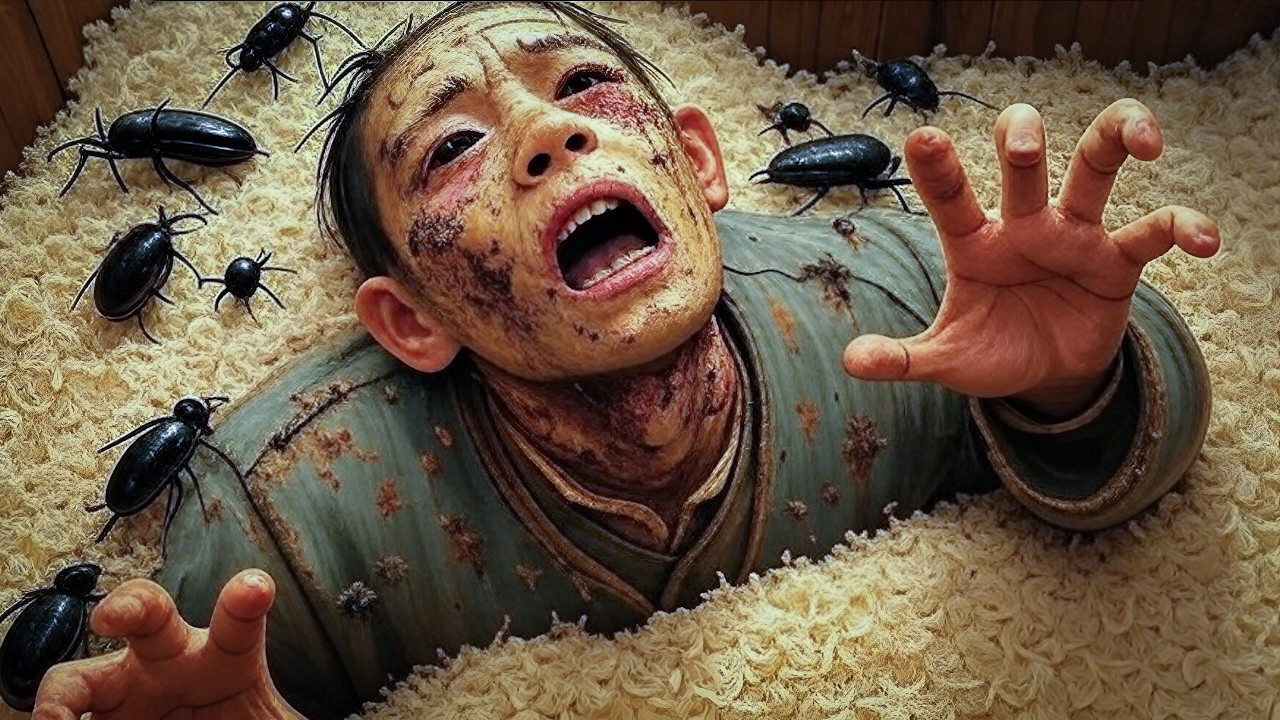
On July 4, 1762, Yeongjo summoned his son to the palace courtyard. There, before officials and servants, he ordered Sado confined in a wooden rice chest. It was a method chosen precisely because it avoided direct execution. To kill a crown prince by sword would desecrate the royal bloodline, but to seal him in a box was to let nature take its course. The chest was carried into the courtyard and placed under guard. The lid was closed. Inside, Sado cried out for mercy, calling upon his father, his wife, and his children. No reply came. For days, his voice was heard within the chest. Servants reported his muffled pleas, his promises to reform, his prayers shouted into the darkness. On the seventh night, there was still sound, faint, but present. By the eighth day, there was none. He had died of heat and thirst, his body collapsing within the wooden coffin of grain that had become his tomb. Those who passed by covered their ears, unwilling to hear the prince's descent into silence.
A Legacy of Sorrow: The Rice Chest's Echo
In the aftermath, the court carried on with ritual calm, but behind closed doors, the trauma lingered. Lady Hyegyeong wrote of the horror of that week, when she could do nothing but listen as her husband's voice dwindled. The servants who stood guard at the chest never spoke freely of what they had witnessed, only bowing their heads when asked. Yeongjo himself maintained a mask of authority, but those closest to him knew the decision had scarred him deeply. Years later, the king sought to cloak the act in mourning rather than disgrace. He restored Sado's title as Crown Prince Sado, a name meaning "thinking of with sorrow." It was a gesture of regret, a signal that even in punishment, he could not bring himself to erase his son entirely. Yet the memory of the rice chest endured, whispered in the palace as both warning and lament. The dynasty survived, but at a terrible cost. A father had condemned his son. A son had terrified his family, and a court had borne witness to a tragedy it could never forget. The rice chest became more than an instrument of death; it became a symbol of a kingdom trapped between duty and madness, love and fear. And in that symbol, the story of Crown Prince Sado reached its bitter end.
History's Bitter Debate: Victim or Tyrant?
There was no autopsy of the prince, no clinical dissection of his madness. What remains instead are the pages of Lady Hyegyeong's memoirs, written decades later, a testimony both intimate and tragic. In them, she portrayed Sado not only as a tyrant within the palace, but also as a victim crushed by a father's relentless criticism, consumed by illness, and broken by a system that demanded perfection, yet offered no mercy. Through her eyes, we see a man at once dangerous and doomed. His story demonstrates how private torment can become public disaster, a son's untreated illness grew into a father's impossible burden, and a dynasty's collective shame. The rice chest that ended his life became a symbol of the cruelty of absolute monarchy, where the failings of one man could endanger an entire realm.

Historians still debate whether he was a madman, a victim of paternal abuse, or both. What is certain is that his perversions were not born in isolation, but in the pressure cooker of Joseon's rigid dynastic order. In the end, Sado achieved a kind of immortality, though not the kind he desired. His name lived on not as a wise regent or future king, but as a cautionary tale about the danger of unchecked authority and untreated illness within absolute monarchy. He left behind scars that his son, King Jeongjo, tried to heal, but never erased.
The story of Crown Prince Sado reminds us that history is rarely the sanitized, orderly narrative presented in textbooks. It is a raw, often brutal, tapestry woven from human frailty, political machinations, and the terrifying consequences of power unchecked by empathy or understanding. The Joseon dynasty, for all its rigid Confucian ideals, could not escape the visceral, horrifying reality of a prince driven to madness, sealed alive in a wooden chest. It's a stark, uncomfortable truth that proves, yet again, history was always far nuttier, filthier, and weirder than we were ever taught.