Imagine the scene: you are slogging through a tropical rainforest, mud clinging to your shins, the air thick with humidity and the stench of decay. Your weapon, a finicky piece of military hardware, might jam at the worst possible moment. Through the dense foliage, hundreds of unseen enemies lie in wait, their traps concealed, their explosives primed, some even adorned with gruesome trophies like necklaces of human ears. This was the terrifying reality of the Vietnam War, a conflict that ripped through the fabric of a nation and forever changed the lives of those caught in its brutal embrace. Forget the sanitized history lessons, because the truth of this war was far stranger, more horrifying, and utterly unhinged than any textbook dared to print.
The Bloody Welcome at Ia Drang
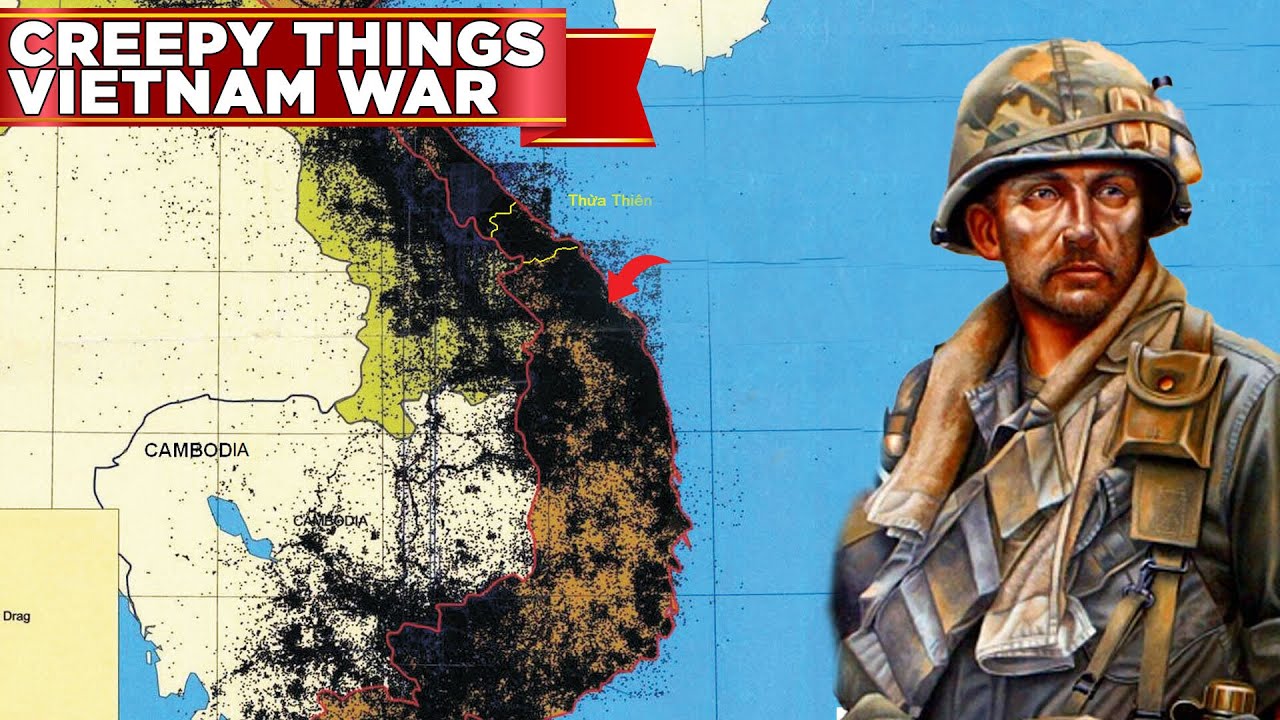
The United States' first real taste of the Vietnam War's ferocity came on November 14, 1965, deep within the Ia Drang Valley, a remote region near the Cambodian border in South Vietnam's Central Highlands. The First Battalion, 7th Cavalry Division, was airlifted by Huey helicopters into what they believed was a reconnaissance mission to root out North Vietnamese forces. Their commander, Lieutenant Colonel Harold Moore, landed with extreme caution, a prescient unease hanging heavy in the humid air. Initially, only 90 American soldiers were on the ground, with more scheduled to arrive later that day. Within the first hour, they captured a North Vietnamese deserter who delivered chilling news: three North Vietnamese regiments, numbering in the thousands, were surrounding them. "They wanted very much to kill you," the deserter reportedly confessed, "but have not been able to find you." Their wish was about to be granted.
As more US troops arrived, they found themselves outnumbered by approximately ten to one. Around noon, the jungle erupted. North Vietnamese soldiers, masters of their terrain, moved swiftly through the dense cover, engaging American troops in intense and deadly hand-to-hand combat. Artillery and bombers were called in, but the proximity of the combatants meant that American air support often struck their own men. As night fell, the Americans hunkered down, listening to the North Vietnamese probing their positions, the jungle turning into a theater of unseen horrors. Intense fighting continued into the third day, by which point the Americans had managed to secure a landing zone. The North Vietnamese had suffered an estimated 1200 casualties, while the Americans counted 79 dead. Despite the opportunity to extract all remaining troops, General Westmoreland, in a questionable tactical decision, reportedly didn't want the battle to appear as a retreat, so some forces remained.
This decision proved catastrophic. On the fourth day, two remaining battalions moved to a second landing zone, LZ Albany. They were ambushed. The ensuing battle raged for 16 hours and was an unmitigated annihilation. North Vietnamese mortar rounds and other weapons claimed the lives of 70 Americans in the first few minutes of the ambush alone. By the end of that horrific day, more than 150 US soldiers were dead, alongside hundreds more North Vietnamese. Rick Rescorla, one of the surviving platoon leaders, grimly described the aftermath as "a long bloody traffic accident in the jungle." The Battle of Ia Drang served as a brutal awakening, signaling that this war would be anything but a swift victory, a far cry from the walk in the park many in Washington had envisioned.
The Phantom Foe: Viet Cong and the Art of Disguise
While the Ia Drang Valley introduced American soldiers to the conventional might of the North Vietnamese Army (NVA), the true terror of the conflict often emerged from a more elusive enemy: the National Liberation Front, better known as the Viet Cong (VC). The NVA were a regular army, well-trained and organized, employing conventional warfare tactics like large-scale engagements with infantry, artillery, and armor units. They received significant support and guidance from the Soviet Union and China, operating under a centralized command structure. The Viet Cong, however, were a different beast entirely.
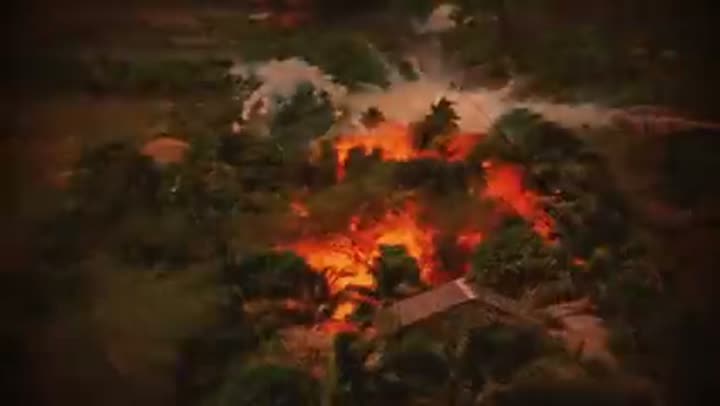
These were guerrilla fighters, primarily active in South Vietnam, composed of local insurgents sympathetic to the Communist cause, intent on overthrowing the US-backed government. They were ghosts in the jungle, masters of hit-and-run attacks, ambushes, sabotage, and the insidious art of booby traps. Their intimate knowledge of the terrain, combined with their uncanny ability to don civilian clothing and blend seamlessly into local populations, made them nearly impossible to distinguish from friendly villagers. This created a pervasive paranoia among American soldiers, who found themselves constantly asking: Is that an innocent farmer, or a Viet Cong fighter waiting to strike? Was that grandma a VC in disguise?
This deception was never more evident than during the Tet Offensive, a series of surprise attacks launched by the Viet Cong and NVA in late January 1968, coinciding with the Vietnamese Lunar New Year. On January 31, a team of VC fighters, disguised as South Vietnamese soldiers and civilians, approached the heavily fortified US Embassy compound in Saigon. Dressed in either stolen or replicated uniforms, carrying fake ID cards and weapons hidden beneath their clothes, they breached the embassy perimeter. A fierce firefight ensued, and the Viet Cong occupied portions of the building for a staggering six hours before they were finally neutralized. The sheer audacity of infiltrating the symbolic heart of American presence in Vietnam was a profound shock. Simultaneously, at Khe Sanh, near the demilitarized zone, VC fighters disguised as local peasants or workers planted explosives and launched small-scale attacks, creating a diversion while larger assaults unfolded elsewhere. Though ultimately a strategic failure for the VC and NVA, the Tet Offensive was a massive psychological victory. It exposed the stark reality that the US and its allies were far from achieving victory, shattering public confidence and fueling the anti-war movement back home.
The sheer audacity of infiltrating the symbolic heart of American presence in Vietnam was a profound shock.
Underground Labyrinth: The World of the Tunnel Rats
A significant factor in the Viet Cong's ability to launch surprise attacks, particularly during the Tet Offensive, was their sprawling network of underground tunnels. It is estimated that tens of thousands of miles of these subterranean passages snaked beneath the Vietnamese landscape, especially around Saigon. These tunnels served multiple critical functions: they allowed armies to move secretly, facilitated the transport of supplies, enabled covert communication, and provided shelter for soldiers and entire supply caches. For American forces, discovering and navigating these dark, dangerous passageways became one of the war's most terrifying duties, a task assigned to specialized soldiers known as "tunnel rats."
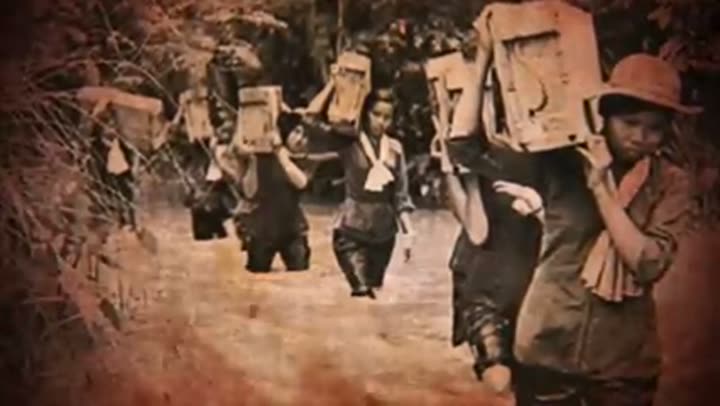
These soldiers were typically smaller men, chosen for their ability to squeeze through the often narrow and cramped tunnels. They carried minimal gear: usually just a weapon and a flashlight, plunging into a claustrophobic, pitch-black world. Their objective was to search for enemy soldiers, uncover weapon caches, locate booby traps, and gather intelligence. The threat of an ambush around a blind corner was constant, leading to fierce, close-quarter combat in conditions that offered almost no room to maneuver. But the enemy was not the only danger. The tunnels were riddled with an array of booby traps: hidden explosives, pits lined with sharpened bamboo stakes, and even chilling "gift boxes" filled with venomous snakes and spiders. One can only imagine the primal terror of encountering a spitting cobra in absolute darkness, deep underground.
Life below ground was brutally harsh. Air was scarce, the tunnels were damp and dark, and food was often in short supply. The jungle's natural inhabitants also made their presence felt: venomous snakes, centipedes, scorpions, spiders, and, of course, countless rats. Viet Cong soldiers often stayed in these tunnels for days on end, particularly during intense waves of US bombing, only emerging at night to scavenge for food. Disease was rampant, with one Viet Cong report stating that around half of an entire unit contracted plasmodium (malaria) within the tunnels. The largest and most famous of these complexes was the Cu Chi tunnel system, located just northwest of Saigon. It served as a major staging point for Viet Cong attacks on the capital. In 1966, US and American forces launched "Operation Crimp" to neutralize Cu Chi, leveling vast sections of the jungle. Yet, many tunnels remained intact, quickly reoccupied by resilient VC forces. Over the course of the war, an estimated 45,000 people lost their lives within the Cu Chi tunnels, a testament to the brutal underground struggle.
Ghosts in the Machine: Operation Wandering Soul
In the psychological warfare arena, the US military concocted a truly bizarre and unsettling operation between 1969 and 1970, known as Operation Wandering Soul, or Ghost Tape Number 10. The premise was simple, yet deeply manipulative: exploit the profound Vietnamese belief in vengeful spirits, or ma qui, and the critical importance of proper burial rites. The operation involved creating fake audio recordings, which were then played from loudspeakers mounted on helicopters or ground-based equipment, echoing through the dense, oppressive jungle at night.
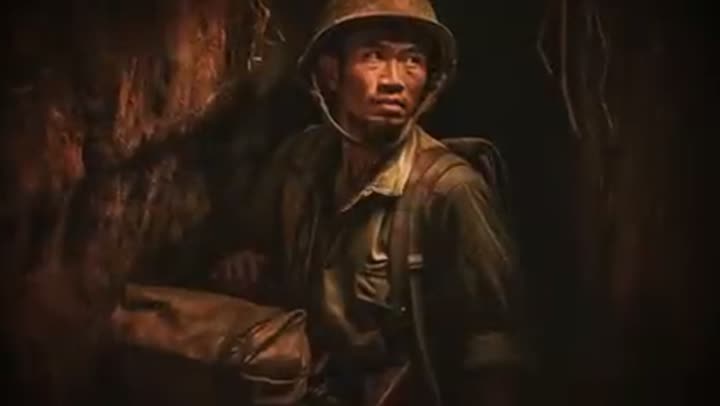
These recordings were designed to induce maximum fear and disorientation. They featured the eerie sounds of restless spirits and tormented souls of dead Vietnamese soldiers, interwoven with mournful music, the voices of grieving relatives, and even the menacing growls of tigers, recorded at the Saigon Zoo. The voices of the "spirits" were actually South Vietnamese soldiers, recruited and recorded in a studio in Saigon. According to Vietnamese folklore, if someone dies an untimely or unjust death, or does not receive proper burial rites, their spirit may continue to wander the mortal realm, unsettled and restless, seeking resolution or revenge. Operation Wandering Soul aimed to convince enemy soldiers that their fallen comrades, denied proper burial, were now aimlessly wandering the afterlife, haunting those who failed to honor them. The recordings included direct messages in Vietnamese, urging enemy soldiers to abandon their cause and return to their families before they too met a similar, unhallowed fate. The actual effectiveness of this macabre psyop remains uncertain, with few documented instances of North Vietnamese surrendering directly as a result of hearing the spooky recordings. However, the very existence of such an operation speaks volumes about the lengths to which both sides were willing to go in this brutal conflict.
The Weapon That Wouldn't Work: The M16 Debacle
Imagine being pinned down in the dense jungle, enemy fire whizzing past your head, and you raise your rifle to return fire, only for it to jam. Nothing. A "nothing burger," as the transcript puts it. This was an all too common, terrifying reality for American soldiers in Vietnam, as the standard-issue M16 rifle proved disastrously unreliable in the early stages of the war. So prevalent was the problem that many US soldiers resorted to picking up captured North Vietnamese AK-47s, which, despite their enemy origin, were far more dependable.
The story of the M16's failure is a textbook example of bureaucratic bungling. In the early 1960s, the US military sought to upgrade its standard weaponry. The AR-15, a promising new rifle, emerged as a strong candidate. It was lighter, more accurate, had less kickback, and inflicted more damage than the older M14. The Green Berets, recognizing its potential, adopted it for covert missions. However, the military establishment, those "suits" in charge, had other ideas. They made several critical changes, transforming the AR-15 into the M16. These modifications included adding a manual bolt closure and altering the twist spiral grooves in the barrel, which dictated how quickly the bullet spun. Critically, and against expert advice, the military decided the M16 would use "ball powder," a propellant that had been around since World War II. It was cheaper to produce, and existing supply chains made distribution easier. This decision was made despite tests unequivocally showing that the M16s were prone to jamming when using ball powder.
The first M16s arrived in Vietnam towards the end of 1964, and the results of this hasty mashup of weapons technology were catastrophic. Soldiers found themselves with dud guns in the middle of firefights, effectively armed with single-shot muskets against semi-automatic fire. Stories circulated of American soldiers found clutching cleaning rods, desperately trying to unjam their weapons amidst the chaos of battle. A survey conducted in 1967, classified then but now public, revealed a shocking truth: a whopping 80 percent of the 1586 soldiers questioned reported that their weapon jammed while they were trying to fire it during the war. This systemic failure of equipment added an unimaginable layer of terror and vulnerability to an already brutal conflict.
Children of the Dust: The Amerasians' Plight
The phrase Gia Dinh, meaning "dust of life" in Vietnamese, originated in the 1930s, referring to impoverished rural people who sought refuge in towns during French colonial rule, a time of vast socio-economic disparities. During the Vietnam War, this poignant term took on a new, heart-wrenching meaning. It was applied to the children born of American fathers and Vietnamese mothers, the mixed-race offspring commonly known as Amerasians. These children often found themselves ostracized in both Vietnam and the United States, caught between two cultures that struggled to accept them.
In Vietnamese society, the stigma of being born out of wedlock and possessing foreign heritage led to incredibly difficult lives. In post-war communist Vietnam, these children were often viewed as symbols of fraternizing with the enemy, facing discrimination and hardship. The United States, for its part, initially disavowed responsibility. In 1970, the US Defense Department stated bluntly that "the care and Welfare of these unfortunate children has never been an area of government responsibility." However, as the US began its withdrawal from Vietnam in 1975, an attempt was made to evacuate some of these children. Operation Babylift began on April 4, 1975, with President Gerald Ford announcing a plan to evacuate some 3000 Amerasian orphans. Tragically, the first cargo plane, loaded with around 314 people, many of them children, crashed minutes into its flight from Saigon. 138 people lost their lives in that horrific accident.
Despite this devastating setback, Operation Babylift continued, and an estimated 3300 children were eventually evacuated from Vietnam. Yet, the morality and execution of the entire operation have been questioned over the years. Many children were separated from their families under questionable circumstances, and the long-term emotional and cultural impact on those who were evacuated, and those who remained, is a complex and painful legacy of the war, a testament to the profound human cost beyond the battlefield.
The Cruelty of the Tiger Cages
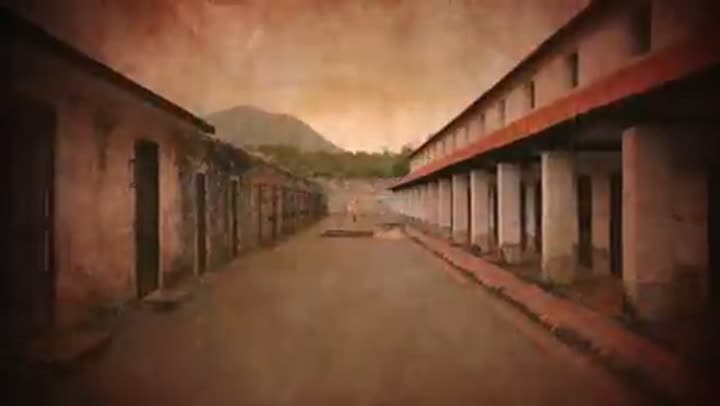
The term "tiger cages" conjures images of wild animals, but during the Vietnam War, these were tiny, brutal cells used to imprison human beings. These were not cages for tigers, but concrete trenches, often no larger than a small storage locker, with bars on top. Their sole purpose was to inflict pain and create conditions of extreme discomfort for whoever was trapped inside. The South Vietnamese government, aided by its allies, utilized these horrific structures to punish their enemies, including Viet Cong fighters and suspected sympathizers. Prisoners were packed tightly into these cages, often several people squeezed into a single cell where they could barely move, stand, or even lie down.

One of the most notorious sites for these tiger cages was a South Vietnamese prison on Con Son Island, a former French colonial prison that held a grim mix of accused Vietnamese communists, ethnic and religious minorities, and political dissidents. Conditions in the main prison were already appalling, with guards reportedly throwing quicklime, a chemical compound that caused painful skin burns, onto prisoners already suffering from malnutrition and disease. But tucked away in a corner of this hellish facility were the tiger cages themselves, holding around 500 people: 300 men and 200 women. The conditions in these cramped cages were even worse, with prisoners ravaged by tuberculosis, open sores, infections, and severe malnutrition. There were harrowing stories of inmates becoming so desperate with hunger that they would resort to eating grass.
The existence of the tiger cages at Con Son prison was meant to be a closely guarded secret. However, in 1970, a delegation was sent to inspect the prison. A congressional aide named Tom Harkin, along with a humanitarian volunteer and translator named Don Luce, learned about the cages. They managed to take photographs, documenting the unspeakable conditions. When the delegation's official report inexplicably omitted any mention of these atrocities, Harkin leaked his photos to Life Magazine. The subsequent public outcry, fueled by the shocking images and stories, added significant fuel to the growing anti-war sentiment, exposing the brutal realities that many had sought to conceal.
When the delegation's official report inexplicably omitted any mention of these atrocities, Harkin leaked his photos to Life Magazine. The subsequent public outcry, fueled by the shocking images and stories, added significant fuel to the growing anti-war sentiment, exposing the brutal realities that many had sought to conceal.
The Unspeakable Horrors of Tiger Force
War, by its very nature, can push individuals to the brink of humanity, but for an elite 45-man unit of the 101st Airborne Division, the descent into depravity was swift and absolute. Nicknamed "Tiger Force," this unit was created in 1965 with a chilling directive: to "out-guerrilla the guerrillas." They were trained in stealth combat, surveillance, and reconnaissance, then unleashed into the jungles of Vietnam. In 1968, they were even awarded the Presidential Unit Citation by President Johnson for "exceptional bravery and fortitude." What the public didn't know then was the unspeakable barbarity that lay beneath that commendation.
Years later, a reporter at a small Toledo newspaper, The Blade, unearthed a cache of grisly documents: a covered-up war crimes investigation and interviews with soldiers and witnesses. These detailed how the soldiers of Tiger Force had rampaged through South Vietnam during the summer and fall of 1967, systematically taking as many lives as they could. Their commander, Colonel Gerald Morse, who preferred to be called "Ghost Rider," set quotas that his soldiers enthusiastically exceeded. By the end of their 1967 campaign, the unit had reportedly racked up more than 1000 lives. Members of Tiger Force went far beyond mere killing, engaging in sadistic acts against anyone who crossed their path. Scalping was a common practice. More horrifically, some soldiers made "nice little necklaces that were all ears." One medic who was part of the unit grimly estimated that they killed 150 people in just one month.
By 1971, stories about the atrocities committed by Tiger Force led to a secret investigation by the Army, which ultimately judged many of the allegations to be true. Yet, in a shocking failure of justice, no one was prosecuted. Six of the most compromised soldiers were quietly allowed to resign. The entire investigation was then buried, remaining hidden from public view until it was unearthed in 2003 by The Blade's tenacious reporting. The story of Tiger Force stands as a harrowing testament to the darkest corners of human behavior in war, a chilling reminder that the horrors of Vietnam extended far beyond the official battle lines.
The Vietnam War was a vortex of chaos, a conflict that churned up not just mud and blood, but also the very foundations of human morality. From the unyielding tenacity of an unseen enemy to the systemic failure of equipment, from the psychological warfare designed to prey on ancient beliefs to the unspeakable atrocities committed by those meant to uphold order, this war was a masterclass in terror. It was a conflict that bled into living rooms through television screens, forcing a nation to confront the brutal realities that textbooks often gloss over, proving once again that history, in its rawest form, is always far nuttier, filthier, and more profoundly unsettling than we were ever taught in school.