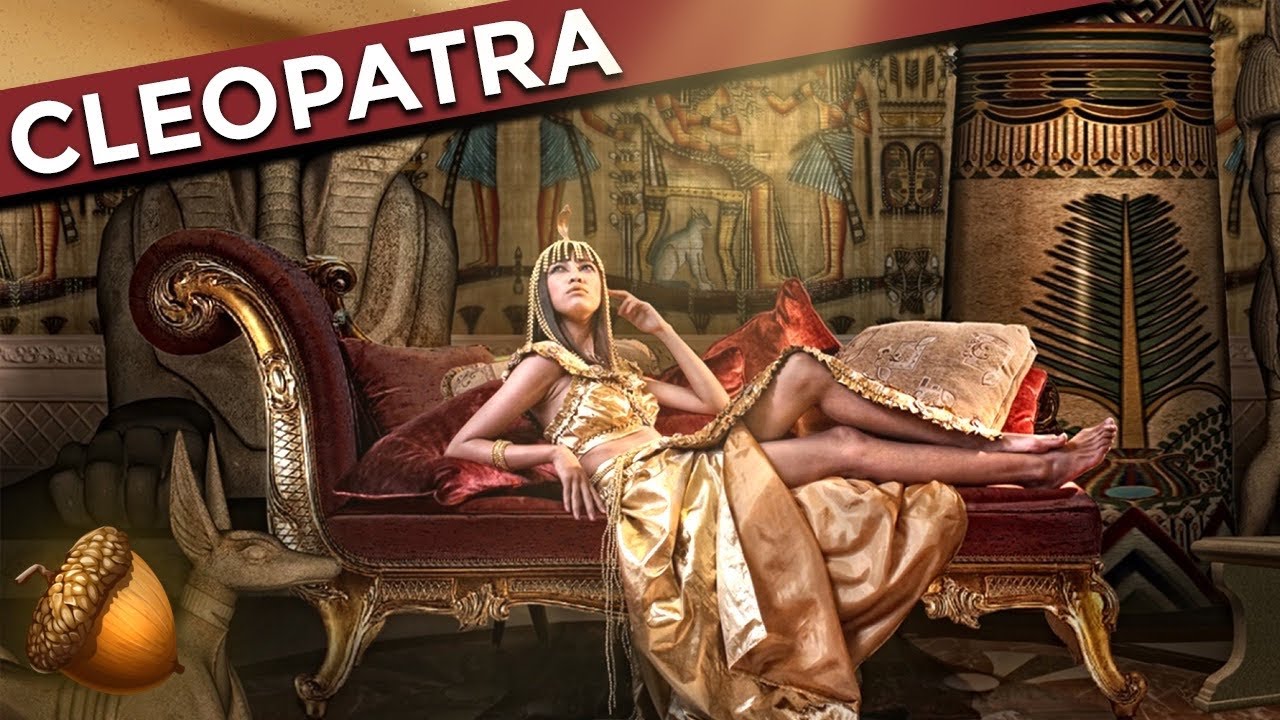
Forget the romanticized Hollywood version, the one where Elizabeth Taylor's iconic beauty alone captivated the ancient world's most powerful men. The real Cleopatra, the last pharaoh of Egypt, was a creature far more complex, cunning, and frankly, far more terrifying than any silver-screen portrayal could capture. She was a political mastermind, a ruthless sibling killer, a PR genius who declared herself a living goddess, and a woman who bathed in the milk of 700 lactating donkeys. Her story isn't just about love and allure; it's a gritty, high-stakes saga of power, manipulation, and survival in a world where an empire hung in the balance.
The Mind, Not Just the Myth, of a Queen
The myth of Cleopatra's unparalleled beauty has persisted for millennia, cemented in modern consciousness by stunning portrayals like Elizabeth Taylor's in the 1963 epic, Cleopatra. This image suggests that her physical appearance alone was enough to turn the heads of formidable leaders like Julius Caesar and Mark Antony. Yet, contemporary historians paint a more nuanced picture. Plutarch, in his Life of Antony, published around 75 A.D., offered a crucial insight: "Her actual beauty was not so remarkable that none could be compared with her or that no one could see her without being struck by it, but the contact of her presence was irresistible. The character that attended all she said or did was something bewitching."
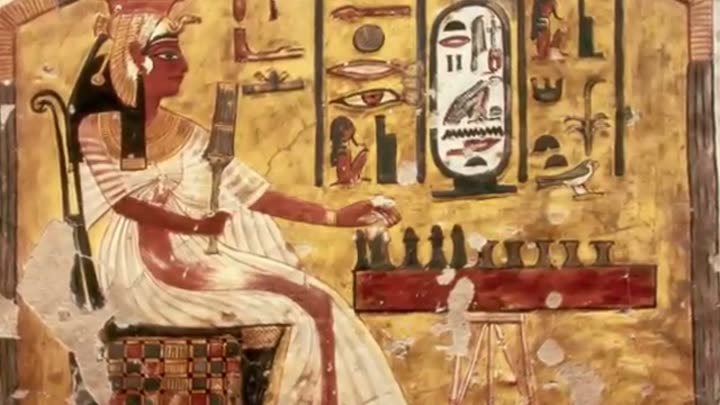
This suggests Cleopatra's true power lay not in conventional good looks, but in an electrifying charisma born of intellect and wit. She was a polymath, a student of mathematics, medicine, alchemy, economics, history, and geography, mastering subjects that many in college would "detest." Her linguistic prowess was legendary, speaking an astonishing nine languages, a feat that allowed her to navigate the complex diplomatic landscape of her era. This intellectual arsenal, combined with her shrewd understanding of human nature, enabled her to control conversations and exert a hypnotic command over those in her presence. Her image as an irresistible temptress was, in essence, a carefully crafted political tool, a persona she meticulously maintained to secure her hold on power and influence her powerful suitors.
Divine Right and the Donkeys' Milk Spa
For Cleopatra, maintaining her image was not merely about vanity; it was a matter of divine authority and political survival. She understood the importance of propaganda long before the term existed, positioning herself as the living reincarnation of the Egyptian goddess Isis. Isis, initially an obscure deity, had grown to become one of the most important goddesses in ancient Egypt, her influence spreading from England to Afghanistan as the Roman and Egyptian empires aligned. Cleopatra’s audacious declaration of being the "new Isis" was a stroke of genius, designed to solidify her authority among her subjects, who were expected to worship her and kiss the ground upon which she walked. This was ironic, given that Cleopatra was not ethnically Egyptian at all, nor was she related to the ancient pharaonic lines.

She belonged to the Ptolemaic dynasty, a line of Greek rulers descended from Alexander the Great's general, Ptolemy I. For 300 years after Alexander's death in 323 BC, the Ptolemies ruled Egypt, largely maintaining their Greek customs, language, and culture, often confining themselves to the Hellenistic city of Alexandria, which served as a sort of "Chinatown" of ancient Egypt with a dominant Greek influence. Unlike her predecessors, Cleopatra was perhaps the first Ptolemy ruler to embrace Egyptian culture, learning and speaking the Coptic language, alongside the tongues of most neighboring regions. This cultural immersion, combined with her divine claims, was a calculated move to gain acceptance and legitimacy among her Egyptian populace. To uphold this god-like image, Cleopatra spared no expense or effort on her personal care. An expert in alchemy, a pseudoscience that predated modern chemistry, she maintained her own perfume factory near the Dead Sea, specifically in Ein Gedi. She believed her fragrances possessed mind-controlling properties, using them as subtle tools of persuasion. Yet, her greatest fear was the erosion of her youth. In an era devoid of modern medical aesthetics, her anti-aging regimen was nothing short of legendary. Legend has it that her daily bath required the milk of no fewer than 700 lactating donkeys, a luxury most modern billionaires couldn't easily replicate even once. This peculiar practice, while sounding bizarre, was rooted in an ancient belief that donkey milk possessed powerful de-aging properties, a testament to the lengths she would go to maintain her celestial appearance.
Her actual beauty was not so remarkable that none could be compared with her or that no one could see her without being struck by it, but the contact of her presence was irresistible. The character that attended all she said or did was something bewitching.
The Bloodline and the Betrayal
The Ptolemaic dynasty, like many ancient royal houses, practiced incest, a tradition that resulted in a rather small family tree, with Cleopatra reputedly having only two great-grandparents instead of the standard 16. Her path to power was steeped in family intrigue and violence from an early age. Her mother passed away under mysterious circumstances when Cleopatra was only 14 years old. Her father, Ptolemy XII, recognizing her sharp intellect and leadership potential, named her regent and deputy to his throne. For four years, she ruled alongside him, gaining invaluable experience in governance.

However, upon Ptolemy XII's death, his will plunged Cleopatra into a precarious situation. It stipulated that she marry her 10-year-old brother, Ptolemy XIII, and share the rule with him. This was a common practice, but Cleopatra, a woman of unprecedented ambition, had no intention of submitting to a child king or sharing power. She immediately asserted her dominance, a move highly unusual for a female ruler in ancient Egypt. She ensured that Ptolemy XIII's name was systematically erased from official documents and that only her own face appeared on the coins minted during their joint reign. This overt power grab quickly alienated her brother's advisors and set the stage for a brutal conflict.
A Serpent's Embrace of Power
Cleopatra's defiance soon drew the ire of Rome. When she sided with the Syrians in a dispute, she incurred the wrath of the burgeoning Roman Empire. Rome, in turn, backed the disgruntled young Ptolemy XIII, helping him to dethrone his sister-wife. Cleopatra was forced to flee with her younger sister, Arsinoe IV. While they were united in their escape, the relationship between the two sisters was far from amicable, described as "chilling." Their differences were irreconcilable, and Cleopatra eventually became convinced that Arsinoe was actively plotting against her, a suspicion that would later have deadly consequences.

Meanwhile, Ptolemy XIII's brief reign as pharaoh was, as one might expect from an 11-year-old, disastrous. His advisors struggled to control him, and in a monumental act of tactlessness, he ordered the execution of Pompey, Julius Caesar's rival, in front of Pompey's own wife and children. This act deeply offended Caesar, who viewed it as a stain on Roman pride, prompting him to seize the Egyptian capital. Ptolemy XIII's short, chaotic life ended when he drowned in the Nile while attempting to flee the combined forces of Caesar and Cleopatra. With Ptolemy XIII gone, Cleopatra was once again bound by tradition and forced to marry her youngest brother, Ptolemy XIV. This, however, was a marriage strictly in name. Ptolemy XIV was too young to pose a threat, and Cleopatra was already deeply entangled in an affair with Caesar. She later bore Caesar a son, Caesarion, and wasted no time in orchestrating the murder of Ptolemy XIV, clearing the path for her son to become co-regent. Caesar, however, had no intention of acknowledging Caesarion as his heir, instead choosing his grand-nephew Octavius. Cleopatra's ruthless ambition knew no bounds; her craving for power was indeed "thicker than her blood," as she systematically eliminated all of her siblings one by one to secure her position.
The Art of the Bewitching
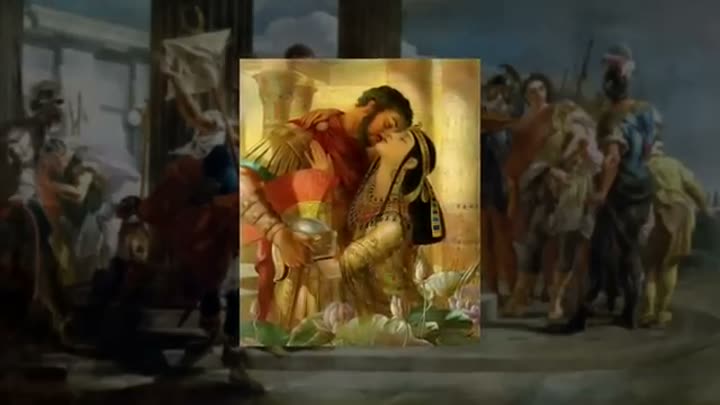
Plutarch's description of Cleopatra as "bewitching" was not an exaggeration; she possessed an uncanny ability to make men dance to her tune, coaxing them into actions they might otherwise never consider. This was less about hypnotic command and more about her profound understanding of male psychology, knowing precisely what her powerful targets desired. She secured the unwavering support of both Caesar and Antony not merely through seductive charm, but through a carefully orchestrated, creative presentation of herself. Her first meeting with Caesar, for instance, involved her being famously smuggled into his chambers hidden inside a carpet, an audacious and memorable entrance that immediately set her apart. Caesar was so utterly enamored that he took the scandalous step of erecting a statue of her in the Roman Temple of Venus Genetrix, placing it right next to the goddess's own effigy, an unprecedented move that outraged many Romans who never considered their administrators divine.
Her introduction to Mark Antony was equally theatrical and effective. She appeared before him dressed as Aphrodite, the goddess of love, a vision so captivating that Antony reportedly abandoned his planned invasion altogether, choosing instead to spend the winter in Alexandria with her. This shrewdness, this ability to blend allure with political strategy, allowed her to swiftly gain control over the hearts and minds of these formidable men. Her web of enchantment was so potent that it wrapped itself around them like an inescapable shroud, bending their wills to her desires and ultimately, to her political agenda.
Cleopatra's craving for power was thicker than her blood as she took out all of her siblings one by one.
Parties, Pearls, and Politics
Life with Cleopatra was an experience of unparalleled decadence and excess. With Antony, she indulged in a lifestyle that made a modern "American frat house" seem tame by comparison. While Rome was consumed by a brutal civil war, Cleopatra and Antony reveled in Alexandria, famously forming their own "secret drinking club." Their revelries were legendary, but perhaps none more so than the infamous bet that showcased Cleopatra's extravagant contempt for wealth. It is said that she once wagered with Antony that she could consume a meal worth an exorbitant sum. To win the bet, she ordered her servants to bring her a cup of vinegar. She then took one of her priceless pearl earrings, a jewel reportedly worth over $10 million in today's currency, dumped it into the vinegar, and waited as the acetic acid slowly dissolved the pearl. Once it had completely disintegrated, she drank the concoction, winning her outrageous wager.
This act was not just a display of opulence; it was a brazen statement of power and disregard for conventional value, enacted while Roman soldiers were dying in the civil war and Augustus Octavius was systematically eliminating threats to his claim on Rome's throne. Cleopatra's life with Antony was a whirlwind of pleasure and political maneuvering, a dangerous dance between personal indulgence and imperial ambition, all set against the backdrop of a world teetering on the brink of profound change.
So, was Cleopatra the most beautiful woman in history? Perhaps not in the conventional sense. But she was undeniably one of the most brilliant, ruthless, and utterly captivating figures to ever grace the stage of history. Her story is a testament to how far one woman would go to seize and maintain power, blending intellect, charm, and sheer brutality in a way that truly makes the textbooks seem utterly pedestrian. History, as it often does, proves itself far wilder, filthier, and nuttier than any sanitized version we're usually fed.