Forget everything your elementary school textbooks told you about ancient Egypt, those shimmering images of golden pharaohs and majestic pyramids. While those grand narratives certainly hold a place in history, they often gloss over the truly wild, visceral, and sometimes utterly repulsive realities of daily life and death along the Nile. This wasn't just a civilization of monumental architecture and sophisticated astronomy, but also one steeped in bodily fluids, bizarre medical practices, brutal justice, and a surprisingly fluid understanding of gender. Prepare to strip away the sanitized veneer and dive headfirst into the truly filthy secrets of a civilization far stranger than you could ever imagine.
The Royal Rectum: A Divine Obsession
Before indoor plumbing and readily available toilet paper, personal hygiene, especially for royalty, was a serious business. In medieval Europe, the King of England, Scotland, and Ireland, Charles the First, had a close friend, Henry Reich, the first Earl of Holland, who held the coveted position of "Groom of the Stool." This man was responsible for the king's rear, performing the intimate duty of wiping His Majesty's backside. While this might sound like a relic of the Dark Ages, the practice of a royal rear-end guardian stretches back thousands of years, all the way to ancient Egypt.

In Egypt, where pharaohs were considered living gods, their personal care was elevated to a sacred art. The equivalent of the Groom of the Stool was not a mere janitor with a lord's salary, but a highly qualified medical specialist. These individuals were known as *Iry*, a title that translates to "Shepherd of the royal anus," or more formally, *Neru Pehut*, the "guardian of the royal rectum." Their job was far more sophisticated than simply wiping. The *Neru Pehut* was tasked with administering enemas to the pharaoh, a practice considered crucial for health and well-being. Greek historians like Herodotus and Diodorus Siculus recorded that ancient Egyptians were meticulous about their rear hygiene, and enemas were a common, even routine, procedure for common people and royalty alike.
The role of the *Neru Pehut* was not only respected but highly desired, a testament to the pharaoh's divine status. To touch a god in such an intimate way was seen as performing a daily divine intervention. One notable physician from around 2200 BC, named *Iry-achet*, held such a title. His medical specializations, including "positions of the belly," "positions of the eyes," and "protectors of the anus," were discovered on a recycled door found at the Giza shaft tomb. The Egyptians believed the rear end was a critical area because it was considered the source of *wekadu*, a corruptive substance that needed to be removed from the body to cure disease. This belief even permeated their religion. Myth had it that the god Thoth, often depicted with the head of an ibis, actually invented the enema, with the venerated bird observed using its curved beak to wash its own behind with water.
The Pharaoh's Pursuit of the Perfect Physique
Ancient Egyptian rulers, much like modern influencers, were acutely aware of their public image. We've previously discussed how they routinely misrepresented their weight and appearance in etchings and statues. This body consciousness wasn't just about art; it extended to their daily lives. They wanted to indulge in lavish meals but still maintain the slim, muscular physique that was the beauty standard of the era. Their solution to this age-old dilemma of wanting to eat your cake and look good too was, frankly, disgusting: laxatives.
To shed excess weight without the inconvenience of actual effort, Egyptian royalty would take laxatives at least three times a month. The primary ingredient for these powerful purges was castor oil, a substance that would undoubtedly confine them to the washroom for most of the day. Imagine, if you will, a world before modern plumbing, where indoor toilets were essentially pits or portable receptacles. The stench must have been unbearable, requiring, as the saying goes, a gas mask just to enter the royal chambers. The popularity of laxatives as a medical solution was so widespread that Egyptians began consuming them like modern aspirins. Feeling hungry? Take a laxative. Battling diarrhea? Believe it or not, the solution was more laxative. The underlying philosophy was a literal interpretation of "better out than in," believing that diseases, no matter how stubborn, could be purged from the body with sufficient force and speed.
To shed excess weight without the inconvenience of actual effort, Egyptian royalty would take laxatives at least three times a month.
Beyond the Strips: Ancient Egypt's Wild Pregnancy Tests
While ancient Egypt was a patriarchal society in many respects, women did hold positions as physicians, working alongside their male counterparts, especially in matters of pregnancy and childbirth. Their medical system for reproduction was extensive, though some of its methods were, to put it mildly, bizarre. Long before the convenient, pocket-sized strips of today, ancient Egyptian women had their own peculiar ways of confirming a pregnancy.
One method, dating back 3,500 years, involved two pouches of seeds: one of barley and one of wheat. A woman would urinate on these seeds daily, and if either bag sprouted, it was considered a sign from the gods that she was pregnant. While this might sound like a baseless religious ritual, it turns out there was actual science behind it. In 1963, the National Institute of Health conducted a study and found that this ancient Egyptian method was surprisingly effective, working 70 percent of the time. Modern pregnancy tests rely on detecting human chorionic gonadotropin (HCG), a hormone that also elevates estrogen levels in a woman's urinary system. It's speculated that this surge in estrogen helped promote seed growth, explaining the ancient test's accuracy.
However, the Egyptians' ingenuity didn't stop there. They also believed the two types of seeds could predict the baby's gender. If the barley sprouted first, it meant a boy; if the wheat won the race, a girl was on the way. Unfortunately, this part of the test had no scientific basis; studies confirm no correlation between a baby's gender and estrogen's effect on seed growth. And the oddities continued. Another method involved placing a supposedly pregnant woman on a mash of beer and dates, with pregnancy determined by how much she vomited. In earlier days, physicians employed a more "hands-on" approach, rubbing a special oil over a woman's entire bare body at night. The next morning, an inspection would determine if she was "fresh and ripe," and thus pregnant or ready to conceive. Imagine a doctor using such methods and language today; they'd lose their license faster than you can say "malpractice."
Perhaps the most infamous and frankly, disturbing, pregnancy test involved a clove of garlic or an onion. This pungent item would be inserted into a woman's genitals overnight. In the morning, her breath would be checked. If the smell of garlic or onion was detectable, it meant her "tubes were clean and ready to have a baby." The Egyptian physicians, in their limited understanding of anatomy, believed all orifices of a woman's body were interconnected, with a direct pathway from the genitals to the mouth. If no smell was detected, she was deemed barren. This grotesque practice highlights their profound lack of understanding of the human reproductive system, despite their obsession with the cycle of life and death.
Hidden Horrors: Parasites and Misconceptions of the Male Body
The ancient Egyptians, for all their medical innovations, held some truly baffling beliefs about the human body, especially when it came to male physiology. Despite their detailed observations, their understanding of the reproductive system remained rudimentary. A particularly glaring example was their assumption that men experienced a "time of the month" much like women. It was common for Egyptian men to have blood in their excrement, a symptom that was routinely dismissed as a male menstrual cycle.
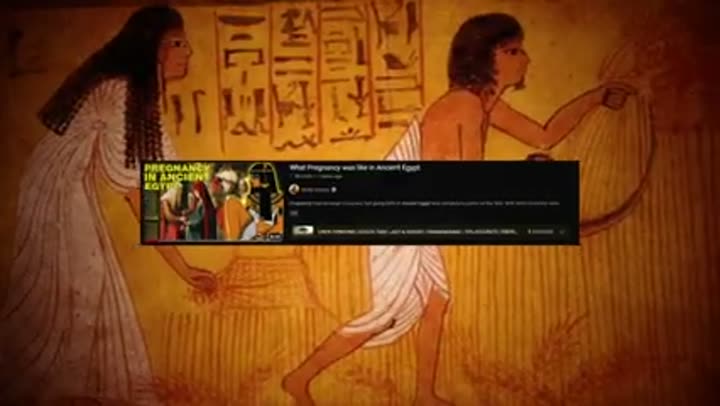
The grim truth behind this "male menstruation" was far more insidious: Schistosomiasis, a debilitating parasitic disease, was rampant throughout ancient Egypt. This parasitic infection, caused by flatworms, leads to chronic ill health and, critically, blood in the urine and feces. The disease was so pervasive that the presence of blood in a man's excretions was not only common but, astonishingly, considered a good sign. In this warped reality, a "model family man" was often one whose body played host to an unhealthy number of these parasitic worms. The widespread nature of *Schistosomiasis* meant that what we now recognize as a serious health crisis was, for the ancient Egyptians, simply a normal, even expected, aspect of male health, highlighting a profound and often fatal misunderstanding of their own bodies.
A Woman's Place: Power, Prejudice, and Potions
Ancient Egyptian women occupied a paradoxical position in society. On one hand, they enjoyed a level of academic, economic, and political independence that was remarkably progressive for the ancient world. A woman could live independently, work any job a man could, contract marriage, buy and sell land, file lawsuits, initiate divorce, and bequeath property as she wished. These legal and economic freedoms stand in stark contrast to the subjugated status of women in many other contemporary and even later civilizations.
Yet, despite these impressive legal rights, ancient Egyptian women were still considered socially inferior to men. They were not immune to ridicule and faced societal restrictions propagated through wisdom literature and religious texts that often bad-mouthed women with "liberal natures." Furthermore, public harassment was disturbingly common and rarely punished. Catcalling, whistling, and even flashing were everyday occurrences. The Greek historian Herodotus recorded that during sacred religious festivals, men would frequently flash their privates at women on the banks of the River Nile while traversing by boat, accompanying these acts with jeering, catcalling, and teasing. Even in cases of violence and harassment against women, particularly during the Ptolemaic dynasty, the victim was often blamed, a chilling echo of victim-blaming sentiments that persist to this day.
In a society deeply enamored with magic, it's no surprise that love potions played a significant role, particularly in the complex social dynamics between men and women. Egyptians brewed separate concoctions for a variety of romantic and manipulative purposes: to win over the woman of one's dreams, to force a woman into subjugation, to make a woman "enjoy bedding" someone she didn't fancy, or even to ruin rival marriages out of jealousy. The effectiveness of these potions, unsurprisingly, was highly questionable. The recipes themselves were as insane as their intended outcomes. One particularly foul brew called for a combination of dandruff from a dead man, barley, apple pips, blood from a tick that had bitten a black dog, the blood of the person ordering the potion, and their semen. This grotesque concoction was then meant to be secretly introduced into the beloved's beverage. One could argue, with a wry smile, that if someone could be convinced to willingly consume such a vile mixture, they were likely already deeply infatuated, rendering the potion entirely unnecessary.
One particularly foul brew called for a combination of dandruff from a dead man, barley, apple pips, blood from a tick that had bitten a black dog, the blood of the person ordering the potion, and their semen.
Justice, Eternity, and an Unexpected Erection: The Raw Realities of the Afterlife
The ancient Egyptian justice system was not for the faint of heart. While we might joke about "snitches getting stitches," in Egypt, snitching and stitching (or rather, mutilation) were mandatory, sometimes even for the innocent. Following the successful plot to assassinate Ramesses III, the guards rounded up not only the conspirators but also every single person working in the pharaoh's palace and court. The court decreed that all of them, having had ample opportunity to overhear the plot and warn the authorities, were culpable for failing to prevent the pharaoh's death. Their punishment? To have their ears chopped off, regardless of whether they were actually aware of the conspiracy. This brutal precedent effectively spooked the populace, ensuring that any hint of criminal activity was swiftly reported.
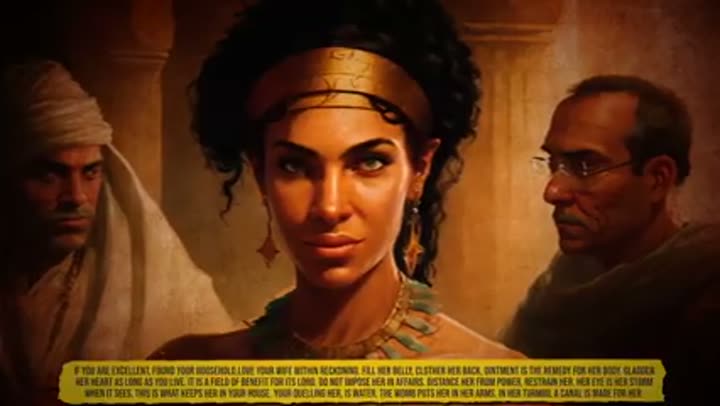
Interrogations under Egyptian law were a "bad cop all the way" affair. Guards were notoriously heavy-handed, often beginning an interrogation by tying the subject to a stake and mercilessly beating their hands and feet until satisfied with the answers. Even friends and relatives of suspects were subjected to such harsh punishments. The authorities, however, were not entirely oblivious to the possibility of false confessions born of torment. They acknowledged this risk and would conduct thorough investigations of crime scenes and cases to ensure the right person was prosecuted. For witnesses, the torment wasn't just physical, but deeply psychological. There were no oaths to swear to; instead, courts would demand that witnesses describe in painstaking detail the specific punishments they would like to endure should they be found lying. These punishments, already chosen by the court, served as a chilling reminder of the cost of perjury, instilling a profound fear that discouraged false testimony.
The Egyptian obsession with the afterlife manifested in elaborate and incredibly costly funeral rituals. In the 1st century BC, a top-tier mummification could set you back one Talent of silver, which translates to a staggering 30 kilograms or 66 pounds of silver. While prices may have been inflated under the Ptolemaic dynasty, the sheer expense made full mummification a luxury for the elite. Today, the raw materials alone (linen, natron salt, resin, incense) would cost around $3,600, but the intricate labor involved would push the total estimated modern cost to approximately $70,000. There are even businesses today offering human and pet mummification, with pet services ranging from $7,000 to over $100,000.
Naturally, such an exorbitant operation was out of reach for the majority. Lower classes resorted to incomplete mummification, often skipping sarcophagi or even coffins, and leaving some or all organs intact during the dehydration process. The dirt poor had the most basic burial: wrapped in cloth and left to dry naturally for weeks in the desert sand. Unlike the wealthy, who rested for eternity in tombs adorned with inscriptions from the Book of the Dead, Pyramid Text, and Coffin Text, the poor were consigned to unnamed graves in communal cemeteries.
Among the many peculiarities of Egyptian burial, King Tutankhamun's mummy holds a particularly bizarre secret. While the "curse of King Tut" was largely a hoax (Howard Carter, the discoverer, lived for decades after the tomb's opening), one aspect of Tut's mummification was undeniably unique: his "black pole was up." Tut was the only Egyptian ruler found mummified with a sustained erection, his "tower pointing North." The mystery surrounding this post-mortem priapism is further deepened by theories suggesting his embalmers might have even switched his actual member with that of a "more impressive donor."
Finally, among all these strange realities, ancient Egypt harbored a surprisingly progressive view on gender. Fixed genders, as we understand them today, were not a rigid concept. The Egyptians were remarkably comfortable with gender fluidity, believing that genders could change after death. Their mythology is replete with gods who shift genders, and they even thought that women, despite being socially inferior in life, could transform into men in the afterlife if they had led fulfilling lives. Their highly proactive deities often possessed features beyond conventional gender norms, with goddesses sometimes depicted with beards. Queen Hatshepsut herself famously adopted a fake beard to present herself as a male pharaoh, highlighting a culture where identity, both divine and mortal, was far more fluid and complex than often portrayed.
So, there you have it. The ancient Egypt you thought you knew was just the polished, sanitized version. Beneath the gleaming gold and monumental stone lay a world of bodily fluids, unsanitary medicine, brutal justice, and a fluidity of identity that would shock even our modern sensibilities. History, as always, proves to be far nuttier, filthier, and weirder than any textbook dares to tell you.