The history books often conclude World War II with the Allied victory, a triumphant end to an era of unparalleled global conflict. Yet, the question of what truly happened to the architects and foot soldiers of one of history's most abhorrent regimes, the Nazis, often receives a cursory glance, if it is addressed at all. The comfortable narrative suggests they simply vanished, swallowed by defeat. The uncomfortable, indeed nutty, truth is far more complex, revealing a world where justice was selective, pragmatism often trumped principle, and a vast network of perpetrators simply melted into the shadows, sometimes aided by the very powers that sought to defeat them.
The Grand Illusion of Denazification
After the guns fell silent in 1945, Germany found itself carved into four zones of occupation: American, British, French, and Soviet. The victorious Allies, particularly the Western powers, embarked on an ambitious, if ultimately flawed, program known as denazification. The stated goal was clear: to systematically purge German and Austrian society of Nazi power and influence, from the highest echelons of government to the most mundane aspects of daily life. However, the reality on the ground quickly proved far more challenging than any planner in Washington or London could have imagined.
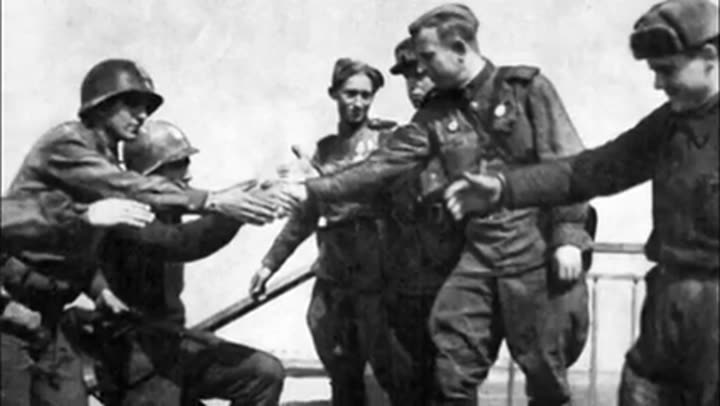
Life for detained Nazis varied dramatically depending on their zone of internment. The Soviet camps, notorious for their brutal conditions, prompted many to attempt perilous relocations to the Western zones, often feigning anti-communist sympathies to secure safe passage. The French zone, by contrast, proved the most lenient. French authorities, viewing Germany as a monolithically culpable nation, placed less emphasis on distinguishing between individual Nazis and non-Nazis, a policy that inadvertently offered a softer landing for some.
In the five years immediately following the war, approximately 4,000 Germans were detained in internment camps, awaiting potential penalties. This figure, while seemingly substantial, pales in comparison to the sheer scale of Nazi involvement. At the war's end, an estimated 45 million Germans, nearly two-thirds of the population, were either members or active supporters of the Nazi party. The problem of denazification was one of insurmountable magnitude, a bureaucratic nightmare of epic proportions. Imagine an entire nation queuing at the Department of Motor Vehicles, each citizen requiring individual scrutiny and judgment, and you begin to grasp the administrative paralysis that ensued.
Bureaucracy, Blackmail, and "Nominal Nazis"
Beyond the sheer numbers, the Allies faced an immediate and pressing challenge: rebuilding a shattered Germany. Denazification rules dictated that offenders be removed from high-ranking positions and relegated to manual labor. But if every Nazi and Nazi sympathizer were held accountable, there simply wouldn't be enough skilled workers to operate a functioning society. The British zone, for instance, discovered that a staggering 90 percent of its lawyers had been Nazi party members. Faced with the impossibility of establishing law and order without a legal system, Britain reluctantly determined that up to 50 percent of the German legal civil services could be staffed by "nominal Nazis," those deemed less ideologically committed.
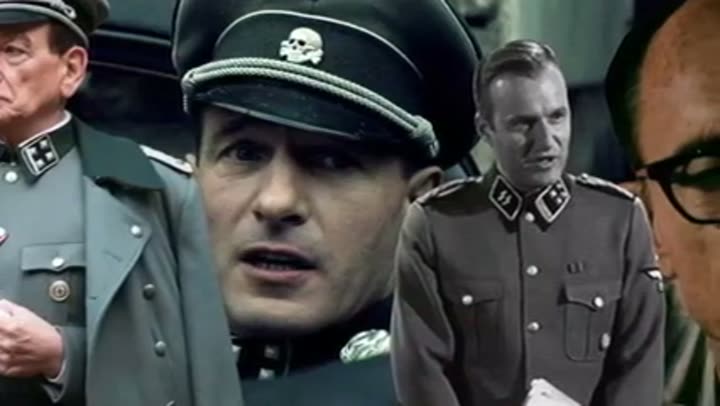
The French zone encountered a similar predicament with its education system. After initially firing three-quarters of its teachers due to Nazi affiliations, the authorities found themselves with no one left to educate the next generation. They were forced to re-hire many of the very individuals they had dismissed. Reconstructing a country while simultaneously attempting to categorize and penalize such a vast number of culpable citizens was a process far from simple, or even practical. General Dwight D. Eisenhower, then an army general, initially estimated the denazification process would take 50 years. But by 1946, a mere year after the war's end, the Allied powers had largely handed the reins of denazification over to Germany itself. This remarkable shift meant that Germany was now tasked with enforcing its own punishment, a move that would predictably lead to a significantly looser interpretation of justice.
The problem of denazification was one of insurmountable magnitude, a bureaucratic nightmare of epic proportions. Imagine an entire nation queuing at the Department of Motor Vehicles, each citizen requiring individual scrutiny and judgment, and you begin to grasp the administrative paralysis that ensued.
Unsurprisingly, post-1946 Germany adopted a far more lenient approach. Anyone born after 1919 was conveniently deemed "brainwashed" and thus exempt from punishment. Of the public officials the U.S. had removed from office, a shocking 75 percent were eventually reinstated. To sidestep the lengthy and politically fraught business of trials, an astonishing 90 percent of Nazis were classified as "lesser offenders." By 1948, with the Cold War rapidly escalating, American concerns shifted dramatically. The threat of communism eclipsed the lingering specter of Nazism, and any remaining denazification cases were sped through with proceedings that were legally sketchy at best. By 1951, denazification officially ended, and the emphasis shifted from punishment to paying reparations to victims and their families. Through a series of pardons and amnesties enacted by the German government, nearly 800,000 people were freed from any punishment or penalty. A chilling testament to the failure of comprehensive denazification can be found in the German Ministry of Justice itself, where, post-war, a staggering 77 percent of senior officials were revealed to be former Nazis.
The Southern Cross and the Ratlines
While the bureaucratic machinery of denazification ground to a halt, many of the most egregious Nazi offenders had no intention of facing any form of justice. South America, with its numerous sympathetic dictators, became a popular destination for those seeking to disappear. An estimated 9,000 Nazi officials and collaborators are thought to have escaped to the continent after the war. While Brazil and Chile welcomed their share of exiles, Argentina, by far, became the primary haven.
The architect of this Argentinian sanctuary was none other than President Juan Perón himself. A fervent admirer of fascism, Perón had served as a military attaché in Italy early in World War II, developing a profound respect for the Axis powers. He saw an opportunity to bolster his own country's power by recruiting individuals with specific military and technical expertise. Perón and his government officials actively worked to establish "ratlines," escape routes for Nazis through the ports of Italy and Spain. They even aided in forging essential documents for leaving the country. Most of these fugitives made their way down the Pacific coast, often using falsified Red Cross passports augmented with Argentine tourist visas. Once in Argentina, many Nazis initially changed their names and went into hiding, but as it became clear that Argentina would not extradite them back to Germany, some brazenly resumed living under their real identities, confident in their newfound immunity.
The Cold War's Faustian Bargain: Operation Paperclip
Of course, Argentina wasn't the only nation willing to overlook past atrocities for its own strategic gain. As the Cold War intensified and an arms race began between the United States and the Soviet Union, collecting expert scientists and engineers became a higher priority for both superpowers than punishing crimes against humanity. In 1945, the U.S. secretly launched Operation Paperclip, a controversial program designed to bring German scientists and engineers, many of them Nazis, back to the American mainland. These individuals were essentially treated as "human weapons" in the burgeoning ideological conflict.

Towards the end of the war, Germany had already recognized the critical need for these skilled individuals. A German scientist named Benner Osenberg had meticulously compiled a list identifying names of crucial scientific personnel. By a stroke of remarkable luck, a Polish lab technician discovered this list, torn up, in a toilet. The fragments eventually made their way from MI6 to U.S. intelligence. A crucial motivation for Operation Paperclip, beyond simply acquiring these brilliant minds for America, was to prevent the Soviets from gaining their technical expertise. While officially termed an "evacuation operation," identified targets were often essentially kidnapped and forcibly brought to the U.S., where they were held for months at a time for interrogation. Despite a suspected high level of Nazi involvement among them, many of these literal rocket scientists went on to have incredibly successful careers in the United States, becoming integral components of the nascent NASA space program.
Nuremberg's Necessary, Yet Limited, Justice
For the most serious offenders who hadn't managed to escape into hiding, the Nuremberg Trials represented a monumental, if ultimately limited, attempt at justice. Beginning in 1946, these trials prosecuted prominent Nazis for war crimes, crimes against humanity, and wars of aggression. They were profoundly important for establishing precedents in international law, particularly concerning the prosecution of war crimes, and were a crucial step in holding some of the most culpable individuals responsible for the horrors of the Holocaust.
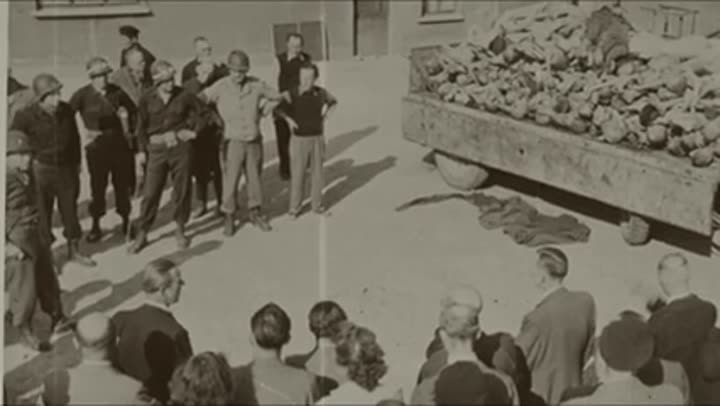
The first and most well-known trial indicted 24 men, with outcomes ranging from outright acquittal to 10 years imprisonment, and ultimately, execution. In the end, 12 were sentenced to death. While the trials represented a significant moment of accountability, 12 men receiving capital punishment pales in comparison to the millions who perished in the Holocaust, and the vast number of perpetrators who were never held responsible for their actions. The trials were not without their critics. Some questioned their legality, labeling them an example of "victor's justice" and judicially invalid. Other criticisms pointed to a perceived hypocrisy, with Allied nations prosecuting crimes against humanity after their own various wartime actions, such as the firebombing of Dresden or the atomic bombings of Hiroshima and Nagasaki.
The Nuremberg Trials were profoundly important for establishing precedents in international law, particularly concerning the prosecution of war crimes, and were a crucial step in holding some of the most culpable individuals responsible for the horrors of the Holocaust.
The Unrelenting Shadow: Nazi Hunters and Lasting Pursuits
Even as official denazification efforts waned, the pursuit of justice for Nazi war criminals did not entirely cease. Some of the most notorious figures managed to go into deep hiding, later escaping Germany to live anonymous lives. Yet, they could not escape the relentless dedication of "Nazi hunters," individuals who emerged to deliver justice to those who believed they had gotten away with mass murder. One of the most famous cases involves Adolf Eichmann, the mastermind behind Hitler's Final Solution and the vast network of concentration camps. Eichmann successfully fled to Buenos Aires, where he worked at a Mercedes-Benz automotive plant and lived a seemingly normal life with his wife and four children.
It wasn't until 1960 that Eichmann's anonymity was shattered. Israeli agents, operating in secret, captured him, drugged him, and flew him out of Argentina disguised as an Israeli airline worker who had suffered a head trauma. Despite protests from Argentina regarding the violation of its sovereignty, Eichmann was subsequently tried and executed in Israel. Not all Nazi hunters were government operatives. Simon Wiesenthal, a Holocaust survivor, dedicated his life to tracking down perpetrators. He successfully located Franz Stangl, the commandant of Treblinka and Sobibor extermination camps, held responsible for the Action T4 euthanasia program that systematically murdered those with mental and physical disabilities. Wiesenthal tracked Stangl to Sao Paulo, Brazil. Stangl was eventually extradited to West Germany and sentenced to life imprisonment.
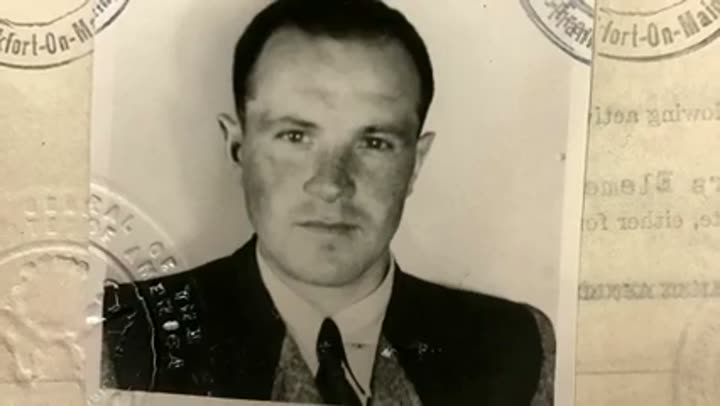
The hunt for justice extended surprisingly far into the 21st century. As recently as 2019, in the United States, Jakiw Palij was deported from the country at the astonishing age of 95 years old. Palij had long claimed to have worked on his father's farm in 1949, but a historian at the U.S. Holocaust Memorial Museum uncovered the truth: Palij had served as a guard at a forced labor camp during the war. It remains an unfortunate truth that not all Nazis were held accountable for their crimes, and many lived out their lives unpunished. While Nazi hunting has naturally died down as most people alive during World War II have since passed away, these stories serve as a stark reminder of the enduring pursuit of justice, however late it may come.
The tale of what happened to the Nazis after World War II is a far cry from the tidy narratives often presented in school. It's a messy, morally ambiguous history, rife with political expediency, bureaucratic failure, and the cold calculation of national interest overriding the pursuit of justice. It reminds us that history is rarely clean, rarely simple, and often far, far nuttier than the textbooks dare to admit. The shadows of these unpunished crimes continue to stretch across generations, a testament to the enduring human capacity for both evil and the relentless, if often delayed, quest for accountability.