Forget everything your dusty old history textbooks told you about stoic samurai and fearsome Mongol hordes. The clash between these two legendary warrior cultures was less a glorious duel of titans and more a brutal, technologically lopsided slaughter, punctuated by divine intervention and a shocking lack of common sense from one of the greatest empires the world has ever seen. This wasn't just a battle for land, it was a collision of entirely different military philosophies, where ancient codes met gunpowder and mass destruction, all while nature itself decided to play kingmaker, twice. It's a story so wild, so utterly improbable, it makes you wonder what else history has conveniently swept under the rug.
The Khan's "Polite" Invitations
By the late 1260s, the Mongol Empire, under the formidable leadership of Genghis Khan's grandson, Kublai Khan, was an unstoppable force. Having already established the Yuan Dynasty across vast swathes of East Asia and subjugated Korea, Kublai now cast his imperial gaze across the sea towards Japan. His empire was, by a significant margin, the largest contiguous land empire in recorded history, a fact that undoubtedly colored his perception of international diplomacy. In 1268, he dispatched a letter to the Kamakura Shogunate, which had been ruling Japan since 1192, addressing its leader, Hojo Tokimune.
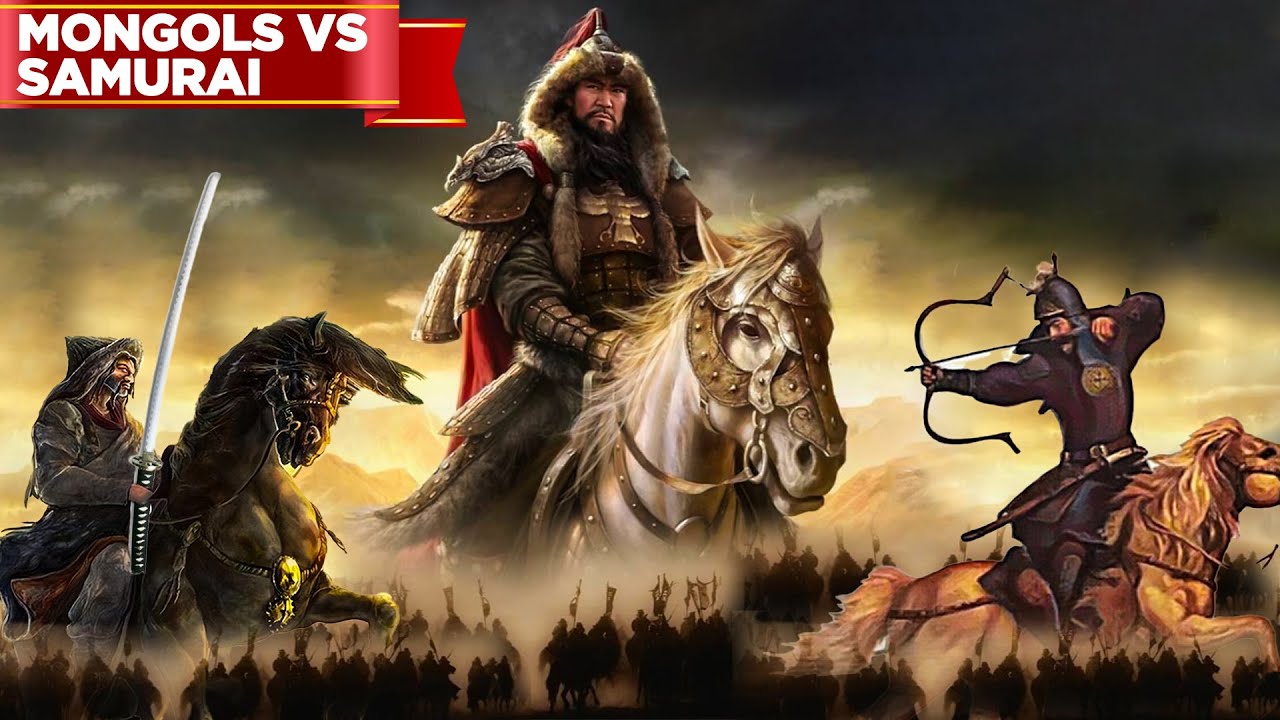
This initial missive was a masterpiece of passive aggression. Kublai expressed a desire for "friendly relations" and "trading partners," even recognizing Tokimune as the "king of Japan." Yet, he simultaneously demanded that Japan pay tribute to the Mongols, or else. The letter concluded with a chillingly veiled threat: "How are we in the right unless we comprehend this, nobody would wish to resort to arms." Tokimune, secure in the perceived invulnerability of his island nation, was not swayed. He simply ignored the message, a decision that would prove to be a grave insult to the all-powerful Khan.
Undeterred, or perhaps simply infuriated, Kublai sent another letter. This time, the diplomatic niceties were entirely stripped away. The tone was downright aggressive, akin to a professional wrestler's pre-match taunt. It declared, "By now under our sage emperor all under the light of the sun and the moon are his subjects. You stupid little barbarians, do you dare to defy us by not submitting?" This second, deeply insulting communication was also met with silence from the Japanese. Kublai Khan, a man accustomed to unquestioning obedience, was now beyond furious. The stage was set for a confrontation that would redefine warfare in the region.
The First Storm: Mongol Fury Meets Samurai Steel
Kublai Khan was not one to be ignored. By 1271, he had successfully defeated the Song Dynasty, a victory that significantly bolstered his naval capabilities, allowing him to amass a truly massive fleet. Using newly subjugated Korea as a strategic launching point, the Mongol armada set sail for the Japanese islands in the autumn of 1274. The sheer scale of this invasion was staggering, with estimates ranging from 500 to 900 ships and possibly as many as 40,000 soldiers. However, some historians, wary of historical exaggerations from both sides, suggest the actual number of Mongol troops might have been closer to a mere 3,000.
Regardless of the exact numbers, the Mongol invading force quickly overwhelmed the initial Japanese defenses. Their first targets were the small northern islands of Tsushima and Iki, where they swiftly decimated the local populations. From there, they advanced to Hakata Bay on the island of Kyushu, near the modern-day city of Fukuoka. The Japanese samurai, numbering only a few thousand, found themselves severely outmatched, not just in numbers, but in tactics.
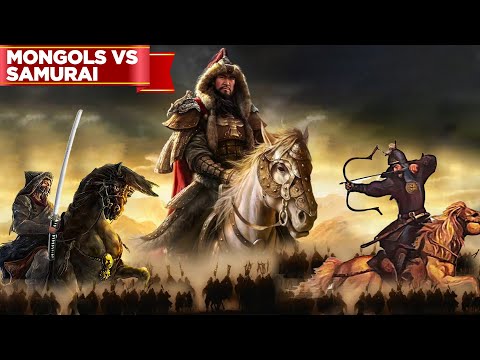
The samurai fought according to the ancient code of Bushido, a strict set of principles that dictated their behavior both on and off the battlefield. This code emphasized individual honor, often leading to a ritualized form of combat where two armies would meet, and a single warrior from each side would step out to engage in one-on-one combat. The Mongols, however, had no time or respect for such traditions. They attacked in tight, coordinated battalions of cavalry and infantry, a shock to the Japanese. When a samurai warrior bravely stepped forward to declare himself and await his opponent, the Mongols simply responded with a barrage of arrows, charging past the now deceased or wounded soldier and into the stunned samurai ranks. They were not playing by the rules, and it was a brutal awakening for the Japanese.
The Mongol advantage extended far beyond their numbers and unconventional tactics. They possessed superior weaponry, including gunpowder projectiles that they flung with catapults into the Japanese ranks, causing widespread devastation and psychological terror. They also utilized poison-tipped arrows and longbows that boasted twice the range of the samurai archers. Despite these overwhelming disadvantages, the samurai, with their legendary superior swords and protective armor, managed to hold out for a time, displaying their characteristic resilience. Much of what we know about this first clash, known as the Battle of Bun'ei, comes from the detailed account of a Japanese samurai named Takazaki Suenaga.
The Mongols, however, had no time or respect for such traditions. They attacked in tight, coordinated battalions of cavalry and infantry, a shock to the Japanese. When a samurai warrior bravely stepped forward to declare himself and await his opponent, the Mongols simply responded with a barrage of arrows, charging past the now deceased or wounded soldier and into the stunned samurai ranks.
The Winds of Heaven
As recounted by Suenaga, the samurai, though broken and battered, managed to retreat to safety under the cover of night. But their salvation was not to come from their own efforts. As heavy rain and fierce winds began to sweep across the coast, the Mongol commanders grew increasingly worried about their ships running aground. In a tactical decision that would prove to be their greatest mistake, they ordered their fleet to retreat into open waters, seeking safety from the tempest. It was here that they were met by a truly massive typhoon.
The storm was catastrophic. By some accounts, more than a third of the Mongol ships ended up at the bottom of the Pacific, taking with them some 13,000 troops. This extraordinary event was immediately seized upon by the Japanese as a divine intervention, a miraculous act of protection from the gods. They named these "divine winds" kamikaze, a term that would become legendary in Japanese history, mythologized to the point where separating fact from fable became a monumental task. The Mongols, reeling from this devastating natural disaster, had no choice but to retreat back to Korea to regroup and plan for a future attempt.
In the aftermath of the first invasion, the Japanese were under no illusions. They knew Kublai Khan would return, and they used the intervening years to prepare. Their primary defensive measure was the construction of a formidable 12-mile-long stone wall around Hakata Bay, the very site of their near defeat in the Battle of Bun'ei. This immense fortification was a testament to their resolve and their understanding that traditional samurai tactics alone would not suffice against the Mongol war machine.
A Wall, a Ministry, and a Second Reckoning
Kublai Khan, ever persistent, made a second attempt at diplomacy in 1276, sending another group of ambassadors to Japan to negotiate terms. Shogun Tokimune, having learned nothing but contempt for Mongol overtures, was even less impressed this time around. He had the messengers executed, a clear and unambiguous statement of defiance. Three years later, Kublai tried again, and once more, his emissaries were forced to part ways with their lives. The message was clear: Japan would not bow. In response, Kublai, demonstrating his unwavering determination, established a dedicated government division: the Ministry for Conquering Japan. Diplomacy was officially over; it was time for another crack at the island nation.
In 1281, the Mongols launched their second, even larger invasion fleet from the Korean peninsula. This time, their armada was truly colossal, boasting upwards of 4,000 ships and an estimated 140,000 soldiers. But the Japanese were ready. They had assembled an army of nearly 40,000, and their defensive walls around Hakata Bay were well-fortified. When the Mongols entered the bay for the second time, the battle was far more evenly matched, at least initially. The Mongol armada was still waiting for its main fleet to arrive, but elements of it attacked anyway.
The Mongols found themselves unable to breach the newly constructed walls. The Japanese, meanwhile, employed audacious guerilla tactics. Samurai warriors would sneak out in small boats under the cover of darkness, launching daring raids to set fire to many Mongol ships. This constant harassment, combined with the impenetrable defenses, stalled the invasion. Eventually, the full Mongol reinforcements arrived, presenting the Japanese with an invading army more than three times their size. Defeat seemed imminent once again, but then, history repeated itself in the most improbable way.
The Way of the Warrior
The samurai mentality, deeply intertwined with Bushido, was far more than just a set of battlefield tactics. It was a comprehensive ethical framework that dictated every aspect of a samurai's life. Values such as frugality, righteousness, courage, benevolence, respect, sincerity, honor, loyalty, and self-control were not merely aspirations; they were foundational pillars of existence. While Buddhism was the prevalent religion in Japan at the time, Bushido operated as an ethical code, distinct from religious dogma.
Interestingly, despite their adherence to these noble virtues, samurai often believed they were doomed to Jigoku, the Japanese version of hell. This grim conviction stemmed from their very profession: they were trained to fight and end the lives of those who opposed them, an act that ran contrary to certain Buddhist principles. This paradoxical existence fostered a unique Zen Buddhist state of mind, one where samurai were said to be utterly unafraid of death. Overcoming the fear of death was a core Zen Buddhist practice, and for the samurai, it manifested as what they called the "divine shield." This mental fortitude made them truly formidable warriors, completely committed to their craft, which was seen as an art form as much as a martial discipline. The ideal of the "warrior poet," an educated, disciplined, and noble fighter, was highly revered.
The samurai mentality, deeply intertwined with Bushido, was far more than just a set of battlefield tactics. It was a comprehensive ethical framework that dictated every aspect of a samurai's life. Values such as frugality, righteousness, courage, benevolence, respect, sincerity, honor, loyalty, and self-control were not merely aspirations; they were foundational pillars of existence.
The Mongol War Machine: From Steppe to Sea
Shortly after the Kamakura Shogunate rose to power in Japan, a different kind of power was sweeping across Asia and Eastern Europe. From the vast Mongolian steppe, Genghis Khan had forged a war machine unlike any in history. By his death in 1227, the Mongols controlled most of northern and central Asia. His grandson, Kublai Khan, took this legacy even further, conquering more lands in the east and eventually subjugating the once-great Song Dynasty.
When most people picture the Mongols, they envision fierce horsemen thundering across endless plains. Horses were, indeed, central to Mongol life; children were said to have learned to ride before they could walk, a testament to their profound equestrian culture. However, few associate the Mongols with seafaring prowess. This perception changed dramatically when Kublai Khan conquered the Song Dynasty. In doing so, he gained control of their impressive naval fleet. This, combined with the subsequent subjugation of Korea, suddenly gave the Mongols arguably the most powerful navy in the world at the time.
The Mongols were remarkably adept at incorporating conquered peoples into their empire. They practiced religious tolerance and recognized the immense usefulness of integrating skilled individuals from newly acquired territories back into their society. As a result, many Song and Korean generals, sailors, and shipbuilders ended up switching allegiance to the Mongol side. By the time Kublai Khan set his sights on Japan, his navy boasted thousands of vessels, many of which were either built by these defected Song boat builders or had been taken by force during the Mongol conquest of the dynasty. This formidable, multi-ethnic naval force was the spearhead of Kublai's ambition to conquer Japan, an ambition that ultimately proved futile against the combined might of Japanese resolve and nature's fury.
Legacy of the Divine Wind
The Japanese were saved a second time by the divine winds. Another typhoon, even more devastating than the first, blew through the island, utterly destroying the Mongol fleet. In the end, only a few hundred ships were able to remain afloat. Khan's armada was shattered, and any survivors who managed to make it ashore were systematically taken out by the waiting samurai. The Mongols were once again forced to flee, their tails between their legs, victims of what the Japanese unequivocally viewed as the wrath of the gods.
The two kamikaze winds that miraculously saved Japan from the Mongols attained legendary status within the nation. For centuries to come, warriors would draw strength and inspiration from this incredible story of divine protection. While the Mongol Empire would eventually splinter over the next century, the Japanese shogunates would persist for hundreds of years, their sovereignty secured by an act of nature that entered the realm of myth. The tales of these invasions offer a stark reminder that even the most formidable empires can be undone by factors beyond their control, and that history is far wilder, and often far more improbable, than any textbook might suggest.