Imagine a war where the enemy wasn't just the soldier across the wire, but the very ground beneath your feet, the air you breathed, and even your own mind. World War I, often sanitized in textbooks, was a conflict of unprecedented industrial horror, where shiny new automatic weaponry met outdated tactics, creating a maelstrom that claimed an estimated 20 million lives. It was a brutal crucible where men lived like animals, gas turned lungs into fluid, and the unseen wounds of the mind were often punished with a firing squad. This wasn't just a battle of nations, it was a war against humanity itself, fought in conditions so grotesque they defy easy comprehension.
The Unbearable Intimacy of Hell: Life in the Trenches
To truly grasp the nightmare of World War I, one must first understand the trenches. Picture a game of Tetris, but instead of falling blocks, imagine bodies, piling up, higher and higher, in muddy holes under constant artillery bombardment. This grim analogy only begins to scratch the surface of the reality. German veteran Ernst Jünger put it bluntly: "Trench fighting is the bloodiest, wildest, most brutal of all... no mercy there, no going back."
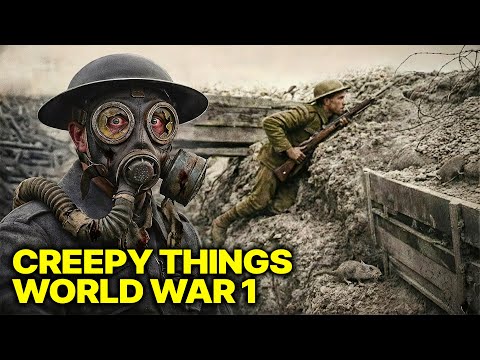
These weren't meant to be permanent fixtures. In early 1914, both sides dug shallow ditches, expecting swift advances. French and British soldiers believed they would move on within days. However, the advent of automatic weaponry and devastating artillery fire made standing upright a death sentence. Those temporary cuts in the earth hardened into permanent, labyrinthine positions, trapping men in a constant state of siege. British officer and poet Robert Graves described these trenches as places where men lived like animals, eating, sleeping, and waiting underground for weeks at a time. Relief was irregular, privacy was nonexistent, and the ground itself became home, a claustrophobic, unsanitary prison.
In regions like Flanders, the water table sat just below the surface, meaning trenches flooded constantly. Men often slept sitting or standing to avoid drowning in the foul water. Shelling, a relentless terror, collapsed trench walls without warning, burying soldiers alive. Survivors dug frantically, knowing that mere minutes could mean the difference between rescue and suffocation. It was a constant battle against the elements, the enemy, and the very earth itself.
A Menagerie of Misery: Rats, Lice, and Lingering Death
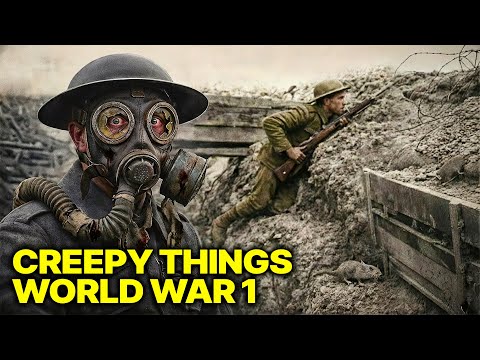
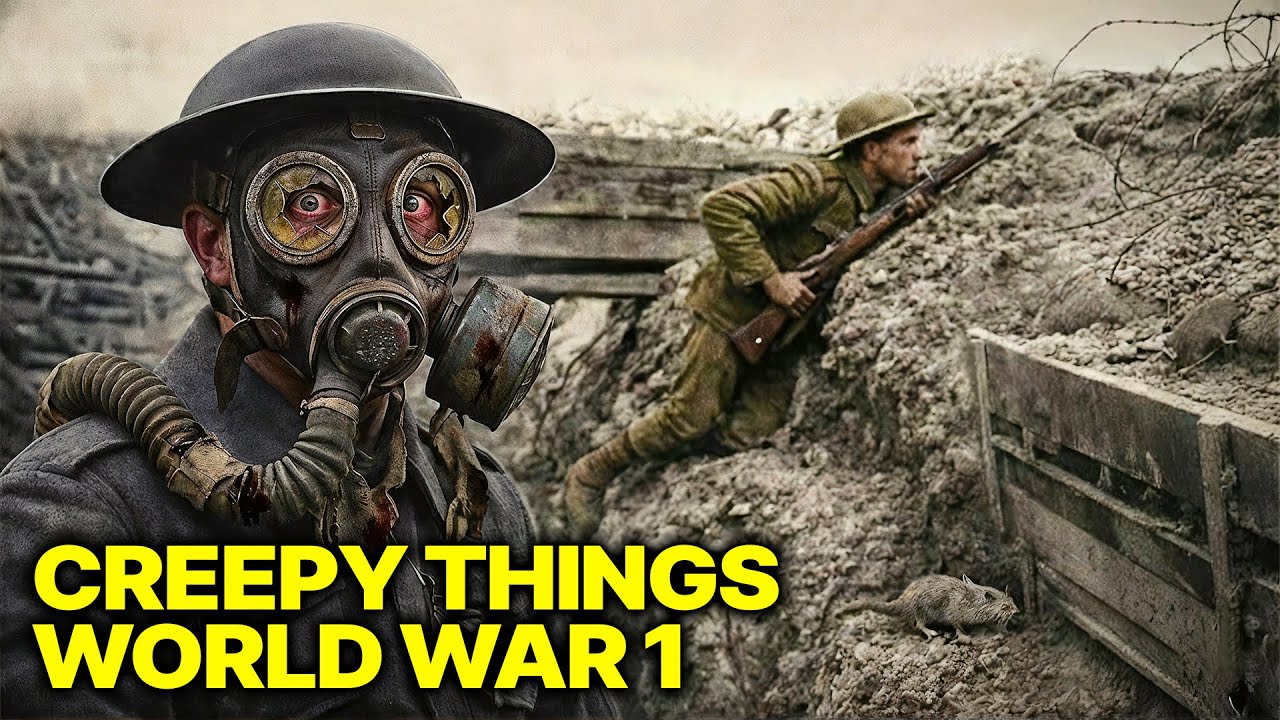
Beyond the immediate threat of enemy fire, the trenches teemed with biological horrors. Rats, emboldened by the abundance of food, were everywhere. It is quite possible there were more of them in the trenches than there were soldiers. They fed on rations and, more disturbingly, on the decomposing bodies of the fallen, growing to enormous sizes, some described as big as cats or even small dogs. Soldiers, in desperate attempts to maintain some semblance of control or simply for sport, would try to execute them between bombardments, but their numbers never made a dent.
Disease spread through these cramped, unsanitary conditions with terrifying speed. Dysentery and infection ran rampant, claiming millions of lives without a single bullet or shell ever touching them. Without antibiotics, even the smallest wound could turn fatal. Then there was trench fever, a louse-borne illness that caused fever, severe pain, and profound exhaustion. This debilitating condition affected hundreds of thousands of soldiers on the Western Front, with the Allies alone recording about 800,000 cases, often leaving men incapacitated for weeks or even months.
Perhaps the most infamous of these ailments was trench foot, a ghastly condition caused by prolonged exposure to cold and wet conditions. Winter temperatures on the Western Front hovered around freezing, often dipping below zero. Tissue would expire, leading to gangrene. Inspections became a routine, if horrifying, part of daily life. Severe cases often ended in amputation, a desperate measure to save a life. For some, losing a foot became the only conceivable exit from the endless misery of the front lines.
"It is quite possible there were more of them in the trenches than there were soldiers."
When Technology Outran Tactics: The Industrial Slaughterhouse
Imagine trying to attach a jet engine to a flimsy wooden biplane built by the Wright brothers. The moment the ignition switch is flicked, that jet engine would tear through the frame, likely causing an immediate explosion. This absurd scenario perfectly illustrates the core technological mismatch of World War I. The "jet engine" was the terrifying new weapons technology, and the "wooden biplane" was the outdated military tactics employed by European armies.
These armies entered the war expecting movement, short engagements, and advances measured in miles. Instead, modern artillery and automatic weapons transformed battlefields into vast slaughter zones, halting movement almost immediately. British officer Harold Macmillan, later Prime Minister, wrote home describing a battlefield that looked eerily empty, even as hundreds of thousands of men lurked underground, firing at enemies they never saw. This new reality reshaped everything about combat.
Automatic weaponry was particularly devastating. Weapons like the German MG08 and the British Vickers machine guns could fire hundreds of rounds per minute. Entire attacking units were cut down in seconds, often before they could even reach the midpoint between their own trenches and the enemy's. This sheer volume of fire created an impenetrable curtain of death, rendering traditional charges and frontal assaults suicidal. The industrial scale of killing had arrived, and military doctrine simply hadn't caught up.
The Charnel Ground: Navigating No Man's Land
The strip of ground between opposing trenches earned a chilling moniker: No Man's Land. The term spread in late 1914, describing an area no army truly controlled, a terrifying expanse of pulverized earth and discarded bodies. Scholar Fran Breerton painted a vivid picture of its horrors: men drowning in shell holes already filled with decaying flesh, wounded men beyond help from behind the wire, dying over a number of days, their cries audible and often unbearable to those in the trenches.
Crossing No Man's Land meant exposure to every imaginable horror simultaneously: automatic machine gun fire, artillery bursts, mortars, riflemen, razor-sharp barbed wire, and sometimes, poison gas. The ground itself was a treacherous obstacle course, uneven, cratered by shellfire, and slick with mud. Men who were hit often stayed where they fell, unable to move forward or back, left to die slowly in the open. Stretcher bearers, in their desperate attempts to retrieve the wounded, faced the same relentless fire, making their missions incredibly perilous.
The legacy of No Man's Land endures even today. In places like Verdun in northeast France, that ground remains dangerous. Entire zones are sealed off because unexploded shells and chemical residue still sit beneath the soil, silent reminders of the cataclysm that unfolded there a century ago.
The Silent Killer: A New Era of Chemical Horror
Imagine sitting in a cafe, smelling a faint aroma of hay. It doesn't seem threatening, but then your friends start writhing in pain, gasping for air, and you feel like you're drowning. This was the terrifying reality of phosphine gas, the deadliest chemical weapon used in World War I. Soldiers often felt fine after exposure, only to literally drown hours later as their lungs filled with fluid. All told, some 1.3 million people died from chemical gas in the war, with phosphine responsible for the majority of those deaths.
World War I was the first conflict where chemical weapons were deployed on a mass scale, and no one was prepared. The first large-scale gas attack occurred on April 22, 1915, near Ypres, when German forces released chlorine gas against French and colonial troops. Survivors described a green cloud rolling across the ground, followed by choking, burning eyes, and collapse. Thousands fled their trenches in panic, creating a gaping hole in the Allied line that stretched for miles.
The program behind these horrific attacks was led by a German chemist named Fritz Haber, who believed gas could break morale faster than artillery. He adapted industrial chemicals for battlefield use. The irony of Haber's life is profound: he was responsible for the deaths of millions, while simultaneously developing nitrogen fixation, a process that made modern fertilizers possible and allowed us to feed millions. Without his method, large-scale agriculture, as we know it, would be impossible.
Early gas attacks came with no warning and no protection. Soldiers, desperate, pressed socks, rags, or cloths over their faces. Chlorine was soon followed by the aforementioned phosphine, introduced later in 1915. Two years later, in 1917, mustard gas entered the battlefield. While it killed fewer men than phosphine, it injured far more. It burned skin, blinded eyes, and lingered in soil and clothing for weeks. It didn't even need to be inhaled; men blistered where their uniforms touched their skin, and some took weeks to pass away.
"The irony of Haber's life is profound: he was responsible for the deaths of millions, while simultaneously developing nitrogen fixation, a process that made modern fertilizers possible and allowed us to feed millions."
Nurse Vera Britain, a British veteran, recorded the harrowing aftermath, describing soldiers with mustard-colored burns and blind eyes, all sticky and stuck together, always fighting for breath with voices of a mere whisper, saying that their throats were closing and they knew they would choke. Gas truly changed how soldiers experienced the front. Shells could be heard, but gas arrived quietly, insidiously. Alarms, drills, and masks turned the primal act of breathing into a conscious, terrifying effort, and panic often spread faster than the clouds themselves.
The Unseen Wounds: Shell Shock and the Price of "Cowardice"
Imagine a truck driver in a dystopian wasteland who survives a horrific accident without visible injury, but afterward, his hands shake, loud noises make him flinch, and he cannot sleep. When his boss demands he drive again and he refuses, he is accused of faking it and executed. This chilling scenario is not far from the reality faced by soldiers suffering from shell shock in World War I.
Today, we call this post-traumatic stress disorder, or PTSD. During World War II, it was known as battle fatigue. But during World War I, there was no agreement on what it was. By late 1914 and early 1915, armies began encountering soldiers who were physically unharmed, yet utterly unable to function. Men trembled uncontrollably, some couldn't speak, others froze in place, unable to move or respond to orders. Doctors and officers had no shared language for what they were witnessing. British non-commissioned officer Frederick Holmes described watching a man crying and shaking like an aspen while waiting to be evacuated. Others recalled soldiers standing on the firestep after bombardments, staring forward, unresponsive, even when spoken to directly.
Medical responses varied wildly. Some doctors believed shell shock was a neurological injury caused by blast waves. Others treated it as a weakness, a lack of discipline, or even malingering. Treatment ranged from rest and evacuation to brutal electric shock therapy, intended to force men back into functioning. Military leadership often framed breakdown as a failure of character. Soldiers who couldn't return to the line risked being charged with cowardice or malingering, crimes that carried the gravest penalties.
The Tragic End of Harry Farr: A Pardon Too Late
Harry Farr, a private in the West Yorkshire Regiment, became a tragic symbol of this brutal misunderstanding. Farr had been hospitalized multiple times in 1915 and 1916 for shell shock. Medical records explicitly noted his trembling, panic, and an inability to function under shellfire. Yet, despite these clear signs of distress, he was repeatedly sent back to his unit. Each return to the front was followed by another collapse.
In September 1916, with preparations underway for the horrific Battle of the Somme, Farr was once again ordered back to the front. He refused. Witnesses later described him shaking uncontrollably, utterly unable to master his movements. He was arrested and charged with cowardice. At his court-martial, Farr had no legal representation, a fundamental injustice. Medical testimony about his prior hospitalizations and clear mental distress was not meaningfully considered. The panel, in a shocking display of ignorance and callousness, declared him mentally fit for duty.
Harry Farr was then sentenced to death and executed by firing squad on October 18, 1916. He was just 25 years old. His widow was subsequently denied a pension, and his family carried the crushing stigma of his "cowardice" for decades. It wasn't until 2006 that the British government, in a belated act of recognition, issued a posthumous pardon to Farr, along with 305 other soldiers executed under similar, horrific circumstances. But for Harry Farr and his family, the damage was, of course, irrevocably done.
World War I was a brutal, industrial-scale nightmare that reshaped warfare and human understanding of suffering. The horrors of the trenches, the silent terror of chemical weapons, and the tragic misunderstanding of shell shock reveal a conflict far more complex, gruesome, and profoundly human than any textbook could convey. It was a war where the line between sanity and madness, courage and collapse, life and an agonizing death, was terrifyingly thin, proving that history is always nuttier, filthier, and weirder than we're ever taught.