Forget everything your high school history teacher told you about the Korean War, because the true story involves more chemical compounds than combat strategy. While textbooks focus on geopolitical chess matches and frozen foxholes, the reality on the ground was a pharmaceutical free-for-all. American soldiers, caught in an alien, hostile environment, were not just fighting communism, they were fighting dependence, anxiety, and paranoia, often fueled by the very drugs their own government supplied. This wasn't a war of clean heroics; it was a gritty, chemically altered odyssey that reshaped not only individual lives but the very fabric of American society, all while a future president, who would later wage a "War on Drugs," was busy narrating propaganda. The story of what happened when the US military turned its troops into speed demons is far wilder, and far more unsettling, than any official account.
The War Machine's Chemical Precedent
The seeds of America's drug crisis were sown long before the first shots were fired in Korea. During the Second World War, the US Army had already embraced pharmaceuticals as a force multiplier. They purchased and issued an astonishing $877,000 worth of bennies and pep pills, distributing them among approximately 12 million soldiers. This mass dispensation led to widespread substance dependence among the troops. When these veterans returned home, they found that their wartime crutches, often amphetamines, were readily available over the counter, disguised as asthma inhalers and antidepressants. This created a burgeoning drug problem, not of cartel-fueled smuggling, but one born from within American society itself, nurtured by a military industrial complex that saw pills as a legitimate tool of war.
The stage was set for the next major conflict. The Americans who fought in Korea were largely a cross-section of healthy males aged 19 to 24, well trained and well armed. Yet, they stepped into a conflict where the lines between military necessity and devastating addiction blurred almost immediately. The irony of this chemical dependency is underscored by the voice that once narrated a 1959 propaganda film about these very soldiers: Ronald Reagan. The same Ronald Reagan who, decades later, would escalate the "War on Drugs" during his presidency, unknowingly presided over a military culture that had, for years, normalized and even encouraged drug use among its fighting men.
The Pill-Popping Front Line
The Korean War saw an unprecedented surge in military-sanctioned drug use, creating a generation of chemically reliant soldiers. Data compiled by the US Army's Research Institute for the Behavioral and Social Sciences, based on self-reports, paints a stark picture, and it's worth remembering that self-reports likely significantly *undercount* the true extent of the problem. Even with this conservative metric, 15 percent of soldiers confessed to consuming speed pills. Hallucinogens, barbiturates (affectionately known as "goofballs"), and opiates also featured prominently on this disturbing list. Another report suggested that it was "very likely" that one out of every four US soldiers participating in the Korean War acquired and abused speed pills illegally.
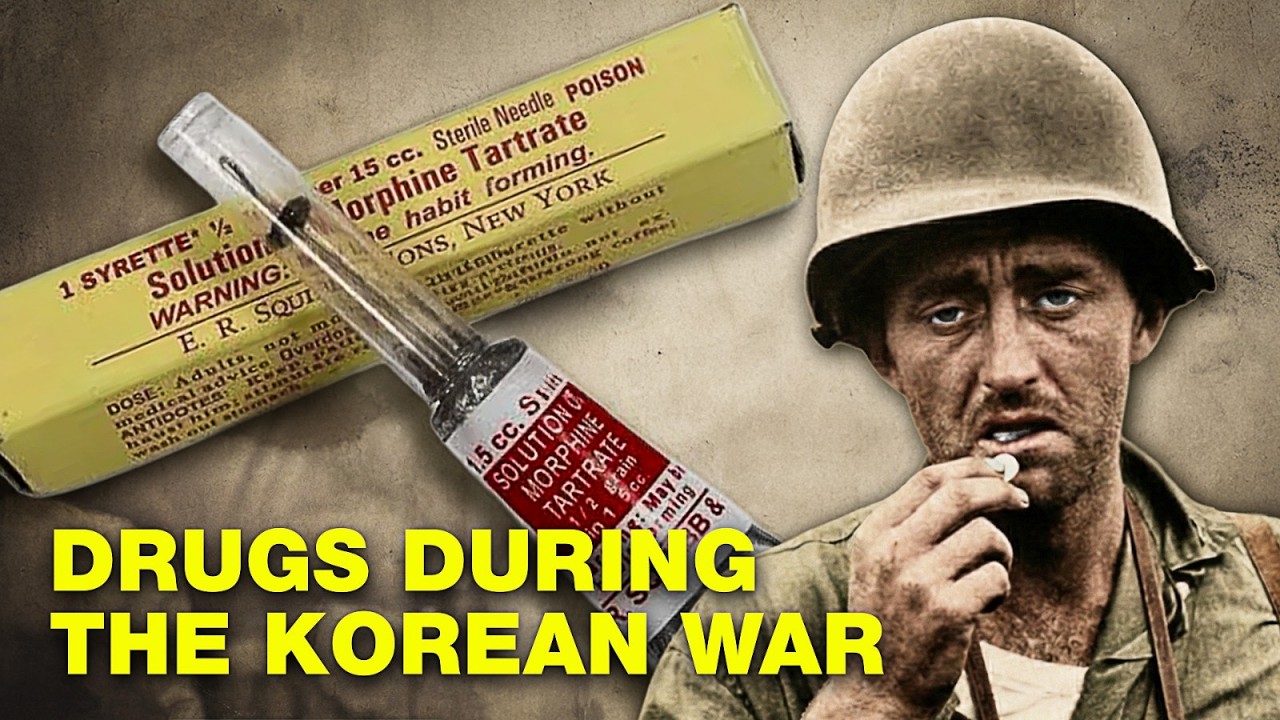
But the most staggering figure reveals the military's own complicity: the American Army itself issued a mind-boggling 225 million doses of what were euphemistically called "thrill pills" during the conflict. A veteran, speaking to former Esquire war correspondent Michael Herr, recounted that despite 20 milligrams being the recommended dosage for 48 hours of combat readiness, speed was handed out to combatants "like it was candy." The reason for this insatiable demand was simple: dependence. Stimulants like "Colombian snow," speed, "smack," and "crank" offered a temporary rush, but came with a heavy price: anxiety, high blood pressure, irregular heartbeats, and crippling paranoia. Soldiers were caught in a vicious cycle, pushed to ingest uppers to maintain their ferocity, only to find themselves desperate for relief from the inevitable side effects.
The American Army itself issued a mind-boggling 225 million doses of what were euphemistically called "thrill pills" during the conflict.
The Deadly Dance of Uppers and Downers
Faced with the relentless physical and psychological toll of combat and the gnawing side effects of their prescribed stimulants, soldiers in Korea desperately sought a countermeasure. They turned to an old practice, a dangerous cocktail known as the "speedball." The concept wasn't new, tracing its origins back to the First World War, where medics mixed "Colombian snow" (cocaine) with morphine to manage pain without inducing the debilitating drowsiness or lethargy that might compromise a soldier's combat effectiveness. After the Great War, this potent concoction migrated from the battlefield to civilian life, finding its way into the glamorous, yet often tragic, circles of Hollywood and the American music industry. Celebrities like Judy Garland and Elvis Presley were known addicts, and in more recent years, this lethal combination has claimed the lives of John Belushi, Chris Farley, River Phoenix, and Philip Seymour Hoffman, to name but a few of its famous victims.
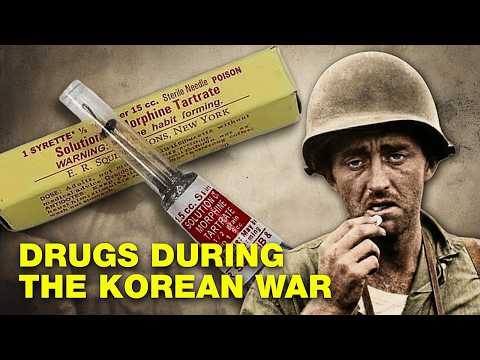
In Korea, soldiers improvised their own variations of the speedball. One popular version was called "the splash," a potent mix of amp pills and "China white" (a form of heroin). When their supply of amphetamines dwindled, the ingenuity, or desperation, of the troops led them to unexpected sources. The Japanese Army, it turned out, had a substantial stash of crack cocaine left over from the Second World War, and they were more than happy to share it with the G.I. Joes, even teaching them how to "cook" it. Other illegal drugs were acquired through Chinese and Japanese drug peddlers, and notoriously, through brothels. The US Army high command, recognizing the dual threat, attempted to eradicate as many brothels as possible, fearing not only the spread of venereal disease but also that soldiers might be lured towards communism through narcotics and "bodily pleasures." Some soldiers even reported trying to recreate the original speedball formula, mixing "China white" with "Colombian snow," but found the resulting high nowhere near as potent as the speed plus "China white" combination. Speed's effects were more long-lasting, and crucially, it was often available for free from the camp infirmary, creating a perverse incentive structure.
The critical question, of course, is: did any of this work? The blunt answer is a resounding "no, no, it did not." The notion that mixing uppers with downers could somehow cancel out each other's negative effects was a dangerous placebo. In reality, these cocktails only exacerbated each other's dangerous side effects. An upper would invariably outlast a downer by a significant margin, creating a perilous imbalance. Furthermore, while stimulants would make a person's heart pump faster, depressants would slow down their respiratory system. This meant the heart was forced to work harder with less oxygen, an unsustainable condition that could, and often did, lead to physiological breakdown. The true human cost of this chemical experiment remains unknown, as there is no available data on how many deaths from such substance abuse occurred during the Korean War. This lack of data, perhaps not coincidentally, ties directly into the reasons why speed pills were standard issue in the first place.
A Lie Wrapped in a Pill
To understand the military's embrace of amphetamines, we must look further back, to the dark days of the Second World War. It's no secret that a severely addicted German dictator, Adolf Hitler, fueled his fascist ambitions with drugs. While the atomic bomb represented one revelation of the war, another, equally profound, was how drugs and pills pushed every single mission on both sides. In the book Killer High, A History of War in Six Drugs, the British first learned of Germany's chemical warfare advantage when they captured a German pilot carrying either Pervitin tablets or Fliegerschokolade (pilot's chocolate), both amphetamine-based stimulants. The Allies had to develop their own response to this chemically assisted warfare, and they didn't have to search far.
Just as Pervitin was sold over the counter in Germany, "bennies," or Benzedrine, were popular inhalers and tablets in the West. Benzedrine inhalers, containing 325 milligrams of oily amphetamine base, topped sales charts in the US. They offered no real benefit to asthma patients, but they certainly made them "feel great." In 1937, the manufacturer, SKF (Smith, Kline & French), rebranded bennies as an antidepressant tablet, further embedding them into the civilian pharmaceutical landscape. After the widespread abuse of bennies and pep pills during the Second World War, the US, much like Germany with Pervitin, recognized the "ill effects" of speed. However, unlike the Germans, who eventually conceded the backfiring effects of Pervitin, Americans had no plans to slow down on their reliance on speed. Instead, the US Army tasked SKF with finding a "solution" to the problem of speed's side effects. SKF responded with a new amphetamine salts-based pill called Dexedrine, commonly known as "dexies." SKF audaciously claimed that Dexedrine was "free of any and all side effects of speed." As the pills were issued during the Korean War, it became "obviously evident" that this claim was a blatant lie.
SKF audaciously claimed that Dexedrine was "free of any and all side effects of speed." As the pills were issued during the Korean War, it became "obviously evident" that this claim was a blatant lie.
The Unseen Casualties
The aftermath of the Korean War brought another layer of betrayal for the soldiers who had fought it. Because the American government refused to recognize the Korean conflict as a "proper war," returning veterans were often denied the benefits and support they desperately needed. This institutional neglect pushed many back into the arms of substance abuse. Between the Second World War and the Korean War, "dexies" had already surged in American markets, marketed as antidepressants and weight loss pills. One notable competitor was Obertrol, a French weight loss pill, which could be considered the "Ozempic of the 1950s." What made Obertrol particularly dangerous was that it was primarily composed of speed salts with only a dash of other ingredients, ensuring a powerful, addictive kick. For substance-dependent veterans, there was no shortage of choices in post-Korean War America.
Their need to return to speed was starkly reflected in sales figures. Dexy sales doubled in the two years following the war, crossing the 10 million milestone. Recognizing another lucrative market, SKF also created Dexamil, a blend of D-amphetamine and barbiturate, specifically marketed for "dealing with daily mental and emotional distress." This became incredibly popular among veterans who had become addicted to speedball variants during their service. The scale of this chemical dependency is truly staggering: according to FDA manufacturer surveys, by 1962, US production reached an estimated 80,000 kilograms of amphetamine salts. This corresponded to the consumption of 43 standard 10-milligram doses per person per year on a total population basis. Many addicted veterans who sought help from doctors were, thanks to aggressive marketing tactics by the American Medical Association (AMA) and SKF, prescribed even more uppers and downers instead of genuine therapeutic support. Injectable "crank" became one popular, and devastating, method of treating ex-servicemen and other addicts.
The Aftermath: A Nation Hooked
The consequences of this chemically-fueled conflict rippled far beyond the battlefields of Korea, embedding themselves deeply into American society. The San Francisco Bay Area, in particular, became an epicenter of the burgeoning epidemic. Veterans themselves, with their newfound chemical expertise, were instrumental in manufacturing "crank." It was a vicious cycle of supply and demand, often facilitated by a lax medical and pharmaceutical landscape. Several pharmacies in San Francisco were notorious for selling injectable speed, specifically Methedrine, without a prescription. This created a self-perpetuating cycle of abuse that would affect generations to come, leaving a lasting legacy of addiction and societal cost. The very soldiers who were meant to defend the nation became unwitting vectors for a drug crisis that would plague America for decades.
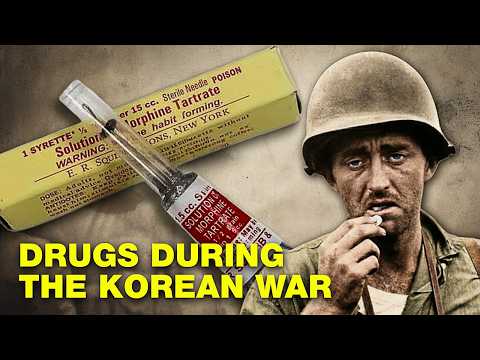
The story of drugs in the Korean War is a stark reminder that history is rarely as clean or straightforward as textbooks suggest. It was a period where military necessity, corporate ambition, and human desperation converged in a toxic chemical brew. The veterans, often denied the recognition and support they deserved, carried the invisible wounds of addiction home, only to find a society ill-equipped, and at times complicit, in their continued struggle. This wasn't just a war fought with bullets and bombs, but with bennies, dexies, and crack, leaving a legacy far more complex and devastating than any official narrative could ever capture. History, as always, was far nuttier, filthier, and more profoundly weird than you were ever taught.