The Renaissance, a period often lauded as Europe's grand awakening, was a paradox of unprecedented genius entwined with staggering, self-inflicted stupidity. While cathedrals pierced the sky and masterpieces bloomed from humble canvases, the continent was simultaneously drowning in preventable disasters born of ego, superstition, and an almost pathological refusal to engage with reality. Kings thought they were scientists, scientists thought they were gods, and the church thought it could sell both, creating a volatile cocktail where every visionary came with a body count and every great idea was wrapped in a thick layer of delusion. This wasn't merely a rebirth, it was a grand, continent-spanning experiment in what happens when faith meets unchecked power, and civilization trips over its own brilliance.
The Teenager Who Unleashed Syphilis
Our journey into Renaissance brain malfunction begins in 1494 with Charles VIII, a 24-year-old boy king of France who mistook divine destiny for a vacation itinerary. France was rich but restless, and Charles, who reportedly still needed help reading his own war plans, had one big idea: invade Italy. His motivation? A self-appointed mouthpiece of God in Florence, a monk named Girolamo Savonarola, had whispered that Charles was chosen to lead a holy crusade. To Charles, this wasn't politics, it was prophecy, and artillery was simply proof of God's favor. So, he gathered 40,000 men, packed his cannons, and marched south with the confidence of a teenager who's never been told no. His plan, if it could be called that, was simple: march from Lyon to Naples in 30 days, overthrow a king he'd never met, and then strut home immortal.
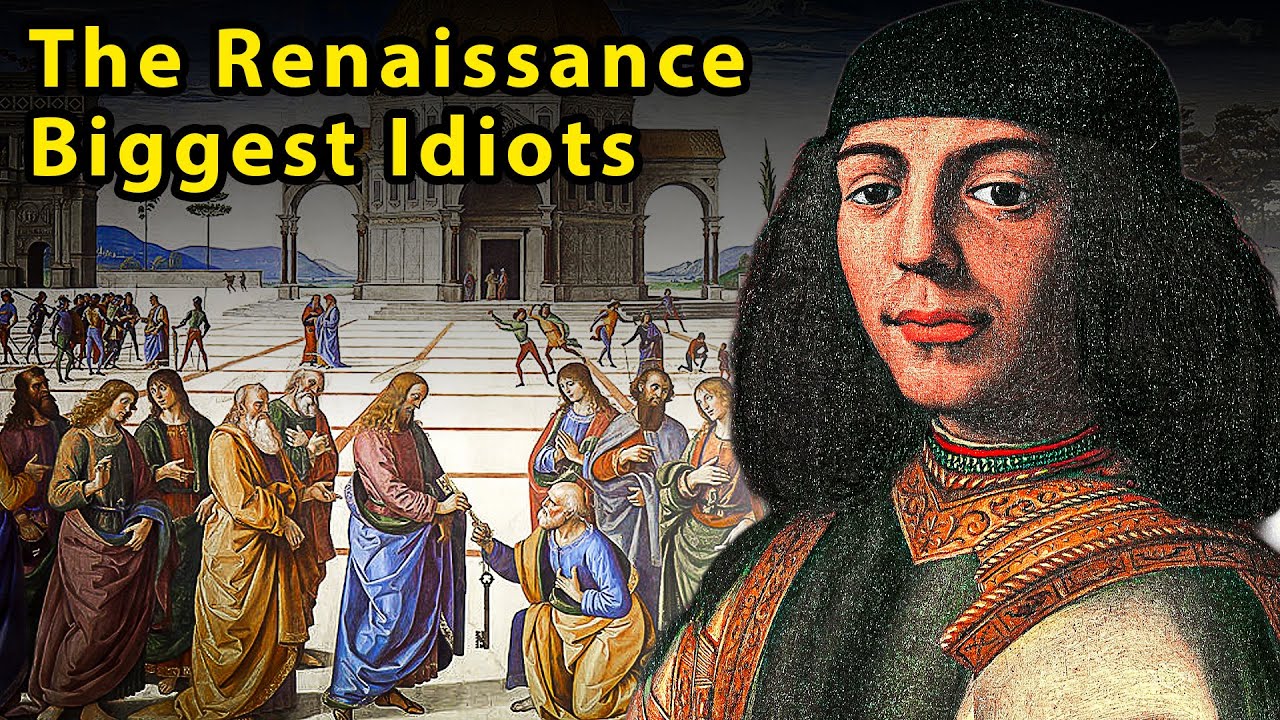
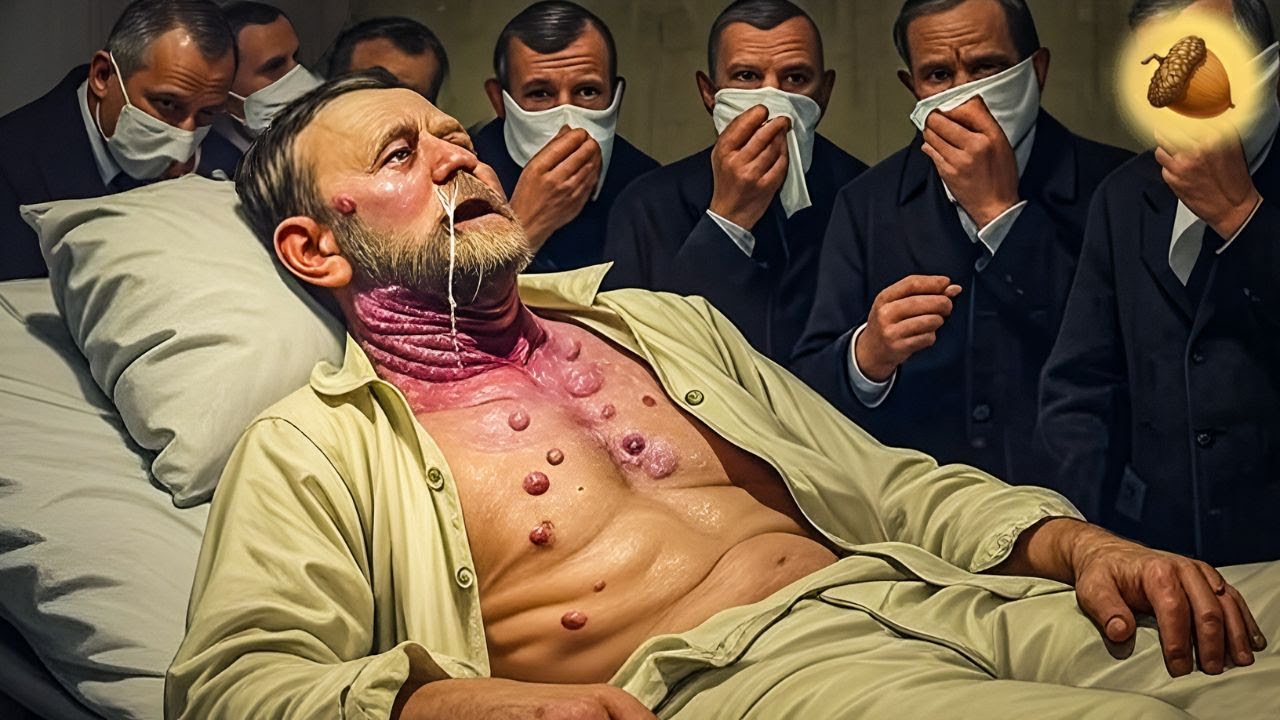
What could possibly go wrong? Everything. France already faced catastrophic money problems, its treasury bled dry by endless internal wars. Charles' invasion budget relied on borrowing so aggressive it made his bankers weep. He brought no proper supply chain, no winter provisions, and no real map of Italy. But God, he believed, was the quartermaster. By the time his army crossed into the Italian peninsula, it was less a crusade and more a plague parade. Unpaid mercenaries looted every town they passed, peasants fled, famine followed, and disease bloomed in the ranks. When Charles finally reached Naples, the city practically surrendered out of sheer exhaustion. His soldiers trashed the royal palace, stole everything not nailed down, and, just to ensure history would remember him, spread a brand new disease Europe had never seen before: syphilis. In his divine mission to save Christendom, Charles accidentally unleashed an STD that would ravage the continent for centuries. The irony, of course, is that he probably caught it himself.
By the time Charles limped home, his holy war had produced exactly one enduring legacy, and it was communicable. Financially, things were no better. The campaign cost an astounding 1.2 million lira, roughly the GDP of a mid-size kingdom, and yielded absolutely nothing. Within a year, every inch of Italian ground he'd seized was gone. Spain, the Papal States, and Milan united against him in what became the first of the Italian Wars, a conflict that would last 65 years, destroy tens of thousands of lives, and leave France broke for a generation. Contemporaries were not kind. Philippe de Commynes summed it up neatly: "The king returned with disease as his only conquest." Others just called him what he was, a fool who confused cannon fire for divine approval. He wanted immortality, he got infection. He sought empire, he sparked 65 years of continental bloodletting.
Pope Alexander VI: The Vatican's First Subscription Service
In 1492, while Columbus was sailing west, Rodrigo Borgia was busy buying the keys to heaven. The papal conclave that year was less a holy election and more of a Sotheby's auction with cassocks. Cardinals whispered bribes like traders on the floor, and Borgia outbid them all. By the time the smoke rose from the Sistine chimney, he'd spent around 5 million ducats to secure the throne of St. Peter. Once enthroned as Pope Alexander VI, he didn't so much shepherd his flock as fleece them. His philosophy was simple: the church exists to make the Borgias rich. Salvation became a subscription model, and sin now came with an upgrade fee. He sold indulgences to fund wars, mistresses, and marble palaces, transforming the Vatican treasury into a laundromat for the soul.
The numbers were staggering. Forgiveness of sins: 10 ducats. Appointment to bishop: 50 ducats. Command of Papal troops: negotiable. It was a spiritual pay-to-win system centuries before microtransactions, where Rome's cardinals lived like rockstars while peasants were told to buy their way out of purgatory. One chronicler described the Vatican as "a brothel disguised as a church." At the heart of this divine pyramid scheme was his golden boy, Cesare Borgia, commander of Papal armies, collector of titles, and the original nepotism success story. Cesare treated Italy like a chessboard soaked in blood, conquering towns and strangling rivals at dinner, allegedly. The entire campaign, from his troops to his banquet knives, was financed by indulgence money: every sin paid for another one. Meanwhile, Alexander threw parties that would have made Nero blush, which poets called "banquets of the damned." Rumors, again, allegedly, told of poison wine, disappearing guests, and orgies in the Vatican gardens. One thing was certain: faith attendance was at an all-time low.
Up north, the patience of the pious was snapping. German monks wrote furious letters about Rome's greed. Savonarola in Florence preached that the pope was the Antichrist in a silk robe. Alexander ignored them all, declaring that reform was for peasants. He had bigger concerns, like how to install his teenage son as a prince without triggering another crusade. But greed has a half-life. Less than 15 years after Alexander's coronation, a frustrated Augustinian monk named Martin Luther nailed his complaints to a church door. The Protestant Reformation, the single greatest crack in Christian unity, was, in part, a market correction for Papal corruption. You could say Borgia's indulgence campaign sold out faster than expected. To his credit, Alexander did modernize church administration, unfortunately, that meant turning graft into an efficient bureaucracy. His reforms streamlined bribery so neatly that the system functioned perfectly until it destroyed itself. When he died in 1503, some say poisoned by his own wine, Rome's moral hangover finally caught up. He wanted to make the church profitable; he succeeded. He also managed to bankrupt its soul.
In his divine mission to save Christendom, Charles accidentally unleashed an STD that would ravage the continent for centuries.
Rudolf II: The Emperor Who Drank Mercury for Enlightenment
While Rome sold grace by the ounce, an emperor in Prague was about to try manufacturing eternity from mercury. If you ever wondered what would happen if a monarch ran an empire like a chemistry experiment, look no further than Rudolf II of Habsburg, the man who mistook mercury poisoning for enlightenment. It's the late 1500s in Prague, Europe's center of learning, wealth, and now complete dysfunction. Rudolf's palace looked less like a seat of empire and more like a laboratory built by someone on the edge of a breakdown. You can imagine the smell: incense, candle wax, and liquid metal slowly killing everyone who inhaled it. While tax collectors vanished and peasants starved, their emperor was busy trying to turn lead into gold, and occasionally, himself into a god.
Rudolf had inherited the largest empire in Europe, with Spain, Austria, and Hungary all technically his. But rather than governing it, he locked himself in Prague Castle, built a personal museum of curiosities, and declared that science, or what he thought was science, would replace God. He hired every alchemist he could find: charlatans, mystics, astrologers, and at least three men who claimed to have found the philosopher's stone. The imperial payroll read like a carnival lineup. His philosophy was simple: knowledge equals control. He believed that if he could just understand nature deeply enough, he could command it. Gold, immortality, divine favor, they were all within reach, provided you didn't mind the occasional explosion. He spent an estimated 3 million gold ducats funding these experiments, roughly the cost of a small war, and arguably more destructive. Meanwhile, actual governments evaporated, armies went unpaid, and the treasury bled dry. Religious tensions between Catholics and Protestants boiled over as Rudolf refused to choose a side, and the empire began to rot from neglect. Prague became a city of debt collectors and astrologers waiting to get paid.
Among the few rational men on his payroll were astronomers Johannes Kepler and Tycho Brahe, brilliant minds forced to write desperate letters begging for their salaries. Kepler once complained that his patron was "consumed by demons of metal and fire." And he wasn't exaggerating. Rudolf personally handled mercury in his laboratory, inhaling fumes daily while mixing potions meant to grant eternal life. He also believed he could communicate with angels through mirrors. The result was less divine revelation and more psychotic breakdown. His advisers warned him that rebellion was brewing, and his own board begged him to name an heir before civil war erupted. Astrologers, of course, assured him everything would be fine, and he believed them all. In 1608, his own brother Matthias staged a coup and seized power without firing a shot. The empire had become so exhausted by Rudolf's experiments that no one bothered to defend him. By the time he died in 1612, half mad and likely riddled with mercury poisoning, Bohemia was economically paralyzed. Within a decade, his neglect and fanaticism had snowballed into the 30 Years' War, a conflict that would kill 8 million people. He wanted to master nature; instead, he demonstrated natural selection on an imperial scale.
Venice: The Empire That Banned Innovation
They say Venice built itself on innovation, which makes it all the more impressive that it later banned it. In the mid-1500s, the Venetian Senate decided that the best way to stay ahead of the world was to make sure no one else ever tried anything new. It's the kind of logic you'd expect from a jealous ex, not a maritime empire. The scene opens in candlelight. The lagoon's greatest patricians sit in rows of red robes, passing decrees about things they no longer understand. Behind them, the city that once invented banking, printing, and double-entry bookkeeping now smells of old salt and stagnation. "If it worked for our ancestors, it will work forever," became their national policy.
At the heart of it all was a belief so wrong it could have been written on a tombstone: monopoly equals mastery. Venice had spent centuries guarding its trade routes like state secrets. So when other nations began learning shipbuilding and navigation, the Senate doubled down. They granted lifetime monopolies on glassmaking, salt production, and overseas trade. If you weren't in the guild, you were out of luck, or worse, out of the city. Skilled artisans were literally forbidden from leaving under penalty of death. And what happens when you tell a generation of inventors they can't invent? They leave anyway. Smuggling became the new national industry. Glassmakers fled to France, engineers to the Netherlands, and pilots to Portugal. Within a generation, Venice, the empire of open seas, was reduced to chasing defectors across Europe.
The Senate tried to compensate by criminalizing innovation. In 1547, a decree was passed forbidding anyone from building new types of ships without prior approval, because heaven forbid progress be unsupervised. Meanwhile, the Dutch and English were doing exactly what Venice refused to do: experimenting. They built faster, wider, cheaper vessels, traded freely, and reinvested profits. By 1600, they were running circles around Venetian fleets. The once mighty arsenal, which had launched 100 galleys a year at its peak, was down to a trickle. Yet the senators kept patting themselves on the back for their stability, a delusion only bureaucrats can afford. And it wasn't just trade that suffered. The monopoly system infected every part of society. Knowledge became property. Scholars needed licenses to publish. Even maps were classified, because revealing geography was considered treason. When Galileo himself demonstrated his telescope to the Venetian Doge in 1609, the city rulers smiled, applauded, and then did absolutely nothing. Within a decade, the Dutch were mass-producing better versions and selling them back to Venice at a profit. By the mid-1600s, Venetian GDP had halved. Their colonies were gone, their navy obsolete, their merchants bankrupt. The city that once connected East and West had turned into a gilded museum of its own past, beautiful, irrelevant, and broke. They called it protectionism; history calls it self-extinction.
Savonarola: Florence's Fundamentalist Firestarter
He wanted to save Florence's soul, so he set fire to everything that made it worth saving. It's 1495. The Renaissance capital of the world hums with painters, poets, bankers, and sinners. Then in storms a Dominican friar named Girolamo Savonarola, who waved a crucifix like a weapon and yelled that God was about to nuke the city for vanity. And the worst part: everyone believed him. One minute, Botticelli's painting angels. The next, he's being told those same angels are pornographic. Savonarola wasn't just a preacher, he was an apocalypse influencer. His sermons packed the Duomo like a rock concert. He promised divine protection if Florence cleansed itself of sin, and divine fire if it did not. Within months, the entire city was running on fear. Merchants confessed their greed, lovers burned their poems, and tailors replaced silk with sackcloth. Florence, the birthplace of humanism, had become the world's first fundamentalist startup.
His philosophy was chillingly simple: moral purity equals survival. To achieve it, he created the Republic of God, a theocracy so strict that even smiling too much was suspicious. Gambling was outlawed, music censored, and art forbidden unless it glorified Christ, and even then, only if it wasn't too sexy. He recruited children as informants, little saints with big mouths to spy on their parents and rat out vanity. Florence became a city of whispers, fear, and bonfires. And speaking of bonfires, that's where things really got biblical. On February 7th, 1497, Savonarola organized what he called the Bonfire of the Vanities. His followers marched through the streets collecting anything sinful: paintings, mirrors, wigs, books, even lutes. They piled it all high in Piazza della Signoria and set it ablaze, smoke rising over the sky and landing on a civilized rebirth. Believe it or not, Botticelli himself, yes, the guy who painted The Birth of Venus, may have tossed in his own work. Imagine creating beauty that defines an era, then burning it because a monk told you to.
Economically, it was a master class in self-destruction. Florence's trade collapsed, luxury textiles evaporated, and the city treasury lost over half its revenue in a single year. Art dealers starved, workshops closed, and foreign diplomats described the once vibrant city as "a convent without joy." But Savonarola didn't flinch. To him, poverty was proof of holiness. If Florence was suffering, it meant God was paying attention. Eventually, the Pope did too, and not in a good way. Alexander VI, the Borgia Pope known for turning the Vatican into a family business, excommunicated him. That's when you know you've gone too far, when even Alexander VI thinks you're the problem. But Savonarola doubled down, calling the Pope the Antichrist and daring Rome to stop him. They did. In 1498, his own followers dragged him from his pulpit, tortured him, and hanged him in the same square where his bonfires had once burned. Then they set him on fire. He tried to purge sin with flames and ended up lighting his own pyre. Florence lost its art, its economy, and its sanity. Savonarola gained immortality as a man who mistook righteousness for kindling.
Paracelsus: The Alchemist Who Cured with Poison
He declared that medicine was trapped in the Dark Ages, then personally dragged it back there with a bucket of mercury. Meet Paracelsus, the self-anointed savior of science, and the only man who ever tried to cure people by poisoning himself first. In 1527, this Swiss-born alchemist stormed into Basel University, burned the medical textbooks of Galen and Avicenna in the courtyard, and announced that he alone had discovered the key to life: chemicals. "The dose makes the poison," he said, a slogan that sounds clever right up until you watch him swallow arsenic to prove it. To his credit, Paracelsus wasn't entirely wrong. Medicine at the time was a carnival of leeches, urine analysis, and astrology charts. But where others sought balance, he sought spectacle.
Instead of herbs and prayer, he prescribed mercury, lead, and sulfur as healing metals. His patients were told to sweat out their sins while their skin peeled like old parchment. When people began dropping dead, he explained that they'd simply been "purged too well." That's one way to interpret organ failure. He toured Europe like a mad prophet, railing against traditional doctors and selling miracle elixirs brewed in alembics. Cities that let him practice often regretted it. Records from Basel, Strasbourg, and Vienna show him leaving behind trails of unpaid rent, burned lecture halls, and suspicious funerals. Yet his legend spread. He was a martyr for scientific truth, a Renaissance influencer with a bottle of poison instead of a camera. One of his greatest hits came from his treatment for syphilis, that fashionable new disease imported from Charles VIII's army. While others used mild ointments, Paracelsus went for liquid mercury, rubbed on the skin or injected into the flesh. The idea was to drive out the corruption through sweat. What it actually did was liquefy people's gums and rot their teeth from the inside. Doctors called it a "silver death." He called it progress.
And here's where it gets tragicomic. His students adored him. They copied his experiments without the slightest idea of dosage, some replacing herbs with metals wholesale. By the 1540s, hospitals across Germany were reporting mass poisonings among patients and staff. One university ledger lists "death by remedy" as the second most common cause of mortality right after plague. That's one hell of a peer review. Still, Paracelsus saw himself as a visionary misunderstood by lesser minds. When a rival physician challenged him to debate, he threw a flask of urine at the man and left the city before the duel. He spent his final years wandering the Alps delirious, likely suffering from the very mercury fumes he prescribed to others. His autopsy showed his organs riddled with heavy metals. The man who promised eternal health died of his own medicine. He wanted to cure humanity of ignorance; instead, he proved that genius without restraint is stupidity with better marketing.
The man who ruled the world without leaving his desk had turned the greatest empire of the Renaissance into a bureaucratic corpse.
Philip II: The Bureaucrat Who Sank an Armada
He wanted to prove that God favored precision, so he built the world's most expensive shipwreck. Madrid, 1588. King Philip II of Spain, ruler of the largest empire on earth, sits in a palace he never leaves, pouring over maps of seas he never seen. Around him, secretaries wait for orders that must all be signed by him personally, because nothing says divine monarchy like checking every invoice yourself. You can imagine the mood: one part piety, two parts paperwork. Philip believed in two things above all: God and control. He didn't see much difference between them. He micromanaged everything: taxation, troop movements, ship design, even the uniforms of soldiers fighting thousands of miles away. His advisers called it the monarchia universalis; his critics just called it slow.
The problem with absolute control, of course, is that it doesn't scale, especially when your empire spans five continents. Messages from the Philippines took two years to reach him. He read them all, and by the time he approved responses, the situation had usually solved itself or exploded. And yet, in 1588, he decided to run a war by memo. His grand idea: launch the Spanish Armada, a fleet of 130 ships, 30,000 men, and one divine mandate to conquer Protestant England. The plan looked flawless on paper, which was exactly where it stayed. Philip refused to let his admirals adapt it in the field. He ordered the fleet to hold formation even through the Atlantic's worst storms. The results were biblical. Wind ripped sails to ribbons, ships collided mid-sea, and supplies rotted before battle even began. Admiral Medina Sidonia, who had never commanded a fleet before, begged Philip to call it off. The king replied that God would provide. God did. He provided hurricanes.
Believe it or not, England barely had to fight. Half the Armada sank without firing a shot. The rest limped home through the North Sea, hounded by storms and the Dutch navy. Out of 130 ships, fewer than half returned. Thousands of sailors drowned or starved, and Spain's "invincible fleet" became Europe's favorite punchline. The disaster wasn't just maritime, it was mathematical. The campaign lost 10 million ducats, more than Spain's entire annual revenue. Within a decade, the empire declared bankruptcy four times. Mines in the New World couldn't dig silver fast enough to fill the holes Philip made with his divine accounting. And still, he micromanaged on. Reports of mutinies were denied. Suggestions for reform were ignored. He once demanded to review the number of nails used in a galleon's construction. When the empire finally began to collapse, he blamed insufficient faith. That's one interpretation of insolvency. By the time he died in 1598, Spain had lost its naval supremacy, its treasury, and its credibility. The man who ruled the world without leaving his desk had turned the greatest empire of the Renaissance into a bureaucratic corpse.
If you've enjoyed this parade of divine delusion and royal self-destruction, you're exactly where you belong. History, as we like to say at Nutty History, was always filthier, weirder, and far more baffling than any textbook could convey. It's a canvas where genius and stupidity often shared the same brush, proving that progress needs more than just bright ideas, it needs common sense. Hit subscribe before someone decides progress needs another bonfire.