Imagine a war so brutal, so utterly devastating, that its echoes still haunt the geopolitical landscape, yet it remains largely a footnote in the popular historical imagination. This isn't some ancient, forgotten skirmish, but a conflict fought mere decades ago, a terrifying crucible where entire cities vanished under fire, and soldiers froze solid in their foxholes. It was a war that brought the world to the brink of nuclear apocalypse, a conflict so extreme it redefined military terror, and yet, for many, it barely registers beyond a brief mention of the 38th parallel. Welcome to the Korean War, a chapter of history far wilder, filthier, and more terrifying than any school textbook dared to print.
The Scorched Earth Campaign
The Korean War began with a thunderclap, but it quickly escalated into an inferno, particularly for the urban centers of the peninsula. By September 1950, the skies over Pyongyang, North Korea's capital, were swarming with US B-29 bombers, unleashing thousands of pounds of explosives. Incendiary napalm, a horrifying cocktail of chemicals, created blazing infernos in crowded neighborhoods, turning entire city blocks into raging firestorms. Buildings collapsed, sending angry black smoke billowing for miles, and survivors stumbled through ruins, choking on dust and burnt air, surrounded by charred rubble and the remains of those less fortunate.
This wasn't an isolated incident; it was a systematic campaign of saturation bombing. American commander Curtis LeMay, a man not known for understatement, later admitted with chilling candor, "We burned down just about every city in North Korea and South Korea both. We killed off over a million civilian Koreans." By the war's end, the United States had dropped an astonishing 635,000 tons of bombs on Korea, including more than 32,000 tons of napalm. This gargantuan tonnage exceeded the amount used in the entire Pacific theater of World War II. Once thriving cities like Pyongyang were reduced to smoky ruins, with almost nothing left standing amidst the ashes, a testament to an unprecedented level of urban destruction.
A Hell Frozen Over
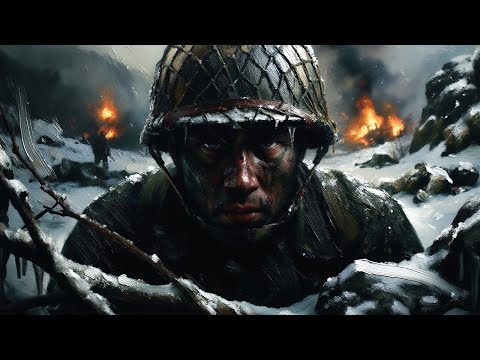
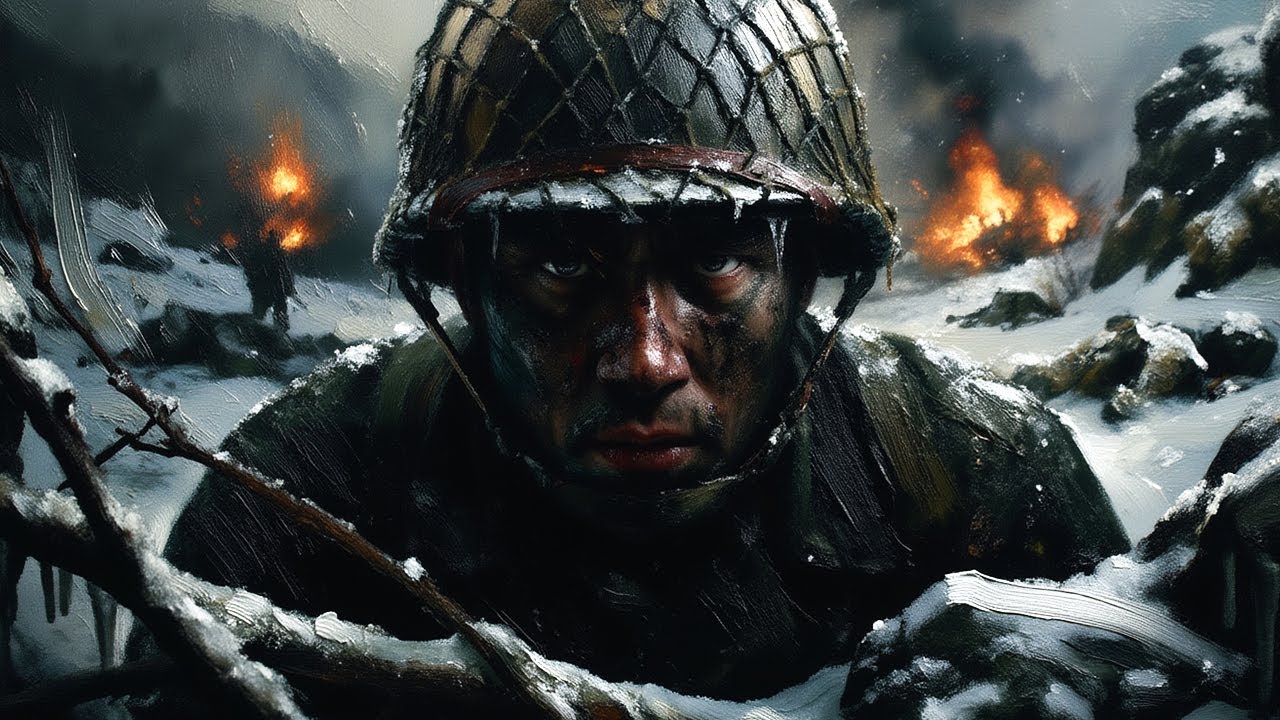
If the cities burned, the mountains froze, and the human cost was equally staggering. Historians have called the Battle of Chosen Reservoir the most brutal in US military history, a frigid nightmare that also precipitated the largest evacuation in US military history, even surpassing the withdrawal from Vietnam. On November 27th, 1950, at the Chosen Reservoir in North Korea, temperatures plummeted to minus 30 degrees Fahrenheit. In the pitch-black mountain night, thousands of Chinese volunteer soldiers launched a sudden, overwhelming assault on unsuspecting US and UN troops.
On the east side of the reservoir, US Colonel Alan MacLean's task force, largely composed of the 31st Infantry Regiment, braced in shallow foxholes hacked into the frozen ground along a narrow mountain road. Without warning, bugles and battle cries pierced the darkness as wave after wave of Chinese infantry, clad in white winter uniforms, surged downhill. Outnumbered and encircled, American rifles froze and jammed in the Arctic cold, forcing fighting to devolve into brutal hand-to-hand combat amidst dim flares and falling snow. Marine Pat Finn grimly recalled that "They just kept coming. Every time attackers fall, more climb over their bodies to press the attack." Hand grenades and bursts of machine gunfire momentarily lit up scenes of carnage, figures wrestling and stabbing in the snow, while the screams of wounded men echoed through the night. Some Chinese soldiers even carried trumpets and whistles, using eerie, disorienting sounds to add to the chaos. Friend and foe intermixed in a terrifying melee.
By dawn, the sheer scale of the horror was revealed under the weak winter sun. Over 300 Chinese bodies lay frozen in grotesque poses across the blood-stained snow. An entire hill remained eerily silent, littered with frost-covered corpses. On one hilltop, out of a company of around 250 Marines, only 20 men were left standing, the rest dead, wounded, or missing. Survivors, many frostbitten, began a harrowing 70-mile fighting retreat to the sea, battling ambushes all the way. In one brief lull, Marine Pat Finn tried to comfort a mortally wounded friend who begged for a cigarette and a blanket for his shattered legs. Finn noted grimly, "He didn't have enough legs to cover." Such was the nightmare at Chosen Reservoir, a frozen hell that veterans would forever remember as one of the most terrifying battles in modern history.
The Korean War brought the world to the brink of nuclear apocalypse, a conflict so extreme it redefined military terror, and yet, for many, it barely registers beyond a brief mention of the 38th parallel.
The Great Escape from Hungnam
With Chinese forces pressing relentlessly from the mountains and no viable route south, UN commanders made a desperate decision. They redirected the retreat toward the port of Hungnam. Units fought their way down narrow roads, holding ground just long enough for the next column to pass, then pulling back again in a brutal, staggered withdrawal. This fighting retreat culminated in the Hungnam evacuation in December 1950, a logistical marvel born of sheer necessity. Roughly 100,000 troops, alongside a similar number of Korean civilians, were evacuated by sea. It stands as the largest evacuation by sea in US military history, a testament to both the desperation of the situation and the incredible efforts to save lives amidst the chaos.
Blitzkrieg and the Bloody Perimeter
To truly grasp the horrors that unfolded at Chosen Reservoir, one must understand the war's explosive genesis. On June 25th, 1950, North Korea launched a surprise blitzkrieg invasion of the South, shattering the pre-dawn quiet with a thunderous barrage of artillery. Soviet-made T-34 tanks spearheaded the North Korean People's Army (KPA) as it crossed the 38th parallel, followed by hardened northern infantry fresh from years of civil war in China. Within a mere three days, Seoul fell, and panic gripped the capital. In a desperate attempt to slow the advance, South Korean forces destroyed the Hong Kong Bridge, inadvertently killing hundreds of civilians trapped on it.
As the KPA moved south, a horrifying pattern of mass executions followed. Southern authorities killed thousands of political prisoners, while northern forces purged suspected sympathizers. A post-war commission later documented hundreds of mass graves and estimated up to 100,000 civilian deaths across the peninsula. By August 1950, the invaders had overrun 90 percent of South Korea. The desperate remnants of South Korean and newly arrived US forces made a last stand around the Busan perimeter, a shrinking enclave at the peninsula's tip. Fighting raged along this perimeter in sweltering summer heat, with outgunned South Korean infantry clinging to hastily dug foxholes as KPA tanks rolled toward them. US Marines reinforced weak points just in time, but casualties were staggering. Hills changed hands multiple times under relentless North Korean assaults and withering American defensive fire. Villages and towns near the front were pulverized by constant shelling. Civilians cowered in any shelter they could find or fled south in massive columns, only to face aerial strafing from US planes suspicious of enemy infiltrators. Refugees and retreating soldiers intermingled, adding to the chaos. By September, the Busan Defense Line was scorched and littered with wreckage and bodies, but it held. The KPA's rapid advance finally stalled, and the Republic of Korea (ROK) and UN forces, bolstered by tanks and supplies pouring in through the port of Busan, had checked the invasion at the brink of defeat.
Inchon's Daring Gamble and its Gruesome Aftermath
Even as the Busan perimeter endured its final assaults, UN command hatched a daring plan to turn the tide. On September 15th, 1950, US General Douglas MacArthur launched a high-risk amphibious landing at Inchon, a port city far beyond enemy lines. Allied troops stormed ashore amidst mud flats and mines, catching the North Koreans completely by surprise. The gamble worked brilliantly. This flanking maneuver triggered a total collapse of the KPA offensive. Cut off from supply and facing attacks from both front and rear, North Korean units began to disintegrate. UN forces swiftly recaptured Seoul by late September, but it was far from easy. Street-to-street fighting raged amidst the rubble, with KPA snipers and camouflaged machine gun nests making every block a deadly kill zone. UN Marines and ROK soldiers had to clear buildings room by room, enduring brutal urban combat.
As North Korean forces retreated under pressure, prisoners taken during the collapse were not spared. At Hill 303 near Daegu (Teagu), captured American soldiers were held for days with their hands tied before being marched into a ravine. Without warning, guards opened fire. Corporal Roy Manring Jr., one of only four survivors, later testified, "I looked around and saw my buddies were falling, getting murdered with their hands tied behind their back." Shot multiple times, Manring survived by falling beneath the bodies of other prisoners and remaining still. Days later in Daejeon (Taejon), dozens more prisoners were taken from jail in wired groups and executed in hastily dug ditches. Sergeant Carrie H. Wel, the sole survivor of that atrocity, told investigators, "They were aiming at my head." He continued, "After they thought everybody was dead, they started burying us." Shot and buried alive, Wel remained in the ditch until nightfall, breathing beneath the dead. On September 27th, 1950, Seoul fell again, its people having seen their city captured by opposing armies twice in just three months. The human cost of this reversal was enormous. The once invincible KPA lost over 150,000 soldiers killed in the South and 125,000 captured in a matter of weeks. By contrast, UN and South Korean losses in this counteroffensive, including Inchon, were under 20,000. For the moment, it appeared a decisive victory had been won, and North Korea seemed on the verge of collapse.
The Dragon Awakens: China's Terrifying Entry
Just as UN troops neared the Yellow River in late October, a new and far more formidable foe was about to intervene, launching the war into its darkest days. Hundreds of thousands of Chinese People's Volunteers secretly poured across the border into North Korea. On November 25th, 1950, China unleashed a massive surprise offensive across a snowy front. A staggering 300,000 Chinese troops attacked in coordinated waves, exploiting the element of surprise with devastating effect. Entire UN divisions suddenly found themselves ambushed at night, surrounded and overwhelmed. This was the terrifying context around which the Battle of Chosen Reservoir, that frozen hellscape, unfolded.
As the front crumbled under the weight of the Chinese onslaught, an ominous possibility loomed: US President Harry Truman openly threatened to use atomic bombs to prevent total defeat. In a moment of dangerous escalation, only five years after Hiroshima, orders were drafted for potential nuclear strikes on Chinese and North Korean targets. The world held its breath as the Korean War teetered on the edge of becoming a nuclear World War III. The sheer scale of the conflict, the brutal conditions, and the specter of global annihilation made this period arguably the most terrifying of the entire war.
A staggering 300,000 Chinese troops attacked in coordinated waves, exploiting the element of surprise with devastating effect. Entire UN divisions suddenly found themselves ambushed at night, surrounded and overwhelmed.
The Grind: Stalemate and Trench Warfare
Amidst the crisis, US forces finally managed to stabilize the front in January and February 1951. By March 1951, the UN launched a counteroffensive and retook Seoul for the fourth and final time. The exhausted city, having changed hands four times in less than a year, was left largely in ruins. The front line seesawed back to roughly the original 38th parallel. After the shocks of late 1950, both sides were battered and weary. General MacArthur, whose aggressive stance risked further escalation, was relieved of command by President Truman in April 1951. Truman publicly stated, "A number of events have made it evident that General MacArthur did not agree with that policy. I have therefore considered it essential to relieve General MacArthur so that there would be no doubt or confusion as to the real purpose and aim of our policy."
But the war was far from over. It now entered a prolonged, agonizing stalemate. From mid-1951 onward, the Korean War settled into a grinding war of position. The front solidified near the 38th parallel, and peace talks began in mid-1951, but the fighting continued for two more brutal years. Combat now resembled the trench warfare of World War I. Soldiers burrowed into defensive lines of bunkers, barbed wire, and zigzag trenches dug into stony hills. Fierce battles erupted over key outposts and hilltops that gained little ground but cost many lives. UN troops nicknamed these bloody hills with grim names like Bloody Ridge, Heartbreak Ridge, and Pork Chop Hill, reflecting the carnage. On Heartbreak Ridge in late 1951, for example, waves of US, French, and South Korean troops assaulted fortified heights held by North Korean and Chinese forces, only to be driven back repeatedly. After a month of combat, the ridge was taken at the expense of over 25,000 casualties on both sides.
Behind Barbed Wire: The Brutality of POW Camps
By mid-1952, soldiers and civilians alike were war-weary. Behind the lines, prisoner of war camps became their own theaters of brutality. On Koje Island (Geoje), a UN camp held over 50,000 communist prisoners. It erupted into riots in 1952 as hardline prisoners resisted repatriation and protested alleged mistreatment. In one particularly brazen uprising, prisoners seized the camp commandant at night and held him hostage. US guards eventually restored order, but not without further conflict. British and American troops prepared for battle in the notorious Koje prison compounds as they moved in to split the rebellious reds into smaller groups. Tear gas was fired into the camp from American lookouts high above the compounds, as prisoners refused to leave their huts and tents, forcing the troops to "smoke them out." Meanwhile, communist authorities for their part imprisoned captured UN soldiers under horrific conditions. Many Allied POWs succumbed to disease, exposure, or torture in North Korean camps, enduring a different kind of frozen hell.
An Entire Nation Erased
For the people of North Korea, the war was nothing short of apocalyptic. Some 12 to 15 percent of the North's population is estimated to have been killed. This proportion of loss is greater than even the Soviet Union suffered in World War II, a conflict often considered the benchmark for human devastation. The Korean War was not merely a territorial dispute or a clash of ideologies; it was a grinder of human lives, a destroyer of nations, and a stark reminder of the sheer, unadulterated terror modern warfare can inflict.
The Korean War, often dubbed "The Forgotten War," was anything but forgettable for those who lived through it. It was a maelstrom of fire, ice, and human depravity, a conflict that pushed the boundaries of destruction and brought the world to the precipice of nuclear annihilation. History, as always, proves itself far stranger, far more brutal, and undeniably nuttier than the sanitized versions we often receive. The Korean War offers a chilling glimpse into the depths of human conflict, a warning etched in napalm and frozen blood that we ignore at our peril.