The history books tell us of the rise and fall of Nazi Germany, a stark, brutal chapter that closed definitively in 1945. But what if the curtain call wasn't quite so final? What if the architects of that horrific regime had a contingency, a shadowy network designed to resurrect their twisted vision, a so-called Fourth Reich? Forget the sanitized narratives of school textbooks: the truth, as always, is far stranger, more ambitious, and ultimately, more chilling than any official account. This is the story of Otto Skorzeny, a man who built a legend, rescued dictators, hunted enemies, and then, after the supposed end of the war, helped build an escape route for hundreds of his fellow travelers, transforming fiction into a terrifying, if ultimately unsuccessful, reality.
The Scarred Architect of Terror
Otto Skorzeny, a name that would become synonymous with daring, brutality, and a post-war resurgence of Nazi ideology, began life not in Germany, but in Austria. Born in 1908, Skorzeny hailed from Vienna, a city steeped in imperial history, yet his upbringing was decidedly middle-class. His family, however, boasted a long and storied military tradition, a legacy that clearly influenced young Otto. When he complained about their austere lifestyle, his father's stern retort, "There is no harm in doing without things, it might even be good for you not to get used to a soft life," proved to be a principle Skorzeny would embody throughout his life, for better or worse.
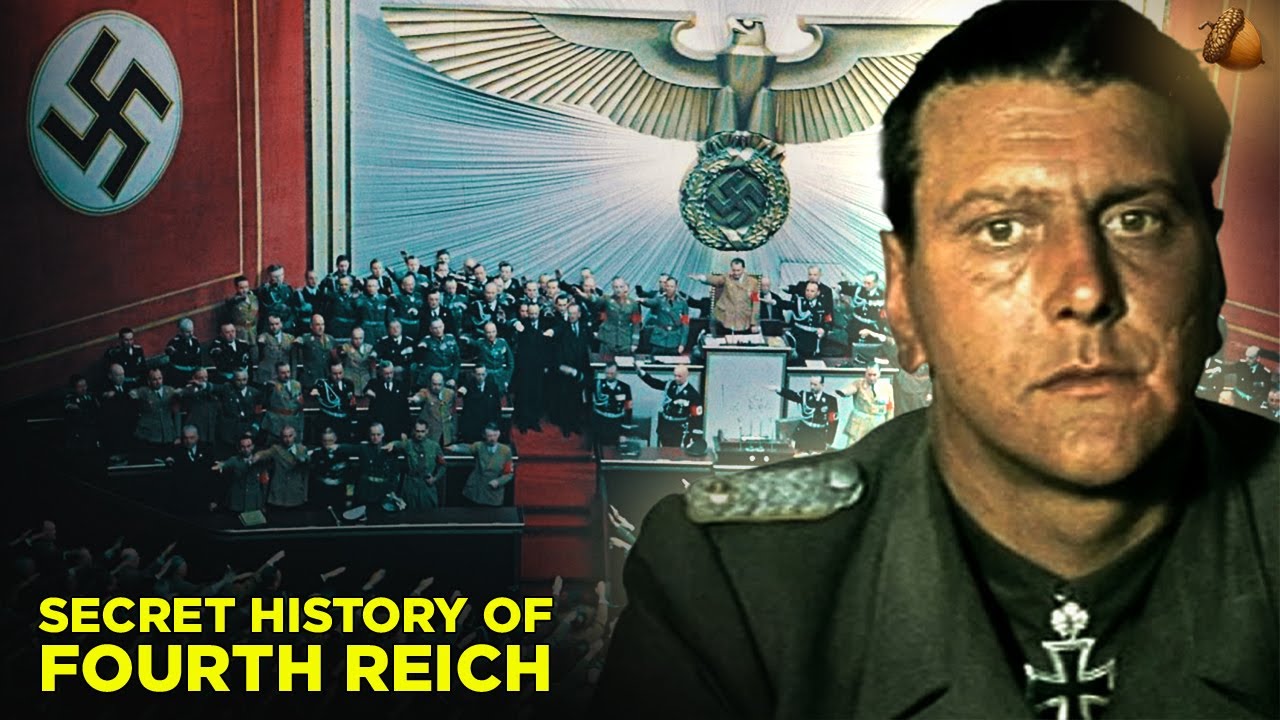
His student days at Vienna University offered an early glimpse into the man he would become. Skorzeny joined the German National Burschenschaft, a traditional student association known for its liberal and nationalistic leanings, and one that played a significant role in the unification of Germany in 1871. It was here that Skorzeny discovered a talent for fencing, becoming a star representative for his association. He participated in a total of 15 personal combats, a testament to his aggression and skill. It was during his 10th fight that a sword strike across his face left an indelible mark: an intimidating scar that would become his signature. This facial disfigurement earned him the chilling moniker "Scarface" within the SS, a name that only amplified his notoriety and the terror he inspired.
From Austrian Nazi to Hitler's Bodyguard
Skorzeny's political alignment solidified in 1931 when he joined the Austrian Nazi Party. His innate charm and commanding presence quickly propelled him through the ranks, securing him a position within the Nazi SA, or Storm Detachment, the party's original paramilitary wing. When Nazi Germany annexed Austria on March 12, 1938, a pivotal moment known as the Anschluss, Skorzeny was already a key player. The historical record suggests that it was Skorzeny's involvement that ensured the then-Austrian President Wilhelm Miklas survived a potential attack on his life by Austrian Nazis, a curious twist given Skorzeny's fervent allegiance to the regime.
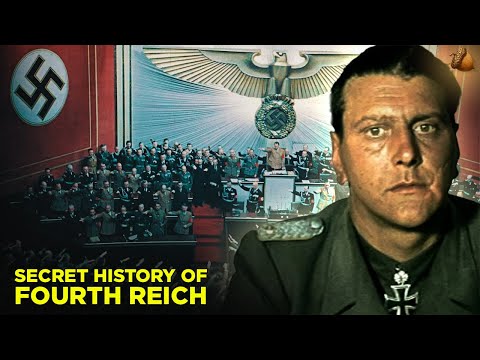
With the invasion of Poland on September 1, 1939, and the subsequent eruption of the Second World War, Skorzeny, then a civil engineer, wasted no time enlisting. His initial ambition was to join the Luftwaffe, the German air force. However, his physical attributes proved to be an unexpected obstacle: he was rejected for being too tall, standing at six foot four, and too old, at around 31 years of age, to train as aircrew. Undeterred, Skorzeny found his place within the elite Leibstandarte SS Adolf Hitler, Hitler's personal bodyguard regiment, often abbreviated as the LSSAH. While the Nazis may have been notoriously bad at acronyms, they were exceptionally good at finding roles for men like Skorzeny.
His early war service saw him integrated into the SS division Das Reich, where he participated in numerous brutal engagements on the Eastern Front. Skorzeny's performance in battle did not go unnoticed. He was eventually tasked with leading a technical section of German forces during the Battle of Moscow, a mission of audacious scale. His orders were to seize critical communist party buildings, including the NKVD headquarters at Lubyanka and the Central Telegraph Office, along with other high-priority facilities, before Soviet forces could destroy them. The most chilling directive, however, was to capture the sluices of the Moscow-Volga Canal. Hitler, in a grotesque display of strategic malice, intended to open them, thereby turning Moscow into a vast, artificial lake. Fortunately, German forces ultimately failed to capture the Soviet capital, and these catastrophic plans were never realized.
The Birth of a Commando Legend
Skorzeny continued his service in the Soviet Union until December 1942, when an explosion inflicted a severe shrapnel wound to the back of his head. This injury forced his evacuation from the front lines, but his valor was recognized with the prestigious Iron Cross. While recuperating in Berlin, Skorzeny's mind turned from conventional warfare to something far more insidious. It was during this period that he began to develop his radical ideas on unconventional commando warfare, a concept that would soon catapult him to international infamy.
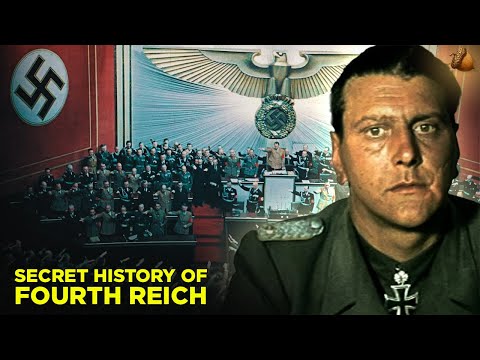
His moment arrived in the summer of 1943. Following the Allied invasion of Sicily and the bombing of Rome, the Italian Grand Council of Fascism delivered a stunning vote of no confidence against Benito Mussolini. The very same day, King Victor Emmanuel III replaced Mussolini with Marshal Pietro Badoglio and had the dictator arrested. By this time, Skorzeny had been appointed head of German special forces, commanding a unit of elite SS commandos. On Hitler's direct orders, Skorzeny and his men executed a daring glider assault on the remote Italian mountaintop where Mussolini was being held captive. Overwhelming the Italian guards with a surprise attack, Skorzeny's commandos successfully freed the deposed dictator. This audacious mission significantly enhanced Skorzeny's reputation with Hitler, earning him a promotion to Major.
The feat of rescuing Benito Mussolini earned him the Knight's Cross of the Iron Cross, the highest award Nazi Germany could bestow.
Mussolini's subsequent parading before the international media, with Skorzeny proudly at his side, cemented the commando's global renown. Even Winston Churchill, no stranger to wartime heroics, described the mission as one of "great daring." For this extraordinary achievement, Skorzeny received the Knight's Cross of the Iron Cross, the highest military award Nazi Germany could bestow. From then on, Otto Skorzeny became the Nazis' go-to man for their most sensitive and audacious operations. Another such mission occurred in 1944, when Skorzeny and his men captured the son of Hungarian Regent Admiral Miklós Horthy. After a brief firefight to secure Miklós Horthy Jr., Skorzeny's team famously rolled him up in a carpet and put him on a plane to Berlin, effectively blackmailing his father into compliance with the Nazi regime.
Europe's Most Dangerous Man
Skorzeny's influence extended far beyond dramatic rescues. After the failed July 20th, 1944, assassination plot against Hitler, Skorzeny played a leading role in rounding up and torturing anti-Hitler conspirators, demonstrating his unwavering loyalty and brutal efficiency. As the war raged on, and after D-Day, he led commandos deep behind Allied lines, wearing American uniforms, to capture U.S. weapons and launch attacks from the rear, sowing chaos and confusion. The Allies, with good reason, dubbed him "the most dangerous man in Europe" for his audacious raids and wild schemes.
He lived up to that fearsome reputation by almost succeeding in a plot to assassinate Joseph Stalin, Winston Churchill, and Franklin Roosevelt at the Tehran Conference in 1943. Hitler himself had authorized Skorzeny to carry out this high-stakes assassination plot, an operation that sounds straight out of a Quentin Tarantino film. However, thanks to the vigilance and espionage efforts of Russia's internal affairs ministry, the plan was foiled, narrowly averting a catastrophic blow to the Allied leadership.
The Spider Weaves Its Web: Escape and Denazification
The fall of Berlin eventually led to Skorzeny's capture and incarceration. He spent two years behind bars, facing trial for his war crimes. Remarkably, he managed to exploit a legal technicality to argue his way to acquittal. Yet, his troubles were far from over, as he still faced denazification proceedings, a process designed to purge former Nazis from positions of influence. But then, on July 27, 1948, something truly bizarre occurred. Three U.S. military police officers entered the prisoner of war camp where Skorzeny was held, claiming they had orders to transport him to Nuremberg for a legal hearing. Skorzeny, however, never reached that hearing. In fact, there was no hearing in Nuremberg awaiting him.
The "U.S. military police officers" were, in reality, former SS officers who had infiltrated the camp to facilitate Skorzeny's escape. Even more astonishingly, Skorzeny later claimed that these SS officers were aided by U.S. authorities in his escape. This extraordinary claim gained credence when the Allies' West German government arbitration board declared Skorzeny denazified in absentia, effectively clearing his name without his physical presence. The question lingered, and indeed still does: was the USA helping Skorzeny all along? It certainly suggests a complex, murky post-war landscape where former enemies found unexpected allies.
Popular media has long perpetuated the myth of the ODESSA network, a secret Nazi organization supposedly created by Otto Skorzeny to build a Fourth Reich and resurrect Nazi domination by rescuing and recruiting ex-Nazis worldwide. If real life were a James Bond movie, the ODESSA network would have been a terrifying reality. Luckily, it wasn't quite that. ODESSA was actually the code name used by U.S. intelligence for the operations carried out by ex-Nazis to aid and rescue fellow ex-Nazis from POW camps. When the name was leaked to the media, it captured the public imagination, transforming into a pop culture phenomenon. Yet, as they say, every fiction has some basis in truth. The inspiration for fictional Nazi secret organizations like SPECTRE and Hydra in pop culture certainly draws heavily from the life of Otto Skorzeny. Just look at the scars on Skorzeny's face, mirrored by Ernst Stavro Blofeld, played by Donald Pleasence and Christopher Waltz. This can hardly be a mere coincidence.
After his escape from the Allied POW camp, Skorzeny did indeed establish a special team dedicated to extracting and rescuing other ex-Nazis from Germany. This organization, however, was not called ODESSA, but Daishbena, which translates to "The Spider." Skorzeny set up an import-export agency in Madrid, which, while conducting legitimate business, also served as a front for Daishbena's clandestine operations. It is confirmed that Daishbena successfully helped as many as 600 former SS men escape from Germany to Spain, Argentina, and from there to other countries across the globe. Over the years, Skorzeny, his collaborators, and their network allegedly amassed enormous influence in Europe and Latin America.
The Global Reach of the Shadow Man
Skorzeny's post-war activities paint a picture of a man who continued to operate on a global scale, leveraging his unique skills and contacts. He worked with various countries' intelligence departments, constantly striving to increase his power and prowess. In a truly astonishing turn of events, and on indirect directions from the CIA, Skorzeny and his former SS colleagues trained the Egyptian army and Arab volunteers in 1952. Their mission: to retaliate against English troops stationed in the Suez Canal. The following year, in 1953-54, Skorzeny further aided in training Yasser Arafat and his Palestinian rebels against Israel, even planning their raids via the Gaza Strip. This willingness to work with former enemies against new ones highlights the complex and often morally ambiguous landscape of the Cold War.
Skorzeny was also a frequent traveler between Spain and Argentina, where he acted as an advisor to President Juan Perón and even served as a bodyguard for his formidable wife, Eva Perón. It is widely believed that the true purpose of these visits was not merely advisory, but to establish the mythical Fourth Reich in Latin America, a stronghold for ex-Nazis and their ideology. And, if rumors are to be believed, Skorzeny may have also engaged in an affair with Eva Perón, adding a layer of scandalous intrigue to his already dramatic life.
The Paladin Group specialized in arming and training guerrillas, and some of its operatives were even recruited by the Spanish Interior Ministry to wage a clandestine war against the terrorist group ETA.
In the 1960s, Skorzeny founded the Paladin Group, an organization he envisioned as an "international directorship of strategic domination." This ambitious project was meant to be carried out through the combined efforts of paramilitary operations by soldiers and political warfare by civilians. Based near Alicante, Spain, the Paladin Group specialized in arming and training guerrillas. Astonishingly, some of its operatives were even recruited by the Spanish Interior Ministry to wage a clandestine war against the terrorist group ETA, a testament to Skorzeny's ability to find a market for his unique brand of expertise, even with former adversaries.
Skorzeny had no qualms about playing both sides, a characteristic that defined his post-war career. In 1963, he made another startling switch, being hired by Mossad, the intelligence agency of Israel, to assassinate German rocket scientist Heinz Krug, who was working for the Egyptian government. Former head of Mossad Isser Harel later confirmed that a number of ex-Nazi operatives were indeed employed by Israel to gain counter-intelligence on Arab countries, with many of these individuals allegedly working for the Paladin Group. It's a bizarre, almost unbelievable, intersection of former enemies turned uneasy allies. Interestingly, it was also in the 1960s that fictional Nazi groups like SPECTRE and Hydra first appeared in literature, making one ponder the uncanny timing of these developments.
The Fading Echoes of a Dream
Fortunately, the dream of establishing a Fourth Reich, whether in Europe or Latin America, ultimately remained just that: a dream. The key players in Skorzeny's post-war network began to fade from the scene. Spain's dictator, Francisco Franco, and Otto Skorzeny himself both died in the same year, 1975. Juan Perón, Skorzeny's Argentine patron, had passed away a year earlier in 1974. With their deaths, much of the infrastructure and political protection that allowed men like Skorzeny to operate in the shadows began to unravel.
History, as always, proves to be far more intricate, more morally ambiguous, and often much nuttier than the tidy narratives we're fed in school. The story of Otto Skorzeny, a man who consistently defied expectations and blurred the lines between hero and villain, reminds us that the aftermath of major conflicts can be just as complex and dangerous as the wars themselves. The echoes of his clandestine activities, training mercenaries and spies for various governments, illustrate a world where loyalties were fluid and the fight for power continued long after the official surrender, leaving behind a legacy of intrigue that still fascinates and disturbs us today.