The history books often paint the Holocaust in broad, chilling strokes, detailing the systematic genocide and the horrors of the gas chambers. But what school rarely covers, what doesn't make it into the sanitized curriculum, is the sheer, inventive depravity that permeated every single moment of existence for those caught in the Nazi machinery. It wasn't just mass murder; it was a daily, meticulous dismantling of human dignity, inflicted with a casual cruelty that beggars belief. This was a system designed not just to kill, but to utterly obliterate the spirit, piece by agonizing piece, long before the final breath.
The Journey to Hell: A One-Way Ticket
The dehumanization began long before any inmate saw the barbed wire fences of a concentration camp. Nazis meticulously stripped Jewish people of their dignity, tearing them from their homes and rounding them up on city streets. They were then crammed into trains, treated with less regard than livestock, in a system that was horrifyingly efficient and vast in its reach. Train cars, designed for a comfortable 50 passengers, were routinely overloaded with more than 200 souls, and that was considered a slow day.
These unfortunate passengers were stripped of all their belongings, left with hardly any warm clothing, and provided with no food or water. They were given no protection against the harsh weather or the rampant spread of terrible diseases in conditions far worse than any factory stable. The journey to these camps was an unforgiving ordeal, often stretching for 15 to 20 days without a moment's respite. A particularly grim example occurred when a train arrived at a camp from Corfu after 18 days of travel; the Nazis opened the doors only to find that every single person inside had already perished.
But the Nazis, in their perverse ingenuity, were not content with mere logistical cruelty. They transformed this process into a grim, twisted joke: they began charging their future victims for the privilege of riding the train to their extermination. A Jewish person was forced to pay the standard fare, as if they had a choice in the matter. The depths of this cynical scam, or perhaps abhorrent prank, were underscored by their adherence to normal train travel rules: children under the age of four were allowed to board for free. This "generosity" towards Jewish children, however, ended abruptly at the train ticket. Once aboard, they faced the same malice and brutality as the adults.
Children of the Inferno: Lodz and the Lost Innocence
The sheer scale of child suffering in the camps is staggering. Auschwitz alone witnessed over 230,000 children under the age of 18 enter its gates, with hundreds of minors gassed daily until its liberation by the Soviets. While adults often tried to shield children within the mixed camps, some children were singled out for unique horrors. The concentration camp in the Polish city of Lodz, renamed Litzmannstadt by the Germans, opened on December 1, 1942. This was the only camp specifically designated to house Polish children as inmates, a unique situation that allowed the SS guards to unleash their cruelty without any adult inmate oversight.
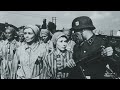
Adolescents, some as young as two years old and up to 16, were routinely beaten, starved, humiliated, and punished without any discernible cause or reason. Hard labor was demanded of these children, with no regard for safety hazards or their physical capabilities. They were forced to work in grueling conditions, pushing their endurance to its breaking point and beyond. If they succumbed to fatigue or disease, their small bodies were unceremoniously tossed into pits, devoid of remorse. Due to the absence of higher directive monitoring, precise records are tragically scarce, leaving us without a clear count of how many children entered this horrific camp and how many survived.
Not all the children imprisoned in Lodz were Jewish. Some were arrested for petty theft, smuggling, or street trading. Others were orphans, or the children of people involved in the Polish resistance. Surrounded by a Jewish ghetto, this isolated children's camp consisted of wooden barracks and a flimsy fence, offering next to no protection against the brutal winter cold. Children who couldn't help but wet their beds were punished by being deprived of sleep or forced to sleep on planks outside. These children also worked under the constant threat of punishment if they failed to meet their daily quotas.
The boys were forced to straighten needles, make shoes of straw, weave wicker baskets, and produce belts for gas masks and leather parts for backpacks. The girls worked in the laundry, kitchen, tailor shop, and garden. For breakfast, these children received a mere slice of coarse bread and a half-liter of black coffee, sometimes sweetened with saccharin. Dinner consisted of a liter of rutabaga or potato soup, often with beet leaves or cabbage, and occasionally a spoonful of marmalade. Even a small mistake, however, could result in the denial of food, leading to chronic hunger. Many inmates resorted to hunting birds for nourishment, and even used dead flies as garnish on the hot water served as soup, just to make it palatable. Those few who managed to survive until Germany's defeat in World War II and were liberated from the camp knew the true, agonizing meaning of one single word: hunger.
"Those few who managed to survive until Germany's defeat in World War II and were liberated from the camp knew the true, agonizing meaning of one single word: hunger."
The Sadist's Playground: Guards and Their Twisted Games
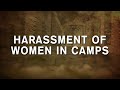
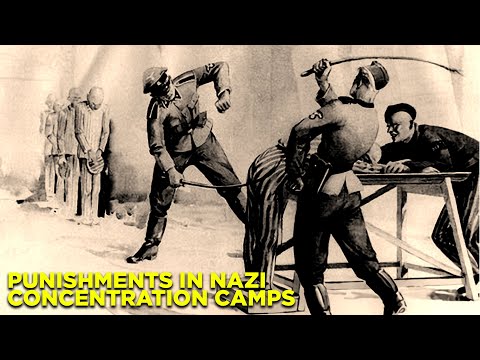
Some SS guards became disturbingly imaginative in devising new methods of punishment. Edward August, an SS guard infamous for being constantly drunk on duty, terrified even his fellow guards with his methods of torture. He would kick his victims in sensitive places, frequently bury them in boxes of sand, dunk their heads in barrels of water, and hang them upside down by their legs on a chain, then slowly lower them into tanks of used car lubricants. This casual, inventive sadism was not an aberration, but a feature of the system.
The psychological toll on these children was catastrophic. After liberation, those who cared for these unfortunate kids found their behavior to be closer to animalistic than human, a direct result of their brutal conditioning. The children were hostile and unable to differentiate Polish caregivers from the SS guards. As a result, with very few exceptions, the victims were unable to hold jobs for more than a week. Their situation improved slowly with time, but these children could never again endure communal gatherings, walking in pairs, or even being whistled at, each a horrifying reminder of their past torment.
Stripped of Humanity: The Female Experience
Jewish women in Nazi concentration camps faced a particularly cruel and gendered form of degradation. They were welcomed with mandatory hair shaving, forced undressing, and invasive genital inspections. This unpleasant scrutiny was commonly performed by male guards, who used the examination as an excuse to violate their bodies. Women were also punished with harassment and abuse for any perceived wrongdoings or disobedience. There were documented cases of women being deliberately hurt and then left to die without medical aid, simply for not stripping on command. Guards would routinely take young women from their barracks in the middle of the night, only for them to return to the barracks in the morning with their clothes torn apart and appearing half-dead. These girls were also sold off to superior SS officers, leaders of the Nazi party, and rich beneficiaries of the cause and war effort for a night or two. In a testament to human resilience, some Jewish women, facing no other options, began to use this horrific ordeal as a desperate negotiation opportunity to help and save others.
Beyond the Gas Chambers: The Slow Torture
Concentration camps are most infamous for the dreaded gas chambers, but this was only one facet of the hellish reality. Death by gas chamber, horrific as it was, was often the quickest way to die, and perhaps, disturbingly, the least torturous. Living in the camps meant enduring another seven layers of hell. Many Jewish inmates were left unattended in dark, damp cells with no food, water, or clothes. The SS used these cells simply to torture or to send a chilling message to the entire inmate population. But these were just "dark cells." Then there were the officially designated "Dark Cells," which contained no light and were sealed shut with prisoners inside. They were left with very little oxygen, which would steadily diminish with every breath the inmate took, offering no escape from a slow, impending, and inevitable death by asphyxiation.
The deliberate creation of food scarcity was another method of torture, simply because the guards could. The daily food rations of an average prisoner were scant at best. They were forced to eat bread made of sawdust and sausage made of mangy horses. This severe lack of nutrition led many inmates to steal food out of extreme craving, and a significant number even resorted to eating rotten food from the garbage. The "tea" provided to inmates was made of wild weeds, and the water offered to them was sometimes seawater, specifically given so guards could observe its devastating effects. This caused severe dehydration, and inmates who begged for water were denied. These poor souls were reduced to licking freshly mopped floors, desperate to quench their insufferable thirst with any drop they could find.
"These poor souls were reduced to licking freshly mopped floors, desperate to quench their insufferable thirst with any drop they could find."
Science of Cruelty: Doctors of Death
Nazi scientists and doctors have become figures of urban legend and myth, thanks to their portrayal in popular culture. Yet, behind every legend, there were real, evil scientists and doctors who enacted horrible war crimes and medical practices in the name of "science" and to appease the Führer. Inmates were treated as nothing more than lab rats by these madmen in positions of power. Dr. Sigmund Rascher, operating in the Dachau concentration camp, created a tablet from beet and apple pectin, which he believed could stop bullet wounds from bleeding. He then forced inmates to take these tablets before having them shot in the chest and neck. Later, the same inmates had their limbs amputated without any use of anesthesia. While the exact number of inmates who died from this insane experiment remains unknown, we do know that Dr. Rascher went on to establish a manufacturing company for the tablet, using inmates as his workers. If there was ever a stark opposite to Oscar Schindler, it was this man.
At Ravensbrück concentration camp, another gruesome experiment was conducted to test the efficiency of sulfonamides, also known as sulfur drugs. Subjects were intentionally wounded on the outer side of their calves, and then physicians would rub a mixture of bacteria into the open wounds before sewing them shut. Sometimes, they would even throw in some glass splinters, just to observe the growth of these battle-like wounds. To accurately simulate gunshot wounds, they would also tie off blood vessels on both sides to stop circulation, causing horrible, unimaginable pain to these inmates. Despite any advances these experiments might have made in the scientific and pharmaceutical fields, one must ask: at what cost?
These were just a few examples. There were more horrendous experiments where inmates were used as guinea pigs to simulate battlefield wounds in an attempt to "cure" them. They were exposed to hypothermia, poison, and risky nerve operations, all to gather better knowledge of ailments a soldier might endure on the battlefield. They even conducted bizarre and creepy genetic and sterilization experiments in the name of attempts to eliminate non-Aryan races. The sheer depravity of these acts, cloaked in the guise of scientific inquiry, stands as a chilling testament to the utter moral collapse that defined this period.
History, as we often learn it, is a carefully curated narrative, stripped of its most unsettling truths. But the raw, unfiltered accounts of Nazi concentration camps reveal a humanity capable of truly monstrous invention, where every facet of life was weaponized, and death was often a grim mercy. This wasn't just an atrocity; it was a universe of calculated, intimate cruelty that reminds us how truly nutty, how utterly terrifying, the past can be.