History books often paint Napoleon as a singular genius, a titan whose strategic brilliance reshaped Europe. But perhaps that narrative is a little too convenient, too neat. What if his legendary status wasn't forged solely by his own intellect, but also by the astonishing, almost unbelievable, incompetence of his adversaries and even some of his own men? Imagine a general surrendering an entire army of 27,000 soldiers without a single major battle, or a marshal literally marching away from the cannon fire that sealed his emperor's fate. These aren't isolated incidents, but rather a collection of breathtaking blunders that turned the Napoleonic Wars into a veritable carnival of strategic ineptitude. It is time to peel back the layers of myth and reveal the true architects of Napoleon's rise: the biggest idiots of the era.
The Architect of Annihilation: General Mack's Ulm Folly
Austrian General Karl Mack von Leiberich, once a favorite of Emperor Francis II and entrusted with reorganizing the Imperial Army, was a man whose arrogance and overconfidence were legendary. He believed rigid plans compensated for battle's fluidity, fitting Austrian critics' description of him as more suited to staff rooms than field command. In 1805, commanding Austrian forces of the Third Coalition, Mack received alarming reports of Napoleon's swift advance. He marched his army to Ulm on the Danube, convinced he could hold the French until Russian reinforcements arrived. Dismissing French maneuvers as bluffs, he made no preparations for encirclement, instead dispersing forces into small detachments.
Mack had cluelessly positioned himself in Napoleon's audacious flanking maneuver. While Austrians lingered, the French army swept across the Rhine, north of Mack, then wheeled to trap him. Napoleon, shrewdly judging Mack's self-confident rigidity, knew he would stubbornly cling to his fortress, making him the perfect victim. Mack's blunders continued. Austrian scouts brought critical intelligence, with officers urging him to break out east, warning of French encirclement. Mack dismissed these fears as exaggerations, insisting his orders be obeyed. Surrounded by a timid staff, he remained in Ulm with some 27,000 troops, while Napoleon's marshals sealed every road.
The situation became undeniable. By mid-October, French corps blocked exits. Austrian columns were repulsed. Heavy autumn rains turned roads to mud, straining supplies. The French tightened the noose, cutting communications and bombarding resistance. Austrians held for days, but morale plummeted, and desertions mounted. Recognizing defeat, Mack dispatched envoys. On October 20, 1805, he formally surrendered Ulm and his 27,000 soldiers without a major battle, handing France a bloodless victory. Mack's lame excuse of illness convinced no one.
Mack's folly was catastrophic. Austria was knocked out of the war before the main coalition battle. Napoleon marched eastward, crushing Russian and Austrian armies at Austerlitz six weeks later. Mack was court-martialed, stripped of rank, and imprisoned, though later pardoned. He continued to blunder. Mack proved an unchecked ego can lose a war before it begins.
Spain's Unyielding Obstinacy: The Blunders of La Cuesta and His Peers
Spain's military leadership during the Napoleonic Wars was a relic. Generals like Francisco Javier Castaños and Joaquín Blake were products of a decayed system, rife with favoritism and outdated thinking. Promoted for loyalty over merit, these incompetent officers inherited command confronting Napoleon's battle-hardened legions. General Gregorio García de la Cuesta exemplified this ineptitude. Despite humble origins, his rigid unwillingness to compromise earned him unsuited high commands. He viewed himself as Spain's honorable defender, yet his talent was negligible. Appointed to lead Spanish armies after the 1808 uprising due to seniority and patriotism, he faced Napoleon's forces with an army starved of reform. While French troops were hardened, Spanish generals clung to outdated, 18th-century tactics.
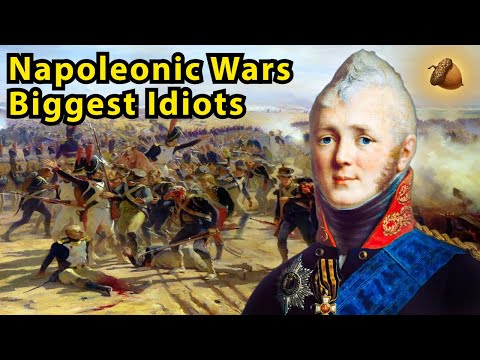
La Cuesta repeatedly annihilated his armies. At Medina del Rio Seco in July 1808, his rash attack without support cost thousands of men in a single day. At Medellín in March 1809, he repeated these mistakes, his soldiers paying the price. Two major, avoidable defeats in less than a year, born from his policy to attack head-on regardless of success odds. His failures worsened by refusing to coordinate with British commanders, particularly Arthur Wellesley. Despite Spain's objective of combined alliance, La Cuesta treated allies with contempt. He rejected sound advice, squandered advantages through poor deployment, and his xenophobia and pride were lethal. Retreat orders were almost always catastrophically late.
This self-defeating pattern extended to other Spanish generals. Leveraging political connections, they commanded large forces. Spain's armies, numbering hundreds of thousands and outnumbering British contributions, were squandered. At Ocaña in 1809, over 50,000 Spaniards were routed by half as many French. At Albuera in 1811, disorganized charges nearly undid Allied efforts. Despite manpower advantages, they failed miserably. Like La Cuesta, their policy clung to rigid line tactics, refusing modern combined arms. They distrusted Wellington and Portuguese allies, pursuing doomed offensives. Blaming subordinates for collapse, not their own blunders, these arrogant generals repeated hopeless charges and deployments. Only Bailén in 1808 saw real success, squandered in later campaigns.
Believing willpower substituted for logistics, they led armies to destruction. True resistance came from guerrillas, not these commanders, who often fled. At Ocaña, divisions collapsed while officers rode for safety. At Albuera, Spanish units panicked. Their spectacular failures forced Britain and Portugal to bear the war's burden. By 1813, Spanish armies were sidelined, useful only for numbers. These generals fought like the 1700s and lost inevitably.
At Medina del Rio Seco in July 1808, his rash decision to attack without proper support cost him thousands of men in a single day.
The Opium-Fueled Follies of Marshal Junot
Jean-Andoche Junot, a French marshal, seemed to fight more with his pipe than his plans. In autumn 1807, Napoleon dispatched him to Portugal to occupy Lisbon, secure the coastline, and impose French control. Junot, a trusted aide from Italian campaigns, had a formidable reputation, but reputation is not ability. Despite loyalty, Junot suffered crippling opium and alcohol dependence. The arduous campaign through Spain demanded discipline. His army entered Portugal exhausted; Junot's erratic command forced marches of up to 30 miles a day. Soldiers dropped out, horses collapsed. His army staggered into Lisbon, unfit to defend. The Portuguese royal family had fled to Brazil, turning a supposed triumph into a blunder of immense human cost.
Initial French control seemed stable, but Junot's weaknesses surfaced. He failed to secure supply lines and alienated the population with requisitions. A popular uprising, joined by British troops under Arthur Wellesley, panicked French headquarters. Junot had forgotten occupation demanded strategy, allies, and planning, not just arrival. At Vimeiro in August 1808, Junot misread terrain and deployed poorly. He launched repeated frontal assaults against British lines, wasting lives. French were driven back with heavy losses when reserves failed. Napoleon's trust waned. French officers complained of his confused, erratic behavior, rumored to be from opium, leaving him dazed during critical decisions.
His demoralized men negotiated evacuation under the humiliating Convention of Cintra. Junot's reputation was unsalvageable. Recalled, he was still favored but deemed unreliable. In 1812, given command in Russia, his delays at Smolensk again weakened French efforts. His mental health collapsed; by 1813, he was removed, tragically taking his own life. Junot proved loyalty no substitute for lucidity, especially when fueled by hubris.
The Peacock King's Pathetic Gambit: Murat's Fatal Flamboyance
Joachim Murat, son of an innkeeper, vaulted into Napoleon's inner circle through horsemanship and ambition. A Marshal of France and brother-in-law to Napoleon (married Caroline Bonaparte), he styled himself King of Naples, known for a wardrobe so extravagant he resembled a costume ball. As King of Naples in 1808, Murat tried to emulate Napoleon. Naples, a French client kingdom, forced him to balance loyalties. Brave but strategically inept, he sought to be more than a flamboyant sidekick. He repeatedly took independent commands, blundering spectacularly each time.
In 1813, Napoleon needed Murat to hold Saxony. Instead, Murat squandered cavalry at Leipzig, allowing the coalition momentum. Opportunistically, he declared loyalty to Napoleon, then secretly negotiated with Austria for his crown. His clumsy side-switching earned distrust from both camps. After Napoleon escaped Elba in 1815, Murat, clinging to his cavalry king image, foolishly rejoined the fight on his own terms. His gamble to rally Italy against Austria immediately collapsed. Through vanity, betrayal, and stupidity, he committed to an unwinnable fight. In May 1815, he launched the Neapolitan War against Austria, hoping to ignite nationalism. Within a month, he lost Tolentino, his army scattered, and his Italian throne dream vanished.
Within a month, Murat destroyed the kingdom he sought to preserve. His defeat at Tolentino forced him to flee, setting the tone for his final month. Against all political logic, he believed he could reclaim power. In October 1815, he landed in Calabria with a pitiful force, was captured, tried by Austrians, and sentenced to death within a day. By October 13, 1815, Murat faced a Neapolitan firing squad, dressed in an elaborate uniform. Vain to the end, he refused a blindfold, ordering soldiers to aim at his heart. His bravado couldn't hide his spectacular failure as king and commander. Despite leading cavalry charges, Murat's strategic record was disastrous. He betrayed Napoleon, lost his kingdom, and was executed months after his final gamble, a ridiculous cautionary tale of a flamboyant marshal mistaking style for strategy.
By October 13, 1815, Murat stood before a Neapolitan firing squad, dressed in one of his famously elaborate uniforms, the Liberace of Marshals to the very end.
The Deafening Silence at Waterloo: Grouchy's Imperial Blunder
Waterloo means muddy fields, exhausted men, and empire's end. In June 1815, Napoleon's last gamble collapsed as British, Dutch, and Prussian forces combined. His defeat is shorthand for ruin. Yet, Napoleon had a fighting chance, depending on marshals' initiative and situational awareness, not blind obedience. Emmanuel de Grouchy's actions are perplexing. Elevated to Marshal in April 1815, he was tasked after Ligny (June 16) with pursuing retreating Prussians. Napoleon dispatched Grouchy with 33,000 men: prevent them from reuniting with Wellington. Grouchy, a rigid soldier, followed orders literally, ignoring the wider strategic picture, merely shadowing the Prussians.
On June 18, while Napoleon fought at Waterloo, Grouchy heard distant cannon fire. Instead of marching to the sound, he continued pursuing the Prussians, convinced his orders bound him to that course, ignoring the crisis. His monumental stupidity, a textbook example of "pride comes before a fall," led to the empire's collapse. Napoleon's army collapsed when nearly 50,000 Prussians under Blücher arrived on Wellington's flank. Grouchy realized too late. His forces, isolated and misdirected, played no part in sealing Europe's fate. He escaped with his corps intact, avoiding annihilation. But his boneheaded obedience ensured Napoleon's downfall. Napoleon remarked Grouchy was "30,000 men less." Bonapartists condemned him for losing Waterloo, though historians debate if defeat was inevitable. Grouchy turned 'follow orders' into 'follow failure,' costing France its emperor.
The Tsar's Reckless Ambition: Alexander I and Russia's Costly Pride
Alexander I, son of Tsar Paul I, ruled Russia until his father's 1801 assassination. Educated in Enlightenment philosophy under Frédéric César de La Harpe, Alexander developed reformist ideals and an interest in Europe's balance of power. Upon accession, he complexly admired Napoleon, seeing him as modernizer and rival, whose empire spanned from the Pyrenees to the Danube. In 1801, Alexander tried to emulate Western counterparts. Russia, Europe's largest state, had weaknesses: sprawling territory, serfdom-dependent economy, and privilege-dominated officer corps. Eager to be Europe's arbiter and elevate Russia, he built coalitions to restrain Napoleon. Napoleon struck first, defeating Austrians and Russians at Austerlitz in December 1805.
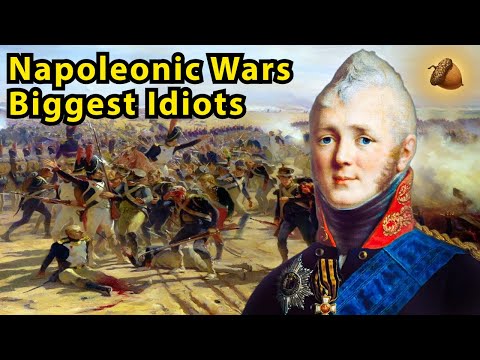
Despite generals' caution, Alexander insisted on fighting after Austerlitz. His poorly coordinated army, stretched across foggy fields, was vulnerable. Napoleon exploited the Pratzen Heights gap, leading to Russia's humiliating defeat. Campaigns in 1807 at Eylau and Friedland brought further defeats, forcing the Treaty of Tilsit. Through pride, naivete, and stubbornness, Alexander committed Russia to unwinnable wars. In 1812, Napoleon invaded Russia with the Grand Army. Alexander, now defender, saw French cross the Neman and occupy Smolensk within a month, losing vast stretches of territory. Forced into defensive strategy, Moscow's burning in September 1812 set the campaign's tone. Against prestige logic, Alexander refused to negotiate, even as his capital burned.
Over a brutal winter, Napoleon's Grand Army disintegrated in snow, harried by Russians and starvation, with hundreds of thousands dead. By 1814, Alexander's armies entered Paris, and the Tsar claimed victory. Convinced of his divine mission, he pushed for conservative order, ruthlessly executing liberal reformers, dissident nobles, and Polish nationalists in the name of a "Holy Alliance." Russia survived, but Alexander's hubris and poor judgment prolonged the wars, costing his empire hundreds of thousands of lives. Despite his triumph, he was one of the greatest fools of the Napoleonic Wars, an overconfident emperor who thought he could play chess with cannons.
So, the next time someone tries to tell you history is a dry recounting of grand strategies and brilliant leaders, remember these names. Remember Mack, who surrendered an army without a fight. Remember La Cuesta and his Spanish peers, whose stubborn incompetence squandered entire nations. Recall Junot, lost in an opium haze, and Murat, the peacock king who chose flair over foresight. Do not forget Grouchy, deaf to the cannons of destiny, and Alexander, whose pride cost countless lives. These figures are not footnotes, but monumental examples of how profound stupidity, staggering arrogance, and sheer boneheadedness can shape empires, redraw maps, and make a legend out of merely competent opposition. History, it turns out, is far nuttier, far filthier, and infinitely weirder than any textbook will ever dare to admit. It is a testament to the enduring power of human folly.