Forget the sanitized portraits in your history textbooks, the Tudors weren't all stately gowns and noble pronouncements. This was an era where political intrigue could cost you your head literally, where daily life was a minefield of accidental death, and where the most powerful figures in the land were often as unstable as a house of cards in a hurricane. From monarchs who turned their kingdom into a personal dating app with lethal consequences, to medical practices that would make a modern doctor blanch, Tudor England was a place where survival was a daily gamble, and the rules of the game were often rewritten by the whim of a king or queen. It was a time of brutal change, bizarre beliefs, and a body count that would shock even the most hardened modern sensibilities.
Henry VIII's Lethal Blind Date
Dating in the 16th century was, in many ways, far more high-stakes than today's swiping culture. Imagine the pressure on Thomas Cromwell, a man who had clawed his way from the humble beginnings as a blacksmith's son to become Henry VIII's chief minister, one of the most powerful figures in England. His assignment: find the notoriously particular king a new wife after the death of Jane Seymour in childbirth. The year was 1539, and Cromwell, ever the pragmatist, sought a political alliance. He arranged a marriage between Henry and Anne of Cleves, a German princess from the Duchy of Cleves, hoping to counterbalance the burgeoning power of the Catholic Habsburg Dynasty with a Protestant alliance.
Cromwell, relying on the artistic assurances of Henry VIII's court painter, Hans Holbein the Younger, presented the king with a portrait of Anne. However, upon her arrival in England, Henry's reaction was less than enthusiastic. He complained that Anne bore little resemblance to her painted image, famously stating he saw "nothing in this woman as men reported of her." Henry, whose pursuit of beautiful women was legendary and whose marriages were many, refused to consummate the union. While some contemporary accounts suggest Anne was not dramatically different from her portrait, whispers of Henry's own impotence, his inability to perform in the bedroom, began to circulate, potentially offering an alternative explanation for his displeasure.
Regardless of the true reason for his dissatisfaction, Henry, unwilling to shoulder the blame, turned his wrath upon Cromwell. Accusing his once-trusted advisor of deception, the king initiated Cromwell's swift downfall. Within months, Cromwell was charged with treason and heresy. His execution took place on July 28, 1540. The execution itself was reportedly gruesome, with some accounts suggesting Cromwell's enemies may have bribed the executioner to botch the job, leading to multiple swings of the axe. Fortunately for Holbein, the painter, he emerged from the ordeal unscathed, perhaps suggesting that Henry's grievances were indeed more politically motivated, or perhaps a convenient cover for his personal failings, than a true artistic critique.
Thought Crimes and a King's Paranoia
Henry VIII's reign was characterized by an insatiable appetite for power and a disturbing penchant for beheadings, which some historians suggest he enjoyed more than food. This grim tendency reached new heights with the passing of the 1534 Treason Act, an infamous piece of legislation that transformed Tudor England into a chilling, Orwellian dystopia where even unspoken thoughts could lead to the gallows. The Act was a direct consequence of Henry's desperate desire for a male heir and his subsequent break from Rome. Unable to secure a divorce from Catherine of Aragon within the strictures of Catholicism, Henry declared himself the supreme head of the newly established Church of England, a move designed to consolidate his authority over both temporal and spiritual matters.
To cement his position and crush any dissent, the 1534 Treason Act made it a capital offense to deny the king's supremacy over the Church, to wish harm upon the monarch, or even to suggest that Henry was a heretic or a tyrant. This sweeping law had a profoundly chilling effect on public discourse, forcing individuals to guard their words and writings meticulously lest they be accused of treason and face dire consequences. It became a potent tool for Henry to eliminate any perceived threats to his absolute rule.
The list of Henry's victims under this Act is long and distinguished. Sir Thomas More, a brilliant lawyer, writer, and former Lord Chancellor, was executed in 1535 for refusing to acknowledge Henry as the head of the Church and opposing his annulment. John Fisher, the Bishop of Rochester and a leading Catholic theologian, met the same fate in 1535 for similar reasons. Even members of Henry's own family and inner circle were not safe. Thomas Seymour, brother of Henry's third wife Jane Seymour, was executed in 1549 for treason, accused of attempting to marry Princess Elizabeth without royal consent. Perhaps most famously, Anne Boleyn, Henry's second wife, was charged with adultery, incest, and treason, and executed in 1536, charges widely believed to have been fabricated by Henry to clear the way for his marriage to Jane Seymour. Hundreds more, many of them highly influential figures, were jailed or executed, victims of Henry's escalating paranoia and his insistence on being the ultimate authority, with God's ear and a ready axe.
The 1534 Treason Act transformed Tudor England into a chilling, Orwellian dystopia where even unspoken thoughts could lead to the gallows.
A Catalogue of Curious Catastrophes
Tudor England was a period of intense social and economic upheaval, marked by a mass migration from rural areas to burgeoning cities. This rapid urbanization introduced new environments and technologies, many of which were still poorly understood, leading to a surprising array of accidental and often bizarre deaths. Take ratsbane, for example, the common name for arsenic. This readily available poison served multiple purposes in Tudor households: a rodenticide, a murder weapon, and even, paradoxically, a medicine. As cities grew, so did the rat population, making ratsbane a household staple, as common as flour or tea. Predictably, this accessibility led to tragic mix-ups.
One Leicestershire housewife, Barbara Gilbert, accidentally poisoned herself when she mistook ratsbane for flour while preparing a meal for her family. Another unfortunate woman, seeking beer for her sick husband (beer often being safer than water in those days), picked up ratsbane instead, with fatal consequences. Beyond accidental ingestion, arsenic was also a favored instrument for more deliberate ends. Sir Thomas Overbury, a writer and courtier, was poisoned in 1613, just after the Tudor period, but his story began within it. Imprisoned on trumped-up charges for opposing the marriage of his friend Robert Carr to Countess Frances Howard, Overbury was allegedly poisoned with arsenic by the Countess, who feared he would expose her scandalous affairs. Despite initial reports of natural causes, his body, covered in black spots and with putrefied organs, revealed the truth. Several jailers were executed for their role, though the Countess herself, being of noble birth, avoided punishment.
Even mundane household items presented unexpected dangers. The practice of smoking meat was widespread, with large slabs of bacon, known as flitches, often hung in chimneys to cure. This seemingly innocuous tradition turned deadly for Elizabeth Brown, a servant. The rope supporting the bacon in the chimney snapped, sending the heavy flitches crashing down on her as she warmed herself by the fire. She sustained severe injuries and died four days later. New technologies also carried unforeseen risks. The advent of clock towers, a marvel of engineering, introduced new hazards. In 1513, in Bungay, Suffolk, a laborer named John Townsend was repairing a large church clock mechanism when it slipped from his grasp. It fell, striking a young boy named William Brett on the head, killing him the next day. Such incidents, involving falling clock weights and other components, became increasingly common as clock-making proliferated, highlighting a world where even the march of time could be a perilous affair.
The King's Ailments: A Recipe for Tyranny
To truly understand the capricious and often cruel nature of Henry VIII, one must delve beyond his political machinations and into the deteriorating state of his health. While he was a fit and athletic young monarch, his love for jousting proved to be his undoing. He sustained numerous jousting injuries throughout his life, which left him with chronic pain and significant mobility issues. A particularly severe leg wound, acquired in 1536, never fully healed, developing into a persistent ulcer that caused immense discomfort and often rendered him unable to walk or stand for extended periods.
As he aged, Henry's lavish lifestyle, characterized by sumptuous feasts, combined with his declining mobility, led to severe obesity. Some accounts suggest he weighed as much as 400 pounds towards the end of his life. This extreme weight gain brought a cascade of other health problems, including heart disease, hypertension, and diabetes. Compounding his physical suffering, Henry was also believed to have grappled with a range of mental health issues, including profound depression, anxiety, and an escalating paranoia. Historians often draw a direct line between his chronic physical pain and his increasingly erratic and tyrannical behavior, suggesting that his ailments fueled his mental instability.
The picture that emerges is one of a physically disabled, severely overweight, depressed, and deeply paranoid king, driven by an almost psychotic obsession with securing a male heir. His willingness to fundamentally alter his kingdom's religion to achieve his personal desires, coupled with his volatile mental state, created an environment of profound instability. For anyone unfortunate enough to be in Henry VIII's court, particularly those in positions of influence, life was a constant tightrope walk, with the king's unpredictable wrath a perpetual threat.
Curious Cures and Deadly Cosmetics
Tudor medicine, by modern standards, often appears more dangerous than the diseases it purported to cure. The widespread use of arsenic, or ratsbane, exemplifies this paradox. While primarily known as a poison for pests and people, this "little larceny" also found its way into the medical and cosmetic practices of the era. It was administered topically as lotions and ointments, and orally in small doses, particularly as a treatment for skin conditions like psoriasis and eczema. Though believed to possess anti-inflammatory properties, its application often resulted in significant side effects, ranging from severe skin irritation to outright poisoning.
Arsenic also played a prominent role in Tudor beauty standards. Many women embraced arsenic-based products to achieve the fashionable pale, almost translucent complexion. Queen Elizabeth I herself was reportedly fond of these cosmetics, and some historians theorize that her extensive use of arsenic-laced makeup may have contributed to her death from blood poisoning. The quest for beauty, it seems, could be a fatal endeavor.
Another ubiquitous and often disastrous medical practice was bloodletting. Based on the ancient Greek concept of the four humors (blood, phlegm, yellow bile, and black bile), Tudor physicians believed that illness stemmed from an imbalance of these bodily fluids. To restore balance, blood was removed from patients through various methods: incisions with a knife or lancet, the application of cupping glasses to create suction, or the direct use of leeches. Diet, lifestyle, and climate were all thought to influence humoral balance; for instance, consuming too much meat was believed to increase "hot" or "choleric" yellow bile, leading to fever and inflammation. While the theory aimed to restore health, the reality was often the opposite: bloodletting frequently weakened patients further, exposing them to dangerous infections and complications, making the cure far worse than the original ailment.
Bloody Mary's Fiery Crusade
Long before the cocktail, there was Queen Mary I, daughter of Henry VIII and his first wife, Catherine of Aragon. Her brief but brutal reign, lasting just five years from 1553 to 1558, earned her the chilling moniker "Bloody Mary." A devout Catholic, Mary was determined to reverse the Protestant reforms of her father and half-brother, Edward VI, and restore England to the Catholic fold. She swiftly repealed Protestant-friendly laws and enacted new legislation supporting Catholicism, bringing in staunchly Catholic Spanish advisors who encouraged her severe persecution of Protestants.
The systematic persecution began in earnest in 1554 with the passing of the Heresy Acts, which criminalized any questioning of Catholic doctrine, particularly the belief in transubstantiation (the literal transformation of bread and wine into the body and blood of Christ during communion). Protestants who refused to recant their beliefs were given a stark choice: convert to Catholicism or be burned alive. The most infamous cases were the Oxford Martyrs: three prominent Protestant Bishops, Hugh Latimer, Nicholas Ridley, and Thomas Cranmer. Charged with heresy, they were burned at the stake in Oxford in 1555, their gruesome deaths intended as a stark warning to others.
During Mary's reign, estimates of those executed range from 280 to over 600 people. The majority were burned at the stake, while others faced the gallows or the executioner's axe. Countless more were imprisoned or forced to flee the country. The persecution extended beyond England's borders, with the Catholic Archbishop of Dublin, George Brown, overseeing similar burnings in Ireland. Mary's brutal campaign, however, proved deeply unpopular, sparking widespread unrest and protest throughout England. Her death, believed to be from uterine cancer, ultimately brought an end to her fiery crusade. Her half-sister, the Protestant Elizabeth I, succeeded her, promptly reversing Mary's religious policies and re-establishing Protestantism as the official religion of the realm.
During Mary's reign, estimates of those executed range from 280 to over 600 people. The majority were burned at the stake, while others faced the gallows or the executioner's axe.
The Priest Hunter's Cruel Persuasion
With Elizabeth I's ascension, the religious pendulum swung back, and it was now the Catholics who faced the wrath of the state. One of the most notorious figures of this period was Richard Topcliffe, chillingly known as "the priest hunter." A Member of Parliament and a justice of the peace, Topcliffe also served as a pursuivant, a government agent tasked with apprehending religious dissidents. He quickly gained a reputation for extreme cruelty and his unhesitating use of torture to extract confessions and information.
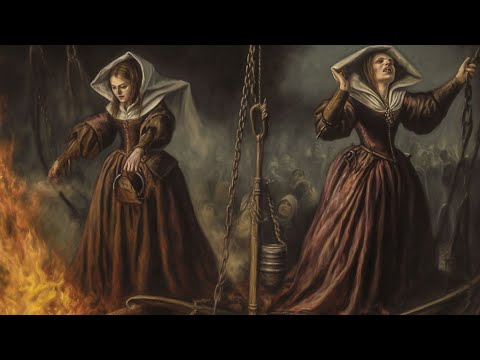
Topcliffe's primary target was Catholic priests, whom he viewed as a direct threat to the stability of the Protestant state. His methods were barbaric. He employed a particularly infamous torture device, colloquially known as "Topcliffe's persuasion," which involved suspending a prisoner from the ceiling and repeatedly dropping them until they confessed. After securing a confession, often under duress, Topcliffe would frequently attend the subsequent trials, ensuring a guilty verdict, and then personally oversee the executions. For those convicted of treason, the punishment was especially brutal: they were hanged, but cut down before unconsciousness, then disemboweled and quartered while still alive.
Beyond physical torment, Topcliffe reveled in the psychological humiliation of his prisoners. He would taunt and insult them publicly, often forcing them to kneel and kiss his hand as a final act of degradation before their deaths. He cultivated an extensive network of spies to monitor suspected Catholics and was not above using blackmail and other underhanded tactics to achieve his aims. His relentless pursuit led to the arrest and execution of dozens of Catholic priests and other religious figures, including the revered Jesuit priest Edmund Campion, who was tortured and executed in 1581, a testament to Topcliffe's unwavering zeal and brutality.
The Age of Witch Mania
Amidst the religious turmoil and political intrigue, the Tudor era also coincided with a terrifying phenomenon known as "witch mania." While Catholicism and Protestantism vied for dominance, one thing nearly everyone, regardless of their faith, agreed upon was the malevolent nature of witches. Driven by pervasive fear, deep-seated superstition, and often mass hysteria, thousands of women across England were accused and executed for practicing witchcraft.
The trials themselves were often characterized by bizarre accusations and flimsy evidence. One of the strangest was the Witches of Warboys trial, which took place in Huntingdonshire in 1593. Four women from the village were accused of witchcraft and "ungodly supernatural acts." The accusations were wild: claims of flying on broomsticks, casting spells on local livestock, and transforming into animals like dogs and cats. The primary accusers were two young girls, Jane Willis and Susan Lathrop, who claimed to have been bewitched, experiencing hallucinations and seizure-like fits. Despite the fantastical nature of the charges, the women were found guilty and sentenced to death. Their trial and execution became a national sensation, held up as a stark warning against the perceived dangers of witchcraft.
Further north, in Scotland, the North Berwick Witch Trials between 1589 and 1591 saw a group of women accused of plotting to kill King James VI through witchcraft. The king himself became personally involved in the investigation and prosecution, a testament to the era's profound belief in the supernatural. These trials ultimately led to the execution of more than 70 people. The rampant witch hunt hysteria was not merely a product of irrational fear; it was exacerbated by the drastic social and economic changes sweeping through Tudor society. The dissolution of monasteries, the privatization of common lands, and the rise of capitalism created immense upheaval, leaving many struggling to survive. In this climate of uncertainty and hardship, witches became convenient scapegoats, blamed for everything from crop failures to illness, providing a dark outlet for societal anxieties.
The Tudors, then, were not merely figures from dusty portraits or dry historical accounts. They presided over a world that was, by turns, magnificent and monstrous, where daily existence was fraught with perils that defy modern imagination. From the capricious whims of monarchs to the unseen dangers lurking in everyday life, to the brutal enforcement of religious conformity and the terrifying grip of superstition, Tudor England was a place where survival was never guaranteed, and the line between life and death was often terrifyingly thin. It was a testament to human resilience, but also a stark reminder that history, in its raw, unfiltered truth, is always far nuttier, filthier, and weirder than any school textbook could ever convey.