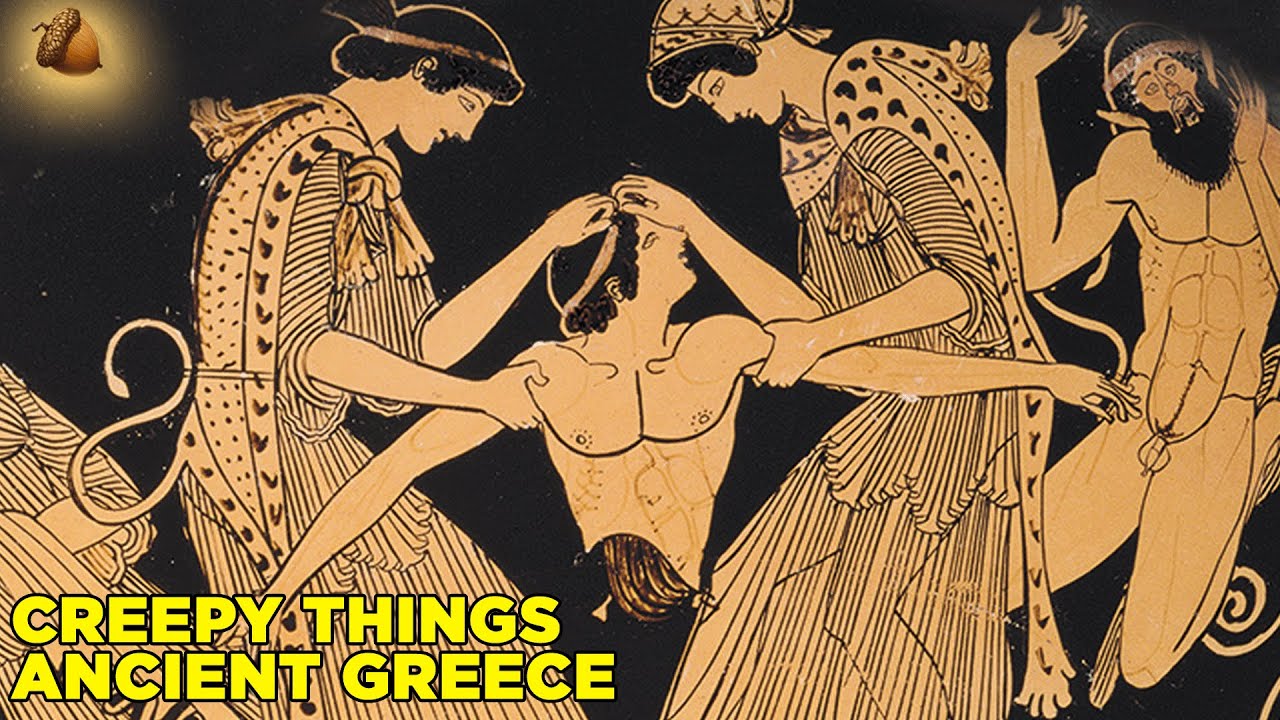
Forget the sun-drenched, chiseled warriors of Hollywood's imagination, the noble, self-sacrificing heroes standing against impossible odds. That image of Sparta, so often parroted in classrooms and pop culture, is a carefully curated fantasy. The truth, as it so often is with history, is far more unsettling, a brutal tapestry woven with threads of totalitarian control, engineered cruelty, and a chilling disregard for individual life. While Athens debated philosophy and democracy, Sparta was busy perfecting a system designed to strip humanity down to its most savage, utilitarian core, creating a society that was less a utopian ideal and more a meticulously crafted machine of war, built on secrets far darker than any textbook dares to admit.
The Spartan Cradle: Wine Baths and Mount Taygetus
From the moment a Spartan boy drew his first breath, his life was not his own. The state, not the family, laid claim to him. Immediately after birth, these newborns were subjected to a bizarre ritual: a bath not in water, but in wine. The belief was that this would fortify the infant, hardening his constitution from day one. But this strange ablution was only the prelude to a far more terrifying ordeal. Parents were then expected to present their tiny charges to the Gerousia, the Council of Elders, for inspection. For those unfamiliar with the minutiae of Spartan governance, the Gerousia was one of the two chief organs of the Spartan government, comprised entirely of men over the age of sixty. Their sole qualification for this immense power was simply outliving the average Spartan lifespan, a grim testament to the society's values.
Picture this: a council of ancient, hardened men, their faces etched with decades of Spartan discipline, scrutinizing a helpless infant. Their task was to determine if the child was "worthy of living." They scoured the baby for any perceived deformity, disability, or weakness. Any imperfection, any sign that the child might not grow into a perfect warrior, could seal its fate. These senators, steeped in the cold apathy of Spartan ideology, were essentially looking for any excuse to discard a life. If the infant failed this initial, harrowing assessment, it faced a final, brutal test. The parents were instructed to take their baby boy to the base of Mount Taygetus and leave him there, utterly alone, for days.
This was not some symbolic gesture, but a death sentence delivered by exposure. The infant would face the elements: hunger, thirst, extreme weather, and the very real threat of being devoured by wild animals. The official line was that if, by some miracle, the baby survived this ordeal, it would be welcomed back into Spartan society, a reward for its "dumb luck." However, it requires little imagination to grasp just how exceedingly rare such a survival story would have been. Occasionally, if an infant was truly fortunate, they might be rescued by Helots, the state-owned slave class, or by passing foreigners, a grim irony given the Spartans' disdain for both. Spartan parents, it seems, were masters of "tough love," to the point of outright cruelty. Before even the initial inspection, mothers would sometimes bathe their infants repeatedly in wine, practically waterboarding them, in a desperate, misguided attempt to toughen them up. Infants were also willingly left unattended by parents, an early conditioning designed to accustom them to the relentless hardships that defined Spartan existence.
Seven and Sent Away: The Agoge's Brutal Embrace
Life in Sparta, far from improving, only grew harsher as one aged. Unlike modern societies where young adults often cling to the family home well into their twenties, Spartans were far sterner. Male children were forcibly removed from their parents' homes at the tender age of seven. This wasn't a parental choice, but a statewide mandate. These young boys were sent to begin the agoge, a rigorous education and training program that was mandatory for every Spartan male child, with the sole exception of the firstborns of the ruling houses (the Eurypondid and Agiad dynasties).
These seven-year-olds, fresh from their families, were transferred to communal barracks, instantly expected to behave like seasoned soldiers. While they did receive instruction in reading, writing, morality, social communication, rhetoric, poetry, hunting, and survival skills, these academic pursuits were secondary. The program's overarching goal was singular: to forge these adolescent boys into perfect Spartan warriors. They were spoon-fed unwavering loyalty to Sparta, subjected to severe martial training and combat drills, and conditioned to excel at stealth and pain tolerance. Surrender, under any circumstances, was simply not an option. Food was intentionally kept scarce in the barracks, not just to keep the boys lean and fit, but to force them to acclimate to the hunger and thirst that were inevitable companions on the battlefield. This scarcity also served another, more insidious purpose: it motivated them to steal food, thereby honing their stealth tactics. If, however, a boy was caught in the act of stealing, he would be severely beaten and flogged, not for the theft itself, but for the unforgivable sin of being careless enough to get caught.
The council was responsible for deciding if a newborn child was worthy of living or not. If that doesn't shiver your bones with how cold an apathetic Spartan society was, maybe you should take one of those "Are you a sociopath" tests.
As if the physical rigors weren't enough, the educators and administrators of the agoge believed that bullying and discord among the students were essential for developing their personalities. They actively sought opportunities to ignite arguments and provoke violence among the boys. While Spartans admired wit, the agoge was not in the business of creating bards; it was creating hardcore soldiers. So, while a clever remark might be acknowledged, it often served as an invitation for a physical altercation. Fighting and hazing were daily occurrences. It was not uncommon for one or two students to go to sleep each night with a black eye, a bruised leg, or even a broken shoulder. The teachers firmly believed that these constant scuffles were a vital means to eliminate "bad traits" such as weakness, cowardice, and timidity from their young charges, ensuring only the most brutal and resilient survived.
Breeding Soldiers: The Spartan Woman's Role
While Spartan boys were whisked away to the barracks, girls remained with their families, learning the intricacies of running a household from their mothers. However, this domestic education did not preclude intellectual and physical training. The educational program for girls, while different in focus, was no less rigorous than that for boys. Instead of heavy martial training, Spartan girls were taught dancing, gymnastics, javelin throwing, and discus. These skills were not merely for recreation; they were cultivated to enable them to compete in events like the Heraean Games, a distinct athletic festival for women. But make no mistake, the ultimate objective of this training was not personal achievement or athletic glory.
Spartans believed that such physical conditioning helped women become stronger, healthier mothers. In Sparta, gender roles were starkly, brutally clear: males were mandated to become soldiers, and females were mandated to birth more soldiers. They were, in essence, nothing more than cogs in a larger military machine, their individual desires and aspirations subsumed by the state's insatiable need for manpower. Their bodies, their lives, their very purpose, were all dedicated to the perpetuation of Sparta's martial dominance.
The Spectacle of Pain: Dimastigosis and Endurance
Even outside the structured brutality of the agoge, Sparta's recreational practices revolved around pain and endurance. Their version of a competition was a contest known as Dimastigosis, a chilling display of human resilience. This annual event involved adolescents being flogged, often quite savagely, in front of an altar at the Sanctuary of Artemis Orthia. Originally, this practice served a dual purpose: it was a religious ritual, an offering to the goddess, and simultaneously a test of the boys' bravery and their resistance to pain. The winner of this gruesome contest was determined by who could endure the torment for the longest period. The truly horrifying aspect, however, was that there was no upper limit to the torture or flogging. Boys were brainwashed from an early age to resist pain for as long as humanly possible, pushed to the very brink of collapse. The unspoken, yet widely understood, rule was simple: "if somebody succumbed to pain, or as we say in common terms, if he dies, he dies."
This macabre ritual, already extreme, devolved further when Greece fell under Roman rule. By the 3rd Century AD, Dimastigosis had transformed into an outright blood sport. An amphitheater was constructed, not for gladiator contests, but specifically so that scores of tourists could gather and cheer on the grisly ordeal, turning a sacred, if brutal, rite into a grotesque public spectacle. It was a stark demonstration of how far a society could push the boundaries of human suffering in the name of tradition and entertainment.
The Unseen Engine: Helots, the State's Property
With every male resident designated as a soldier and every female occupied with childbearing or household management, a fundamental question arises: who performed the labor? Who sustained the society, tilled the fields, and carried out the myriad menial tasks? The Spartan solution was a vast, exploited slave class known as the Helots. Sparta's stratified society relegated all non-martial and non-political jobs to non-citizens. Free non-citizens, called periokoi, were responsible for merchandising and trade-related professions. But the Helots, a state-owned serf class, were doomed to perform all the backbreaking manual labor at the behest of the government.
It's crucial to understand that, unlike other ancient societies, Helots were not privately owned. In a system strikingly similar to some communist ideologies, Spartan society adhered to the principle of "we over I." All property, including slaves, was owned by the state. The Helots were most likely the indigenous people of Laconia and the nearby region of Messenia, forcibly reduced to a slave race after being conquered by invading Dorian people, a collective term for the Macedonian tribes from the north who had swept through the Peloponnese. Each Helot was assigned to work the land of a specific citizen, but because they were owned by the state, their assigned "master" had no right to sell or liberate them. Helots had no political or voting rights, yet they were allowed to marry and possessed a limited right to own property, provided they paid their master's share. Despite these minimal concessions, they were accustomed to harsh and sadistic treatment from their Spartan overseers, who often considered them nothing more than toys or pets.
Spartans believed that such training helped them to become better mothers. In Sparta both genders had a clear divided responsibility, males were mandated to become soldiers and females, well, they were mandated to birth more soldiers. They were nothing more than parts of a machine.
The Spartans loved to humiliate their Helots at every possible opportunity. Slaves were frequently forced to drink themselves into intoxication, their drunken antics then used as a grotesque object lesson to teach Spartan children about the vices of drinking. But Sparta was acutely aware that this systematic abuse and exploitation could, and often did, come back to haunt them. At its peak, the Helot population outnumbered the Spartan army by an astonishing ratio of seven to one. On one hand, this vast workforce ensured that every Spartan household had food on its table. On the other, the Spartan government lived in constant dread of a Helot uprising. They knew that if the Helots ever united and rebelled, not even Ares, the god of war, would be able to save Sparta.
The Annual Harvest: Krypteia's Bloody Secret
For the Spartan authorities, Helots were simultaneously indispensable tools for servitude and a dangerous, ever-growing "pest problem." To manage this perceived threat, Sparta devised a chilling institution known as the Krypteia. When the ephebes, the younger men undergoing martial training, reached the age of twenty, they were assessed for potential leadership roles. These aspiring leaders were then given an opportunity to test their mettle by participating in the Krypteia, a sort of secret police akin to Hitler's Gestapo or modern Iran's Guidance Patrol. This task force was specifically assigned to keep watch over Helot settlements and to snuff out any nascent spark of rebellion.
Every fall season, the Spartan ephebes would declare an unofficial war on the Helots. Under the cloak of darkness and secrecy, these young soldiers were given free rein to kill as many Helots as they could. This annual purge was not a random act of violence; it was a calculated, strategic culling aimed at eliminating the strongest, most inspiring, and most motivated slaves. Its purpose was two-fold: to instill terror and submission among the Helots, and to deliberately reduce their numbers, ensuring they could never grow strong enough to mount a successful uprising. Soldiers who participated in this brutal "harvest" were considered elite within their ranks. Their ruthlessness earned them notoriety and significantly boosted their prospects for climbing the social ladder. The Krypteia was the ultimate expression of Spartan paranoia and their willingness to commit unspeakable acts to maintain their rigid, brutal order.
So, there you have it: the Sparta that history textbooks rarely touch, the one that Hollywood conveniently ignores. It was a society built not on ideals of freedom or individual worth, but on an unyielding, almost pathological, dedication to military might, maintained through systematic cruelty and constant, existential fear. History, as we at Nutty History always say, was far weirder, filthier, and more terrifying than you were ever taught in school, and Sparta stands as a chilling monument to that truth.