Ancient history, the kind they gloss over in school, rarely mentions the true architects of civilization. Forget the grand temples and the epic battles for a moment. What if the very foundations of human society, from the first settled villages to the most complex spiritual rites, were built not just on grain and laws, but on good old-fashioned mind-altering substances? It sounds like a stoner's fantasy, but the archaeological record, once stubbornly ignored, now reveals a far trippier truth about our earliest ancestors. In Mesopotamia and Egypt, the cradles of civilization, a potent cocktail of cannabis, opium, and even psychedelic flowers helped shape everything from medicine to religion, making our progenitors far wilder than any textbook dares to admit.
The First High: Civilization's Chemical Catalyst
About 12,000 years ago, humanity made a monumental leap: farming. In the Fertile Crescent, that arc of highly productive land stretching from the Nile to the Tigris, agriculture was likely the very first step toward organized civilization. But as bizarre as it may sound, the second step, often overlooked, was alcohol. Humans didn't just learn to grow crops, they learned to ferment them, transforming simple grains and fruits into mind-altering substances. For better or worse, psychoactive drugs have been an integral, if often unacknowledged, part of human culture and civilization from the very beginning. This peculiar mystery, the pervasive use of narcotics in antiquity, was long met with denial by some archaeologists, who clung to a more conservative vision of the eastern cradles of civilization, including Mesopotamia, Egypt, the Indus Valley, and China. Yet, the truth is, these early civilized folks smoked, ingested, and imbibed pretty much anything they could lay their hands on.
The first significant drug to spread across vast swathes of early civilization was most likely good old hemp, thanks to nomadic peoples like the Yamnaya. These livestock herders, originating from the Eurasian Steppe north of the Black Sea and in the Caucasus mountains, were a powerhouse of cultural diffusion. Considered one of the three key tribes that founded European civilization, the Yamnaya began their eastward expansion around five millennia ago, and they brought cannabis along for the ride. They spread the growth and use of cannabis throughout Eurasia, ensuring that everyone from Mesopotamia and Egypt to Greece and Rome eventually got their hands on it. This was no small feat, essentially establishing the world's first intercontinental drug trade route.
Yamnaya's Bloody Legacy: The Original Dealers of Dope and Destruction
The Yamnaya, while instrumental in the spread of cannabis, were not exactly peace-loving hippies. Their history is, in fact, full of violence, much like any drug baron's. These nomads are, astonishingly, the reason why the origins of Stonehenge remain a mystery to some historians today. When the Yamnaya arrived in Britain 5,000 years ago, they didn't just settle; they wiped out the entire peaceful population of farmers who were the original Britons and, crucially, the builders of Stonehenge. A similar, brutal fate befell many other original European populations, who simply vanished after the Yamnaya's arrival. These formidable nomads traveled on horseback from place to place across Europe and South Asia, bringing with them not only their culture but also their "good old Mary J."
Archaeological digs in the Caucasus have provided concrete evidence of their cannabis use, uncovering braziers containing seeds and charred remains of the plant dating back to approximately 3000 BC and even older. This physical evidence is hard to dispute, despite the lingering skepticism of some conservative archaeologists. Their biggest issue with the Yamnaya being the original dope dealers of the Stone Age is that the ancient texts from these regions are largely silent on the matter of using hallucinogenic substances for recreational purposes. However, the silence of texts does not dismiss the compelling archaeological findings, nor does it strengthen the outdated theory that hemp was strictly used for making only ropes. The evidence points to a much more complex and, frankly, much more fun history.
"The silence of texts does not dismiss the compelling archaeological findings, nor does it strengthen the outdated theory that hemp was strictly used for making only ropes."
From Rope to Remedy: Cannabis in the Cradle of Civilization
Moving into the more detailed records of ancient Egypt and Mesopotamia, cannabis certainly has a documented history of medical use in both civilizations. The primary challenge for modern researchers lies in the language and script; these ancient records are in languages that have not been spoken or read for thousands of years, meaning we don't have a clear, direct understanding of how they referred to cannabis. The texts don't exactly say "Mary Jane" or "420," using different names for their herbs. However, there aren't many plants that one can use to make both sturdy ropes and potent brownies, which helps narrow down the possibilities. Fortunately, a clay tablet from Assyrian times leaves very little room for debate about the medical use of cannabis. This tablet named a total of over 400 drugs, and a little detective work reveals that cannabis is indeed shortlisted among them.
The Egyptians, on the other hand, offer much more concrete evidence of their fondness for cannabis. Their detailed descriptions of medical treatments in the Remission Papyrus and the Ebers Papyrus clearly depict how popular cannabis was as a medical remedy. For instance, to treat glaucoma, cannabis was meticulously ground with celery and left overnight. This preparation was then used the following morning to wash the eyes of suffering patients, and it did, to a degree, work. The Ebers Papyrus also recommended cannabis, ground with honey, to be used as a feminine remedy. Interestingly, modern science is now exploring cannabis for its potential to treat menstrual pain and discomfort, as well as endometriosis, showing a remarkable continuity of understanding across millennia.
Beyond its medicinal applications, cannabis also held an important role in Egyptian religion and ritual. Its presence has been noted in many old Egyptian tombs and graves, including that of the legendary Pharaoh Ramses II. The goddess Seshat, the deity of wisdom, and Bastet, the feline goddess of war, both had cannabis depicted in their lore and imagery. It was also believed that this drug was part of the profession of witchcraft. Furthermore, if people consumed weed during certain rituals and festivities, as evidence suggests, it strongly indicates that Egyptians and Mesopotamians also consumed it recreationally. This wasn't just medicine; it was part of their celebrations, their spiritual journeys, and their daily lives.
The Happy Plant: Opium's Ancient Empire
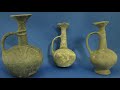
For a staggering 8,000 years, opium was an ever-approved, next-door medicine, a panacea for nearly all maladies. Whether it was the Sumerian civilization, Egyptians, Chinese, Indians, Greeks, Romans, Arabs, or people in medieval and Renaissance Europe, opium was utilized for medicinal purposes, rituals, and, of course, recreation all over the world. While we've previously discussed the popularity of poppy capsules in ancient Greece and Rome, and how opium made its way from the East to Europe in small flasks resembling the shape of poppy capsules, its roots stretch far deeper into antiquity. Archaeological excavations have unearthed ancient ceramic pots, nearly identical in shape to those five-inch-long flasks, discovered in tombs and settlements throughout the Middle East, dating as far back as 1400 BC. However, the Mesopotamians were taking advantage of opium long before other civilizations had even begun to tap into its potent properties.
Some researchers are quite certain that the Assyrians were fully aware of the plant's properties and knew exactly what its secrets were. They even gave the poppy a telling name: holygill, which translates to the "happy plant." But even before the Assyrians, the Sumerians, between 4000 BC and 3000 BC, engraved tablets describing the collection of poppy juice in the morning and its subsequent use in the production of opium. This indicates a sophisticated understanding and systematic cultivation of the plant for its psychoactive properties thousands of years before many other cultures caught on. The "happy plant" was clearly a significant part of their pharmacopeia and possibly their spiritual practices as well.
Egypt's Poppy Power: Trade, Cultivation, and Sacred Secrets
Jugs containing opium residue have also been found in Egyptian tombs, which comes as no surprise given the extensive cultivation of the poppy in Egypt itself. In the classical era, the extract of the plant was widely known as opium thebiacum, named after the city of Wasat, which the Greeks knew as Thebes. Another version, opium cyrenaicum, was a slightly different variety of the plant grown to the west in Libya. The Egyptians were cultivating opium thebiacum in famous poppy fields around 1300 BC. The opium trade flourished dramatically during the reigns of pharaohs such as Thutmose IV, Akhenaten, and King Tutankhamun. It was traded from Egypt by the seafaring Phoenicians and Minoans to destinations across the Mediterranean Sea, including Greece, Carthage, and various parts of Europe. By 1100 BC, opium was being cultivated in Cyprus, where specialized surgical quality knives were used to score the poppy pods, facilitating the efficient collection of its precious sap.
After the Persian conquest of Assyria and the Babylonian lands in the 6th century BC, the use of opium became generally restricted to a select few: priests, magicians, and warriors. This suggests a shift from broader use to a more controlled, possibly ritualistic or strategic, application. In Egyptian mythology, the invention of opium was credited to the god Thoth, the deity of knowledge and writing. It was said to have been given by the goddess Isis to Ra, the sun god, as a treatment for a debilitating headache. This divine origin story highlights the reverence and perceived power of opium within their culture, elevating it beyond a mere botanical extract to a gift from the gods themselves.
"In Egyptian mythology, the invention of opium was credited to the god Thoth, the deity of knowledge and writing. It was said to have been given by the goddess Isis to Ra, the sun god, as a treatment for a debilitating headache."
A Mother's Little Helper: Opium for the Wee Ones
Despite its restricted use among the elite after the Persian conquest, this doesn't mean that opium wasn't for domestic use in earlier periods. In fact, it was the recommended way to deal with noisy, sleepless babies. Can't make your baby fall asleep? Just give them a draft of opium. Shockingly, this practice remained in use until the Victorian era in Europe, demonstrating an astonishingly long-lived, if ethically questionable, tradition of infant sedation. Imagine the quiet nights, or perhaps, the eerily silent ones, in ancient Egyptian and Mesopotamian households, thanks to this potent sedative. While many people today might associate opium with smoking, particularly in more recent historical contexts, people in ancient Egypt and Mesopotamia consumed opium by eating it. This is similar to how many people consume morphine today for severe coughs, aches, and pains, highlighting a different mode of administration for the same powerful drug.
The Nile's Sacred Buzz: Blue Lotus and Divine Ecstasy
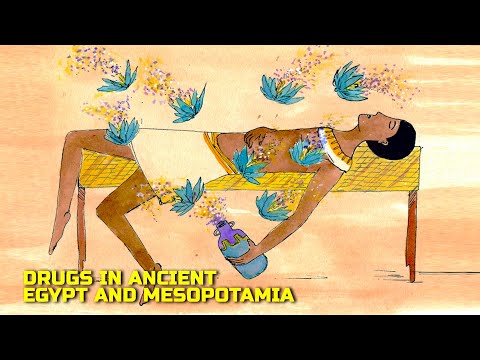
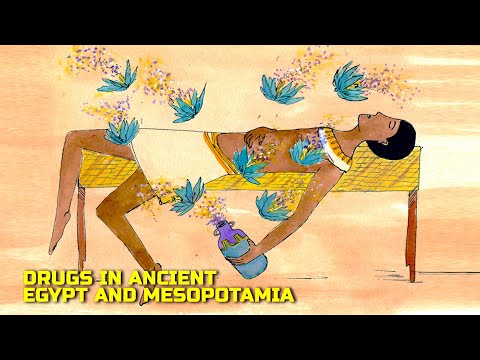
Before Egypt was introduced to hemp or poppy, there was the blue lotus. This stunningly beautiful flower, growing abundantly along the banks of the Nile, was perhaps the ancient Egyptians' very first introduction to narcotics. Also known as the sacred blue lily of the Nile, the blue lotus has been revered by many ancient cultures and civilizations, from ancient Egypt to the ancient Greeks, Tibetans, and beyond. In those distant times, religion, magic, and medicine had very little distinction; ancient Egyptians heavily believed that all parts of life were influenced, and even controlled, by divinity and the supernatural. The blue lotus, therefore, became a central player in their holistic worldview.

The ancient Egyptians had many traditional uses and applications for the blue lotus. The flowers were commonly steeped in wine, which was then shared during religious ceremonies, rituals, and celebrations. The blue lotus was said to possess the power to connect one to the divine, inducing higher states of being and consciousness. To give you a better understanding, blue lotus, taken in excessive quantities, would create a "super duper high." It would also induce a state of euphoria, make people feel relaxed with improved blood circulation, and, perhaps most notably, make it a potent aphrodisiac. The ancient Egyptians were famously liberal when referring to sexuality, and the blue lotus helped them to create rituals and celebrations around this aspect of life. There are countless depictions of these famous celebrations, with the blue lotus often a central symbol within each of them. The flower was so significant that it is even mentioned in the Egyptian Book of the Dead as "the lily which shines in the earth." Today, the blue lotus flower is still used as a sleep aid and anxiety reliever, though it has also been described as a mild stimulant, a testament to its enduring, if varied, psychoactive properties.
So, there you have it: the true, unvarnished history of drugs in ancient Egypt and Mesopotamia. Forget the sanitized versions in your textbooks; these weren't just societies of pyramid builders and scribes. They were societies deeply intertwined with cannabis, opium, and blue lotus, weaving these potent substances into their medicine, their religion, their trade, and even their childcare. History, it turns out, was far nuttier, filthier, and certainly more chemically enhanced than we were ever taught in school. Our ancestors didn't just build civilizations; they built them on a buzz.