Forget the horned helmets and the cartoonish marauders of popular imagination. The Vikings, those fearsome raiders who carved their names across medieval Europe, were not merely bloodthirsty barbarians. They were builders of complex societies, traders, explorers, and, perhaps most surprisingly, architects of an intricate legal system. Yet, beneath this veneer of societal structure lay a justice so unforgiving, so utterly brutal, that it makes modern penal codes seem like a gentle suggestion. Their punishments were not just about retribution, but about honor, sacrifice, and a chilling spectacle designed to ensure no one ever forgot the price of transgression.
The Subtle Art of Homicide (and When it Wasn't So Subtle)
In our modern world, the act of taking a human life is meticulously categorized: premeditated murder, intentional murder, manslaughter. Each carries distinct legal ramifications. In the Viking Age, however, the lines were drawn with a different kind of precision, one steeped in honor and public declaration rather than forensic detail. Killing someone covertly, in the shadows, or without a fair warning, was considered a truly despicable and monstrous act. Such a deed brought immense dishonor upon the perpetrator and their kin, marking them as cowards.
Conversely, the public challenge and subsequent slaying of an opponent in a duel was considered entirely honorable. This was not murder, but a resolution of conflict dictated by custom and courage. Even in cases of manslaughter, or accidental killings, the expectation was clear: one had to take responsibility for the deed. Fleeing was not an option; instead, the accused was expected to obey the local council, the Thing, and pay the compensation imposed. This same principle applied to homicides resulting from brawls or other similar situations where the act was not premeditated or clandestine. The key was transparency and accountability.
However, should one be caught in the dishonorable act of murdering someone in their sleep, by surprise, or without any fair warning, a particularly gruesome fate often awaited them. For these high-profile, deeply dishonorable killings, the accused might be asked to undertake what was known as the fatal walk. This was not merely an execution; it was a public spectacle of suffering, a visceral demonstration of the consequences of treachery. The very nature of the crime, its stealth and cowardice, demanded a punishment that was anything but subtle or quick.
The Fatal Walk: A Gory Procession
The fatal walk was a punishment reserved for those who committed the most egregious, dishonorable murders, a fate vividly recounted in sagas such as the Broader and Yellow Saga. It was a terrifying ordeal designed to maximize agony and public humiliation. The process began with the executioner, not with a swift blow, but with a deliberate, agonizing act: slicing open the prisoner's belly. This was not a quick disembowelment, but an incision that would leave the internal organs exposed, yet mostly intact for the initial phase.
With their guts spilling out, the condemned was then forced to walk to the spot of their execution, often a prominent tree or gallows site. The sheer biological resilience of the human body meant that even with intestines exposed and trailing, a person could remain alive for hours. This walk, therefore, was not a brief journey, but a prolonged, agonizing procession through their own suffering. Every step would be a fresh torment, every breath a struggle against unimaginable pain and the visceral reality of their own unraveling body. Death, in this context, was not a release, but a slow, creeping inevitability.
Upon reaching the designated execution spot, the ordeal was far from over. The spilling guts of the prisoner would then be pulled out further, meticulously unspooled, and used to tie them around the execution tree. This final act was both symbolic and practical, ensuring the condemned remained tethered to their fate, their very essence used to bind them to the place of their demise. If the prisoner was fortunate, they might succumb to shock or blood loss during this horrific process. Otherwise, more agony awaited, as death might take its agonizingly sweet time, leaving the victim to slowly bleed out or succumb to infection over an extended period. The fatal walk was less an execution and more a drawn-out, public performance of extreme suffering, a stark warning etched into the memory of all who witnessed it.
Justice by Assembly: The Thing and Its Power
Despite their portrayal as lawless savages, medieval Nordic peoples, commonly referred to as Vikings, maintained a remarkably complex societal structure that included a well-defined, albeit unique, judiciary system. There was no professional police force or standing army to enforce laws in the way we understand them today. Instead, order was maintained through a decentralized, community-driven assembly known as the Thing, or in Old Norse, the Þing.
The Thing was the governing assembly at the local level, a cornerstone of Viking society. Its purpose was multifaceted: to sort out disputes between individuals, punish crimes, and maintain peace. Or, perhaps more accurately, to keep control over the inherent violence that permeated their world. These assemblies were held periodically, bringing together all free men of the community. In this gathering, laws were recited, disputes aired, and judgments rendered, making it a truly communal exercise in justice.
Each Thing had a designated law speaker, whose vital role was to recite the laws from memory. In a society where writing, beyond runes, was considered somewhat "lame" and not widely used for legal codes, the law speaker was the living embodiment of the legal tradition. The law speaker, alongside the local chieftain, would judge and settle the cases of dispute brought before them. While all free men of the community theoretically had a say in proceedings, the reality was often different. Things were most likely dominated by local powerful families, or even single influential families. The more influence one commanded in the community, the more weight their words carried during the Thing. When a Thing was led by a king, it held even greater sway and was known as the Althing, a grander assembly for matters of wider importance.
"The more influence one commanded in the community, the more weight their words carried during the Thing."
Honor, Theft, and the Unseen Hand of Hel
Understanding Viking justice requires grasping a fundamental tenet of their society: the supreme importance of taking responsibility for one's own actions. If one committed a wrong, they were expected to admit to the deed. The honorable path in Nordic society was to defend oneself at the Thing, to face the community and the consequences of one's actions head-on. This cultural emphasis on honor and open confrontation profoundly shaped their legal distinctions, leading to some surprising hierarchies of crime.
Perhaps the most counterintuitive aspect for modern sensibilities is that theft was often considered a more heinous crime than murder. While killing another human is universally condemned today, in Viking society, if done honorably in combat or a duel, it carried a different weight. Theft, by contrast, was a dishonorable offense, characterized by treacherous and conspicuous intentions. It was an act of stealth and deceit, striking at the very fabric of communal trust. Killing someone in the open, even if unlawful, was seen as a bold, if misguided, act, whereas stealing was considered cowardly. Technically, one had a better chance of getting away with cutting a throat than cutting a purse, a stark illustration of their moral calculus.
It is important to note that our records of Viking social and political conduct are largely based on sagas. These oral literatures, passed down through generations, recount events and customs, but they are not strictly legal texts. Therefore, while they offer invaluable insights, it is wise to approach these accounts of punishment with a pinch of skepticism, acknowledging the potential for exaggeration or embellishment inherent in oral tradition. Nevertheless, the sagas consistently highlight the severity with which theft was treated, often with punishments designed to bring maximum shame and suffering, not merely death.
For a thief, the prospect of being caught was dire. According to the sagas, if one was apprehended for stealing, they might well have hoped to be killed for it, as it was often considered less painful than the alternative punishments. There was no uniform code for capital punishments among the Vikings; sometimes, local Things would operate like a kangaroo court, with villagers raising gallows to hang the guilty until death, or simply opting to chop off a head. Executions in Nordic law were used in the rarest of cases, but hanging was more common than beheading, which was often reserved for slaves. These were more like guidelines than immutable laws, quick ways to dispatch a culprit, but also regarded as the most embarrassing ways to die.
This perception stemmed from a deeply ingrained Nordic belief about the afterlife. To secure an honorable seat at Odin's table in Valhalla, one was expected to die in battle, with a weapon in hand. A thief, dying ignominiously on the gallows, would never get to see Valhalla at the end of the tunnel. Instead, their likely fate was Niflheim, the realm of evil and death ruled by Hel, a cold, desolate place far removed from the halls of heroes. To die a thief's death was to be condemned to an afterlife devoid of honor. However, if the Thing decided against a quick execution, a thief might get to experience a different kind of Niflheim while still alive: the terrifying ordeal of the "hung meat."
The Hung Meat: A Butcher's Nightmare
Mentioned in texts like the Fraffenkel Saga Frysengoda (likely a transcribed rendering of a saga like the Færeyinga Saga), the punishment known as the "hung meat" stands as one of the most plausible, and chilling, physical acts of vengeance recorded. The name itself paints a vivid, gruesome picture, drawing parallels to a butcher shop. Imagine walking past a butcher's window, seeing carcasses hung by their rear tendons, suspended on hooks. Now, picture that, but with a living human being.
That is precisely what the hung meat entailed. The culprit, often a thief, would be hung upside down by a rope. The critical difference, of course, was that the victims of this punishment were still very much alive. Instead of merely tying their ankles with rope, the administrators of this brutal justice would use knives to pierce holes through the victim's heels, precisely behind their tendons. A rope would then be threaded through these agonizing perforations, pulled over a beam, and used to string them up. The pain of this suspension, combined with the inverted position, would be immense and prolonged, a living tableau of suffering.
After the designated duration of the punishment, which could stretch for hours or even days, the guilty individual would finally be cut down. Their ordeal, however, was not over. The Thing would then declare them an outlaw. This was a sentence of social death, effectively banishing them from the community and stripping them of all legal protections. Their property would be forfeited, divided among the community members, leaving them destitute and vulnerable. To be an outlaw meant anyone could kill them without legal consequence, and they would have no recourse. The hung meat was not just a physical torment; it was a complete annihilation of a person's standing, property, and future, a living death sentence that ensured their name would forever be associated with dishonor.
The Blood Eagle: A Winged Sacrifice to Odin
While the punishments previously described were used by Vikings in various cases, there was one particular form of execution reserved for the rarest of the rare, a punishment so utterly brutal and meticulously gruesome that its very existence is still debated by modern scholars: the blood eagle. The most infamous instance of a blood eagle execution is linked to the legendary Viking king Ragnar Lothbrok. After Ragnar was captured and killed by King Ælla of Northumbria, his sons, most notably Ivar the Boneless, invaded Northumbria seeking vengeance. Following Northumbria's fall, Ivar condemned Ælla to the horrific fate of the blood eagle.
Today, the historicity and exact method of the blood eagle remain subjects of intense academic discussion. Many scholars question whether such a ritual torture was ever truly performed, or if it is merely a hyperbolic literary device found in the sagas. One cannot entirely blame them, for the described process of the blood eagle is so cruel and grisly that it strains credulity. Yet, whether it was a fetishized fiction or a repulsive reality, the blood eagle ritual, as described, was a fate one would not wish upon their bitterest enemy, a testament to the extremes of Viking vengeance.
"Whether it was a fetishized fiction or a repulsive reality, the blood eagle ritual, as described, was a fate one would not wish upon their bitterest enemy, a testament to the extremes of Viking vengeance."
Crafting the Eagle: A Manual of Torture
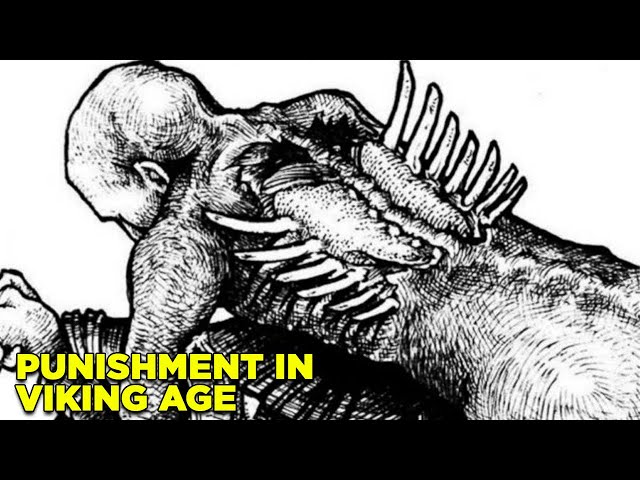
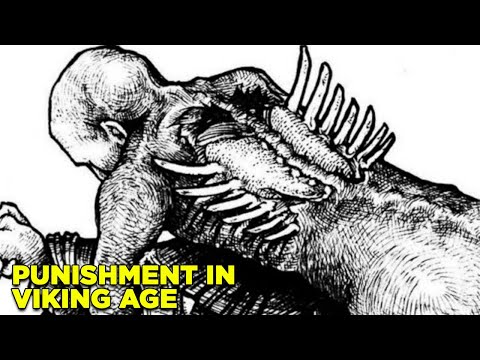
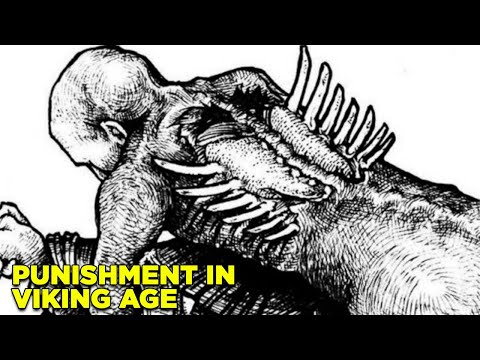
The described procedure for the blood eagle is a meticulous, horrifying ballet of pain. First, the victim's hands and legs would be brutally restrained, often strangled or bound tightly, to prevent any escape or sudden movements that might disrupt the precise torment to follow. The vengeance-seeker would then commence the ritual by stabbing the victim with an axe, starting at the tailbone and working upwards towards the rib cage. This was not a single, fatal blow, but a deliberate, methodical process of separating every single rib from the backbone. The goal was to leave the victim's internal organs on full, grotesque display, a living anatomy lesson in terror.
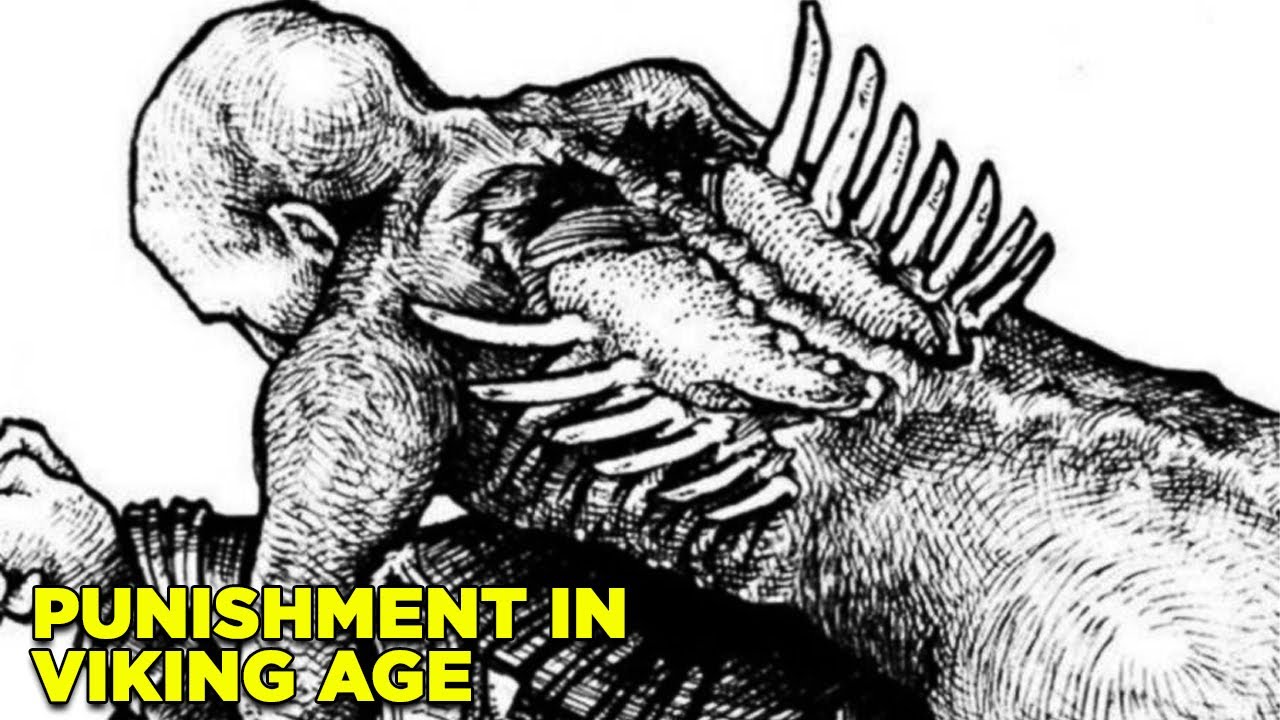
Crucially, this gruesome process was carried out with the utmost care to ensure the victim remained alive throughout, fully conscious to endure every agonizing moment. The pain would be unimaginable, but the tormentors were not finished. To heighten the suffering, Vikings would then rub salt into the gaping wound. This was no mere metaphor; actual saline stimulant would be applied to the raw, exposed flesh, intensifying the torment to an unbearable degree. The salt would sting and burn, a searing agony layered upon the immense pain of their flayed back.
Finally, the detached ribs would be spread out, meticulously splayed like giant, bony fingers. This allowed the vengeance-seeker easy access to the victim's internal organs, specifically the lungs. These would then be pulled out from the body, draped over the splayed ribs, creating the terrifying illusion that the victim had a pair of blood-soaked wings spread out on their back. Hence, the name: the blood eagle. It was a macabre, living sculpture of agony, a human sacrifice transformed into a monstrous bird of prey.
The sagas suggest two primary reasons why Vikings might have employed such an extreme punishment. First, it was believed to be a sacrifice to Odin, the father of the Norse pantheon of gods and the god of war. Such a ritualistic offering, steeped in blood and suffering, was thought to honor the Allfather and perhaps secure his favor. Second, and perhaps more plausibly, the blood eagle was performed as a punishment for individuals deemed to be utterly lacking in honor. According to the Orkneyinga Saga, Halfdan was defeated in battle by Earl Einar, who then tortured him with a blood eagle after conquering Halfdan's kingdom. Similarly, King Ælla was tortured in vengeance by Ragnar's sons for his role in their father's death. The blood eagle was not just about killing, but about annihilating honor, offering up a dishonored life in the most spectacularly brutal way imaginable, leaving no doubt about the victim's ultimate fate, both in this world and the next.
So, were these Viking punishments works of fiction, the embellished tales of skalds seeking to shock and awe? Or do the scrupulous details in their descriptions hold a shred of truth, revealing a history far more brutal, far more intricate, and far more unsettling than any textbook might dare to print? The truth, as always, is probably somewhere in the middle, a testament to a world where justice was visceral, honor was paramount, and the consequences of transgression could be utterly horrifying. History, it turns out, was always nuttier than we were taught.