Forget the serene images of cherry blossoms and stoic warriors you learned in school. Feudal Japan, particularly the Edo period, was a crucible of extremes, where honor coexisted with horrifying exploitation and strict social order masked a seething undercurrent of human desperation. While samurai enjoyed immense privilege, their rigid codes and the shogunate’s iron fist created a society so bizarrely brutal, so deeply stratified, that the lives of ordinary people were often a tragic tapestry of suffering, rebellion, and bizarre traditions you won't find in any tourist brochure. Prepare to discover the dark, unsettling truths that were considered perfectly normal in a Japan far wilder than you ever imagined.
Love, Death, and the Stage
For the samurai, who occupied the apex of Japan's social pyramid, life was a paradox of immense wealth and rigid self-imposed restrictions. This was perhaps most acutely felt in the realm of marriage, where personal choice was a luxury few could afford. Samurai children, regardless of their feelings, had no say in the selection of their life partners. Marriages were almost exclusively pre-arranged, functioning less as unions of affection and more as strategic political tools designed to strengthen alliances between powerful families or consolidate influence. The system demanded not only parental consent but also the explicit approval of the dominant shogunate authorities, who sometimes even exercised their power to orchestrate marriages between rival families, hoping to impose peace through forced matrimony.
This absolute subjugation of personal will meant that falling in love was not merely frowned upon, but actively considered a major taboo. For many young lovers whose affections lay outside these arranged bonds, the only escape from a forced, loveless marriage was a tragic one: suicide. The act of a couple killing themselves together, known as shinju, was not a quiet, private affair. On the contrary, it was often sensational news, captivating the masses and becoming a popular subject for the era’s dramatic arts. A particular genre of romantic theater evolved around these sad tales, almost invariably concluding with the lovers taking their own lives, much like the Western story of Romeo and Juliet.
One of the biggest figures in Japanese literature, Chikamatsu, built his entire career on shinju related plays. This is where the problem began. As these plays grew in popularity, so too did the actual practice of shinju. People, either alone or as couples, were increasingly influenced by these dramatic portrayals, viewing the act of self-annihilation as a romantic or honorable escape. Chikamatsu's works, while celebrated, were considered the single biggest cause of these copycat deaths, effectively making suicide a trend. These plays predominantly depicted young, unmarried lovers whose affections were doomed from the outset, but they also chronicled the stories of married couples compelled to commit ritual suicide, or seppuku and jigai.
The administration eventually recognized the alarming rise in copycat deaths as a severe problem. In a drastic attempt to curb the trend, they were forced to outright ban this macabre genre of entertainment. However, the ban alone proved insufficient. The allure of shinju was deeply embedded, necessitating further, more punitive measures. Families of those who committed copycat deaths were denied funerals, a profound dishonor in Japanese society. Furthermore, if one partner of a couple attempting shinju survived, they would be banished from Japan, not simply for attempted suicide, but under the severe charge of murdering their partner. The state's response highlights the sheer scale of this tragic phenomenon and its deep roots in the societal fabric.
The Silent Blade: Women's Honor and Self-Sacrifice
While seppuku, the ritual disembowelment, is widely known as the samurai's honorable death, its female counterpart, jigai, is far less understood, despite its prevalence. Jigai was the right of self-killing performed by women of samurai families, a practice that prioritized swiftness and dignity over the agonizing endurance of pain associated with seppuku. Instead of disemboweling themselves, women would typically slice their own throats. To ensure a dignified death and prevent their bodies from collapsing into a compromising position, many would bind their knees together before performing the act, maintaining a semblance of grace even in their final moments.

The reasons for jigai were grim: to avoid bringing shame to the family, to preserve honor in the face of a successful enemy invasion, or, most commonly, when a husband was forced to commit seppuku. In this last instance, the wife's jigai became a tragic, poignant narrative, often serving as prime material for those very shinju plays that captivated and troubled the public. These stories underscored the extreme pressures and limited choices faced by women within the samurai class, where personal agency was often secondary to family honor and societal expectations. The tragic narratives of jigai, like those of shinju, painted a stark picture of a society where the ultimate sacrifice was often the only perceived path to maintaining integrity.
Pleasure Quarters and the Price of Flesh
Today, prostitution is illegal in Japan, but prior to 1956, it was a fairly legal, albeit highly regulated, practice. In the early years of the Edo era, Japanese brothels were systematically moved to designated "pleasure quarters" within towns and cities. These districts were often physically isolated, separated from the rest of the city by water or high walls, accessible only through a single, heavily guarded entrance. Ordinary women were strictly forbidden from entering, and male clients had to adhere to a rigid code of conduct. This elaborate system of security, however, was not designed for the protection of the prostitutes themselves, but rather to ensure they could not leave.
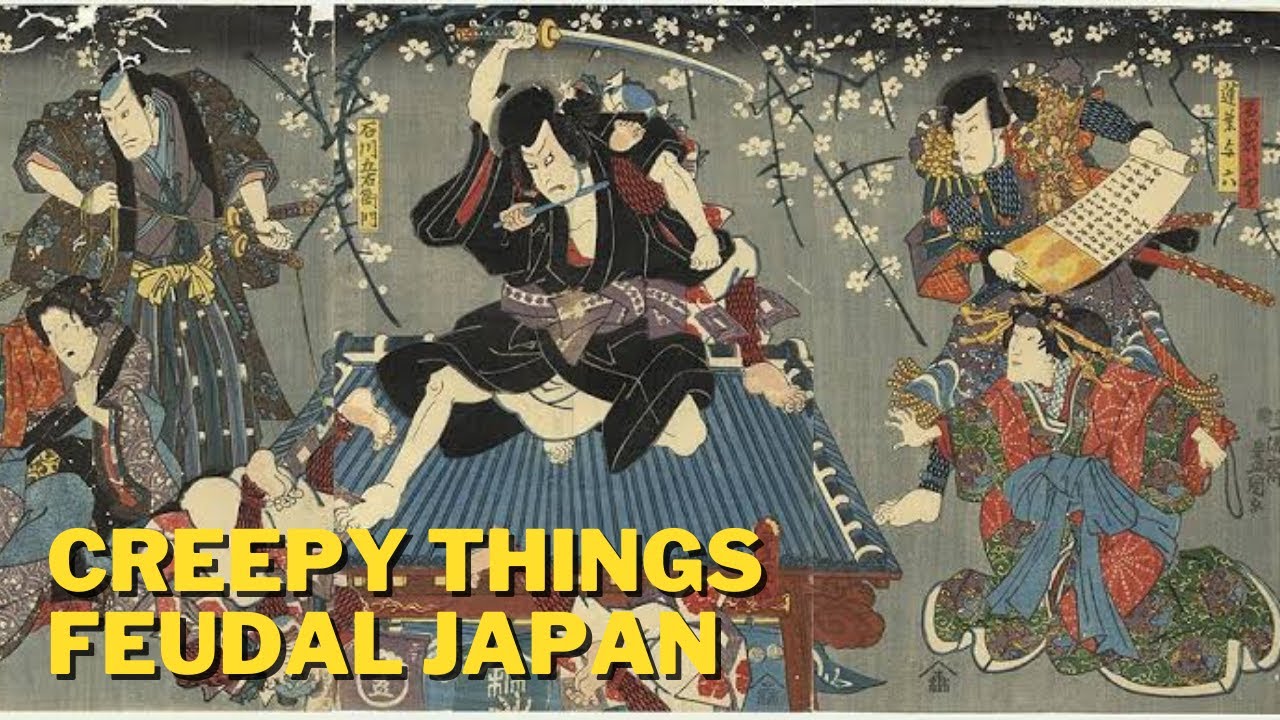
Prostitution in feudal Japan was, in essence, sex slavery. In a society where poverty was widespread and only samurai and merchants enjoyed relative wealth, desperate families frequently sold their daughters to pay off debts or secure meager funds. Brothels would draw up harsh, legally binding contracts for both the young women and their families, explicitly designed to prevent the prostitutes from ever quitting or leaving. Most were sold at a very young age and expected to begin working immediately upon reaching puberty. Life within these pleasure quarters was brutally short and agonizing. Venereal diseases were rampant and deadly, constituting the biggest cause of death among prostitutes, who were treated worse than slaves. They often died young, having endured the horrific ordeal of multiple abortions, which themselves frequently resulted in death.
Prostitution in feudal Japan was, in essence, sex slavery. In a society where poverty was widespread and only samurai and merchants enjoyed relative wealth, desperate families frequently sold their daughters to pay off debts or secure meager funds.
The most frequent customers of these regulated brothels were merchants and, occasionally, samurai. Sometimes, these men would become obsessively enamored with their favorite courtesans, incurring massive debts or bringing shame upon themselves through their repeated visits. Since love marriages were taboo, these obsessive clients would sometimes meet self-inflicted ends, further fueling the tragic narratives that inspired more shinju plays. The pleasure quarters, therefore, were not just sites of indulgence but also tragic breeding grounds for despair, debt, and the very suicides that gripped the public imagination.
The Grisly Gift: A Severed Finger's Devotion
Beyond the widespread suffering and the inspiration for tragic plays, the brothels of feudal Japan harbored another, even more disturbing, phenomenon: what could be considered the world's first documented organ black market. Unlike modern organ markets driven by medical necessity, Japan's version revolved around fingers and toes. Japanese prostitutes, in an uncanny display of extreme devotion to their favorite clients, would resort to self-mutilation. An amputated finger, presented as a gift, was considered the highest honor a prostitute could offer, a visceral and undeniable proof of their loyalty and affection.
However, body mutilation was an extreme violation of Confucian taboos, a moral code Japan had largely adopted from China. To circumvent this powerful cultural prohibition, high-level prostitutes often found a workaround. Instead of sacrificing their own digits, they would purchase them from peddlers, beggars, or even acquire them from corpses. This practice reveals a deeply unsettling aspect of the era: the lengths to which individuals would go to navigate societal expectations and taboos, even if it meant participating in a macabre trade of human body parts. The severed finger, a symbol of ultimate devotion, thus became a chilling testament to the twisted realities of the pleasure quarters.
Beneath the Samurai: The Burden of Birth and 'Filth'
While merchants, alongside samurai, were often wealthy enough to frequent brothels, their social standing was drastically different. Despite their economic power, merchants were relegated to one of the lowest classes in feudal Japanese society. The rigid social hierarchy placed samurai at the top, followed by farmers, then artisans, and finally, merchants. Farmers, despite their higher social placement than merchants, bore an immense burden: they were the only class responsible for paying taxes for the entire country. Their lives were generally characterized by terrible conditions, widespread malnourishment, and poverty so severe that some families were forced to practice infanticide. Their diet, consisting primarily of rice and fish, often left them stouter but lacking in vital nutrients.

Yet, even these hardships paled in comparison to the plight of the Burakumin people. These were segregated communities composed of laborers engaged in occupations considered impure or tainted by death, such as executioners, butchers, and undertakers. Within the Burakumin, the Etta were considered the absolute lowest. The term Etta literally translates to "an abundance of filth" in Japanese, underscoring their utter dehumanization. They were regarded as untouchables, outcasted for their perceived impurity, much like the Dalit people in imperial India. A samurai could kill an Etta instantly if accused of a crime, without fear of repercussions.
The Japanese caste system, along with the feudal system, was officially abolished in 1871. However, the deeply ingrained discrimination against Burakumin, particularly the Etta, persisted for generations. A 19th-century magistrate was recorded declaring an Etta as "one-seventh of an ordinary person," a chilling testament to the systemic prejudice. To this day, discrimination remains prevalent in some parts of Japan, forcing individuals with Burakumin lineage to hide their ancestry to escape social stigma and economic disadvantage. The legacy of this institutionalized marginalization speaks volumes about the enduring power of historical prejudice.
Closing the Gates: Japan's Brutal War on the West and God
In 1635, the Tokugawa Shogunate enacted an edict that would fundamentally reshape Japan's future, cutting off the nation from the rest of the world for the next 200 years. This policy, known as Sakoku, or "closed country," made it illegal for Japanese ships to sail to any foreign country. Any attempt to leave the country was deemed a punishable offense, warranting the death penalty. Secretly planning to depart, or even returning to Japan after having been overseas, was considered an act of treachery and also carried an execution sentence. The rationale behind these draconian laws was the shogunate's profound distrust of Christian missionaries and European traders, whom they viewed as spies for Western imperialism.
By 1639, this xenophobia escalated dramatically, with the Portuguese explicitly forbidden from landing on Japanese shores. Japanese soldiers were authorized to destroy any Portuguese ship they encountered and to arrest and behead any Portuguese missionaries, traders, or civilians without needing to answer to anyone. The shogunate's crackdown on Christianity within Japan was equally brutal. Any Japanese citizen found to have converted to Christianity was subjected to severe torture, often to death, in an effort to force them to reveal the identities and locations of others who had converted. While men faced violent punishments, women were often subjected to more humiliating forms of torture.
During the first wave of Christianity in Japan, an astonishing 300,000 people had converted, including some powerful feudal lords. However, the shogunate was vehemently opposed to this foreign religion, viewing it as a threat to its authority and traditional Japanese values. The hammer came down hard and swiftly. For the next 50 years, the shogunate unleashed samurai to hunt down Christians like wild dogs. The Shimabara Rebellion, a revolt by Japanese Roman Catholics, provided the shogunate with the ultimate pretext to ban Christianity nationwide. This forced the religion underground, transforming it into a secret cult known as Kakure Kirishitan, or "Hidden Christians."
These survivors went into hiding, practicing their faith in secret for two centuries, passing down their traditions orally and adapting Christian symbols to blend with Buddhist and Shinto practices. It wasn't until the final years of the Edo era, with the reopening of Japan, that astonished Western missionaries rediscovered these hidden communities. They found approximately 30,000 survivors, a testament to their unwavering faith and incredible resilience in the face of relentless persecution. The story of Kakure Kirishitan is a powerful, yet often overlooked, chapter in Japan's history, showcasing the extreme measures a government took to enforce its isolationist policies and eradicate a perceived foreign threat.
The history books often paint feudal Japan with broad, romantic strokes of honor and aesthetic beauty. But peer closely, and you discover a world far more complex, brutal, and utterly bizarre than school ever let on. From love stories ending in sensational public suicides to the chilling trade in severed fingers, and from a rigid caste system that deemed some humans "filth" to a government that literally closed its borders and hunted down its own citizens for their faith, Edo Japan was a place where the human spirit was tested in ways that defy modern comprehension. History, it turns out, is always nuttier, filthier, and weirder than the sanitized versions we’re usually fed.