Forget the sanitized tombs and golden masks of your high school textbooks. The pharaohs of ancient Egypt, those god-kings and queens who commanded empires and built wonders, were often far stranger, more ruthless, and frankly, more unhinged than any history class dared to suggest. From generals who farted in defiance of their kings to rulers who married their own daughters, and even one who tried to stop time by never sleeping, their lives were a tapestry woven with political intrigue, bizarre rituals, and an almost unbelievable disregard for human suffering. Step into the desert winds with us, and discover the true, often disturbing, reality of what was considered 'normal' for Egypt's ultimate power brokers.
The General Who Farted at a Pharaoh
The 26th Dynasty saw its share of powerful rulers, but few stories encapsulate the volatile nature of pharaonic power quite like that of Apries and his ambitious general, Amasis. Apries, son of the influential warrior-king Psamtik II, ascended the throne with grand ambitions, striving to emulate his father's military prowess and architectural legacy. He plunged Egypt into numerous conflicts, meddling in Palestinian affairs and engaging in endless campaigns that yielded little success. His troops, growing weary and dissatisfied, began to mutiny, a dangerous omen for any ruler.
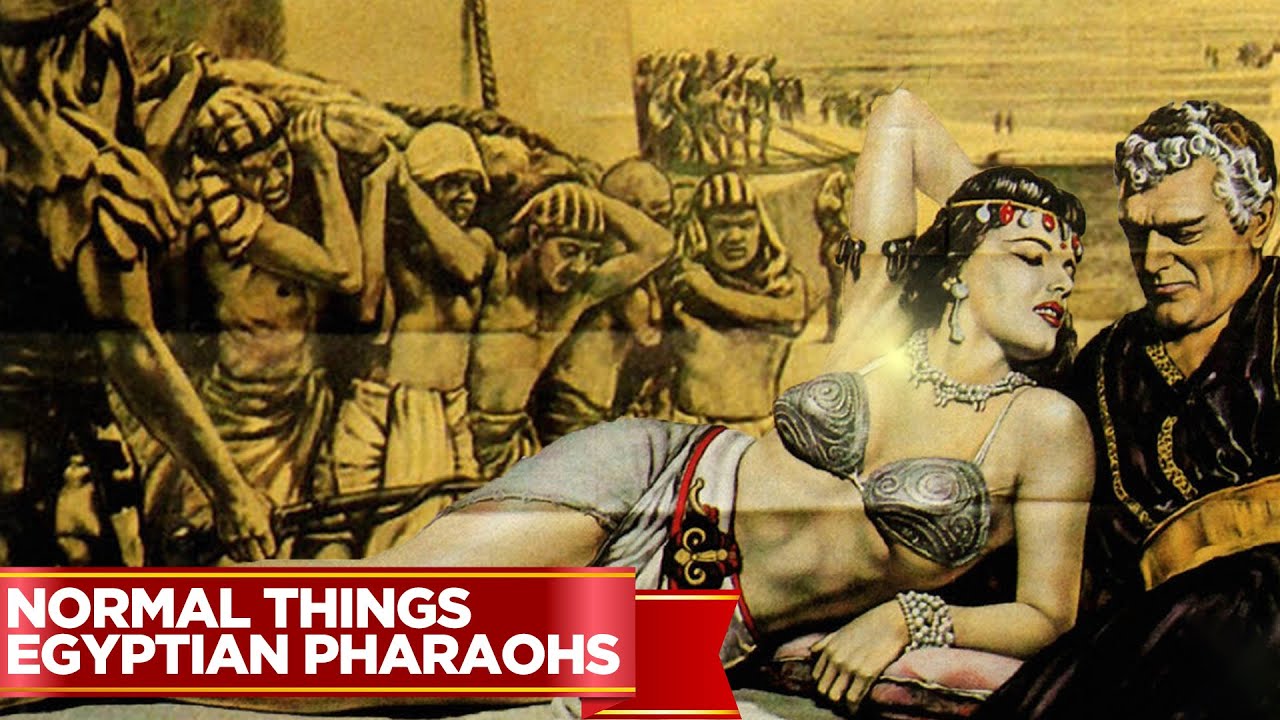
The final straw came with a crushing defeat suffered by the Egyptian army while attempting to aid the Libyans against Greek invaders from Cyrene. The soldiers had had enough. In a desperate bid to quell the revolt without relinquishing his power, Apries dispatched his trusted general, Amasis, to negotiate with the rebellious troops. This decision, however, proved to be Apries' gravest blunder. Amasis, a man defined by his greed and opportunism, was also a notorious kleptomaniac, prone to stealing allies' property and then brazenly denying their original ownership. Upon arriving at the mutineers' camp, Amasis immediately recognized the overwhelming strength of the rebellion.
When the soldiers invited him to join their cause and lead them, Amasis seized the opportunity. He summarily dismissed Apries' terms, turning to the pharaoh's messenger and, in a truly audacious act of defiance, flatulated in the general direction of the royal palace. "Take that back to the king," he reportedly told the bewildered courier. Amasis then marched on Apries, defeating and slaying the former pharaoh on the battlefield. Yet, in a testament to the complex political theater of the time, Amasis granted Apries a proper royal funeral and solidified his own claim to the throne by marrying Apries' daughter, thereby legitimizing his violent succession.
He summarily dismissed Apries' terms, turning to the pharaoh's messenger and, in a truly audacious act of defiance, flatulated in the general direction of the royal palace.
Despite his ruthless ascent, Amasis was plagued by a peculiar form of self-guilt. He embarked on a bizarre pilgrimage, visiting oracles across Egypt to inquire about his innocence or guilt regarding his treasonous actions. Naturally, the oracles, fearing their new ruler's wrath, would declare him innocent. This predictable outcome, however, only infuriated Amasis. He would then demand their execution, derisively calling them "frogs" and asserting that if they truly conversed with the gods, they would know his actions were nothing short of treason.
Ramses II: The Prolific Progenitor
While many pharaohs met early ends through disease or assassination, Ramses II, often heralded as one of Egypt's greatest rulers, defied the odds. He lived an astonishing 91 years, a remarkable feat in an era where life expectancy was significantly shorter. His longevity and continued vigor, even in his old age, led his subjects to believe that his fertility and enduring presence were divine signs, marking him as an actual god. Ramses II remained active not only in the royal court, but also, famously, in his royal bedchamber.
His reign was characterized by monumental construction projects, leaving behind more statues and temples than virtually any other pharaoh. But his productivity extended beyond architecture. Ramses II is believed to have sired more children than any other pharaoh, with at least a hundred known offspring and nine living wives at the time of his death. He was, in essence, the ancient world's Walder Frey, a comparison not made lightly. He would relentlessly pursue any "pretty girl" who caught his eye, even going so far as to refuse to sign peace treaties after successful military campaigns until the defeated nations handed over their daughters to him. In a practice that modern sensibilities find deeply unsettling, Ramses II married at least three of his own daughters, including his firstborn, and at least one sister, who may also have been his daughter. His legacy is one of unparalleled power, monumental achievement, and a personal life that blurred the lines of familial and marital convention.
Sesostris: The Anatomical Art Critic
One of Egypt's most formidable military commanders, Sesostris, possessed a rather unique and graphic method for commemorating his conquests. This pharaoh, whose reach extended further than many others, took his armies and warships across vast lands, expanding the Egyptian Empire. To mark his victories, he would erect pillars on the battlegrounds themselves. These monuments were not merely inscribed with bombastic accounts of his triumph and divine favor, but also served as a peculiar rating system for his vanquished foes.
Sesostris, in a manner that might make a modern online gamer blush, had a distinct way of judging the fighting spirit of his enemies. If a rival army displayed exceptional bravery and resilience on the battlefield, he would command his engravers to carve a picture of male genitalia onto the pillar. This was a symbol of their strength and courage. Conversely, if an enemy force proved easy to route, fleeing at the first sign of defeat, Sesostris would order images of female genitals to be carved, denoting their perceived cowardice and weakness. This practice, while shocking to some, was perhaps less surprising given the ancient Egyptians' generally open attitude towards sensuality and carnal subjects, a stark contrast to the more prudish Greek sensibilities of the time. Egypt was, in many ways, a liberal society that not only treated genders with relative equality but also approached the subject of lovemaking with a remarkably open mind, often to a degree that even modern observers might find quite bold.
If a rival army displayed exceptional bravery and resilience on the battlefield, he would command his engravers to carve a picture of male genitalia onto the pillar.
Akhenaten: The Tyrant of Amarna
The reign of Akhenaten stands as one of the most revolutionary, and ultimately tragic, periods in ancient Egyptian history. This pharaoh dared to dismantle millennia of polytheistic tradition, attempting to convert Egypt to a monotheistic religion centered on the sun god, Aten. This radical shift shook the very foundations of Egyptian society, triggering a massive upheaval. To solidify his new religious order, Akhenaten decided to move his capital to a completely new, purpose-built city, Akhetaten, now known as Amarna.
The construction of Amarna was an undertaking of immense scale and brutal human cost. Akhenaten forcibly relocated 20,000 people to this unfinished city, expecting them to work day and night, regardless of their exhaustion. The nascent city lacked even basic infrastructure to support such a massive workforce, leaving laborers with minimal food and barely adequate shelter. Akhenaten's impatience bordered on tyranny, and dissent was met with extreme cruelty. Workers were not permitted to leave, and any attempts to disobey, break ranks, or even snatch more than their allotted rations were met with a horrific punishment: repeated stabbing.
Archaeological findings in the Amarna cemetery paint a grim picture of this forced labor. It is believed that at least two-thirds of the labor crew suffered at least one broken bone during their work, and nearly a third endured broken backs. Despite his fervent efforts and the immense suffering he inflicted, Akhenaten died before Amarna could be completed. His death was met not with mourning, but with a collective sigh of relief. The people celebrated by systematically destroying everything he had attempted to build, and his name was meticulously erased from historical records, a testament to the profound resentment his radical policies had engendered.
Menkaure's Desperate Race Against Time
While ancient Egyptians were famously obsessed with the afterlife, dedicating significant portions of their lives to preparing for the journey after death, not every pharaoh embraced their mortality with such stoicism. King Menkaure, who ruled in the 26th Century BC, found himself in a unique predicament. An oracle delivered a chilling prophecy: he had only six years left to live. Unlike his ancestors, who would have immediately begun their elaborate preparations for the great beyond, Menkaure was terrified. He desperately wanted to live forever.
His solution was as ingenious as it was futile. Menkaure reasoned that if he could somehow stop time from progressing, those six years would never pass, and he would remain alive indefinitely. In ancient Egypt, the passage of time was primarily marked by the cycle of day and night. So, Menkaure concocted a nefarious plan: he would prevent night from passing. Every evening, he would order as many lamps as possible to be lit throughout his palace and surrounding areas, creating an artificial daylight that he hoped would trick the cosmos. He convinced himself that as long as the lamps burned, it was still day.
Furthermore, he refused to sleep, believing that slumber itself was an admission to the passage of time. Instead, he would spend his nights drinking and reveling, attempting to defy the inevitable. Ironically, by denying himself rest and engaging in constant revelry, Menkaure likely only hastened his own demise, bringing his prophesied end closer with every desperate, lamp-lit night.
The Divinity of the Fake Beard
If you've ever seen an ancient Egyptian carving or sculpture, you've likely noticed the pharaohs depicted with long, narrow, and distinctly artificial-looking chin beards. This iconic facial hair appeared to be an integral part of their official regalia, almost a natural extension of their divine status. The truth, however, is far more mundane and, perhaps, a touch more practical. Egyptian pharaohs were generally clean-shaven, and many even preferred to keep their heads bald. This practice served a dual purpose: it prevented issues with lice, and it helped keep them cool in the scorching desert heat.
So, why the ubiquitous beards in their artistic representations? The answer lies in their divinity. Being a pharaoh was no ordinary job. It entailed rigorous training, extensive education, and a multitude of responsibilities. Pharaohs were not just rulers; they were high priests, supreme judges, commanders-in-chief of the army, and, most importantly, gods incarnate. In ancient Egypt, the ability to grow a healthy, fancy beard was considered a clear sign of divinity, a feature shared with the gods themselves. These symbolic beards were typically braided tightly and styled to resemble the facial hair of the deities, conveying might, manliness, and male fertility. Even in death, the false beard played a crucial role, often placed over the coffins of deceased pharaohs to portray them in the image of Osiris, the god of death and the afterlife, whose beard was characterized by a slight curl at the tip.
This tradition extended even to female pharaohs, who faced unique challenges in asserting their authority. Hatshepsut, one of the most powerful women to ever rule Egypt, worked tirelessly to secure her position and maintain the throne. Despite her monumental achievements, including the construction of some of Egypt's most renowned architectural wonders, she endured significant criticism due to her gender. To counter this, Hatshepsut went to extraordinary lengths to project an image of masculine power. She commanded artists throughout Egypt to depict her with a full beard and strapping, bulky biceps. She even insisted on being addressed as "Son of Ra" and introduced herself accordingly. Historians believe it is highly probable that she wore a fake beard in real life to reinforce her authority. Tragically, her own stepson, Thutmose III, seemingly insecure about her powerful legacy, later attempted to erase her almost completely from history, systematically destroying her monuments and inscriptions.
"Pharaoh": A Title Not Quite What You Think
The term "pharaoh" itself carries a mystique, conjuring images of absolute power and ancient grandeur. Yet, its origin and usage are far less straightforward than commonly believed. The word "pharaoh" is not, in fact, an ancient Egyptian term. It is a Greek or Hebrew pronunciation of the Egyptian word
Furthermore, despite the overwhelmingly male lineage of known pharaohs (approximately 170 in total), the title was inherently gender-neutral. This allowed for a handful of extraordinary women to ascend to the throne and wield the full power of the "great house." Hatshepsut, as previously mentioned, is a prime example of a female ruler who successfully navigated the patriarchal landscape to become a pharaoh in her own right, proving that the title, in its essence, was about the institution of kingship, not the gender of the individual who held it.
The history of the pharaohs is not merely a tale of grand monuments and divine rulers. It is a testament to the raw, often brutal, and always fascinating complexity of human power. From the depths of political betrayal and bizarre personal quirks to the heights of architectural genius and religious revolution, the lives of these ancient Egyptian monarchs were far wilder and more nuanced than any textbook could ever convey. They remind us that history, in all its unfiltered glory, is consistently nuttier, filthier, and more utterly compelling than we are ever taught in school.