Ancient China, a civilization revered for its profound philosophies and enduring cultural contributions, often presents a picture of serene wisdom. Yet, beneath the veneer of Confucian harmony and imperial order lay a justice system of staggering, calculated cruelty. Far from the gentle teachings one might associate with its sages, the pursuit of societal balance often translated into an intricate, soul-tearing array of punishments designed not just to correct, but to utterly break the individual. This was a world where laws were instruments of terror, where the pursuit of order justified unimaginable suffering, and where the most hallowed texts ironically paved the way for some of history's most inventive forms of pain.
The Mythic Origins of Brutality: The Five Punishments
The bedrock of ancient Chinese penal law was known as the Five Punishment System, a framework whose very conceptualization is shrouded in myth. While no definitive architect is known, Chinese legends credit the fearsome warrior Qi You (Chiyou), a mythical king often linked to the Hmong, Sen Mao, or Nine Li clans, with its inception. It was under the Xia Dynasty, China's first legendary dynasty, that these initial five punishments reportedly found their formal implementation. This early system was stark, designed to brand criminals for life, quite literally, and to inflict profound physical alteration.
For minor transgressions like petty thievery or pickpocketing, the punishment was tattooing, a permanent mark of shame and disgrace etched onto the face or body. Major robbery and looting, however, demanded more severe measures, with amputation being the norm. The most common form of this disfigurement was the cutting off of the nose, a visibly humiliating and disabling act. Depending on the gravity of the offense, further amputations could follow, with criminals losing one or both feet. For crimes deemed truly heinous, the state reserved castration, a punishment that not only inflicted immense pain but also stripped individuals of their lineage and social standing. Death, naturally, was the ultimate penalty, reserved for the gravest of crimes.
Interestingly, this early system also included a separate set of five punishments specifically for women. The exact rationale for this distinction remains unclear, though it is often attributed to China's deeply patriarchal society, which frequently held women to different standards or believed them to possess a lesser capacity for tolerance. These female-specific penalties included forced labor, such as grinding grain, or excruciating physical torture like having their fingers squeezed between sticks. Women could be subjected to beatings with wooden sticks, forced to end their own lives, or, in the harshest cases, condemned to solitary confinement and sequestration, a form of living death.
Legalism's Iron Fist: The Qin Dynasty's Code
The first truly centralized imperial law codes emerged with the establishment of autocratic rule by Qin Shi Huangdi, the first emperor of the Qin Dynasty, in 221 BC. This era saw the ascendance of Legalism, a school of thought that fundamentally believed humans were naturally evil and driven by self-interest. To forge a harmonious society, one where the weak could find safety, Legalist philosophy dictated that laws had to be simplistic, ruthless, and brutally efficient. There was no room for mercy or moral ambiguity in this system, only absolute adherence to the state's dictates.

The intellectual godfather of Legalism, Han Feizi, was a staunch advocate for draconian laws. He posited that the ruler alone should wield absolute power, deploying his authority with the swift, unyielding force of lightning or thunder. Han Feizi actively promoted the use of torture and enforced labor as essential components of punishment, urging judges not to shy away from execution when deemed necessary. This uncompromising approach, while establishing a unified empire, ultimately proved unsustainable. The oppressive nature of Legalist rule bred widespread resentment, and the Qin Dynasty was eventually usurped by the Han Dynasty in 206 BC, a mere 15 years after its founding.
Confucianism's Cruel Compromise: The Imperial Era's Penalties
With the Han Dynasty came a significant shift, as Confucianism was introduced into the reformed constitution and penal code. However, Legalism was not entirely abandoned. Enough of its harsh principles lingered within the system to ensure that the punishment apparatus remained cruelly unforgiving. The imperial era saw a significant evolution of the Five Punishment System, adapting it to the new administrative structures.

The new imperial penalties began with bamboo lashes to the buttocks for petty crimes. Repeated offenses escalated to stick lashes applied to the back, buttocks, and legs. For standard crimes, individuals faced penal service, typically lasting one to three years. More serious transgressions resulted in exile to remote locations, such as the distant Hainan Island in the south. Finally, death remained the ultimate penalty, executed by strangulation, slicing, or decapitation, depending on the severity of the horrendous crime. Within each of these broad categories, various degrees of punishment existed. For instance, a prisoner sentenced to a "light stick" beating could face up to five degrees of punishment, dictating the number of blows delivered, often ranging from 10 to 15 beatings. Similarly, the duration of penal service varied, and the severity of exile was measured by how far afield the convict was sent. Curiously, a quick decapitation was often considered worse than strangulation, a slower and arguably more painful demise. This preference stemmed from a cultural belief that an intact body was vital for the afterlife. Yet, the ultimate degree of capital punishment involved a horrifying method of slow killing, cut by cut, ensuring the body was far from intact.
Ling Chi: The Art of a Thousand Lies (and Cuts)
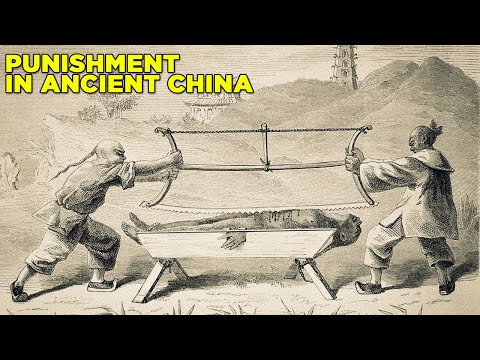
The mention of "killing slowly, cut by cut" brings us to perhaps the most infamous and stomach-churning method of capital punishment in imperial China: Ling Chi, or "death by a thousand cuts." Emerging as a terrifying evolution of the Five Punishments around the 10th century, Ling Chi could only be decreed by the emperor himself, reserved for crimes of the highest degree, known as the Ten Abominations. These included offenses against the state and family, such as treason, parricide, the murder of a spouse, rebellion, and witchcraft.
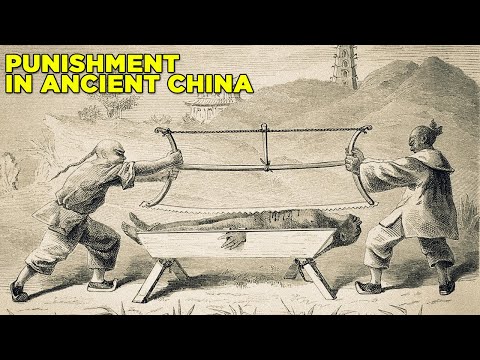
Like other punishments, Ling Chi also had multiple degrees, calibrated to the severity of the crime. This gruesome ritual followed a prescribed, meticulous order, designed to maximize pain while prolonging life. The executioner would begin by slicing away pieces of skin and muscle, carefully avoiding vital organs to keep the victim conscious. Body parts would then be removed in a macabre ballet of suffering. While popularly known as "death by a thousand cuts," the actual number of incisions rarely reached that figure. Commonly, a sentence of Ling Chi involved around eight slices, though it could extend to 120 slices in extreme cases. The process typically began with cuts to the face, followed by the hands, feet, chest, and stomach. The final, merciful blow would target the heart or involve decapitation. Western writers who witnessed Ling Chi described it as "torture for the soul," a punishment intended to utterly destroy the offender's spirit, rendering it unrecognizable and unable to find peace in the afterlife.
Western writers who witnessed Ling Chi described it as "torture for the soul," a punishment intended to utterly destroy the offender's spirit, rendering it unrecognizable and unable to find peace in the afterlife.
Justice by Confession: The Courtroom as a Torture Chamber
In ancient Chinese judicial proceedings, judges and magistrates wielded absolute authority, commanding unwavering respect. Witnesses and the accused were expected to remain in a prostrate position throughout the entire proceeding, a constant reminder of their subservience. The ever-present dread of torture loomed large over the accused, even within the confines of the court. The ancient Chinese authorities held unwavering confidence in this cruel and often unwarranted system of justice. They openly acknowledged that, from time to time, an unjustly tortured accused might confess to a crime despite their innocence. However, this was considered a minor cost for what they viewed as an efficient system. They argued that torture-based justice saved time and money by rapidly resolving cases, as criminal matters could be solved solely by the accused's confession. Consequently, torture was often deployed from the very outset, becoming an integral and expected part of investigations.
The Cangue and the Pole: Tools of Persuasion
The verdict of any trial in ancient and imperial China hinged almost entirely on one critical piece of evidence: the confession of the accused themselves. The Chinese penal code explicitly stated that no one could be convicted without a confession. While this might seem like a convenient loophole for the accused, it was anything but. It simply meant that authorities were empowered to use virtually any method to extract that confession, knowing the entire case relied upon it. One standard procedure in ancient Chinese courts involved tying the accused and witnesses around a pole by their arms. A guard would then wind up the pole, twisting their arms mercilessly, to ensure that no one dared to lie in their testimony.
Understandably, given such harsh treatment, witnesses were extremely reluctant to come forward. If summoned, they often had to be dragged kicking and screaming into the court. Another common and deeply dehumanizing restraint was the kang, or cangue, a flat wooden framework locked around a person's neck. This device could either be borne by the shoulders, forcing the wearer to remain upright, or serve as the top lid of a wooden cage so small that the prisoner's feet could not quite touch the ground. This latter configuration exerted extreme pressure on the prisoner's neck, often leading to slow strangulation. The flat board of the kang was often so large that the prisoner's hands could not reach their own mouth, preventing them from eating or drinking without assistance, or even lying down. The accused was forced to wear the kang continuously until the hearing reached its verdict, and often for much longer if found guilty. Even if not held in prison, authorities would compel individuals to wear the kang in public as a constant symbol of humiliation.
The flat board of the kang was often so large that the prisoner's hands could not reach their own mouth, preventing them from eating or drinking without assistance, or even lying down.
A slightly less sadistic, but equally grim, method of execution involved the "neck tower." The condemned prisoner was placed inside a cage, standing on a stack of stones. Each day, one or two stones would be removed, gradually lowering the prisoner until their neck was slowly, agonizingly strangled by the top of the cage, leading to a protracted and horrendous death.
Beyond the Blade: Psychological and Slow Demise
Not all Chinese capital punishments relied solely on physical torture or immediate execution. Some were designed to inflict deep psychological anguish or a prolonged, agonizing demise. For senior officials in the imperial administration, receiving an imperial letter containing a piece of red silk was a terrifying omen. This missive carried the unambiguous meaning that the official was in severe disgrace and was expected to immediately hang or poison himself, a forced suicide to preserve imperial dignity. For common criminals, other brutal methods existed, such as pulling veins out of the back of the shins until the prisoner bled to death, a slow and agonizing process.
One particularly insidious form of torture focused on mental torment: the slow dropping of water. This ceaseless mental anguish was so profound that it often made prisoners cry out for a quick death. The Chinese water torture involved strapping the prisoner's body down firmly, providing no relief, while incessant, regular drops of water fell onto their forehead. The terror was compounded by occasions when acid was occasionally mixed in, burning painfully through the skin and towards the brain. This created an unbearable state of dread, as the prisoner never knew if the next drop would be harmless water or searing acid. It is a chilling testament to the enduring nature of such methods that multiple media sources have reported that modern China, even in 2021, still frequently treats prisoners in ways reminiscent of ancient and imperial practices, with allegations of secret seizures, detentions, torture, physical and sexual abuse, forced labor, and forced sterilizations. The United Nations continues its efforts to engage the Chinese government on these serious human rights issues.
From the mythical warrior Qi You to the calculated cruelty of Legalist codes and the lingering shadows within Confucian reforms, ancient China's penal system offers a stark reminder that the pursuit of societal harmony can, in the wrong hands, become a justification for unimaginable brutality. History, as Nutty History consistently reveals, is far stranger, filthier, and more horrifying than the sanitized versions found in textbooks. The intricate methods of torture, the psychological warfare, and the sheer inventiveness of pain in ancient China prove that humanity's capacity for cruelty is as boundless as its capacity for creation.