The history books tell us of fearsome Viking berserkers, those legendary Norse warriors who charged into battle with a terrifying, almost supernatural frenzy, seemingly impervious to pain and fueled by an unholy rage. Their eyes, often described as wild and tranced, held a lust for blood that could make enemies flee before the first axe even swung. But what if this wasn't just raw, inherent aggression? What if the Viking berserker, a nightmare made flesh, was actually just really, really high?
The Berserker's Fury: More Than Just Rage
Medieval Europeans had a litany of monsters to fear: basilisks, demons, dragons, and, inexplicably, smart independent women whom they branded as witches. Yet, unlike these fanciful frights, there was one nightmare that was undeniably real and capable of inflicting immense harm: the Viking berserker. These warriors were renowned for their bloodthirsty anger, their madness likened to a dog's, and their strength to that of a bear or bull. Their terrifying, tranced eyes were often enough to shatter an opponent's morale. However, their penchant for violence, gore, and killing wasn't simply an innate trait. That frenzied "blood dance" they performed, which looked so much like a trance, may have been precisely that, a chemically induced state. It was widely believed that during pre-raid blessing rituals, berserkers would enter a self-induced hypnotic trance. In this dissociative state, they would lose conscious control of their actions, their minds operating subconsciously. Individuals in such a state appear remote, possess little awareness of their surroundings, and exhibit a reduced perception of pain alongside increased muscle strength. Despite losing their capacity for critical thinking and having a minimal grasp on social inhibitions, they remained awake, charging into battle with unbridled ferocity. So, what was the secret to this terrifying transformation?
The Mushroom Menace: Why Fly Agaric Falls Short
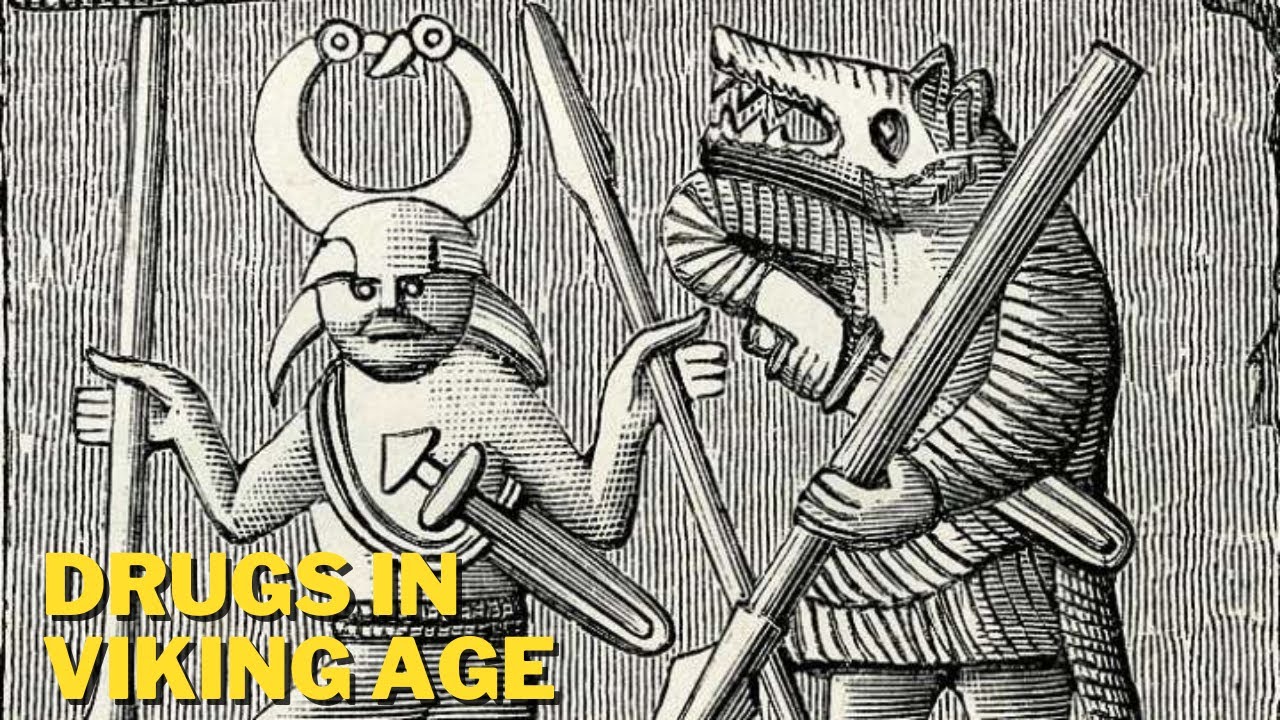
Ancient depictions hint at berserker rage, fueled by more than just battle frenzy.
For centuries, the common belief behind the savage bloodthirst of the mighty berserkers centered on the consumption of specific mushrooms, given Scandinavia's abundant fungal flora. This theory gained significant traction in 1784 when a priest named Odman proposed that "going berserk" was a direct result of eating fly agaric mushrooms, known by their scientific name, Amanita muscaria. One of the primary psychoactive compounds in fly agaric is muscimol, a GABA receptor agonist. This chemical interaction causes a range of effects: sedative, hypnotic, depressant, and powerfully hallucinogenic. Because GABA receptors are ubiquitous throughout the brain, muscimol profoundly alters neuronal activity in numerous regions, including the cerebellum, hippocampus, and cerebral cortex, areas mainly responsible for emotions and higher executive thinking. The effects of muscimol typically begin within 30 to 120 minutes and can last for approximately 5 to 10 hours. Side effects include increased salivation, muscle twitching, tremors, and strong delirium, all of which align strikingly with historical descriptions of berserking. Despite its enduring popularity among the general public, most experts today find the fly agaric theory implausible. Odman, after all, based his hypothesis on reports about Siberian shamans, yet he never actually consumed the mushroom himself. If he had, he might have revised his opinion. Beyond its hallucinogenic properties, eating fly agaric mushrooms can lead to depression and can induce apathy in the user. Furthermore, fly agaric is quite poisonous, capable of causing nausea, vomiting, dizziness, involuntary movements, and even seizures. Another related fungus, white agaric, also shares many of fly agaric's toxic effects and could easily put a person into a coma or outright kill them. The idea that Vikings would risk such severe, unpredictable, and potentially fatal side effects before a battle seems highly improbable.
Despite its enduring popularity among the general public, most experts today find the fly agaric theory implausible.
Ergot's Dark Secret and the Aftermath of Fury
Another fungus, Claviceps purpurea, commonly known as ergot, has also been floated as a potential cause of berserker fury. This fungus contains a compound used to synthesize the hallucinogen LSD, or lysergic acid diethylamide. However, Claviceps purpurea is also highly poisonous, causing a host of debilitating symptoms collectively known as ergotism, which would hardly be conducive to battlefield prowess. Instead, the berserker trance has been more accurately described as a form of psycho-motor automatism. In forensic psychiatry, this state can be characterized by diminished responsibility, a period of intense, unthinking action. The high from such a state is invariably followed by a major emotional catharsis, manifesting as extreme tiredness, exhaustion, and, predictably, long hours of sleep. Such practices, which involved achieving an abreaction of strong aggressive, destructive, and sadistic impulses, largely diminished after the introduction of Christianity. These rituals and actions were, and still are, considered demonic by Christian doctrine, and were thus actively discouraged. If mushrooms proved too stomach-churning and unreliable for even the strongest of Vikings, what truly helped them achieve that trance of terror and tyranny?
Henbane: The Berserker's True Brew?
According to the findings of modern scientists, the answer might well be henbane. This plant, also known as stinky nightshade, has been unearthed in numerous Norse burial grounds, including the grave of a berserker. Often referred to as the "crazy plant" in much older civilizations, the consumption of henbane can induce feelings of delirium, a profound loss of inhibition, and manic episodes. It also triggers visual disturbances, hallucinations, drowsiness, and a distinct reddening of the skin, all symptoms that remarkably match historical descriptions of berserkers in their fury. Moreover, henbane is an effective painkiller, a property we explored in our previous video on drugs in ancient Rome and Greece. This pain-reducing quality would have been invaluable for the unarmored Viking vanguards, who were celebrated for their wild, unpredictable, and highly aggressive fighting style. Henbane, therefore, fits the bill almost perfectly. The question then arises: how did they consume henbane? Carsten Furtwängler, an ethnobotanist at the University of Ljubljana in Slovenia, has put forth some intriguing theories. Rather than the conventional method of smoking, he believes the Vikings might have infused henbane with alcohol, creating a potent drink. Another possibility is that they made an ointment from the plant and rubbed it onto their bodies. Perhaps most surprisingly, Furtwängler suggests they might have prepared an herbal tea from it. While the image of savage berserkers sipping posh herbal tea on the eve of a raid might seem incongruous, it makes sense when considering other archaeological finds.
The Oracle's Offering: Henbane and the Völva
Viking warriors, perhaps under henbane's influence, entered a trance-like fury.
Henbane was also discovered in the grave of a sorceress in Denmark. These Nordic sorceresses, known as völva, were akin to the ancient Greek oracles or sibyls, utilizing hallucinogens to enter trance-like states to glimpse the future. The völva operated in a similar fashion but possessed a more shaman-like flair. If anyone was expertly brewing herbal tea from henbane, or stinky nightshade, it would undoubtedly be these powerful women. However, it is crucial to understand that henbane was by no means a safer choice than mushrooms. Used for centuries as a sedative, a sleeping agent, and an inducer of hallucinations, the plant is deadly toxic. Although people did use it, it was never harmless. The toxicity would have needed to be carefully managed. Henbane contains hyoscyamine and scopolamine, two substances with powerful narcotic effects on the nervous system. When the seeds are heated, these two substances evaporate, and the vapors can act as a narcotic. This is precisely how the Oracle of Delphi is thought to have used such plants in ancient Greece. It's plausible, therefore, that the "tea" prepared by the völva in Scandinavia was primarily for inhaling hot vapors, not for drinking, and would have been served steaming hot directly from the pot. Furtwängler posits that while both henbane and fly agaric could induce many of the symptoms attributed to berserkers, agaric consumption does not typically generate the intense "blood lust" that henbane might have. Still, all such studies remain speculative, and some experts maintain that the berserker's trance may have been entirely natural, unconnected to recreational drugs. Yet, they cannot deny the völva's clear involvement with henbane, and perhaps even cannabis.
If anyone was expertly brewing herbal tea from henbane, or stinky nightshade, it would undoubtedly be these powerful women.
Cannabis and Queens: A Potent Partnership
Mysterious figures, like the Völva, may have used potent herbs for prophecy.
In 1903, a farmer in Norway stumbled upon an ancient Viking ship, dating back to the 800s AD, containing a treasure trove of artifacts. Among these were the skeletons of two women and a curious leather bag filled with cannabis seeds. These seeds are believed to be connected to one of the women, often referred to as the Oseberg Queen. She is thought to be Queen Asa of the Yngling clan, mother of Halfdan the Black, and grandmother of Harald Fairhair, Norway's first king. Many archaeologists propose that this woman was not merely a secular queen but also a priestess of Freya, the Norse goddess of love, fertility, and war. Freya was deeply associated with hemp sowing and harvest festivals across Northern Europe, often honored with erotic rituals. It's theorized that the feminine cannabis flower held erotic and love-generating powers, and those who consumed these flowers would be imbued with the joy and seductive tendencies of the love goddess herself. This suggests a ritualistic, perhaps even sacred, use of cannabis during the pre-Christian period in Scandinavia.
The New World's First Reefer: Vikings in L'Anse aux Meadows
Beyond its ritualistic use in their homeland, Vikings may well have been the first to transport cannabis across the Atlantic. In August 2018, an archaeological team excavated a peat bog located nearly 100 feet east of the Viking settlement at L'Anse aux Meadows, Newfoundland. They uncovered a layer of eco-facts, or environmental remains, that were radiocarbon dated to the 12th and 13th centuries. These eco-facts included the remains of two beetles, species not indigenous to Newfoundland, but rather originating from Greenland. More astonishingly, the other remains included pollen from walnuts and cannabis, neither of which grow naturally at L'Anse aux Meadows. Vikings were known to have visited and settled in and out of Newfoundland for approximately 200 years. The presence of cannabis pollen, matching the timeline of their settlement, strongly suggests that it was indeed the Vikings who introduced the "green leaf" to the Americas. While some doubts about this theory persist, if not the Vikings, then who else could have been responsible for bringing these specific plant species to the New World so early? The evidence, though circumstantial, is compelling.
The Unanswered Question of Opium
Finally, we turn to opium. It is an established fact that Vikings were aware of the poppy plant and cultivated it in their Danish Viking Age kitchen gardens. However, whether it was used recreationally remains an open question. Unfortunately, neither the comprehensive Viking sagas nor the extensive archaeological excavations have yet provided a definitive answer to this particular mystery. The poppy's presence suggests knowledge, but its purpose, beyond culinary or medicinal, remains shrouded in the mists of time. So, there you have it: the Viking Age, far from being just a saga of axes and longboats, was a kaleidoscopic journey through altered states and potent botanicals. History, as always, proves itself to be far nuttier, filthier, and weirder than any textbook could ever convey.