The Ottoman Empire, a colossal power that sprawled across southeastern Europe, Turkey, and the Middle East for four centuries, reaching its zenith in the 17th and 18th centuries, presented a facade of unparalleled magnificence. Yet, beneath the gilded domes and silken robes lay a foundation built upon practices so brutal, so utterly alien to modern sensibilities, that they would irrevocably tarnish its legacy. This wasn't merely a tale of political intrigue, but a deep dive into the systemic savagery that permeated royal life, military recruitment, and even palace entertainment, proving that the history textbooks often sanitize the true, visceral weirdness of the past.
The Bloody Path to Power
Unlike many European monarchies that clung to the rigid doctrine of primogeniture, the Ottoman Empire had a distinctly more sanguinary approach to succession. Primogeniture, the practice of the eldest legitimate child (preferably male) inheriting their father's belongings, was largely ignored in the early generations of Ottoman rule. Instead, the path to the throne was often paved with the blood of brothers, cousins, and uncles, a brutal tradition designed to eliminate rivals and secure absolute power.
This ruthless tradition was codified by none other than Mehmed the Conqueror, the sultan who famously laid siege to Constantinople. During this monumental event, his own uncle fought against him from the city walls. Upon seizing the throne, Mehmed wasted no time in dealing with his relative. He extended no mercy, making it clear that his reign would be absolute and unchallenged. His message to future generations of Ottomans was stark: he began rounding up all his male relatives and executing them. His ruthlessness knew no bounds, not even sparing his younger brother, who was just an infant in his crib. Mehmed had the child asphyxiated without a moment's hesitation. Once he had disposed of all potential competitors for the throne, Mehmed issued a chilling decree: "And to whomsoever of my sons the sultanate shall pass, it is fitting that for the order of the world, he shall kill his brothers." Most of the ulema, the religious scholars, sanctioned this decree, allowing it to become entrenched Ottoman law.
This legal sanction inaugurated a series of generational civil wars, ensuring that every sultan's successor had to drench his hands in the blood of his own kin. The human cost was immense, extending beyond mere political rivals to innocent family members. It is said that another Mehmed, Mehmed III, was so heartbroken by the task that he tore his beard off in agony as his younger brother begged for mercy, repeatedly swearing never to raise a weapon against him. Yet, bound by this gruesome family tradition, Mehmed III turned away silently, and his loyalists killed the young boy. Along with him, the rest of Mehmed III's 18 brothers were also executed. The bodies of all 19 siblings were then thrown out onto the streets of Istanbul, a macabre spectacle that reportedly caused the entire city to weep for their souls that night. The murders, however, did not cease once a sultan secured the throne. The hunt for all royal family relatives continued relentlessly, a constant shadow of paranoia and fear. Even Suleiman the Magnificent, one of the most acclaimed sultans, had blood on his hands; he had his own son asphyxiated in the streets with a bowstring, simply because the son's growing popularity had become a matter of grave paranoia for the sultan.
From Slaughter to Solitude: The Cages
The brutal cycle of fratricide, however, eventually gave way to a slightly less bloody, though no less cruel, system. When Ahmed I died abruptly in 1617, a general agreement was struck between the remaining relatives and the clergy. Instead of once again drenching the streets of Istanbul with royal blood, the clergy quietly established the practice of primogeniture. Ahmed I's younger brother, Mustafa I, was announced as the new emperor, primarily because Ahmed's own sons were deemed too young to rule. Mustafa himself had been spared by Ahmed I when they were 12 and 13 years old, their close bond perhaps preventing the usual fratricide.
This marked a significant shift: the policy of killing relatives changed to one of incarceration. Potential heirs to the throne would henceforth be confined to special apartments within the sprawling Topkapi Palace in Istanbul. These apartments were known as the Kafes, a term that chillingly translates to "the Cages" in English. A prince of the Ottoman Empire might spend his entire life imprisoned within these cages, monitored day and night by guards. While they were afforded luxuries and a lavish lifestyle befitting royal kin, their house arrest was strictly enforced. This extreme isolation often had devastating psychological effects, driving many princes to madness from sheer boredom or leading them into heavily debauched lives.
A prince of the Ottoman Empire might spend his entire life imprisoned within these cages, monitored day and night by guards.
When a new sultan was finally taken to the Gate of Felicity to receive the allegiance of the viziers, it was often the first time he had been outside in decades. This was hardly an ideal preparation for a man about to rule a vast empire. While this new system put an end to the ritualistic civil wars, the royal relatives still lived in constant fear of losing their heads at any moment, the threat of execution a perpetual undercurrent in their gilded prisons.
The Gilded Cage of the Sultan
One might pity the princes confined to the Kafes, but the life of a sultan was hardly one of unbridled freedom. Being the Sultan of the Ottoman Empire meant living a life of suffocating constraint within the walls of Topkapi Palace. The clergy and viziers held a particular vision for their ruler: a sultan should speak only when absolutely necessary, conveying his core message with gravitas and conciseness. The quieter a sultan appeared, the wiser and more regal he was perceived to be. The unstated truth, however, was that the powerful clergy, eunuchs, and viziers preferred their sultans to remain silent, allowing them to make decisions on the sultan's behalf. To facilitate this quietude, a particular sign language was even developed for sultans to communicate their needs and decisions.
Many sultans spent the majority of their days in utter silence, surrounded by a palace teeming with viziers, courtiers, eunuchs, and concubines, all hungry for gossip and eager to exert influence. These factions would smother the sultan in an attempt to gather more power for themselves. Ahmed III, for instance, became so exasperated by the constant presence that he occasionally had to force pages and orderlies out of his room just to have a private moment to put on his pants. Even then, his "private" chamber would still contain about half a dozen people, including sword bearers tasked with throwing out additional intruders. The sultan's struggles were manifold, encompassing internal tug-of-wars between rival factions, the eerie quiet of vast palace halls, and the bottling up of anxiety, depression, paranoia, and the profound guilt of imprisoning and executing his own kin. Given the intoxicating atmosphere of constant surveillance and enforced silence, it is little wonder that many sultans became insane or gravely ill.
Behind the Veil: The Sultanate of Women
Among the most famous, and perhaps most misunderstood, elements of the Ottoman Empire was the harem. In the empire's early generations, royal marriages were strategic tools, coveted for forging alliances and serving as mere diplomatic negotiations. However, the Ottomans soon discovered that concubines were far easier to maintain, leading to the rise of the harem as the primary abode for the sultan's concubines. Intriguingly, the harem was not a free-for-all; it was meticulously managed by the sultan's mother, known as the Valide Sultan.
The harem was, in essence, a women's-only domain within the royal Ottoman home. Men, with the sole exception of the sultan himself, were forbidden entry, only permitted to cross the threshold into a bedchamber to spend the night with one of his wives or concubines. The Valide Sultan acted not only as the manager but also as a procurer of fine women for her son. She ensured he did not spend too much time with any single wife or concubine, thereby preventing any one woman from gaining undue influence over the sultan and accumulating excessive power. A particularly unique rule dictated that once a concubine bore a son, she was forbidden from sleeping with the sultan again, ensuring other women also had a chance to produce heirs.
Between the years 1533 and 1656, the harem's influence swelled dramatically, gaining unprecedented control over the royal court. This period, lasting an astonishing 130 years, is now famously known as the Sultanate of Women, as these powerful women effectively ran the empire from behind their screens and curtains. Any number of concubines were allowed in the palace at one time, and crucially, all sons born from a slave concubine were considered legitimate if the sultan wished it. However, even to earn the right to sleep with the sultan, a concubine had to first get clearance from the sultan's mother. A notable instance of this control involved Murad III, who spent an inordinate amount of time with his favorite wife, Safiye. His mother, the powerful Nurbanu Sultan, intervened and convinced him to sleep with other women in the harem; his sister even presented him with more concubines to ensure a broader distribution of his affections.
Justice, Ottoman Style: The Death Race
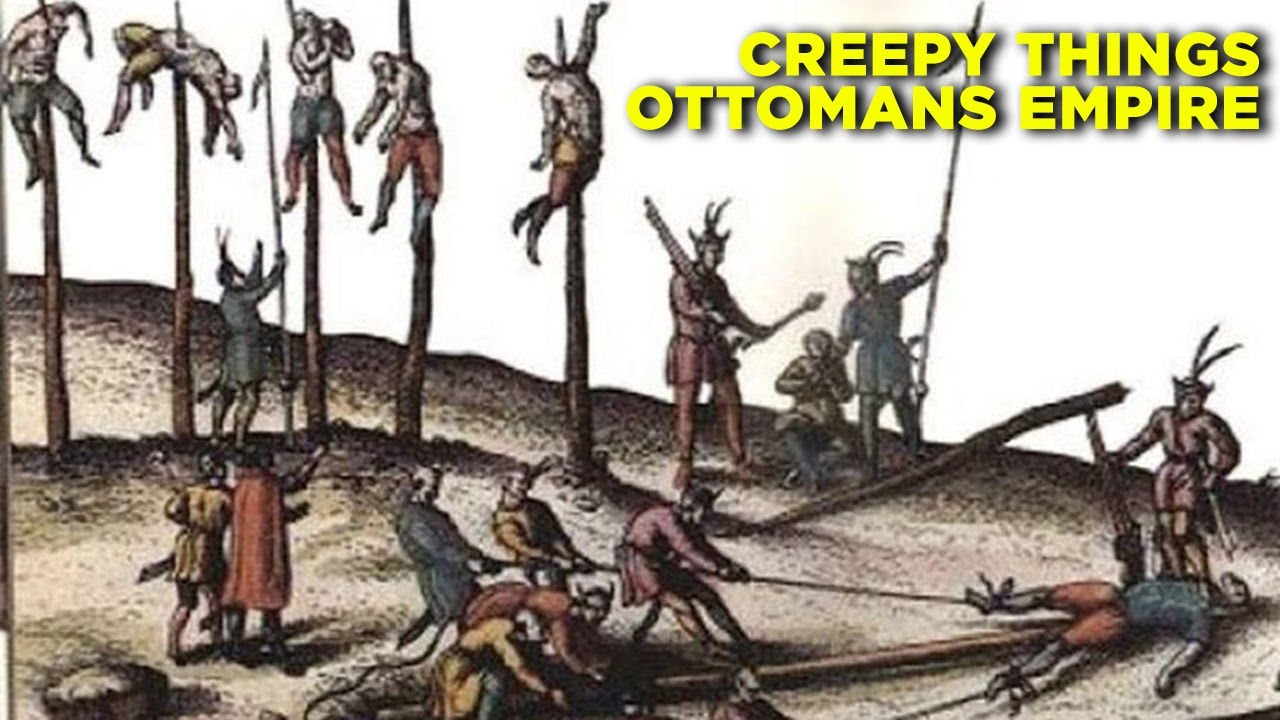
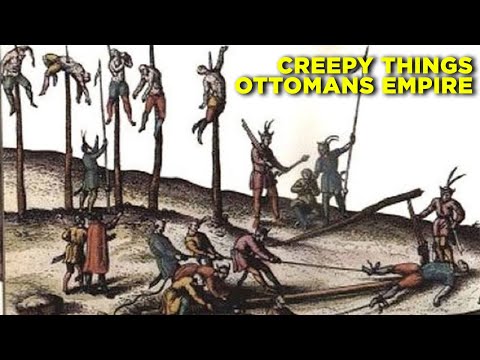
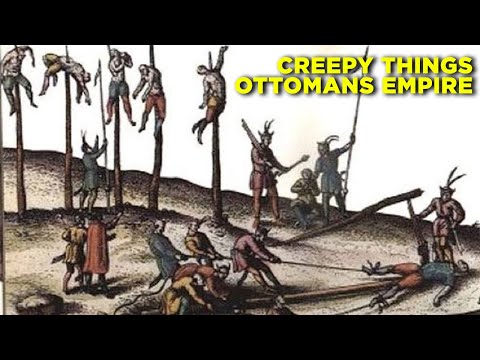
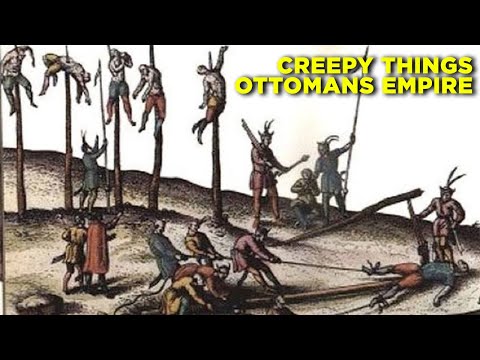
The Ottomans were known for their fierce sense of justice, though calling it "justice" might be an understatement. Their punishment system had a distinct preference for beheadings. The first court of Topkapi Palace was a grim testament to this, featuring two pillars where executioners would display severed heads. A fountain conveniently accompanied these pillars, allowing the executioners to cleanse themselves after their bloody work. During palace purges, mounds of tongues might be piled up in the first court, resembling macabre seasonal decorations, while a special cannon fired every time a body was thrown into the sea.
One might assume that an empire with such a penchant for executions would employ a dedicated corps of professional executioners. However, the sultans and viziers found the palace gardeners perfectly qualified for the job. Seriously, did they think clipping branches and clipping necks were the same thing? In the early days of the empire, the sultan's officials prided themselves on their absolute obedience to his whims, and it was customary for them to face execution with quiet grace. It was also strictly forbidden to spill the blood of royalty and high-ranking officials, meaning they had to be asphyxiated instead. This is why head gardeners were chosen for execution duties: not for their "trialing skills," but based on how huge and muscular they were, ensuring a swift and effective strangulation.
The vizier would have to make his way through the palace gardens, find his way between shady cypress trees and rows of tulips, and run across the grated harem windows where women would watch in amusement as he dashed towards the gate for his life.
While most viziers accepted their fate with dignity, this was not always the case. By the late 18th century, viziers were sometimes granted a peculiar second chance: they could literally escape their punishment. The sultans, in a move that seems straight out of a brutal reality show, turned the execution of an official into a sport. The official would be summoned to a meeting with the head gardener. After exchanging polite greetings, the vizier would be handed a cup of sherbet. If the sherbet was white, the sultan had granted him a reprieve. But if it was red, he was to be executed. As soon as a vizier saw the rich red sherbet, he would start sprinting towards the exit. The goal was to make it to the fish market gate before the head gardener could catch him. The path was neither short nor easy. The vizier would have to navigate through the palace gardens, weaving between shady cypress trees and rows of tulips, all while women in the grated harem windows watched in amusement as he dashed for his life. If the vizier made it to the gate, his life would be pardoned, his sentence reduced to exile. If the gardener caught him, well, the chase was usually nothing more than a source of entertainment for the sultan and the rest of the palace. Most viziers were frail, old, or middle-aged men, often out of shape, making them easy prey for a much fitter and stronger head gardener. Still, there were a few winners. Haci Salih Pasha was the last vizier to face and survive the "death race." He was widely congratulated by the sultan and attendees and later became a provincial governor.
The Harvest of Souls: Devshirme and the Janissaries
One of the most notorious features of early Ottoman rule, and a source of considerable horror among Europeans, was the Devshirme, often referred to as the "blood tax." This was a systematic collection of children, specifically 20 percent of boys aged between 12 and 14 years old, from every Christian city, village, or country under Ottoman dominion. These young boys would be forcibly circumcised and converted to Islam. Most of them were then enrolled in the Janissary Corps, an elite infantry unit of the Ottomans tasked with guarding the sultan and his palace. The Janissaries were, in fact, the first modern standing army in Europe.
Ottoman officials would visit Christian villages, summoning all boys to check their names against baptismal records from local churches. The children were then ranked based on their strength, agility, and endurance. On average, they took one boy from every 40 households. These boys, now considered slaves, were grouped and marched to Istanbul. The Ottomans showed little concern if the weaker ones dropped dead during the arduous journey. To prevent escape, the Ottomans maintained detailed descriptions of these young slaves. In Istanbul, further rigorous training and conditioning awaited them, transforming these boys into faithful Muslims and loyal soldiers before they officially joined the Janissary ranks. The most handsome and intelligent among them found their place in the imperial elite, serving by the sultan's side.
As horrifying and devastating as this practice of abducting and indoctrinating Christian children was, the Ottomans did have a few specific rules governing the Devshirme. It was forbidden to take the sole child of a family. Additionally, children of men who had already served in the Ottoman military were off-limits, as were orphans and Hungarians, largely due to lingering trust issues with the latter. These exceptions, however, did little to mitigate the trauma and brutality of a system that forcibly removed children from their homes, cultures, and families to serve an empire built on their subjugation.
The Ottoman Empire, for all its grandeur and lasting impact on world history, was a realm where the lines between governance and grotesque ritual blurred, where political expediency often trumped basic humanity, and where life, even for those at the very pinnacle of power, was rarely free or easy. From the chilling practice of sanctioned fratricide to the bizarre "death races" for viziers, and the systematic abduction of children for military service, the daily realities of this powerful empire were far stranger, far more brutal, and undeniably nuttier than any history book typically lets on. It serves as a potent reminder that the past, in all its unfiltered glory and horror, rarely conforms to our comfortable modern narratives.