Forget the sanitized tales of pioneering spirit and rugged individualism your textbooks fed you. The American frontier was not some idyllic landscape populated by noble settlers taming a wild land. It was a crucible of ambition, violence, and utter chaos, a sprawling, brutal experiment in expansion where morality was a luxury few could afford. In less than 70 years, the United States exploded from a modest 300,000 square miles to a colossal 2.8 million, gobbling up territory at a pace that would make any modern empire blush. This wasn't just manifest destiny; it was a bare-knuckled brawl for land, resources, and survival, leaving a trail of blood, broken treaties, and untold stories in its wake. Prepare to shed some of those rose-tinted glasses, because the true history of the American frontier is far dirtier, far stranger, and infinitely more compelling than you ever imagined.
Daniel Boone: The Original Action Hero, With Caveats
Daniel Boone, a name synonymous with American frontier legend, carved his place in history by helping to open up the West. He discovered the Cumberland Pass into Kentucky and blazed the Wilderness Road, pivotal routes for westward expansion. His life was the stuff of adventure novels, though one particular incident in 1776 reads like a script straight out of a modern thriller. Just a year after establishing Boonesboro, his daughter Jemima, a mere 14 years old, was captured by Shawnee warriors. These warriors, incidentally, were sent by the British to harass American settlers during the Revolutionary War. Along with two other young women, Betsy and Fanny Callaway, Jemima was taken to a Shawnee village near present-day Chillicothe, Ohio.
Boone, naturally, was not amused. He immediately assembled a group of men and set out in pursuit. Their tracking skills were legendary, and on the third day of his daughter's captivity, Boone and his men launched a surprise attack on the village. They successfully rescued the girls, fatally shooting a few of the kidnappers in the process while the rest scattered into the wilderness. This daring rescue only cemented Boone's reputation as a peerless woodsman with a very particular set of skills.
However, Boone's frontier life was also marked by a more complex, and often uncomfortable, reality. A few years later, in 1778, during the height of the American Revolution, the British allied with several Native American tribes to attack frontier settlements. Boonsboro found itself under siege by a large force of Shawnee warriors led by Chief Blackfish, supported by British officers. The settlers were desperately outnumbered and outgunned, and despite their best efforts, supplies and ammunition dwindled. The situation became even more dire when several enslaved fighters, who had been fighting alongside the settlers, defected to the Shawnee, taking much-needed ammunition with them. This uncomfortable detail reminds us that even our heroes operated within the brutal realities of the time, and Boone himself tolerated forced labor.
Eventually, the settlers were forced to negotiate a surrender. Boone and several others were taken captive for several months. During his captivity, Boone was treated remarkably well, even adopted into the tribe as Chief Blackfish's son, given the name Sheltoy, which translates to "Big Turtle." He was allowed to hunt and fish with the tribe, and he learned their language and customs, developing a deep appreciation for their way of life. Yet, he was still a prisoner. He attempted to escape one night, but the Shawnee quickly caught him and brought him back. For his "bad behavior," Boone was forced to run a gauntlet, stripped naked and made to run between two lines of people who beat him with sticks. He survived the ordeal and was eventually allowed to return to his family. His time with the Shawnee profoundly impacted him, and he later wrote in his autobiography, describing them as a "brave and generous people" and expressing admiration for their hunting and warrior skills, gauntlet notwithstanding.
Davy Crockett: From Backwoods Brawler to Political Rebel
Davy Crockett, the coonskin cap-wearing, rifle-toting icon, was far more than the simple woodsman of legend. Born on August 17, 1786, in Eastern Tennessee, then still part of North Carolina, Crockett grew up in poverty. By age 18, he struck out on his own, becoming a cattle driver, guiding herds through the wilderness to markets in Virginia and Georgia. He quickly earned a reputation as a skilled frontiersman and sharpshooter, a man who could survive anything. There's even a wild tale, echoing the movie The Revenant, about Crockett's encounter with a black bear in the fall of 1825. While hunting near his Tennessee home, he shot a massive bear, only for it to charge him, knocking him to the ground. Crockett, drawing his knife, engaged in a hand-to-hand struggle, puncturing the beast repeatedly until it succumbed. He reportedly suffered a broken leg and multiple cuts and bruises. Whether entirely true or embellished, such stories built the larger-than-life persona that propelled him into the national spotlight.
A pivotal piece of this publicity was a play, The Lion of the West, which premiered in 1831. The main character, while not explicitly named Davy Crockett, was undeniably based on him. This satirical comedy poked fun at frontier life and politics, portraying its Crockett-esque hero as a blustery, boastful figure with a heart of gold. His homespun humor and folksy charm resonated with audiences, solidifying Crockett's status as an American icon. The play's success also coincided with the rise of Andrew Jackson, whom Crockett initially supported, seeing him as a symbol of the rugged individualism prized by the Jacksonian Democrats. Crockett was a rising star, but he was about to learn just how low and dirty politics could get.
As a U.S. Representative from 1824 to 1835, Crockett grew increasingly frustrated with the political machinations in Washington. A member of the Whig party, he frequently clashed with party leaders and their policies. His primary grievance was what he perceived as excessive government spending, believing the federal government was becoming too powerful and squandering taxpayer money. He became particularly critical of President Jackson, despite their initial alliance, realizing Jackson was abusing his power and favoring political allies over national interests.
The final straw that led Crockett to abandon Congress and head for Texas was the Indian Removal Act of 1830. Initially, Crockett supported the act, believing it would benefit Native Americans by removing them from white settler influence and providing new land. He also saw it as a way to open up new territory for white expansion. However, as the debate raged, Crockett began to have doubts. Letters from his constituents expressed opposition to the forced removal of the Cherokee people from his home state of Tennessee. He became a vocal opponent, delivering a famous speech to Congress declaring the act unjust, arguing the government had no right to force Native Americans from their ancestral lands. Despite his impassioned plea, the act passed, leading to the devastating Trail of Tears.
Disillusioned and furious, Davy Crockett moved to Texas, throwing himself into the fight for independence from Mexico. He arrived in San Antonio in early 1836, joining the defenders of the Alamo, an old Spanish mission converted into a fortress. Alongside other famous frontiersmen, including Jim Bowie of Bowie knife fame, Crockett faced off against the Mexican Army led by General Antonio Lopez de Santa Anna. The siege lasted 13 days, with Crockett and the Texans holding out against overwhelming odds, outnumbered by more than 10-to-1. On the morning of March 6, 1836, the Mexicans launched their final assault. The battle lasted less than two hours, and every defender perished, Crockett among them. His death remains debated, some claiming a heroic last stand, others suggesting he and a few others surrendered only to be executed. Either way, it was a valiant, if tragic, end to one of America's most fascinating frontiersmen.
The Maverick Mapper and His Manifest Destiny's Dark Side
John C. Fremont was a man of contradictions: a surveyor, explorer, presidential candidate, and even a brief, self-proclaimed head of an independent republic. He thought of himself as an 1800s freedom fighter, above the constraints of government, and spent his life proving it. His early career began in 1833 when he joined the Navy, serving as a math teacher on the USS Natchez. For several years, he explored the coastal waters of the Gulf of Mexico and the Caribbean, honing his skills in surveying and charting new territories. Discharged in 1838, he moved to Washington D.C., working as an assistant to the chief clerk of the U.S. Bureau of Topographical Engineers. These experiences prepared him for his true calling: mapping the American West.
Fremont was instrumental in mapping out the Oregon Trail, publicizing the route and, initially, even working to foster peaceful relations between Native American tribes and the incoming settlers. Yet, his expeditions were frequently marred by darker incidents involving indigenous populations. In 1844, Fremont and his expedition seized a Native American village near the Great Salt Lake in Utah without permission, destroying their homes and crops and killing several people. A year later, during an 1845 expedition in California, when one of Fremont's horses was stolen, he ordered his men to attack a Klamath village, resulting in several deaths and the burning of their homes. These acts paint a stark picture of the brutal reality of westward expansion, often framed as progress but built on violence and displacement.
"His expeditions were frequently marred by darker incidents involving indigenous populations."
Despite his questionable treatment of Native Americans, Fremont was also a staunch abolitionist, making him a truly confusing figure to pin down. Later in life, he became the first presidential candidate for the newly formed Republican party and, as governor, supported many abolitionist causes. Perhaps his most famous, and certainly most audacious, move came shortly after the outbreak of the Civil War in 1861. As the military governor of Missouri, Fremont declared that all enslaved people owned by Confederates in the soon-to-be state should be free. This "Fremont Emancipation" was a significant step toward abolition in Missouri, applauded by abolitionists and Unionists, but it outraged slave owners and pro-Confederate sympathizers.
President Abraham Lincoln, ever the pragmatist, was deeply concerned about the legality of the order and its potential to push Missouri, a crucial border state, into the Confederacy. Lincoln believed military commanders lacked the authority to issue such proclamations and feared Fremont's actions would complicate efforts to maintain border state loyalty. He asked Fremont to modify his proclamation, but Fremont, known for his "cajones," refused. Lincoln ultimately annulled the order and replaced Fremont with a new commander. They would later reconcile, and Lincoln appointed Fremont to a command in Virginia, where he fought against the Confederacy. But one of Fremont's most controversial maneuvers had occurred 15 years earlier, when he quite literally conquered California, a feat he accomplished with the help of another legendary frontiersman.
Kit Carson: The Legend Forged in Beaver Pelts and Pulp
Kit Carson, a man who wore many hats, was the quintessential American frontiersman: a fur trapper, mountain man, wilderness guide, Indian agent, and soldier. Born on December 24, 1809, in Kentucky, Carson rose to fame through his adventures in the American West during the 19th century. At the tender age of 16, he began an apprenticeship as a saddlemaker, but the confines of the shop quickly grew tiresome. He soon left to join a group of traders bound for Santa Fe, New Mexico.
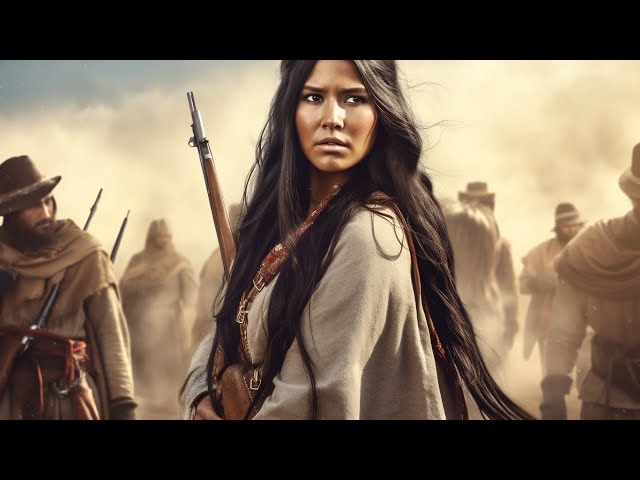
In Santa Fe, Carson embraced the life of a fur trapper and mountain man, rapidly earning a reputation as an expert guide and hunter. He spent much of his early career traversing the Rocky Mountains, trapping beavers and other fur-bearing animals. During this period, he also served as a guide for various expeditions into the frontier, notably for Ewing Young's 1829-1830 expedition and Captain Benjamin Bonneville's 1832-1833 journey. His skills in navigating the wilderness and interacting with Native American tribes were unparalleled, making him an invaluable asset to explorers and settlers alike.
Carson's military career was equally storied, particularly during the Mexican-American War and later, the Civil War, where he fought for the Union. However, much of his fame, and indeed his legendary status, was cemented not by official reports but by a series of popular "dime novels." These cheap, often sensationalized books were accessible to almost anyone and played a crucial role in shaping American folklore. The Life and Adventures of Kit Carson, written by DeWitt C. Peters, ran from 1843 to 1897, establishing Carson as an iconic figure. These pulp narratives depicted him as a brave hero, often battling Native Americans, as seen in the 1940 film Kit Carson, where he helps defeat a group attacking a wagon train. His legend even transcended the centuries, with a portrayal in the 2010 video game Red Dead Redemption, proving that the allure of the rugged frontiersman endures.
California's Rogue Republic: How Two Frontiersmen Carved a State
The paths of John C. Fremont and Kit Carson converged in 1842 in Santa Fe, New Mexico, when Fremont, leading an expedition to explore and map the western territories, hired Carson as his guide. What followed was one of the strangest and most audacious episodes in American history: the conquest of California. By late 1845, Fremont, Carson, and their expedition arrived in California, making contact with American settlers and other foreigners. Tensions between Mexican authorities and American residents were already high, and Fremont's presence only exacerbated the unease.
Carson proved indispensable throughout this period, serving as a scout and messenger for Fremont. He also played a key role in the capture of Sonoma, which became the headquarters for what would be known as the Bear Flag Revolt. Fremont, though initially cautious about overtly political involvement, met with American settlers in Sonoma to discuss declaring independence from Mexico. He provided them with weapons and ammunition from his own supplies, effectively enabling the rebellion. On June 14, the rebels raised the iconic Bear Flag, a symbol of their newfound independence, and declared the establishment of the California Republic, with Fremont as their leader. The flag, featuring a star, a bear, and the words "California Republic," is still recognized today.
The California Republic, however, was short-lived. The U.S. Army swiftly intervened, taking control of the region as part of the larger war effort against Mexico. Nonetheless, the Bear Flag Revolt had significant consequences, establishing American control over the region and paving the way for California to become a state in 1850. It also marked the beginning of a long and often brutal history of conflict and tension between American settlers and indigenous peoples in California, a legacy that continues to resonate.
Fremont's actions, however, landed him in deep trouble. He was a private citizen, lacking official authorization from the U.S. government for any military operations in California. His decision to lead settlers and military forces in revolt against the Mexican government and declare an independent republic was widely viewed as illegal and unauthorized. Consequently, Fremont was court-martialed for mutiny and insubordination. He also faced criticism for his brutality towards Mexican civilians and Native American tribes, with accusations of executing prisoners without trial. Despite a wealth of evidence to the contrary, Fremont claimed he had not participated in the rebellion. Remarkably, he navigated these accusations, later becoming an influential general and politician, even running for president. The frontier, it seems, had a way of forgiving, or at least overlooking, a great deal.
The Oregon Trail's Grim Harvest: A Path Paved in Peril
The Oregon Trail, a route John C. Fremont helped map, was a treacherous journey that truly tested the limits of human endurance. It was not for the faint of heart, and the numbers tell a grim story of hardship and death. Over the course of America's westward expansion, an estimated 1 in 10 people who embarked on the trail lost their lives. This translates to somewhere between 10,000 and 30,000 deaths in total, meaning roughly 20 graves per mile along the arduous path. The factors contributing to this horrific mortality rate were numerous: accidents, freezing cold weather, and, despite the romanticized notions of peaceful coexistence, attacks by Native Americans. Many also suffered from malnutrition and dehydration, as carrying enough food and water for the long journey was a monumental challenge. A complete lack of medical care meant that any infection, no matter how minor, could quickly become a death sentence.
"Over the course of America's westward expansion, an estimated 1 in 10 people who embarked on the trail lost their lives."
Yet, amidst this harrowing history, the Oregon Trail inadvertently played a role in the life of one of the Wild West's most infamous figures: Butch Cassidy. While not a frontiersman himself in the traditional sense, the notorious bank and train robber, born in Utah in 1866, owed his very existence to the trail. His parents, Maximilian Parker and Ann Campbell Gillies, both Mormon pioneers, immigrated to the United States from Scotland in the mid-19th century and met on the Oregon Trail while traveling to the Salt Lake Valley. Their journey was part of what became known as the Mormon Handcart Tragedy.
The Mormon Handcart Tragedy of 1856 involved two companies of pioneers who left Iowa City, Iowa, for Salt Lake City, Utah. The Church of Jesus Christ of Latter-day Saints had encouraged its members to use handcarts instead of traditional covered wagons, as they were significantly cheaper. This decision proved catastrophic. Approximately 1,000 people embarked on this ill-fated journey, but they timed it poorly, encountering a harsh winter as they crossed the Wyoming Plains. Hauling their handcarts, with severely limited supplies, many pioneers became sick and weak. As food dwindled, some resorted to eating leather from their shoes and belts to survive. While some eventually reached safety in Utah, more than 200 of them died from the brutal weather and lack of provisions, and many more suffered from frostbite and other debilitating injuries. Luckily for Cassidy, and perhaps unluckily for the banks and trains he would later rob, his parents endured the ordeal, their survival on the deadly trail ensuring the birth of a future outlaw legend.
Sacagawea: The Unsung Architect of the West
No account of America's frontiersmen, or rather, its foundational expeditions, would be complete without acknowledging its most vital guides. Sacagawea stands out as perhaps the most famous guide of one of history's most famous frontier expeditions: that of Lewis and Clark. Her childhood was a harrowing tale of survival. Born into the Limhi Shoshone, or sometimes called the Lemhi Shoshone, tribe in what is now Idaho, around 1788, her life took a dramatic turn at approximately 10 years old. A group of Hidatsa warriors, a neighboring tribe with whom the Shoshone had a tense relationship, raided her village and captured her along with several other girls.
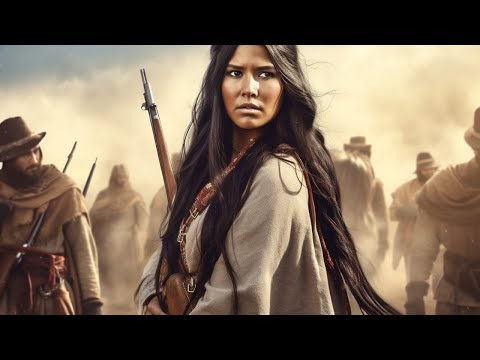
The exact details of what happened next are somewhat murky. According to some accounts, Sacagawea was sold to a French-Canadian trader named Toussaint Charbonneau. He already had a Hidatsa wife, Otter Woman, but was apparently in the market for a second wife who possessed the invaluable skill of speaking both Shoshone and Hidatsa, hoping she could aid his travels in the West. Another story suggests Charbonneau won Sacagawea in a game of chance, either dice or cards, from her Hidatsa captors. In this version, he wasn't necessarily seeking a second wife but recognized the immense strategic advantage of her linguistic abilities.
Regardless of how their union came to be, Sacagawea became Charbonneau's wife and accompanied him on his travels. When the Lewis and Clark expedition arrived at the Hidatsa village in 1804, they hired Charbonneau as an interpreter, and Sacagawea, with her unique linguistic talents and knowledge of the land, joined them on their epic journey. She proved to be an absolutely vital piece of the expedition, translating and communicating with the various tribes they encountered along the way. She even crossed the formidable Rocky Mountains while pregnant, a feat of endurance that few could imagine, let alone accomplish.
Her contributions extended beyond translation and navigation. If it weren't for Sacagawea, many of the invaluable documents from the expedition, including maps and journals, might have been lost forever. The story goes that as the expedition navigated the treacherous Missouri River, one of their boats, laden with crucial documents, supplies, and instruments, capsized in rough waters. The boat and its contents were swiftly swept away by the powerful current. Sacagawea, who was traveling on another boat with her infant son, sprang into action. She immediately jumped to the riverbank and frantically gathered as much of the scattered material as she could. Without the quick thinking and sheer determination of this Shoshone guide, Lewis and Clark might have had to redo the entire expedition, or perhaps some other dynamic duo would have claimed their place in history, their names now etched where Lewis and Clark's currently reside.
The American frontier, then, was not merely a stage for grand narratives of progress and discovery. It was a chaotic, often brutal, and always complex crucible where legends were forged in fire, betrayal, and sheer grit. From Boone's gauntlet run to Crockett's political disillusionment, Fremont's rogue republic, the Oregon Trail's staggering death toll, and Sacagawea's unsung heroics, the stories are far stranger, more morally ambiguous, and ultimately more human than the polished versions we're usually fed. History, it turns out, was always nuttier, filthier, and far more fascinating than any textbook could ever convey. The real wild west was truly wild.