Napoleon Bonaparte, the diminutive general who carved an empire out of revolutionary chaos, was a man whose will bent kings and redrew maps. He was a force of nature, a monarch obsessed with the trappings of power, rank, and dynasty. Yet, the man who struck fear into the hearts of Europe's old guard found his greatest challenge not on the battlefield, but within the gilded cages of his own family. Among his rebellious brothers and mischievous sisters, one figure stood out, a woman whose scandalous life and unbridled spirit kept the emperor awake at night: his favorite sister, Pauline Bonaparte.
The Uncrowned Queen of Hearts
Of his seven siblings, Napoleon held a special adoration for Pauline, often referring to her as the "best living creature" and, notably, "the only one who never asked for anything." This was a stark contrast to his other kin, who eagerly positioned themselves on thrones across Europe, clamoring for titles and power. Pauline, however, had no such desire for crowns or scepters. Instead, she chose to rule hearts, a dominion she wielded with such magnetism and charm that it caused even more headaches for her all-powerful brother.
In an age before social media influencers and reality television stars, Pauline Bonaparte was the original celebrity, a genuine "OG Starlet" whose fame transcended mere notoriety. Born Maria Paoletta Bonaparte, she was better known as Pauline, the undisputed fashion trendsetter and the dazzling life of late 18th-century parties. Known for her sensational stunts and daringly sheer dresses, Pauline may not have conquered nations like her brother, but she absolutely dominated the social landscape. Her scandalous reputation, coupled with her direct relation to the world's most powerful leader, placed her squarely in the crosshairs of Napoleon's enemies. They sought her secrets, hoping to weaponize them against the emperor himself, a testament to the immense power she held over public opinion and the gossip mills of the continent.
General Louis Stanislas de Girardin famously declared that "no woman in the world had savored the pleasure of being beautiful like Pauline." And Pauline, it seems, was not one to hoard her beauty. She was generous, perhaps too generous for her brother's carefully curated reputation. The sheer boldness of her love affairs and bedroom exploits sent shockwaves across Europe, providing ample fodder for rumor and scandal. Yet, her most infamous scandal would not be about her penchant for adultery or even the persistent whispers about the questionable nature of her relationship with Napoleon. It would be about a statue, a singular piece of art that cemented her legend.
A Childhood Forged in Fire and Flirtation
Pauline's story began in Ajaccio, Corsica, on October 20, 1780. She was the sixth child born to Carlo Bonaparte and his wife Letizia, a family that, though reasonably wealthy and noble, faced hardship. Her father passed away when she was only five years old, plunging the Bonaparte household into poverty. While her oldest brother, Joseph, technically became the head of the family, it was the ambitious Napoleon who truly turned their fortunes around, eventually restoring their place among the Parisian elite.
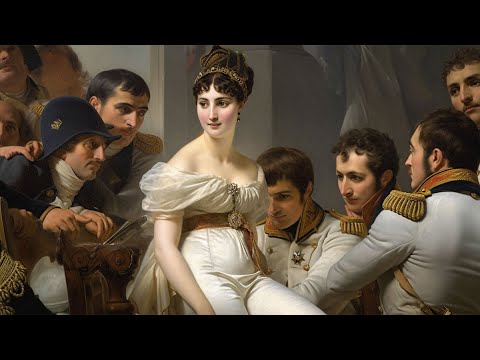
Unlike her intellectually inclined siblings, Pauline received no formal education and showed no interest in academics or politics. She was, by all accounts, the spoiled brat of the family, quickly establishing a reputation for being mischievous and impulsive. Instead of engaging in the "game of thrones" that consumed her brothers and sisters, Pauline preferred the thrill of amorous escapades. As an adult, she took immense pride in her looks, her elaborate outfits, and her unparalleled skill in flirtation. Her large, expressive eyes were said to be so appealing they could make Napoleon's entire war cabinet swoon, and indeed, many of his young officers found their way into her bedroom.
To curb what he perceived as her decadent enthusiasm, Napoleon attempted a strategic intervention, proposing a match with Charles Leclerc. However, this was Napoleon's version of events. In reality, Pauline had already fallen deeply in love with Stanislas Fréron, a French politician and journalist known for his philandering ways and, crucially, being 40 years old. Napoleon and his brothers swiftly put an end to that affair. Days later, Napoleon reportedly caught Pauline in a rather compromising position with Charles Leclerc behind a screen in Leclerc's office. Pauline, it seems, had quickly found Leclerc a much better choice than the middle-aged Fréron. Leclerc was only 24, closer to her own age, and a fervent Napoleon fanboy, going so far as to dress like the emperor and imitate his walk. The couple married and soon had a son, Dermid.
When Leclerc was dispatched to serve in Western France, Pauline found a new, intoxicating freedom in Paris. With her husband absent and her brother and mother unable to exert their usual authority, she blossomed into the undisputed star socialite of Parisian high society. Dancing on the fingertips of most of Paris, she pushed the boundaries of her seductive powers to their absolute limit. One of her most scandalous affairs involved simultaneously dating three of her brother's generals: Moreau, Macdonald, and Bernadotte. What makes this feat even more impressive is that these gentlemen were close friends, and the three-sided affair only came to an end when they, quite inevitably, ended up talking to each other.
The sheer boldness of her love affairs and bedroom exploits sent shockwaves across Europe, providing ample fodder for rumor and scandal.
The Tropical Debauchery of Saint-Domingue
In 1801, Napoleon tasked Leclerc with quelling a brewing rebellion in Saint-Domingue, now known as Haiti, and insisted that Pauline accompany him. The princess was far from pleased, but a year later, she reluctantly stomped her way to Haiti, leaving behind a trail of lovers and her luxurious Parisian life. To punish her brother for this forced relocation, she embarked on an epic shopping spree, purchasing everything imaginable with Napoleon's money.
Upon arrival, the French had to physically carry Pauline from the ship to the shore of Haiti, a testament to her delicate sensibilities or perhaps her sheer refusal to exert herself. However, once there, Pauline was pleasantly surprised to discover that the society was not as provincial as she had imagined. With Napoleon's watchful eye thousands of miles away and Leclerc preoccupied with his military campaign against Toussaint Louverture, Pauline transformed Saint-Domingue into her own personal haven. Lavish parties, extraordinary balls, and incessant flirting with every young French soldier she could find turned the island into an extravagant set straight out of a Babylon movie.
Despite her seemingly frivolous behavior, Pauline harbored a genuine love for Leclerc. After an initial period of success, Leclerc's army was ravaged by an outbreak of yellow fever, which swiftly decimated the French troops. In a surprising display of resilience and devotion, Pauline used her talent for entertainment to lift the morale of the dwindling soldiers. As the yellow fever raged, she converted the family mansion into a field hospital and took on the role of a nurse, tending to the sick and dying. When Leclerc himself became infected with the dreadful disease, he urged Pauline to return to Paris and save herself. Yet, for all her prior reluctance and desire for Paris, Pauline refused to abandon her dying husband.
In November 1802, Leclerc succumbed to yellow fever. Grief-struck, Pauline and her young son returned to France. In a poignant gesture of mourning, she cut her hair and placed the locks with her husband in his coffin for his burial, a stark contrast to her usual flamboyant displays.
The Prince, The Statue, and The Serene Idiot
Pauline's mourning period was remarkably brief. In August 1803, only eight months after Leclerc's death, she married Camillo Borghese, an Italian nobleman. This union was entirely against Napoleon's wishes; he had wanted her to observe a longer period of mourning. However, Prince Borghese was a colossal figure in European society, renowned as one of Italy's wealthiest men, famous for his world-class diamond collection, and the owner of the splendid Villa Borghese. It was, in essence, the "real West Kardashian marriage of the 19th century," instantly elevating Pauline's status and fortune.
Through this high-profile marriage, Pauline added a staggering 70,000 francs per year to her income, gaining part ownership of the lavish Villa Borghese and acquiring two well-stuffed carriages laden with riches, among other opulent merchandise. Yet, as the old adage goes, all the riches in the world cannot buy happiness. Within months, Pauline became utterly disillusioned with her new husband. Rumors abounded, suggesting the prince perhaps preferred men, or simply "wasn't endowed enough" to satisfy the insatiable sister of Napoleon Bonaparte. Whatever the truth, Pauline chose to remain married, drawn by the prestigious title and the immense wealth that could satisfy her extravagant urges, particularly her passion for extravagant jewelry and the arts.
Before Borghese, Napoleon had considered Francesco Melzi d'Eril, the Duke of Lodi and Vice President of the Napoleonic Republic of Italy, as a suitable second husband for his sister. However, the Duke, having heard of Pauline's notorious exploits, was not remotely interested in taking such an infamously promiscuous woman as his wife, even if she was the emperor's sister. It was Napoleon's brothers, Joseph and Lucien, who brought Camillo Borghese, the Sixth Prince of Sulmona, into the picture. Under their pressure, Pauline married the prince without Napoleon's knowledge, an act that incensed the emperor. When he learned of this transgression by his adored sister, he was livid, refusing to acknowledge her new title.
The marriage was further strained by Pauline's inability to adapt to Rome and its conservative society. It didn't take long for her to revert to her salacious ways, openly seducing men behind her husband's back. The Romans, naturally, ridiculed her, and word eventually reached Napoleon, who dispatched a tough letter reminding her of her duties and her position. But Pauline was stubborn to her core. Though she had initially been charmed by the prince's Mediterranean looks, her disillusionment was complete. She consistently addressed him with a cutting jibe, her favorite being "his Serene idiot."
But did Napoleon's letter change her? Absolutely not. Before finally leaving Rome for Paris, Pauline made a decision that would immortalize her: she commissioned two statues from the famed sculptor Antonio Canova. Camillo Borghese had requested that Canova portray his wife in the likeness of Diana, the chaste goddess of the hunt, a Roman equivalent of Artemis, known for her vow of celibacy. When Pauline heard this proposal, she famously shook her head and dismissed the incongruous idea with a laugh, commenting that "no sane mind would believe she was a virgin."
Pauline was nothing if not self-aware and possessed a wicked sense of humor. Instead, when she met Canova, she shed all her clothes and instructed the artist to cast her as Venus, the goddess of love and the Roman equivalent of Aphrodite. When asked why she insisted on a bare sculpture, she famously quipped that "the room was too hot for her to keep her clothes on." While some might view this as the peak of Pauline's innate vanity, Flora Fraser, author of Pauline Bonaparte: Venus of Empire, believes Pauline was deliberately flaunting her disregard for convention and reveling in her defiance of tradition.
As soon as the statues caught the public eye, a furore of gossip was, as expected, unleashed. It was a notoriously brazen act for a woman of her station. Yet, among her artistic peers, the sculpture's technical virtuosity earned widespread admiration. Canova himself recommended that the sculpture was best viewed with a torchlight, a technique that gave the marble an illusion of human-like warmth and movement. Today, Pauline's form continues to amaze visitors to the Galleria Borghese in Rome. However, back in the day, Borghese was far from a fan of the naked sculpture of his wife. Upon its delivery, the infuriated prince stashed the piece of art in an attic, and the difficult marriage effectively came to an end soon after, with Pauline leaving for Paris.
Bathing in Milk, Carried by Servants, and Other Peculiarities
Pauline Bonaparte was a walking contradiction, a personality that was in some ways far ahead of her time, and in others, an unfortunate byproduct of a troubled historical period. She famously treated her servants as "lessened humans," yet was often among the first to offer charity and participate in social welfare initiatives. Her personal demands were legendary: she once ordered holes to be dug in the ceilings of homes she visited so she could bathe in milk and honey. She also demanded to be carried wherever she went, like an ancient queen, refusing to walk even short distances.
Then there was the matter of her relentless amorous adventures. From generals and soldiers to actors and artists, Pauline had lovers of every stripe. Her rumored conquests included the famous violinist Niccolò Paganini, Philippe Auguste de Forbin, Colonel Armand Jules Canfield, Felix Bianchini, and the leading actor of the day, François Talma. It is believed that Pauline likely suffered from salpingitis, an infection of the fallopian tubes. This condition, while causing significant pain, may have paradoxically amplified her drive for intimacy to an astonishing 11, fueling her relentless pursuit of pleasure.
Pauline, however, had no such desire for crowns or scepters. Instead, she chose to rule hearts, a dominion she wielded with such magnetism and charm that it caused even more headaches for her all-powerful brother.
Unyielding Loyalty to the Emperor, Unspoken Bonds
For all the times she locked horns with her brother, Pauline remained fiercely loyal to Napoleon. While he continually showered her with gifts, she often showed little regard for them. He bestowed upon her the Duchy of Guastalla, which she promptly sold to Parma for a colossal 6 million francs. But when Napoleon fell from power, her loyalty shone through. She liquidated all of her assets, including her house, and moved to Elba to be with her brother in exile. Notably, none of his other siblings ever visited him there, a stark contrast to Pauline's unwavering presence.
She actively supported Napoleon's audacious attempt to return to France and regain power, even providing him with her precious Borghese diamonds to finance his efforts. After Napoleon's eventual defeat at Waterloo, she moved back to Rome, seeking the protection of Pope Pius VII. Even then, she never stopped trying to reach Saint Helena to be with her brother again, a testament to a bond that defied conventional understanding.
The nature of their relationship was a constant subject of scrutiny, questioned by Napoleon's rivals and later by certain historians, some even accusing them of being more than just siblings. According to Linda Rodriguez McRobbie, Napoleon's second wife, Josephine, claimed she once caught the two siblings in a compromising situation. Another courtier in Napoleon's court asserted that Pauline herself confessed to them about her desires for Napoleon. However, there is no damning evidence to definitively prove that Napoleon and Pauline were anything more than siblings. It is also worth noting that Pauline and Josephine famously "didn't get along at all," adding a layer of animosity to such claims. Regardless of the truth, the intensity of their bond was undeniable, a powerful force that shaped both their lives.
Pauline's life came to a premature end at the age of 44. Three months after she reconciled with Prince Borghese, she died from pulmonary tuberculosis. Even in death, her legendary vanity persisted, as she reportedly passed away with a smile, believing she was dying a beautiful woman.
Pauline Bonaparte's life was a whirlwind of scandal, extravagance, and unexpected devotion, a testament to a historical period far wilder, filthier, and more wonderfully bizarre than any textbook might suggest. She was a woman who lived entirely on her own terms, a force of nature in her own right, proving that even in the shadow of an emperor, some personalities simply refuse to be contained.