America's culinary history isn't just a story of apple pie and hot dogs; it's a wild, often stomach-churning saga of desperate ingenuity and questionable taste. Before the era of convenience foods and Instagrammable brunch, our ancestors were crafting dishes that would make a modern food critic faint. Forget farm-to-table, these pioneers were living a true nose-to-tail, claw-to-beak, or even vomit-to-dessert philosophy. Prepare to have your assumptions about early American dining completely upended, because the truth is far stranger than any textbook dares to admit.
The Scrappy Origins of American Sustenance
When you sit down to a plate of ham and bacon, you are enjoying what many consider America's national food, but have you ever paused to consider the rest of the pig? Our 18th century ancestors, it turns out, were remarkably thoughtful about minimizing waste. They introduced a dish called pork scraps, which was precisely what it sounds like: the parts of the pig we typically discard today, deemed inedible by modern palates. Organs, tails, and feet, nothing was off limits for these early Americans. They would gobble it all down.
Pork scraps consisted of these discarded pig parts cooked vigorously with cornmeal. This resourceful dish was particularly popular in the Mid-Atlantic colonies. What is truly fascinating is that this culinary tradition has not entirely vanished. You might dismiss the notion of eating pig organs and tails as a mere necessity of the time, a relic of frontier survival, but the dish still exists. Today, pork scraps is a favorite in some Mid-Atlantic states, and surprisingly, in California as well, albeit under a different name: scrapple. If you have ever sampled scrapple and wondered why it possesses a texture so distinct from most other pork dishes, you now understand its humble, full-pig origins. It is a testament to the enduring practicality, and perhaps the adventurous spirit, of American cuisine.
Fur, Feathers, and Frontier Fare
The 18th century frontier was no place for picky eaters, and the protein sources available often reflected the rugged landscape. Take the beaver, for instance. While we recognize these industrious animals for their dam-building prowess, eating their sturdy tail might not be the first thought that comes to mind. Yet, as the fur trade boomed throughout the 18th century, beaver meat became a popular game for frontier hunters. It is hard to fault them, as beaver was indeed furry and provided a good, easily accessible source of protein in the wild. Surprisingly, some people still consume beaver tail today, though it is almost universally regarded as a food eaten out of absolute necessity by voyagers and trappers, never a preferred choice over other, fattier meats.
Squirrels, too, were considered a delicious meal among the frontiersmen, though these bushy-tailed rodents were hardly a new addition to the menu. Squirrels had been a part of the European diet since the Middle Ages, and their descendants simply continued the tradition after migrating to America. Commonly, squirrels were singed, gutted, tied up, and then roasted over an open flame. However, some more ambitious cooks took it a step further, transforming them into pastries and pies. To make things even stranger, these squirrel pies were often served with a duck sauce. While the thought might turn a modern stomach, it speaks to a culinary landscape where resourcefulness trumped conventional notions of taste.
When Lobsters Were Bait and Eel Was Pie
The perception of seafood has undergone a dramatic transformation over the centuries. Today, lobsters are synonymous with luxury, an expensive indulgence reserved for special occasions. However, in the 18th century, their status was dramatically different. Lobsters were so plentiful, they were considered the food of the low-class: workers, freed slaves, and prisoners. They were so common, in fact, that they were often used as bait to catch other, more desirable creatures. One such creature was the eel.
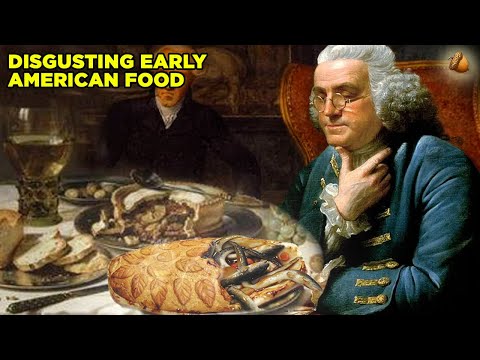
Eels, those slippery, slithery, half-fish, half-snake-like creatures, were a common kitchen ingredient in the 18th century. Despite their somewhat repulsive appearance to modern eyes, the colonials of the New England states particularly loved to make pies out of them. Yes, eel pie was a fan favorite. Imagine the irony: lobsters, now a delicacy, were then mere tools to capture the eels destined for a pie. While smoked eels might be understandable to a degree, the idea of an eel pie is a culinary concept that many hope will never, ever make a return. It is a stark reminder of how dramatically our palates and priorities have shifted over the past few centuries.
Lobsters were so plentiful, they were considered the food of the low-class: workers, freed slaves, and prisoners. They were so common, in fact, that they were often used as bait to catch other, more desirable creatures.
The Ketchup That Wasn't Tomato
When you hear the word "ketchup," your mind invariably conjures images of that ubiquitous red condiment, a sweet and tangy companion to fries and burgers. But in the 18th century, "ketchup" was a far cry from its tomato-based descendant. The English ketchup of that era was, shall we say, a distant cousin that polite society preferred not to mention. It was, in all seriousness, a progressive sauce on paper, said to be inspired by an Asian sauce, which makes its 'English' moniker quite curious.
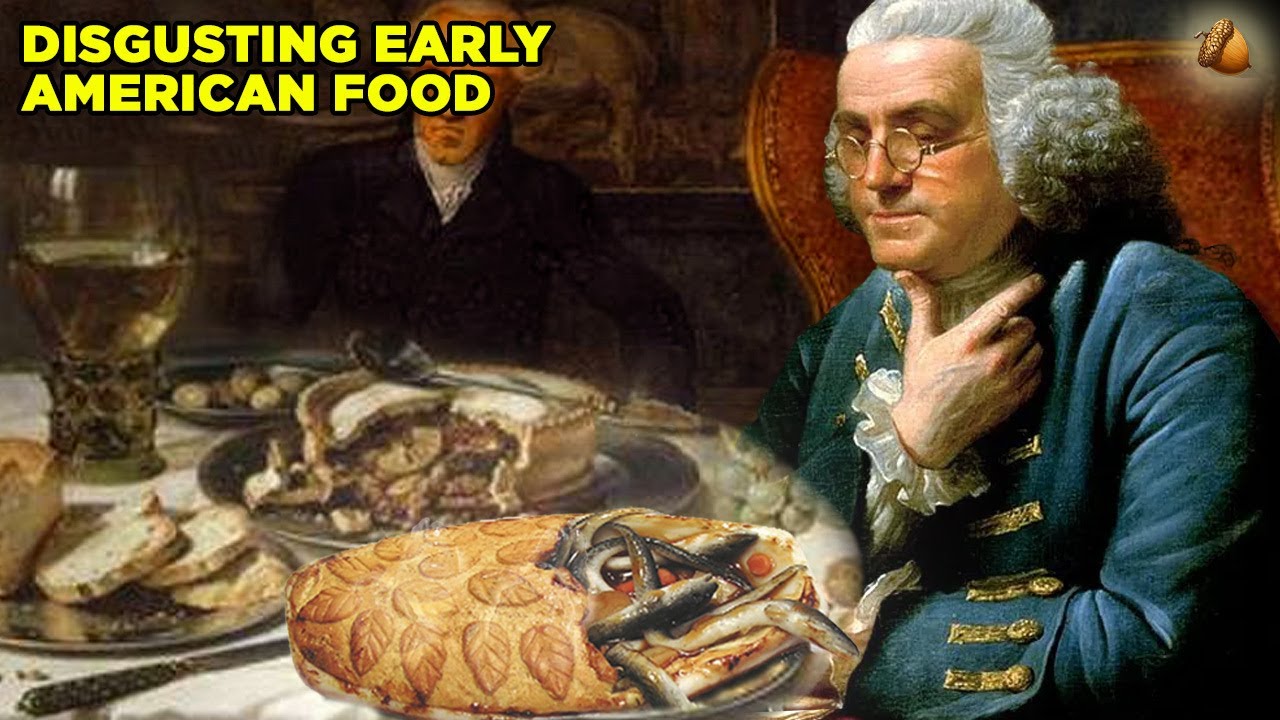
The ingredients list for this peculiar condiment reads like a culinary dare: mushrooms, walnuts, anchovies, and oysters. This is a combination that today would likely come with cautionary advice, perhaps a warning label. One has to wonder who first thought this particular medley of flavors was a good idea. It stands as a testament to a time when culinary experimentation knew few bounds, even if the results were often bizarre by modern standards. This English ketchup is a vivid illustration of how much our understanding and expectations of basic condiments have evolved.
High Society's Turtle Troubles
Many of us grew up with the Ninja Turtles, dreaming of having them join us at the dinner table. But for the 18th century elite, turtles were very much on the dinner table, and in a rather grand fashion. Turtle soup was a highly popular dish among the posh and wealthy colonials, a luxury also enjoyed by the rich on the other side of the pond, in Britain and France. These discerning diners shared a common appreciation for this elaborate dish. Traditional turtle soup was cooked with generous amounts of butter and wine, making it an incredibly heavy and rich offering, perfect for a substantial lunch or dinner.
Even today, snapper turtle soup remains an established part of Philadelphia cuisine, a culinary legacy from a bygone era. However, a word of caution is in order. Ignorance regarding the type of turtle used can lead to severe consequences, including food poisoning or, even worse, salmonella. The fact that such a dish, with its inherent risks and exotic ingredients, was a mark of high status, underscores the often-unconventional gastronomic preferences of the past. It speaks to a time when rarity and complexity, rather than safety or simplicity, often defined a dish's desirability.
The Avian Architectural Marvels
Have you ever encountered a turducken, that somewhat infamous poultry creation of a chicken stuffed into a duck, which is then stuffed into a turkey? Imagine that concept, but taken to an extreme that borders on the absurd. We are talking about the 18th century's answer to the turducken, a dish that could feature an astonishing 17 layers of birds, nested one inside the other like a grotesque culinary Russian doll. This monumental roast required an exact order of birds, meticulously arranged from the innermost to the outermost layer.
Starting from the inside, the order went like this: a warbler, then a bunting, followed by a lark, a thrush, a quail, a lapwing, a plover, a partridge, a woodcock, a teal, a guinea fowl, a duck, a chicken, a pheasant, a goose, a turkey, and finally, the colossal giant bustard. This was not merely a meal; it was an architectural marvel of the avian world, a testament to culinary ambition and perhaps a touch of madness. The sheer scale and complexity of such a dish highlight a period when extravagance in dining was a highly valued, if utterly bizarre, art form.
Starting from the inside, the order went like this: a warbler, then a bunting, followed by a lark, a thrush, a quail, a lapwing, a plover, a partridge, a woodcock, a teal, a guinea fowl, a duck, a chicken, a pheasant, a goose, a turkey, and finally, the colossal giant bustard.
Culinary Chimeras and Unsettling Substitutes
The story of Frankenstein, Mary Shelley's early 19th century novel about a scientist stitching together disparate body parts to create life, might have found a curious precedent in 18th century kitchens. Cooks of the era, it seems, were not above creating their own culinary abominations, drawing inspiration from mythological beasts. Consider the cockatrice, a monstrous creature with the head of a rooster, the wings of a bat, the body of a pig, and the tail of a lizard. 18th century chefs decided to emulate this mythical horror, not with magic, but with kitchen knives and sewing needles.
They would sew the top half of a boiled rooster to the bottom half of a suckling pig, creating a truly unsettling hybrid. This creation would then be stuffed and roasted, presented as a dish also called a cockatrice, though thankfully, they omitted the bat wings and lizard tail from the edible version. It speaks to a time when the spectacle of food was as important as its flavor, and inventiveness knew no bounds, even if it meant venturing into the realm of the grotesque. Beyond these elaborate chimeras, other honorable mentions from the 18th century culinary landscape include "cocktail," an ale brewed with a crushed boiled rooster, badgers used as a pork substitute, and the rather infamous roasted male sheep genitalia and roasted cat. These selections underscore a pervasive willingness to consume whatever was available, often with a flair for the dramatic.
Whale Vomit and Hoof Jelly: The Sweet Endings
When it came to desserts, 18th century Americans possessed a taste for the truly exotic and, by modern standards, utterly bizarre. One of the most desirable and expensive desserts of the era was chocolate mixed with ambergris. For those unfamiliar, ambergris was an elite and costly additive, highly prized for its unique properties. It looked like a stone, felt like wax, and possessed a peculiar odor often described as marine feces. Why, you ask, did it have such a distinct smell? Because ambergris was, in fact, dried vomit of a whale.
Yet, for some inexplicable reason, 18th century Americans found the combination of this sea mammal's expelled digestive matter and chocolate to be exquisitely rich and delicious. It is a taste profile that would undoubtedly make most modern palates recoil. For those who could not afford such lavish, vomitous delights, a more humble, yet still peculiar, after-meal sweetness awaited: calf's foot jelly. This dessert was created by boiling a calf's hoof, which would yield gelatin. Originally, calf's foot jelly was believed to possess medicinal properties, thought to be good for healing sick people. Thankfully, medical science advanced, and calf's foot jelly largely disappeared from menus. However, if you enjoy eating Jell-O today, you are still consuming gelatin derived from boiling various animal bones and skins, a direct, if somewhat sanitized, descendant of that peculiar hoof-based treat.
The culinary landscape of early America was a testament to human adaptability, a mirror reflecting the harsh realities and boundless curiosities of its inhabitants. It was a time when waste was anathema, spectacle was paramount, and nearly anything, from whale vomit to squirrel pie, could find a place on the dinner table. These forgotten dishes remind us that history is often far nuttier, filthier, and weirder than the sanitized versions found in textbooks, proving that our ancestors truly ate like no one else.