Ancient Greece, the supposed cradle of democracy and philosophy, often conjures images of marble temples, wise sages, and the effortless flow of wine. Textbooks paint a picture of intellectual enlightenment and civic virtue, a shining beacon of civilization. But peel back the polished veneer, and you find a reality far grittier, a society where survival was a daily gamble, where justice was brutal, and where the very foundations of their celebrated achievements rested on widespread, often horrifying, human suffering. Forget the idyllic scenes; this was a world where a stolen cabbage could cost you your life, and where the pursuit of beauty could literally rot your face off.
The Bloody Business of Being a Citizen Soldier
Before the days when city-states could afford to outsource their bloodshed, the average Greek citizen was expected to trade their plow for a spear. By about 500 BC, foreign mercenaries became the go-to for many conflicts, but in the archaic period, from 800 to 500 BC, the fighting fell squarely on the shoulders of farmers and common workers. These citizen militias were part-time warriors, clashing during the summer months, only to return to their fields and prepare for the harvest once the fighting season ended. This made for a truly haphazard form of warfare, where commitment was seasonal and logistics often an afterthought.
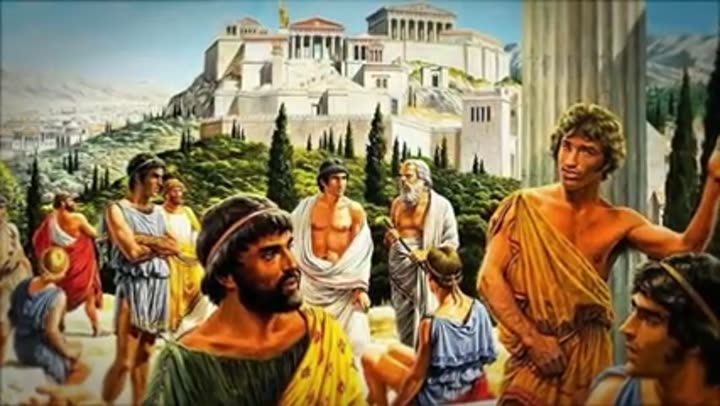
The cost of war wasn't just measured in lives; it was also a significant financial burden on the individual. Citizens were typically responsible for purchasing their own equipment. If you were poor, you were likely relegated to the role of a pawn, thrown into battle with precious little protection, making you highly expendable. But if you had a bit more coin, or perhaps inherited some gear, you could become a hoplite: an infantryman armed with a spear, shield, and body armor. While the exact origins of hoplite warfare are debated, by 600 BC, these heavily armed foot soldiers had become a cornerstone of Greek military strategy, forming formidable phalanxes that dominated the battlefield.
Justice, Draconian Style
Imagine a legal system where the penalty for stealing a cabbage could be death. Welcome to Athens in the 7th Century BC, where the infamous Draconian laws took hold around 621 BC. Before this, Athens operated under a system of oral law, a nebulous collection of customs and traditions with no clear set of defined laws or penalties. Justice was a personal affair, often left to the victim's family to seek retribution, a practice that frequently spiraled into generational blood feuds. Compounding this chaos, the entrenched aristocracy often manipulated these unwritten rules to their own advantage, leading to a deeply unequal society where the common person had little recourse.

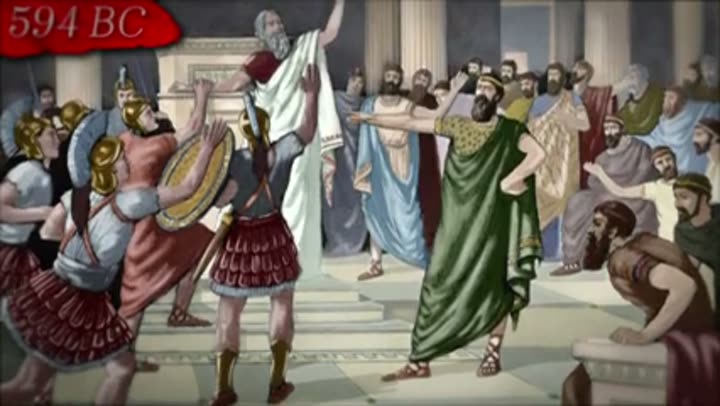
The need for reform was undeniable, but the solution that emerged was shockingly severe. An Athenian aristocrat named Draco penned the city's first written constitution, an attempt to bring order that instead ushered in a terrifying era of state-sanctioned cruelty. This Draconian Constitution prescribed the death penalty or enslavement for even minor transgressions. For instance, while stealing could lead to execution, accidentally killing someone might be forgiven if you simply apologized to the victim's family. The laws also solidified a brutal system of debt enslavement, allowing wealthy landowners to seize their tenants and force them into servitude if they couldn't pay their debts. Furthermore, political rights were severely restricted, granted only to those who carried weapons or owned a certain amount of land, further entrenching the power of the elite. Ultimately, Draco's laws proved too harsh even for the Athenians; they were repealed by the lawmaker Solon in 594 BC, just a few decades after their enactment, and replaced with a more lenient set of statutes.
The Invisible Chains: A Society Built on Enslavement
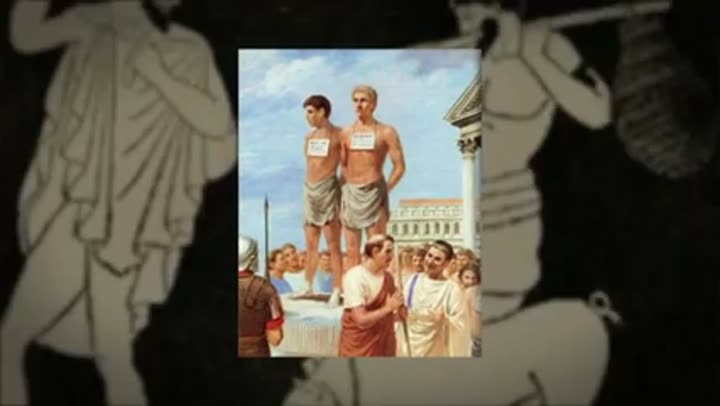
Slavery was not merely present in ancient Greece; it was pervasive, forming the very backbone of its famed civilization. In Athens, between the 4th and 5th centuries BC, the slave population was staggering: an estimated 60,000 to 80,000 individuals, comprising more than half the city's total inhabitants. On average, every household owned at least three slaves, performing the vast majority of manual labor. This allowed Athenian citizens the leisure time to pursue philosophy, politics, and the arts that we so admire today.
In Sparta, the situation was even more extreme. Helots, a unique class of state-owned indentured servants, vastly outnumbered free Spartans, sometimes by a ratio of 20 to 1. These Helots were primarily agricultural laborers, forced to hand over most of their farmed produce to the government. Their labor freed Spartan men to dedicate their lives entirely to military training, forging the feared Spartan war machine into one of the most formidable fighting forces of its era. However, this freedom came at a horrific cost to the Helots, who were treated with deliberate cruelty. The Spartan state actively sought to keep their spirits broken, often subjecting them to regular beatings. Myron of Priene, an ancient writer, recounted that Helots endured a stipulated number of beatings every year, regardless of any wrongdoing, simply as a stark reminder of their enslaved status. In Athens, too, beatings were common for slaves, as an Athenian statesman coldly observed, "the body of a slave is made responsible for all its misdeeds, whereas corporal punishment is the last penalty to inflict on a free man."
In Athens, between the 4th and 5th centuries BC, the slave population was staggering: an estimated 60,000 to 80,000 individuals, comprising more than half the city's total inhabitants.
Becoming a slave in ancient Greece was a grim lottery. You could be born into chattel slavery, inheriting your parents' bondage. Being on the losing side of a war often meant capture and sale into servitude. Even free Athenian citizens were not entirely immune. A system of debt enslavement meant that if you owed too much money to a landlord from whom you leased land, you could be enslaved and forced to work without pay until your debt was considered settled. The omnipresent specter of slavery cast a long, dark shadow over the "golden age" of Greece.
The Scourge of Athens: When Disease Met Siege
Life in ancient Athens around 430 BC was already precarious, with the city under siege by Spartan forces during the Peloponnesian War. But a far deadlier enemy arrived: a mysterious outbreak that decimated the population, making it a statistical certainty that you, as an Athenian, had a one in three chance of perishing. This devastating plague terminated more than a third of the city's inhabitants, adding a layer of unimaginable horror to the wartime suffering.
Historians still debate the exact culprit, with theories ranging from typhus, influenza, and measles to the more terrifying possibility of Ebola. The historian Thucydides, an eyewitness to the catastrophe, meticulously documented its progression. He suggested the plague originated somewhere in Africa, then spread through the vast Persian Empire before finally making its calamitous way to Athens. The symptoms were horrific: initial fever, followed by inflamed eyes, bleeding from the mouth, and ultimately, respiratory failure. The city descended into chaos as nearly 100,000 people perished, a tragedy amplified by the ongoing Spartan siege. This twin assault left Athens in tatters, effectively signaling the end of its golden age. A mere 25 years later, the once-proud city would be absorbed by its rival, Sparta.
Beauty That Kills: The Lead-Laced Face of Antiquity
For ancient Greek women, and indeed many men, the pursuit of beauty often involved a deadly secret ingredient: lead. Cosmetics, a word derived from the Greek *cosmetica*, and the act of beautifying, known as *cosmetican*, were widespread. While Greek writers, predominantly men, frequently disparaged the use of makeup, associating it with prostitutes and lower-class women, historical evidence now suggests that nearly all social strata, across genders, engaged in enhancing their features and brightening their skin. The favored method involved applying a lead-based paste to achieve a pale, idealized complexion.
The consequences, however, were horrific. This lead paste, far from merely cosmetic, actively damaged the skin, leading to horrible disfigurement, scarring, and disease. In a cruel and vicious cycle, as the lead continued to eat away at their faces, more and thicker layers would be applied to cover the damage it had already wrought. The things people do for beauty, even when it literally killed them slowly, highlight a fascinating and morbid aspect of daily life in ancient Greece.
The Great Silence: When Civilizations Vanished
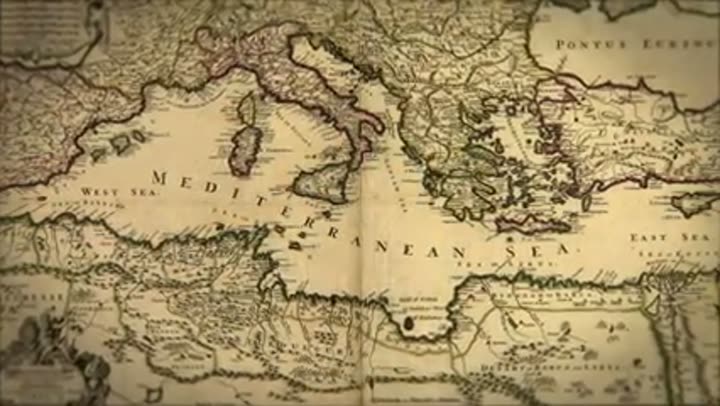
Travel back to the earliest chapters of Greek history, around 1177 BC, and you'd find yourself in an era of cataclysmic upheaval. This period, known as the Bronze Age Collapse, saw a vast, interconnected network of advanced civilizations across the Mediterranean suddenly unravel. The Mycenaeans, Egyptians, Hittites, Babylonians, and Minoans, all boasting thriving cultures, sophisticated architecture, and economies built on extensive overseas trade, experienced a simultaneous and devastating decline. What followed was a Dark Age that lasted for centuries, a period of widespread famine, destruction, and a profound loss of literacy.
Historians grapple with the precise causes of this monumental collapse. Some evidence points to a prolonged 300-year drought, which would have led to widespread famine and starvation, inevitably sparking internal conflicts and wars that slowly consumed these once-mighty empires. However, another, more mysterious threat looms in the historical record: the enigmatic "Sea Peoples." These seafaring raiders are mentioned in vague written accounts and depicted in unidentical carvings on stelae, showing great battles from this tumultuous era. It is believed that these powerful pirates were responsible for much of the death and destruction along the Mediterranean coast, invading and destroying prominent port cities, perhaps exploiting empires already weakened by drought. Unfortunately, these tantalizingly vague accounts and inconsistent archaeological evidence are all we have to suggest the existence and impact of these formidable, ocean-borne marauders.
Travel back to the earliest chapters of Greek history, around 1177 BC, and you'd find yourself in an era of cataclysmic upheaval. This period, known as the Bronze Age Collapse, saw a vast, interconnected network of advanced civilizations across the Mediterranean suddenly unravel.
Blood, Bile, and Blurry Lines: The Art of Ancient Healing
Ancient Greek medicine, while a step forward from prior eras, remained largely rudimentary and often intertwined with superstition. Before the 5th Century BC, illness was almost universally attributed to divine punishment: if you died, the gods were to blame; if you recovered, it was a divine gift. By 500 BC, a more scientific approach began to emerge, but the distinction between science and religion remained profoundly blurry. Asclepius, for instance, was revered as both a divine healer and a highly skilled physician, embodying this dual nature of healing.
Crucially, there were no professional qualifications for doctors in ancient Greece. Anyone could claim to be a physician, practicing their own unique techniques or "mysterious arts" of medicine. One of the most popular and enduring treatments, often prescribed for almost any malady, was bloodletting. The Greeks were ardent proponents of this practice, which was deeply rooted in a medical system called humorism. This theory posited that the human body was composed of four fundamental humors: blood, yellow bile, black bile, and phlegm. A healthy person maintained a proper balance of these components, while pain or illness indicated an imbalance. Temperature was also directly linked to these humors: hot foods were thought to produce yellow bile, while cold foods generated phlegm. Similarly, cities exposed to cold winds were associated with lung disease, and hot winds with digestive problems. Humorism, with its complex but ultimately flawed logic, persisted as a dominant medical paradigm long after ancient Greece, only truly falling out of favor in the 1850s with the advent of germ theory.
So, for all the incredible achievements and philosophical grandeur of ancient Greece, the reality for most was a far cry from the idealized image. It was a world of brutal warfare, unforgiving laws, widespread human bondage, devastating plagues, and dangerous beauty standards. Life was often nasty, brutish, and short, a stark reminder that history is always far more complex, and often far nuttier, than the sanitized versions we learn in school.