Forget everything your history teacher told you about ancient civilizations or the supposed 'glamour' of European royalty. The truth, as always, is far grittier, smellier, and frankly, more fascinating than any sanitized textbook could convey. Humanity's journey from nomadic hunter-gatherers to sophisticated city-dwellers wasn't just a story of innovation and conquest, it was a constant, often losing, battle against its own waste. From piles of ancient refuse that dwarfed buildings to royal palaces reeking of human excrement, our ancestors' relationship with hygiene was a chaotic, often bizarre, dance between ingenuity and utter squalor. Prepare to have your notions of the past quite literally turned upside down, as we delve into the unapologetically messy history of keeping clean, or not.
The Messy Dawn: Sumerians, Egyptians, and the Smell of Progress
When humanity finally decided to put down roots, trading the transient freedom of the hunter-gatherer for the stability of permanent settlements, they inadvertently created a colossal problem: their own filth. Before, nature simply reclaimed whatever mess was left behind, but fixed abodes meant fixed waste. The Sumerians, pioneers of civilization and founders of the ancient city of Eridu, were among the first to grapple with this. And grapple they did, often poorly. Eridu grew to be one of the dirtiest cities known to history, with waste piling up over generations. People simply chucked their refuse into the open, lacking any coherent waste disposal system.
Interestingly, the Sumerians were not entirely oblivious to the consequences. They understood that unhygienic and polluted surroundings invited diseases and ailments, even without knowing anything about germs. Despite this rudimentary understanding, they remained clueless about how to combat the growing mounds of filth in their streets. It was a problem they identified but couldn't solve on a societal scale. Yet, for all their collective urban squalor, the Sumerians were surprisingly attentive to personal hygiene. It is believed that the Babylonians, an offshoot of Mesopotamian culture, invented soap as early as 2800 BC. Clay cylinders containing remnants of antique soap have been found at various Mesopotamian historical sites. Some of these containers even bore labels, often inscribed with "fats boiled with ashes," describing the common method of making soap from animal fatty acids (from cows, sheep, and goats), water, an alkaline substance, and wood ashes. The Roman scholar Pliny the Elder, in his work Naturalis Historia, later described a similar pomade made of tallow (beef fat) and ash, confirming the ancient origins of this cleansing agent.
The Egyptians, ever the aesthetes, took personal hygiene and appearance to another level. Situated along the life-giving Nile River, they were meticulous about sanitation and bathed regularly. Evidence of their bathing routines can be found in the Ebers Papyrus, a medical text scroll produced around 1500 BC. This papyrus detailed instructions for creating soap from animal fat, vegetable oils, and salt, used not only for washing and bathing but also for treating skin conditions. Egyptians were perhaps the earliest civilization to conceive of indoor washrooms. They built toilets and bathing areas within their homes, a remarkable feat for the time. However, they overlooked one crucial detail: running water. Water had to be laboriously carried from the Nile River, a task usually falling to servants, making these indoor facilities a luxury only the wealthy could afford. This necessity gave rise to the profession of "water carriers," a common job well into the Middle Ages and early modern periods until plumbing became widespread.
One can only imagine the stench that must have permeated these washrooms. Like the Sumerians, Egyptians often disposed of their waste by simply throwing it out in the open. A stroll through the ancient city of Memphis, admiring its lavish architecture, might have been abruptly interrupted by an unfortunate misstep into some wealthy Egyptian's excrement. Both Sumerian and Egyptian civilizations also suffered from the proliferation of vermin and diseases due to irrigation canals, or 'kabooldumbs,' which facilitated the spread of ailments. This is why the plague, in various forms, was a common occurrence in ancient civilizations and deeply influenced their mythologies and divine narratives.
Water Wizards: The Hydraulic Marvels of the Indus Valley and Minoans
While some early civilizations struggled with rudimentary waste disposal, others, particularly in the Indian subcontinent and on the island of Crete, demonstrated an astonishing mastery of water management. These cultures understood the true meaning of making water come to them, rather than the other way around. The Bronze Age civilization of the ancient Indus Valley, flourishing around 1500 BC, was a marvel of hydraulic engineering. Their cities, built with dried mud bricks or clay bricks cemented with mud, featured not only public baths but also private baths within urban dwellings. For these facilities to function, a sophisticated sewage system was essential.
The cities of Harappa, Mohenjo-Daro, and the recently discovered Rakhigarhi offer the earliest evidence of urban sanitation, a level of sophistication the West would not see for millennia.
Their secret lay in highly advanced architectural planning for their era: underground drains constructed with precisely laid bricks, forming a sophisticated water management system connected to multiple reservoirs. This drainage network extended beyond public establishments, allowing individual houses to connect via smaller drains that fed into wider public conduits. The sheer scale and ingenuity of this system, developed by 1500 BC, is mind-boggling. Consider this: multi-story houses have been discovered in Mohenjo-Daro, and the Indus Valley people possessed the knowledge to build enclosed terracotta pipes and open chutes to empty bathrooms on higher floors, alongside methods for carrying water upwards. The cities of Harappa, Mohenjo-Daro, and the recently discovered Rakhigarhi offer the earliest evidence of urban sanitation, a level of sophistication the West would not see for millennia. For comparison, when the first flush toilet was used in London during Victorian times, Queen Victoria reportedly jumped from the seat and ran away after hearing the roar of the flushing water, vowing never to use such a device again.
The urban planning of the Indus Valley Civilization included wells strategically placed in communal areas of residential blocks for water supply. Homes typically featured a dedicated bathing room and a toilet, with wastewater directed towards covered drains lining the major streets. Devices like 'sedouce' and 'sakias' were employed to lift water to ground level. Ruins in Pakistan and Dholavira in Gujarat, India, reveal settlements with some of the ancient world's most sophisticated sewage systems, incorporating drainage channels, rainwater harvesting, and street ducts. Stepwells, a common feature in the Indian subcontinent for ages, provided access to water. Many courtyard houses had both a washing platform and a dedicated toilet and waste disposal hole, often with a clay vessel tilted to flush waste into the drain. However, this advanced system relied heavily on proximity to water bodies, a dependency that some scholars believe ultimately contributed to the civilization's demise, with a catastrophic flood considered the most plausible cause.
The Minoans of Crete island, building on similar principles, took this water management a step further. They constructed multi-story complexes, often referred to by archaeologists as "palaces," though they primarily served as distribution centers for goods like olive oil, wine, and grains. The architecture of these structures was extraordinary and far ahead of its time, featuring colonnaded courtyards, sliding doors, external staircases, and monumental stone buildings braced with wood beams. During the Early Bronze Age, roughly between 3500 BC and 2100 BC, the Minoans developed a systematic evolution of water management. The Palace of Minos in Knossos boasted the most elaborate terracotta pipe water management system known to us. This was not merely a drainage system like those of the Indus Valley; Minoan water technologies included running water within palaces and other settlements, comprehensive drainage and piping systems, and sophisticated rainwater harvesting. Terracotta pipes served multiple functions for the Minoans, conveying wastewater, fresh water from local springs, or stormwater collected from roofs to reservoir systems, palace sewage drainage, or public water supply networks such as fountains. In the town of Zakros, for example, a setup from Myrtos Pyrgos utilized a rectangular terracotta pipe to supply a nearby cistern system with rainwater collected from roofs. These pipes were also integral to their aqueducts, which came in two main types: natural gravity flow systems found in Malia and Tylissos, and closed pressurized pipe systems used in cities like Knossos, Phaistos, and Zakros, with terracotta pipes discovered at many such palatial sites.
Pebbles and Philosophy: Ancient Greece's Curious Approach
Moving from the hydraulic wonders of the East to the philosophical heartland of the West, we find the ancient Greeks, from the late Bronze Age to Hellenistic times, gradually understanding the importance of baths. They recognized the correlation between regular bathing and better health. Initially, their bathing rituals were rather bracing: a quick dip into a tub of ice-cold water. However, the people of Laconica, near Sparta, introduced a revolutionary concept: hot air baths. These Laconian baths, warmed with hot coals or rocks, quickly became a luxury among the Greek nobility, inspiring the construction of large public bathhouses in almost every city. Yet, when it came to toilets, Greece, surprisingly, took a significant step back from the achievements of the Minoans just a few centuries prior.
Instead of the Minoan's running water in homes, Hellenistic Greece devised a different solution for posterior hygiene, one that might ironically be considered a distant precursor to modern toilet paper, though certainly not in comfort. Lacking the soft, absorbent qualities of papyrus (which would have angered the Egyptians if used for such a purpose), ancient Greeks opted for the next best thing: pebbles. Yes, tiny, rough, sharp-edged, coarse pebbles. It's truly baffling how such an impractical choice could appeal to a civilization that pioneered philosophy and democracy. To compound the discomfort, ancient Greek public restrooms were stark affairs, consisting of nothing more than bench seats with holes, where people sat right next to each other with no walls or dividers. Eventually, even middle-class homes acquired their own restrooms and flushing toilets, showing that the Greeks, at least, had not entirely forgotten how to build a drainage system, echoing the Minoan ingenuity of old.
Beyond the peculiar wiping habits, ancient Greek beauty standards were quite specific. As we've discussed in previous videos, pale skin and blonde hair were highly fashionable, a stark contrast to today's desire for a sun-kissed body in Greece. To achieve this ethereal pallor, Greeks initially, around 1000 BC, would simply lace themselves with chalk. No matter how detrimental this was to respiratory health, the obsession with a ghostly appearance led them to replace chalk with even more toxic lead powder by 200 BC. For oral hygiene, the Greeks chewed mastic, a plant resin derived from the mastic tree, to keep their breath fresh and maintain teeth cleanliness. They also used twigs as toothpicks and brushes. The very word "hygiene" is a testament to their focus on health, stemming from the Greek goddess Hygieia, daughter of Asclepius, the god of medicine, and the patroness of health.
Urine, Sponges, and Latrines: Imperial Rome's Unconventional Cleanliness
The Romans, inheritors of much Greek culture, also placed great importance on oral hygiene, though their methods were, shall we say, unconventional. So keen were they on clean teeth that they were willing to put anything in their mouths to achieve it. Today, the thought of using urine as a mouthwash is repulsive, but Romans were fascinated by its composition. While they had no scientific understanding of phosphorus and potassium, they somehow discovered that these compounds, present in urine, helped whiten teeth and prevent decay. And it wasn't just human urine; animal urine was also a common ingredient in their toothpaste. One can only wonder who the first brave soul was to experiment with this, and then consistently apply it, until its 'benefits' were realized.
The Romans, thankfully, ditched the Greeks' pebbles for something softer and more sophisticated for post-toilet ablutions: a sponge. Olga Kozlowski, an anthropologist at Brandeis University, humorously refers to herself as the "official queen of latrines" due to her extensive research into ancient Roman gutters. The term 'latrine,' or latrina in Latin, typically referred to a private toilet in someone's home, usually constructed over a cesspit. Public toilets, known as 'forica,' were often attached to public baths, whose flowing water was used to flush away waste. Like the Greeks, Romans had no qualms about sitting in close quarters in public restrooms. The toga, thankfully, provided a measure of privacy that pulling down trousers would not. The issue of the pervasive stench was omnipresent, but Romans seemed to possess fewer inhibitions than modern people.
Once their business was done, the sponge came into play. But here's the kicker: nobody had a private sponge. The sea sponges, attached to a stick, were as communal as playgrounds. Gutter systems supplied clean, flowing water to dip these 'tesorium' (literally, "wiping thing," but affectionately known today as "poop sticks") into. This shared butt-wiping, however, meant shared diseases. If one forica visitor had intestinal worms, it was almost guaranteed that others would carry them home. Additionally, the lack of good lighting and cramped spaces often meant people would miss the hole. Forica were not always well-maintained either, so walking into a public Roman toilet was likely no better than stumbling into a restroom at a particularly rowdy modern music festival. Whether Romans consistently washed their hands after using the latrine remains debated; perhaps an amphora by the door held water for a quick rinse. Egyptians, living in a drier climate, were generally more diligent about hand cleanliness.
The Great Unwashed Myth: Medieval Realities and Royal Filth
Few historical eras have garnered as bad a reputation for hygiene as the Middle Ages. Popular media loves to depict medieval peasants as perpetually covered in filth and grime. Much of this stereotype can be traced back to Queen Isabella of Castile, who supposedly boasted that she had bathed only twice in her life: on the day she was born and on her wedding day to Ferdinand of Aragon. The myth of medieval people never bathing was further perpetuated during the Black Death, when medieval doctors, in a misguided attempt at public health, cautioned against bathing. They believed that hot water opened the body's pores, making individuals more susceptible to disease, and discouraged congregation in bathhouses, which often reused water for multiple people. However, they also recognized the therapeutic benefits of bathing, prescribing it for ailments ranging from bladder stones to melancholy.
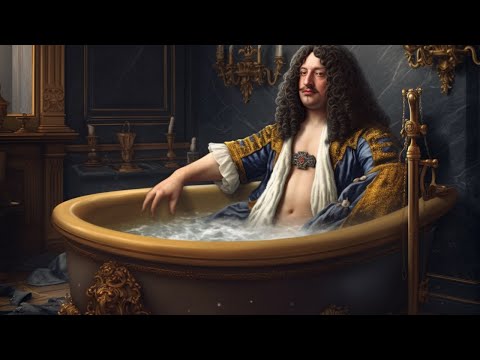
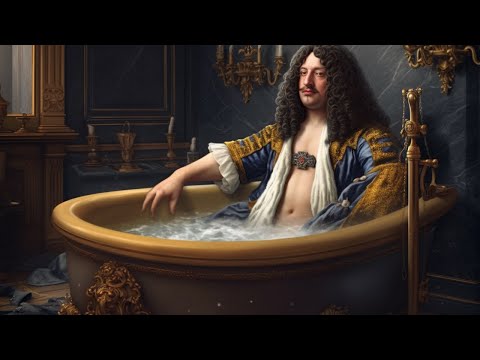
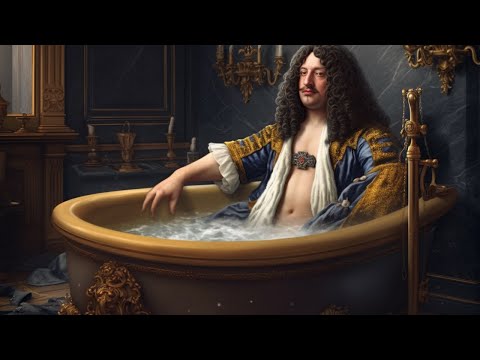
The reality is more nuanced. It is widely believed that wealthy individuals bathed regularly and invested significantly in making bathing a luxurious experience. King John, for instance, traveled with his own bathtub and employed a 'bath man,' reportedly taking around ten baths every six months. Edward III installed a new bathing chamber at Westminster, providing him access to both hot and cold running water. Medieval people were also aware of good dental hygiene. They were advised to rinse their teeth with water upon waking to remove mucus that accumulated overnight. Unlike Roman times, urine was no longer considered a suitable oral hygiene solution, though it found a new purpose as a laundry detergent. Waste disposal, however, remained a persistent problem. Toilets, as understood in antiquity, largely lost their appeal, and chamber pots became ubiquitous. The common practice was to empty these pots by simply throwing their contents out of a window or over a balcony, hopefully with a warning cry to avoid showering unsuspecting passersby. This charming habit persisted even in the Palace of Versailles.
Even if one managed to avoid a "chamber pot rain shower" or stepping in street filth, the pervasive stench was inescapable. Men and women would carry small bags filled with flowers and other fragrant substances, holding them to their noses to mask the overwhelming odors. We can all be grateful for modern air fresheners. For some men, however, the management of royal excrement offered a surprising path to career advancement. The "Groom of the King's Stool" was perhaps the most degrading, yet highly rewarding, job of medieval times. The position was first created by Henry VIII, who, being rather overweight, found it difficult to reach around. Sir William Compton, Henry's Groom of the King's Stool, became a close friend and confidant of the king, eventually earning a knighthood. This ostensibly "crappy job" required serious connections and offered unparalleled access to power. The problem of waste management was so severe that by Henry VII's time, royals would annually relocate between their multiple palaces, allowing their previous residences to be cleared of stench, wasted food, heaps of excrement, and infestations of all sorts of vermin. For the lower classes, life with vermin and disease was simply normal. They would line their floors with hay, which, predictably, only invited more insects.
Versailles' Stench: Royal Filth and the Perfumed Age
If you thought medieval castles were bad, consider the grand Golden Palace of Versailles, a symbol of royal power and architectural splendor that was, in reality, a monument to monumental filth. With a population fluctuating between one thousand and five thousand people, the royal staff required a small army just to keep it somewhat clean. The sheer logistics of managing such a palace were overwhelming, leading to the bizarre situation where noble occupants were expected to maintain their own apartments. Meanwhile, the elegant halls and hallways of Versailles frequently served as makeshift toilets for residents, given the paucity of actual washrooms for so many people. Chamber pots, often filled to the brim, would leak through ceilings into the rooms below. Women would simply pull down a section of their clothing to relieve themselves where they stood, while men, with breathtaking audacity, often urinated off the balustrade in the middle of the Royal Chapel.
Women would simply pull down a section of their clothing to relieve themselves where they stood, while men, with breathtaking audacity, often urinated off the balustrade in the middle of the Royal Chapel.
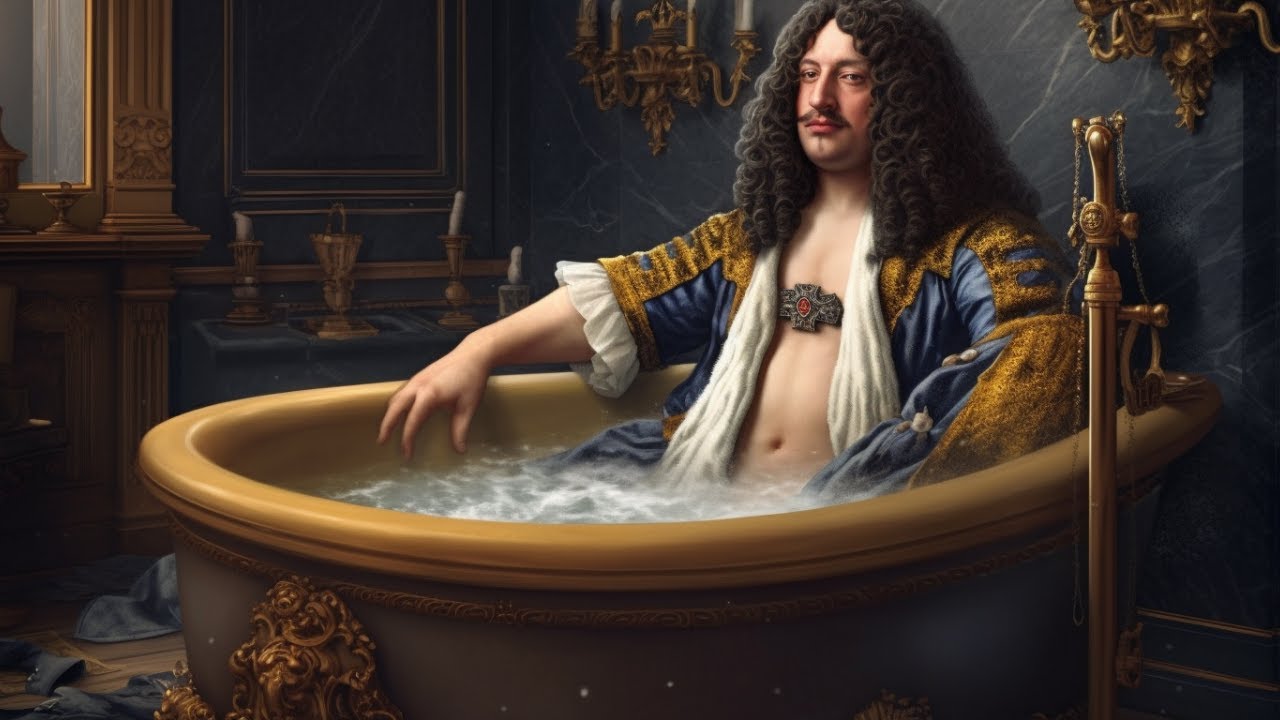
Then there was the matter of bathing. Thanks to various healers of the 15th and 16th centuries, bathing had become a controversial topic in Europe. These medical 'experts' theorized that bathing attracted diseases, leading to a significant reduction in bathing frequency during the 17th, 18th, and 19th centuries, often to less than once a week. However, this doesn't necessarily mean people were universally filthy by their own standards. Most individuals, at least the upper classes, maintained a semblance of cleanliness. A morning routine typically involved washing one's hands and face, followed by a quick wash of the rest of the body with a wet cloth, perfumes, or, in what was considered the safest option, alcohol. Louis XIV, for example, was reportedly rubbed down daily with cloths soaked in alcohol.
Dental hygiene, however, suffered immensely during these centuries. The invention of processed sugar in Victorian times, coupled with the rapid evolution of confectionery, led to a dramatic decline in oral health, a problem that persisted until the advent of modern dentistry. It was during this period that France, perhaps driven by necessity, became the country of pleasant odors and perfumes. New methods of perfuming people and places were developed. Some were effective, others less so. Strong essential oils were often diffused into fountains and other everyday objects to help mask the pervasive stench. The "smelling box," another French innovation, was a pioneering product in the perfuming industry, holding fabric soaked in liquid fragrances. These attempts to cover up the underlying lack of sanitation highlight a fascinating chapter in human history where the art of illusion briefly trumped the science of cleanliness.
Running Water and Revolution: The Dawn of Modern Hygiene
The most revolutionary development in modern history's hygiene came with the widespread introduction of running water in the 19th century. Within a few decades, fresh water became accessible to many, and organized trash disposal systems began to take shape. These innovations were the true catalysts that helped normalize bathing and improve overall hygiene. Across the Atlantic, America also saw significant advancements, with cities beginning to install sewers and expand access to water. This era marked a definitive turning point, moving away from centuries of sporadic cleanliness and olfactory warfare.
The late 19th century brought further innovations that would profoundly impact personal cleanliness. Philadelphia, for instance, witnessed the launch of the first commercial deodorant in 1888. From that point onward, there was no looking back. The modern market is now saturated with pharmaceuticals and cosmetics designed to make us cleaner, fresher, and more presentable than ever before. We live in an age where the ancient battle against human waste has largely been won, at least in developed nations, thanks to a combination of engineering, chemistry, and a collective societal shift towards valuing cleanliness.
So there you have it: a journey through the surprising, often disgusting, and utterly fascinating history of hygiene. From the putrid streets of ancient Eridu to the perfumed halls of Versailles, and finally to the sanitized comfort of our modern homes, humanity's relationship with cleanliness has been a winding, often contradictory, path. It’s a stark reminder that the past wasn't just grand empires and epic battles, but also a constant, intimate struggle against the very biological realities of human existence. The next time you step into a sparkling clean bathroom or take a hot shower, spare a thought for your ancestors, who would likely consider your daily routine a miracle of unimaginable proportions. History, as always, was far nuttier, filthier, and weirder than any textbook could ever prepare you for.