Forget the marble statues and the grand aqueducts: Ancient Rome, the cradle of Western civilization, harbored a secret life far more gritty and shockingly familiar than any textbook dares to admit. Imagine a society where 40% of its people were slaves, where women, even free citizens, were little more than property, and where the empire's soaring economy was lubricated by an open, ubiquitous sex trade. This wasn't some hidden underbelly; it was woven into the very fabric of daily life, driven by the same forces of debt, desperation, and systemic inequality that echo in our own world today. Prepare to peel back the polished veneer of Roman history and stare into its messy, uncomfortable, and utterly fascinating reality.
The Unseen Chains: Slavery and the Roman Woman
To truly understand the Roman sex trade, one must first grasp the pervasive reality of slavery and the subjugated status of women. In this vaunted empire, a staggering 40 percent of its population, both men and women, lived in bondage. Unlike later historical forms, Roman slavery was not defined by skin color, but by birth and conquest. If you were not Roman, there was an 80 percent chance you were a slave. For men, this was already a horrifying fate, but for women, it was arguably the worst imaginable.
Ancient Rome, much like its Greek predecessor, was not a bastion of gender equality. History has been quite clear: women were treated as second-class citizens. They were denied the right to vote or hold public office. Their primary societal role, even for those from the most privileged families, was to serve as loyal and efficient housewives, tasked with bearing and raising children, while their husbands pursued pleasure with younger concubines, essentially side pieces, without social sanction. A woman's education, her social standing, and even her personal freedom were entirely dependent upon her father or her husband. Her value was intrinsically linked to her perceived purity, as women were expected to embody the sanctity of Roman society. These stringent rules, however, applied almost exclusively to women, conveniently bypassing the men who enforced them.
The Pervasive Market: Where Pleasure Was Sold
Despite the conservative, codified, and deeply chauvinistic nature of Roman society, brothels were not only tolerated but flourished, becoming significant contributors to the empire's economy. The reasons are timeless: money, greed, wealth concentration, and pleasure. What's truly astonishing is the sheer ubiquity of these establishments. When we speak of Roman brothels and street workers, we are not talking about hidden, unsavory districts. There were no "red light districts" in the modern sense, no restricted zones where decent citizens would fear to tread. Instead, these operations were integrated into everyday life, functioning more like fast-food vendors on a busy street corner than dedicated, brick-and-mortar franchises.
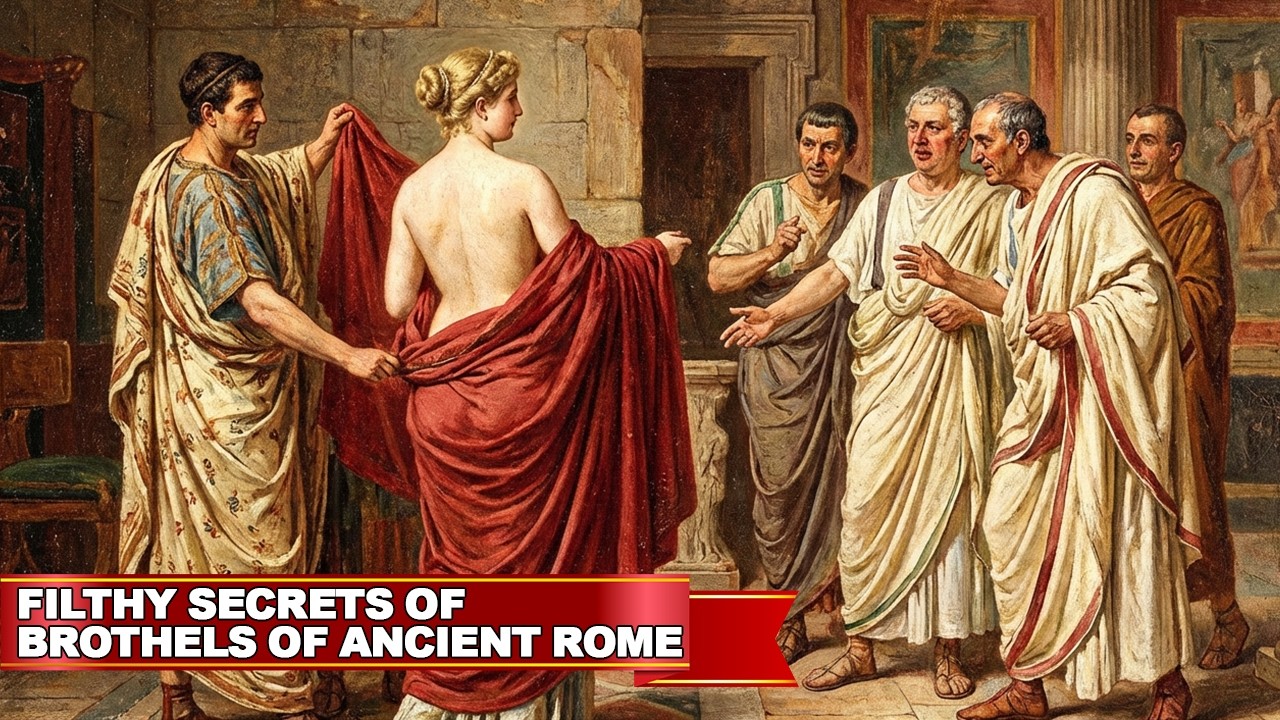
To sell fornication, one primarily needed a bed, not an entire specialized building. Many brothels operated as sublets within inns or taverns, known as cauponae. It was incredibly common for a seemingly ordinary couple living next door to be running a brothel from their home, often involving the wife, sister, or daughter. This was less a choice and more an economic necessity, as families struggled to pay ever-increasing rents and cope with inflation, given the husband's often meager income. While famous dedicated brothels like the Lupanar in Pompeii existed, they were not the norm. Interestingly, while Rome itself lacked a dedicated subura (brothel district), other cities often had these districts located in surprisingly posh neighborhoods, catering to a diverse clientele from all social strata: rich and poor, Roman and foreign alike. These establishments often featured women who had been captured, enslaved, and coerced into the business of pleasing.
To sell fornication, one primarily needed a bed, not an entire specialized building. Many brothels operated as sublets within inns or taverns, known as cauponae.
The Cost of Desire: Roman Currency and Custom
The pricing structure for these services reveals just how accessible they were. An oral experience with a brothel worker could cost as little as two asarii, roughly equivalent to $5.50 in 2026 currency. For a full service, the price was a mere eight asarii, less than $22 today. This made such services cheaper than many forms of modern digital gratification. Some more organized brothels even issued tokens: coins with numbers on one side and a specific performance position molded on the other. These tokens are theorized to have been used as a form of prepaid currency, allowing clients to discreetly indicate their desired service to a chosen woman. They could also serve as a summons, sent by a wealthy client to arrange a meeting at a specific time and place.

The entire system was cheap, easy, and, for Roman men, largely morally unobjectionable. Paying for pleasure was not considered an act of infidelity. However, Roman law presented a curious double standard: a husband was perfectly justified in taking the life of a male brothel worker if he caught him providing services to his wife. Yes, male brothel workers existed, and they were, in many ways, considered even more problematic for society than their female counterparts. This highlights a deep societal contradiction: a flourishing industry for female hustlers, yet severe penalties and stigmas for men who crossed certain lines, particularly those involving Roman wives. The underlying driver remained constant: money, greed, and the concentration of wealth.
The Patriarchy's Profits: Taxation and Exploitation
The very individuals who established and maintained Rome's patriarchal society profited immensely from the brothel industry. Regardless of whether a woman was a free citizen or a slave, the money she earned never went directly to her. It was collected by her male manager, who would then offer her a minuscule share for her labor, keeping the lion's share for himself before passing the largest portion to the brothel owner or, more often, to the wealthy men who owned the women themselves. This system bears striking resemblance to modern pimping.
By the first century AD, the Roman elite found even more ingenious ways to extract wealth. They began taxing women who were registered as streetwalkers in Roman cities. The bureaucracy was meticulous, keeping detailed records of brothels and their workers long before these taxes were implemented. The stated justification for these taxes was to alleviate the tax burden on the wealthy class, a familiar tactic throughout history. While high-class courtesans, known as delicatae and meretrices, who represented a mere 1 percent of the Roman sex industry, could easily afford these taxes, they were a crushing burden for others. The delicatae, interestingly, were often rebellious daughters of affluent, powerful families. They weren't in it for the money, but rather sought to shame their arrogant fathers. They would wear masks to conceal their identities, though their clientele usually knew exactly who they were.
The very individuals who established and maintained Rome's patriarchal society profited immensely from the brothel industry. Regardless of whether a woman was a free citizen or a slave, the money she earned never went directly to her.
The Bottom of the Barrel: From Shabby Taverns to Graveyards
The impact of taxation and poverty was most acutely felt by lower-class free citizens, who could be found plying their trade in dingy, unventilated bathhouses and shabby taverns. Women who managed to evade registration were known as prostibulae and ambulattii, essentially unregistered streetwalkers. These provincial women would wait outside or near high-priced brothels, gladiatorial arenas, theaters, and circuses, ready and willing for just two coins.

But for those truly desperate, or for clients seeking the absolute cheapest or most illicit encounters, the place to go was the graveyard. Here, one might find a bustuaria. These women were scraping the filthy bottom of the Roman economy's barrel. They were typically malnourished, sickly, with hardly any skin on their bones, sunken eyes, and pale faces, perhaps comparable to a modern-day homeless woman, but arguably worse. They had no other option. These bustuariae would use chalk on the backs of headstones to advertise their prices, engaging in intimate acts within tomb passages and secluded plots. This was the worst possible income source in the business, and given the nature of their clientele, all they often had to do was lie still on a cold stone.
The Stigma of the Male Hustler: Preserving Masculinity
Despite the dire circumstances of the bustuariae, Romans paradoxically considered men who sold themselves as hustlers to be even lower. There was a very limited market for men offering services to women, primarily due to social reservations stemming from women's restricted rights in Rome. However, the one percent of privileged women were often above the law and would take on male lovers and courtesans outside their marriages, provided it was kept discreet to protect their husbands' social status and, crucially, their masculinity.
Surprisingly, women were not the only clients seeking male hustlers. Same-gender relationships, while stigmatized, were understood differently than today. It was generally acceptable to be in such a relationship, provided one was not the "receiving" partner. Being on the receiving end was seen as a serious dent to one's masculinity. Thus, engaging in the "business of bodily fluid exchange" with other men was heavily stigmatized. The key was secrecy: ensure nobody found out or caught you in the act. Such a man was expected to be a professional receiver, which would severely damage his social image, and it was equally damaging for clients if it became known they paid to receive. However, these rules did not apply to emperors like Nero or Hadrian, who could keep multiple male concubines without public outcry, showcasing the ultimate privilege.
The Enduring Echoes of Roman Vice
The ancient Roman world, often lauded for its achievements, was also a place of profound social stratification, systemic exploitation, and a casual acceptance of practices that shock our modern sensibilities. The story of its brothels and the lives of those within them is not just a historical footnote; it is a stark reminder that the forces of money, power, and human desperation are timeless. Rome's filthy secrets reveal a society far nuttier, far filthier, and infinitely weirder than the sanitized versions found in school textbooks, proving that history's most compelling lessons often lie in its most uncomfortable truths.