When the venerable Greek historian Herodotus first set foot in ancient Egypt, he wasn't just impressed by the pyramids or the Nile’s bounty; he was utterly flummoxed. This wasn't some minor cultural quirk he encountered, but an entire civilization that seemed to operate on a different cosmic blueprint. He famously accused the Egyptians of "reversing the ordinary practices of mankind," a sentiment born from his astonishment at their peculiar customs, especially concerning love, marriage, and public displays of affection. Forget everything the textbooks told you about stoic, conservative pharaohs and their subjects. Ancient Egyptian society, particularly in matters of the heart and hearth, was a vibrant, often shockingly progressive, and undeniably peculiar place, an eye-opener even for the most seasoned ancient traveler.
Herodotus's Jaw-Drop: A World Turned Upside Down
Herodotus, that indefatigable chronicler of the ancient world, arrived in Egypt expecting perhaps to find familiar echoes of his own Greek civilization, or at least patterns he could readily categorize. Instead, he found a society that challenged his every preconception, a place where the very fabric of social norms seemed to be woven from a different thread. His observations, though sometimes colored by a Hellenic lens, underscore just how distinct Egyptian marital practices were from many contemporary cultures, and indeed, from what we might assume today. Marriage in ancient Egypt, for instance, was largely an arranged affair and, for the vast majority, strictly monogamous. Yet, this institution wasn't primarily focused on individual romantic fulfillment, as many modern ideals might suggest. Its core purpose was far more pragmatic: ensuring communal stability and advancing generations. It was a social contract designed to keep the gears of society turning smoothly, a testament to their long-term vision.
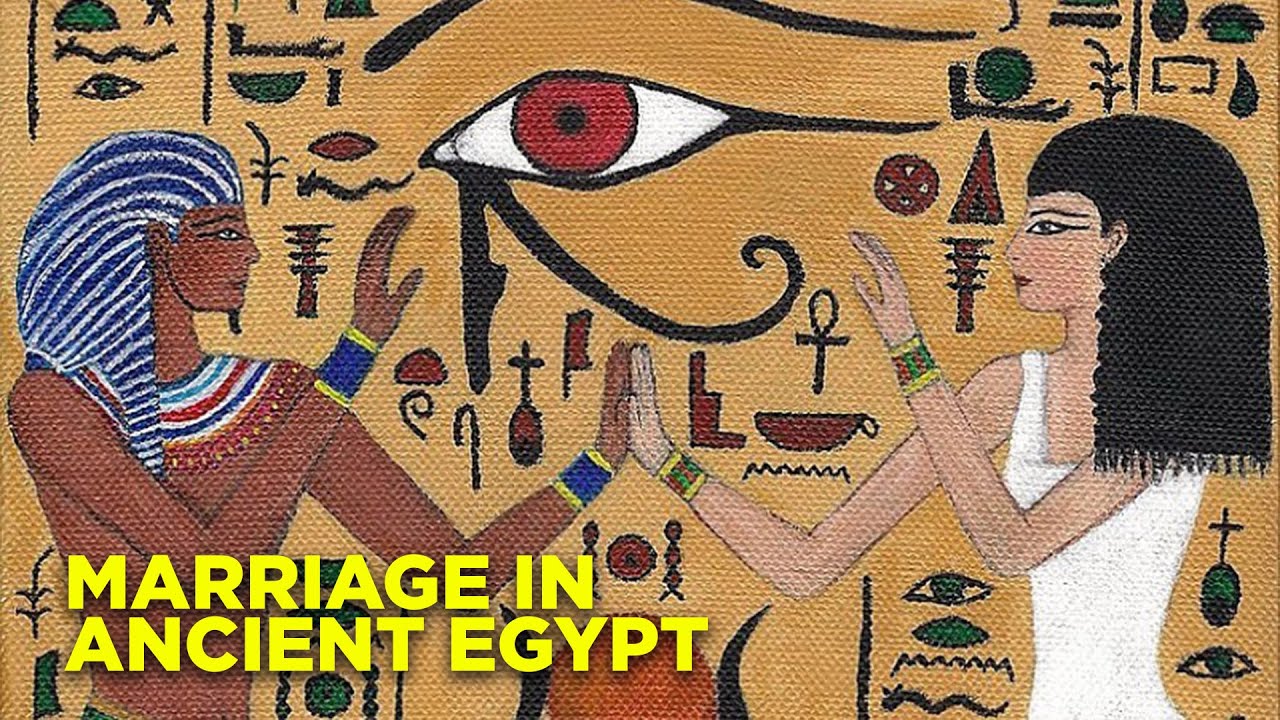
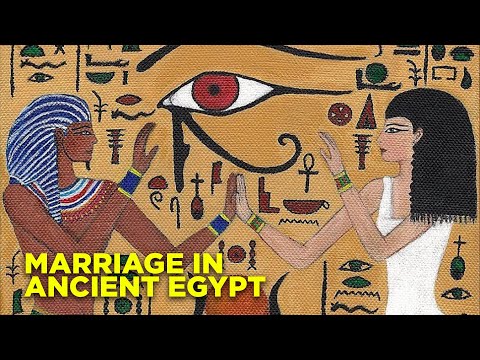
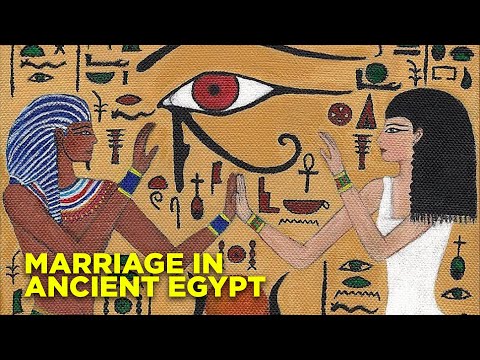
However, reducing ancient Egyptian marriage to a mere social transaction would be a grave oversight, a disservice to the nuanced emotional landscape of its people. History, as always, is far richer than a simple summary. There is compelling evidence, particularly from the vibrant New Kingdom period, that romantic love and genuine companionship were held in high esteem. Art, poetry, and various other works from this era frequently extolled the virtues of one's lover or wife, painting a picture of deep affection. Consider the iconic tomb of Tutankhamun, a pharaoh whose renown stems more from his intact burial than his brief reign. His tomb walls are adorned with beautiful images of him and his wife, Ankhesenamun, locked in undeniably romantic poses. Every single painting of this royal couple depicts their profound devotion through their close proximity, tender hand gestures, and adorable expressions. This artistic expression of love covered much of the young pharaoh's tomb, a poignant detail for a ruler who died at the tender age of 18. Sadly, Ankhesenamun disappears from the historical record not long after, perhaps hinting at her own early demise. Such intimate portrayals were not exclusive to royalty; tomb paintings often depicted husbands and wives eating, dancing, and working together, emphasizing a shared life that transcended mere obligation.
More Than Just a House: The Business of Ancient Egyptian Matrimony
The foundation of ancient Egyptian society rested firmly on the concept of the nuclear family, a structure so fundamental that they even mirrored it in their divine pantheon, arranging their gods into similar family groupings. For a young man, once he reached adolescence, seeking a partner and establishing his own family was considered the appropriate next step. Girls were generally deemed ready for marriage shortly after their first menstruation, while males were typically a bit older. The ideal age for a groom in ancient Egypt was broadly between 16 and 20 years of age, by which point he was expected to have secured a job and be capable of supporting a household. This practicality underlined much of their approach to marriage.
Perhaps one of the most astonishing aspects of ancient Egyptian matrimony, especially to modern sensibilities, was the complete absence of a formal wedding ceremony. Yes, you read that correctly. There were no grand temples, no elaborate rituals, no pronouncements by priests. A woman was considered married to a man the moment she stepped across the threshold and entered his house. Like many civilizations of the time, marriages were typically arranged by the parents, involving an agreed-upon bride price and reciprocal gifts exchanged from the groom's family to the bride's. It's crucial to note, however, that this was not a dowry in the sense understood in other cultures, where property passed to the husband. Instead, the groom often presented gifts to the bride's family and also gave presents directly to his new wife, signifying his commitment and ability to provide.
The legal and financial underpinnings of these unions were surprisingly sophisticated. Prenuptial agreements were a common feature of Egyptian marriages, ensuring that whatever material possessions a bride brought into the union remained unequivocally hers to manage as she pleased. This foresight provided a remarkable degree of financial independence for women. The very phrase "to take a wife" was synonymous with "to moor a boat and find a house," emphasizing the establishment of a new domestic unit. A man, by custom and even by religious expectation, was bound to love his wife, underscoring that while practical, these unions were also expected to foster genuine affection. Unlike the highly formalized, often religious, marriages of Rome or Greece, ancient Egyptian marriage was an entirely non-religious affair. Neither the state nor religious doctrines dictated who one could marry, and aside from financial contracts, these unions weren't even officially registered anywhere. These financial contracts, or marriage settlements, were meticulously drawn up by the fathers of the bride and groom and signed by them in the presence of witnesses. This, perhaps, was the closest thing to what we might call an Egyptian wedding ceremony, a pragmatic formality rather than a spiritual one.
Heart and Home: Love, Equality, and the Domestic Sphere
In a society that placed such a high premium on order and balance, the roles of men and women within marriage were remarkably equitable, especially when viewed through the lens of other ancient civilizations. Ancient Egyptian women enjoyed an almost equal status with men, a belief rooted in their creation myths. It was held that after the dawn of creation, the goddess Isis herself had made the genders equal in power. While a slight margin of dominance was often accorded to males, the overall legal and social framework was designed to foster a partnership. Women were traditionally the mistresses of the home, managing the household, and ideally, a newly married couple would establish their own residence shortly after the union. This independence for the marital unit was key to their social structure.
Legal texts from the period further cement this notion of equality. Each spouse retained absolute control over the property they brought into the marriage. Furthermore, any assets acquired during the course of the union were considered under joint ownership. This meant that a woman was not subsumed by her husband's financial identity, but rather remained a distinct legal and economic entity. This level of financial autonomy for women was virtually unparalleled in the ancient world, demonstrating a progressive approach to marital property that many modern societies only achieved relatively recently.
The goddess Isis herself had made the genders equal in power.
Beyond the legalities, the emotional landscape of ancient Egyptian marriage was expected to be one of mutual affection and respect. While arranged, the hope was that couples would grow to love one another, if they didn't already. The purpose of marriage was undeniably centered on procreation, but couples were explicitly expected to love and honor each other, to be perpetually grateful for their partner's presence in their lives. This expectation of deep emotional connection permeated their culture. The Egyptians were fiercely proud of their heritage, and ancestry was meticulously traced through both maternal and paternal lines, reflecting the equal importance placed on both parents. Despite the establishment of separate households, respect for parents and elders was a cornerstone of Egyptian morality. Indeed, one of the most fundamental duties of the eldest son or daughter was to care for their parents in their twilight years and to ensure they received a proper, dignified burial, a commitment that extended even beyond life.
The Birds, The Bees, and the Crocodile Dung: Fertility and Family Planning
Procreation was, as mentioned, a cornerstone of ancient Egyptian religion and society. Their culture was deeply intertwined with cycles of fertility, renewal, and life. What might surprise many is their remarkably open approach to discussing the act of lovemaking, another aspect that likely made Herodotus quite uncomfortable. Unlike many modern religions that often sidestep or mystify the origins of life, ancient Egyptian society was fairly progressive and pragmatic about it. They understood the mechanics of reproduction and were not shy about it. This frankness extended to their methods of family planning, which, while primitive by today's standards, reveal a conscious effort to manage fertility.
For contraception, ancient Egyptians employed a variety of methods, some of which sound rather alarming to the modern ear. Among the best options available at the time were honey and, surprisingly, crocodile dung. Yes, you read that correctly. While the efficacy of such methods is highly questionable, their very existence indicates a desire to control family size. Given these options, it's perhaps no wonder that ancient Egyptian women often became pregnant very early in their married lives. Despite the crude methods, the intention to plan families was clearly present. When children did arrive, they were universally valued. Children of both sexes were desired and welcomed in households across all social classes. There is absolutely no indication of female infanticide being practiced, a stark contrast to many other ancient societies and further solidifying ancient Egypt's remarkably egalitarian attitude towards gender.
The Egyptians also developed methods to determine the gender of a child during pregnancy, along with tests for fertility and pregnancy itself. One intriguing method involved the expectant mother watering two specific crops: barley and emmer wheat. If the barley sprouted first, it was believed she was carrying a male child. If the emmer wheat germinated first, she was thought to be pregnant with a female child. If neither sprouted, she was not pregnant. While modern science has found some basis for the pregnancy test itself, as pregnant women produce hormones that can induce early flowering in certain plants, there is absolutely no known scientific relationship between these plants and the determination of gender. It was, nevertheless, a widespread practice.
The birth of a child, while a time of immense joy, was also fraught with serious concern. The rates of infant mortality were tragically high, and childbirth itself placed mothers in considerable peril. Childbirth was viewed as a natural phenomenon rather than an illness, meaning assistance was typically provided by a midwife, not a physician. For those children who successfully navigated the perilous first five years of life, the prospects for a full life improved significantly. Skeletal evidence suggests that the average life expectancy for men in peasant society was around 33 years, and for women, it was even lower at about 29 years, often due to the dangers of childbirth. However, for the upper and middle classes, life expectancy could extend to a far more respectable 60 to 70 years, much like modern times. Childhood was a period of play, but past infancy, children were also expected to train diligently for adulthood. Every male child was expected to learn and master his father's trade, while every girl, with the exception of those of royal blood, was trained in the essential skills of household management, kitchen duties, and the care of the young, elderly, and even pets.
No Word for 'Virgin': Sex, Fidelity, and Unconventional Morals
If you thought ancient Egypt's approach to marriage was unconventional, their attitudes towards premarital sex and virginity might truly make your jaw drop. While many traditional religions and civilizations have historically placed immense emphasis on a woman's virginity prior to marriage, ancient Egypt simply didn't care. In fact, there is no known word for "virgin" in the ancient Egyptian language, a linguistic void that strongly suggests one's degree of sexual experience, or lack thereof, was not considered a matter of significant consequence. Unmarried women were largely free to have intercourse with whomever they chose, as premarital relations were widely accepted and not stigmatized. This was a society comfortable with sensuality, where even their religion revolved around powerful ideas of fertility and procreation.
However, this openness did not extend to infidelity within marriage. Once a couple was married, fidelity was paramount, and monogamy was the expected norm. While premarital dalliances were overlooked, "fooling around" after marriage was certainly not looked upon kindly. The Ebers Medical Papyrus, a remarkable text penned in the 15th century BC, even lists various contraceptives popular at the time, further underscoring their pragmatic and open approach to sexuality and family planning. What is particularly striking is the near absence of evidence for soliciting intercourse, or what we might call prostitution, particularly during the Old and Middle Kingdoms. No brothels have been definitively identified in ancient Egypt, and there is virtually no mention of soliciting intercourse in any written works or legal decisions from these periods. This aligns with the Egyptian value of social harmony, which placed special emphasis on domestic tranquility and stable family units, rather than widespread casual encounters outside the marital bond.
There is no known word for "virgin" in the ancient Egyptian language.
The rich poetic tradition of ancient Egypt frequently celebrated the act of lovemaking between lovers and spouses, always focusing on the profound bliss and contentment found in their partner's company. These weren't mere biological descriptions, but expressions of deep emotional connection. Consider these evocative lines: "Your hand is in my hand, my body trembles with joy, my heart is exalted because we walk together." Or the intimate reflection, "I was taken as a wife to the house of [name] for [name] that night, and the pharaoh sent me a present of silver and gold. He, her husband, slept with me that night and found me pleasing. He slept with me again and again and we loved each other." Another poem simply states, "She is more beautiful than any other girl, she is like a star rising, with beautiful eyes for looking and sweet lips for kissing." These verses paint a picture of a society that cherished passion and intimacy within committed relationships, demonstrating that while marriages were often arranged, true affection was a deeply desired and celebrated outcome. Paradise, for the Egyptians, was not meant to become a prison; if a marriage faltered, there were avenues for resolution.
Till Death (or Divorce) Do Us Part: Uncoupling in the Land of the Pharaohs
While ancient Egyptian marriages were ideally expected to last a lifetime, and even continue as a commitment into the afterlife, the harsh realities of ancient life often intervened. Given that the majority of the male population lived only into their 30s, and women frequently succumbed to the perils of childbirth around the tender age of 16 or so, the comforting idea of being reunited with a beloved spouse in the afterlife offered solace. However, just like any other period in human history, not all matches were divinely made, and not all love stories endured. When a marriage soured, ancient Egyptians had a remarkably straightforward and egalitarian approach to divorce, an ease that might surprise many.
The end of a marriage could be initiated by either one or both spouses, a testament to the agency afforded to women in these matters. The process was as simple as its beginning: a mutual agreement to separate. Once the decision was made, material possessions were divided strictly according to the terms stipulated in the prenuptial agreement. A new agreement would then be signed, formally concluding the marriage. A significant aspect of Egyptian divorce law, and one that highlights their progressive stance, was the custody of children. In the event of a divorce, the children of the marriage unequivocally belonged to the mother, and she would retain custody. This stood in stark contrast to many patriarchal societies where children were almost universally considered the property of the father.
While literature of the time contained plentiful warnings about the "unfaithful woman," socially, women were granted enormous freedom within marriage and divorce. Anything a woman brought into the marriage, she was legally allowed to take with her when it ended. Only a charge of infidelity, if amply proven, could potentially deprive a woman of her rights in a divorce settlement, though this was a high bar. The legal framework surrounding marriage agreements did become more complex during the New Kingdom period, reflecting a growing sophistication in their jurisprudence. In the case of divorce during this era, the dowry (if one was provided by the groom, which was distinct from the bride price) would revert entirely to the wife for her support, or she would receive a single, substantial payment. Alimony payments were also a viable option, with the husband obligated to send his ex-wife a monthly stipend until she remarried, a provision that applied even if there were no children involved. This system provided a robust safety net for women, ensuring their financial stability post-divorce and further underscoring the advanced legal protections afforded to them in ancient Egypt.
Beyond the Nile's Bend: Life, Death, and Legacy
Life in ancient Egypt, while often romanticized, was a stark reality for many. The high infant mortality rates and the dangers of childbirth meant that a "full life" was a relative concept. Yet, for those who survived the precarious early years, there was a clear path to adulthood and a societal structure that valued family above all. The nuclear family unit was not just a social construct; it was the very bedrock of their civilization, a principle reflected in their daily lives and even their religious beliefs. Respect for parents and elders was not merely a polite custom; it was a cornerstone of morality, a fundamental duty passed down through generations. This deep reverence for family extended beyond the mortal coil, influencing their beliefs about the afterlife.
The commitment made in marriage was often believed to transcend death, with the expectation that spouses would be reunited in the afterlife. This spiritual continuity provided comfort and meaning in a world where life could be brutally short. However, even in this generally egalitarian society, there were exceptions to every rule, most notably at the very top of the social pyramid. While in-family marriage was generally discouraged among the noble and common populations, due to the practical benefits of arranged marriages for broader familial alliances, the royal family operated under a different set of expectations. Pharaohs, particularly during certain dynasties, were expected to marry their siblings. This practice, often seen as a way to maintain the purity of the royal bloodline and consolidate power, was a unique custom reserved for the divine rulers, setting them apart from their subjects.
The ancient Egyptians, in their wisdom and their quirks, created a society that balanced the pragmatic with the passionate, the communal with the individual. They built a world where marriage was a social contract, yet also a canvas for profound love. They embraced sexuality openly while demanding fidelity within marriage. They afforded women rights and freedoms that would be envied by many civilizations millennia later. Their legacy is not just in the monumental stone structures they left behind, but in the intricate, often surprising, social structures that governed their daily lives. They remind us that history is never a monolithic narrative, but a tapestry woven with threads of astonishing diversity and often, profound contradictions.
So, the next time you picture ancient Egypt, don't just see mummies and pyramids. See a society where love bloomed in unexpected ways, where divorce was surprisingly easy, and where crocodile dung was a form of birth control. See a people whose approach to marriage and family was so distinct, so confidently its own, that it truly astounded the greatest chroniclers of the ancient world. History, as always, was far nuttier, filthier, and weirder than any textbook ever let on, and ancient Egypt's take on love and marriage proves it in spades.