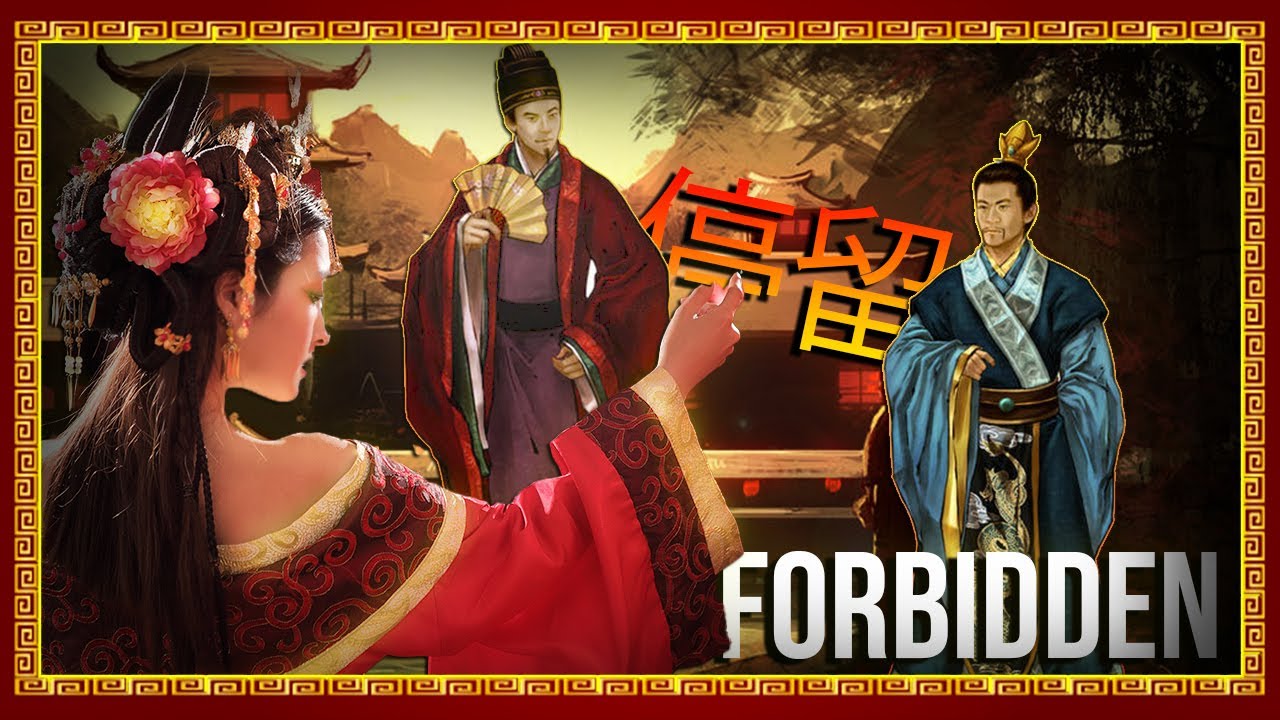
Imagine a life where your worth is measured solely by your ability to produce a male heir, where your very existence is a commodity owned by an emperor, and your death is a mandatory act of devotion. This was the grim reality for countless women in Imperial China, whose lives within the gilded cages of the Forbidden City were anything but brilliant, despite the Ming Dynasty's name. When Ming Emperor Yongle died in the summer of 1424, thirty concubines, deemed his favorites, were handed a blood red piece of silk, a silent decree signaling their impending, forced demise. This wasn't just a brutal footnote in history, it was a systemic horror, a stark contrast to the romanticized notions of imperial splendor often presented in school.
The Bloody Demands of Imperial Devotion
The Ming Dynasty, founded by the Hongwu Emperor, was an era of profound paradoxes. While it ushered China into a golden age, establishing a global power with an orderly government and social stability, it did so with a chilling undercurrent of tyranny and suppression. This iron fist extended most brutally to the women of the imperial court, particularly the concubines. The Hongwu Emperor, otherwise considered one of China's finest rulers, was notoriously possessive of his concubines. Behind the palace doors, he subjected them to imprisonment and harsh punishments, attempting to control every facet of their existence, right down to their final breath.
It was the Hongwu Emperor who, in a macabre twist, resurrected an ancient custom: the ritualistic sacrifice of concubines upon the emperor's death. This meant that certain women, often those considered favorites, were expected to follow their emperor into the afterlife, their lives extinguished to serve him eternally. This tradition was not merely a suggestion but a compulsory act, enforced with cold efficiency. Furthermore, the emperor made it mandatory for his subjects to submit their daughters to the imperial administrators if he commanded them to become concubines, cementing the idea that these women were state property, their destinies not their own.
The practice of keeping concubines stretches back through Chinese history, likely originating with the Western Zhou Dynasty around 1000 BCE. In those early days, a man could keep as many as he could afford. However, restrictions were later imposed during the Eastern Han period, with the number of permitted concubines directly tied to a man's social rank. For the emperor, the concept of a concubine evolved into something far more restrictive and dehumanizing: a servant acquired solely for private purposes, their primary objective to reproduce a male heir in the event the empress failed to do so. The Ming, meaning "brilliant," indeed shone brightly on the world stage, but for these women, their treatment was nothing short of terrible.
Golden Cages and Guarded Gates
The physical embodiment of this imperial control was the Forbidden City. The initial Forbidden Palace was ordered by the Hongwu Emperor in 1366 and completed two years later in Nanjing. Later, the more famous Forbidden City in Beijing was constructed under the rule of the Yongle Emperor, serving as the imperial capital for the Ming and Qing dynasties and housing thousands of concubines over centuries. While it stood as the undisputed center of power in China, for the concubines, it was less a home and more a gilded prison.
Forbidden to leave the inner court, concubines lived a life of extreme seclusion, their days dedicated to serving the emperor, the empress, and the emperor's parents. Their singular, overriding purpose was to offer their services to the emperor and, most critically, to produce male heirs. To ensure the authenticity of any imperial offspring, the inner court was a strictly female domain, with one notable exception: eunuchs. These castrated men were the only males permitted within the inner sanctum, serving as guards, administrators, and intermediaries, their presence a constant reminder of the concubines' isolated existence.
The sheer scale of these imperial harems defies modern comprehension. Some Ming emperors maintained nearly 9,000 concubines. The emperors Huan and Ling, during their reigns, reportedly had an astonishing 20,000 women living within the Forbidden City. Amidst this vast population, the chances of any individual concubine ever catching the emperor's eye, let alone bearing his child, were infinitesimally small. Many spent their entire lives within the palace walls without ever making contact with the man they were ostensibly there to serve, their dreams of advancement or even simple recognition fading into bitter loneliness.
The Brutal Audition
Becoming an imperial concubine was not a choice for most women, but a mandate. The selection process, known as shunu, was meticulously regulated, dating back to the Qin Dynasty between the third and early fifth centuries CE. While the specific criteria varied slightly over time, the ultimate decision always rested on the incumbent emperor's preferences.

During the Ming Dynasty, the Hongwu Emperor ensured that no household in China was exempt from this imperial demand. Every young, unmarried woman, provided she had no physical deformity or disability, was compelled to undergo the shunu selection. The Qing Dynasty later narrowed the pool, preferring candidates from the Eight Banners families, primarily Manchurian or Mongolian, thereby largely excluding the Han population.
Selection day was a harrowing event. Girls, accompanied by their parents or guardians, would be brought to the formidable gates of the Forbidden City for an initial beauty inspection conducted by the emperor and his parents. From hundreds, perhaps thousands, only fewer than 100 girls would make this initial cut. What followed was a far more intrusive and thorough physical examination: candidates were checked for overall health, absence of afflictions, skin infections, body hair, and even body odor. Only those deemed physically perfect would proceed.
The sheer scale of these imperial harems defies modern comprehension. Some Ming emperors maintained nearly 9,000 concubines. The emperors Huan and Ling, during their reigns, reportedly had an astonishing 20,000 women living within the Forbidden City.
The selected girls were then sent to be trained by women specializing in royal service. They would spend several nights learning the intricate craft of serving the royal family, undergoing rigorous discipline. They were taught acceptable behavior, how to speak, gesture, and walk with imperial grace. They also received instruction in various art forms, including painting, reading, writing, chess, and dancing. Those who successfully navigated this demanding training period would then serve the Empress Dowager for several days as maids. This servitude aimed to please the emperor's mother and gain her favor, a crucial step towards earning a higher rank of concubinage. The Empress Dowager herself would conduct further inspections, rooting out any "bad nocturnal habits" such as snoring, emitting odors, or talking or walking in their sleep. Only a select few, after enduring this arduous gauntlet, would ever gain the emperor's notice, leaving the vast majority to a life of bitter loneliness within the palace, a breeding ground for hurtful politics and jealousy. In this context, beauty was often more of a curse than a blessing.
The Pecking Order and Poisoned Pleasures
Within the imperial harem, a rigid hierarchy governed every aspect of a woman's existence. At the apex was the Empress, the emperor's official wife, a venerated and revered figurehead. Considered the "mother of the world," she was second only to the emperor and his own mother, the Empress Dowager, and held unquestioned authority over all concubines, maids, and eunuchs. Below her were the consorts, whose numbers varied with each ruling dynasty. These women were typically daughters of high-ranking officials, either gifted to the emperor or claimed by him as partners, though they were not officially married.
Beneath the consorts, the ranks of concubines began, usually numbering between three and five distinct levels. Life within these lower echelons was characterized by fierce political maneuvering. Concubines constantly plotted, tricked, and strove to impress, fiercely guarding their unofficial rankings. The most direct path to advancement was to bear a male heir for the emperor. However, with hundreds, if not thousands, of rivals, the chance of actually spending a night with the emperor, let alone conceiving a child, was exceedingly slim. This scarcity of opportunity fueled rampant intrigue and bickering, making daily life far from pleasurable or leisurely.
During the Qing Dynasty, conditions for consorts and concubines grew even more stringent. Their rank dictated every privilege, from the clothes they wore to the food they ate, serving as a constant, humiliating reminder of their place. Their activities were meticulously overseen and monitored by eunuchs, who wielded immense power within the palace. Before any visit from the emperor, a concubine was required to bathe and undergo a thorough examination by a court doctor. With so many women vying for attention, any lady graced with the emperor's visit would immediately become the subject of intense jealous rivalries. Most concubines lived in their own rooms, passing their days with makeup application, sewing, practicing various arts, and socializing with their peers, many spending their entire lives within the palace walls without ever experiencing the emperor's presence.
The Walls That Held Them
The Forbidden City was designed to be impenetrable, not just physically, but socially. For concubines, love was an explicitly forbidden luxury. Any emotional bonds formed with eunuchs or other officials were considered grave transgressions, punishable with severe consequences if discovered. Their isolation was absolute: no concubine was permitted any communication with the outside world, not even with her own family. This cut them off entirely from their past lives and any potential support network.

Even illness offered no reprieve from the rigid protocols. If a concubine fell sick, no physician was allowed to visit her directly. Instead, a eunuch would be dispatched to describe her symptoms to a doctor, who would then prescribe treatment based solely on this secondhand account. The medical care, like so much else, was mediated and depersonalized.
Plausible avenues of escape from this gilded cage were exceedingly few. One of the "easiest" was to simply grow old, hoping the emperor would lose interest. In such rare cases, concubines might be allowed to return to their families with an adequate pension, though this was hardly a guarantee and often came after decades of confinement. Some concubines were occasionally gifted to other foreign kings or emperors, but this merely amounted to exchanging one form of captivity for another. A daring jailbreak was an almost unthinkable act, and those few who attempted it faced capital punishment if caught. With no possibility of return, such attempts were desperate gambles. Given these grim choices, many concubines, relieved of their duties, chose to remain in servitude as royal maids or to become Buddhist nuns, resigning themselves to a cloistered existence.
The sheer scale of these imperial harems defies modern comprehension. Some Ming emperors maintained nearly 9,000 concubines. The emperors Huan and Ling, during their reigns, reportedly had an astonishing 20,000 women living within the Forbidden City.
When the Caged Birds Fought Back
Despite the overwhelming odds and the brutal consequences, history records rare instances where concubines managed to defy their predetermined fates or even strike back against their oppressors. Empress Wu Zetian of the Tang Dynasty stands as the most prominent example. Beginning her life as a concubine to Emperor Taizong, she was just 25 years old when he died. Custom dictated that widows and concubines of a deceased emperor retire to monasteries. However, Wu Zetian, with extraordinary cunning and ambition, managed to woo Taizong's successor, Gaozong. This audacious move marked the beginning of her ascent, culminating in her promotion to empress and eventually, at the age of 66, becoming the sovereign of all China, a feat unparalleled in imperial history.
At the other end of the spectrum was Empress Dowager Cixi, a favorite concubine of Qing Emperor Xianfeng. After Xianfeng's death, leaving a five-year-old son, Cixi orchestrated the 1861 Xinyou Coup, making herself the sole regent for the young emperor. While she enjoyed a life of immense privilege and power, she notoriously neglected her responsibilities, allowing China to suffer through social upheaval and the Second Opium War, ultimately contributing to the dynasty's downfall.
Individual acts of defiance, though often tragic, also punctuated the otherwise silent existence of concubines. Lady Wan, a concubine of Emperor Hui, the last emperor of the Qing Dynasty, was one of the only women to successfully divorce her emperor, albeit only after he had been dethroned and was on the run. More tragically, one of the Yongle Emperor's favorite concubines, reportedly in love with a palace eunuch, found herself unable to endure sharing a bed with the emperor any longer and chose an extreme form of retaliation, her ultimate fate left to grim implication. Perhaps the most audacious act of rebellion was the Renyin Plot, where 16 concubines of the Ming Jiajing Emperor, fed up with his unusual and cruel demands concerning their diet, attempted to assassinate him in his chambers. They failed, and the empress swiftly ordered their immediate, brutal execution, a stark reminder of the perils of resistance.
Imperial Chinese society, with its deeply ingrained patriarchal structures, regarded women as fundamentally menial entities, continually demoralized, degraded, humiliated, and ignored. Concubines, trapped at the very bottom of this societal barrel, endured an even more profound level of dehumanization. Their lives were a testament to the fact that history, far from being a sanitized narrative of grand emperors and flourishing empires, was often a brutal, messy, and profoundly unjust affair for those whose voices were deliberately silenced. The stories of these women, living and dying within the Forbidden City's walls, remind us that the past was always far filthier, far weirder, and infinitely nuttier than any textbook ever dared to suggest.