The Vietnam War, an open wound in the American psyche, was unlike any conflict before it. For the first time, the brutal realities of combat were beamed directly into living rooms, shattering the romanticized illusions of previous generations. What viewers saw, often filtered through official narratives, was still horrifying, but what remained unspoken, what became chillingly routine for those on the ground, was far more disturbing. This was a war where the lines between combatant and civilian blurred into oblivion, where technological superiority met an elusive enemy, and where the human cost was measured in body bags and psychological scars that would plague generations.
The Chemical Rain and Scorched Earth
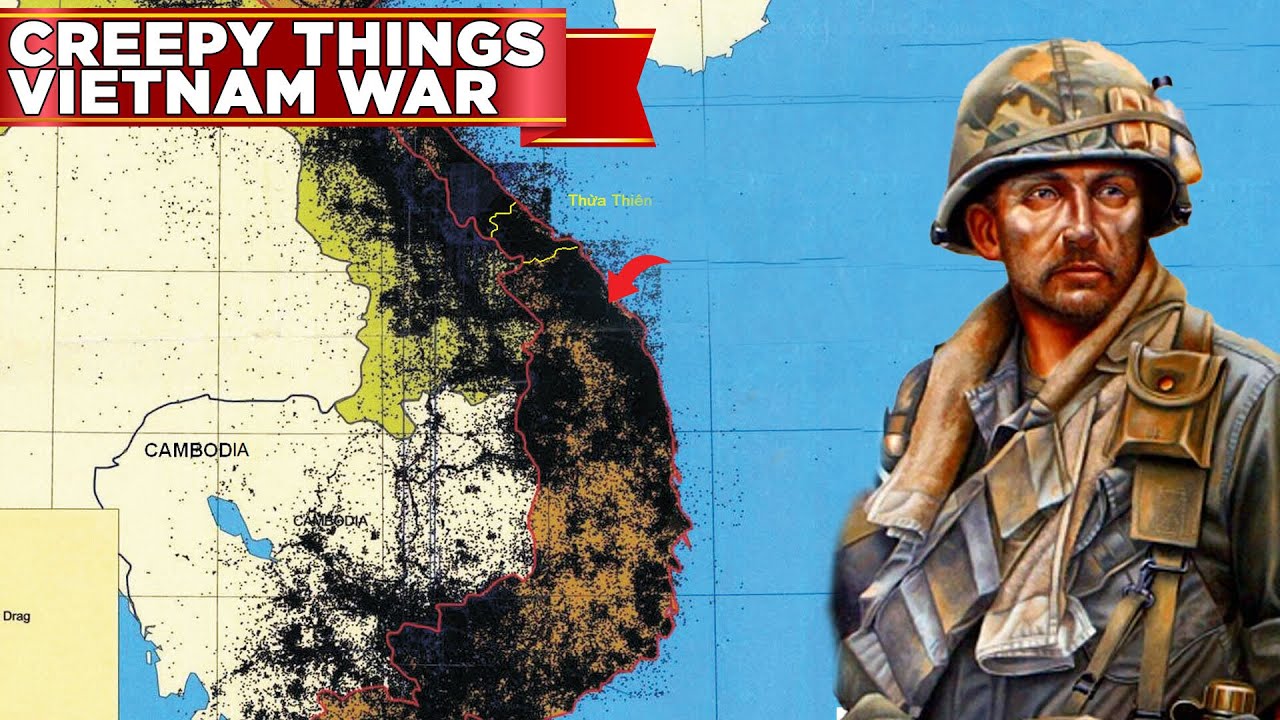
Imagine a landscape, lush and verdant, reduced to a skeletal wasteland, its vibrant green stolen by a chemical assault. This was the reality of Operation Ranch Hand, the massive defoliation campaign initiated in 1961. The United States military sought to deny cover and food to the Viet Cong and North Vietnamese Army by spraying vast tracts of jungle and agricultural land with herbicides, most notably Agent Orange. Over **19 million gallons** of various herbicides, including Agent Orange, were sprayed across Vietnam, Laos, and Cambodia between 1961 and 1971. The active ingredient in Agent Orange, dioxin, was a known carcinogen, yet its deployment was considered a normal, even necessary, tactic. The immediate effects were stark: forests withered, crops died, and the enemy's concealment vanished. The long-term consequences, however, were catastrophic and continue to unfold today. Vietnamese civilians and American veterans exposed to Agent Orange suffered, and continue to suffer, from a horrifying array of health issues: cancers, birth defects, neurological disorders, and severe skin diseases. It was a chemical war waged not just against the enemy, but against the very ecosystem and, by extension, the people who lived within it. Napalm, a jellied gasoline, also became a ubiquitous and terrifying weapon. Dropped from aircraft, it created firestorms that incinerated everything in their path, sticking to flesh and burning at temperatures between **1,500 and 2,200 degrees Fahrenheit**. Its use on villages, often suspected of harboring Viet Cong, became a tragically common sight, creating iconic and horrifying images that seared themselves into the global consciousness.
Body Counts and the Metrics of Madness
Map illustrating widespread chemical defoliation and bombing during the Vietnam War.
In Vietnam, victory was not measured by territory gained or strategic objectives secured, but by a chilling statistic: the body count. General William Westmoreland, commander of U.S. forces, believed that attrition was the key to victory, relentlessly pursuing a strategy to kill more enemy soldiers than could be replaced. This obsession created immense pressure on field commanders, who in turn pressured their troops to produce high body counts. The result was a perverse incentive system where the lives of the enemy, and sometimes even civilians, were reduced to mere numbers on a tally sheet. Units would compete for the highest kill ratios, and the distinction between a combatant and a non-combatant often became dangerously blurred. Vietnamese individuals found in "free-fire zones," areas declared open for attack, were frequently counted as Viet Cong simply to inflate numbers. This practice, sometimes referred to as the "mere gook rule," dehumanized the Vietnamese population and contributed to atrocities. The pursuit of body counts fueled search and destroy missions, where troops would sweep through villages, often burning them down in "Zippo raids" and counting any deceased as enemy combatants. The psychological impact on soldiers, forced to view human lives as a metric of success, was profound and corrosive, stripping away moral boundaries and fostering a climate of indiscriminate violence.
The psychological impact on soldiers, forced to view human lives as a metric of success, was profound and corrosive, stripping away moral boundaries and fostering a climate of indiscriminate violence.
The Unseen Enemy and the Grinding Psychological Toll
The Vietnam War was a conflict of shadows and unseen threats. The Viet Cong, masters of guerrilla warfare, melted into the jungle, emerging for lightning-fast ambushes and then disappearing again. This constant, pervasive threat fostered a profound sense of paranoia and distrust among American soldiers. Every rice paddy, every bamboo thicket, every seemingly innocent villager could conceal a booby trap or an enemy fighter. Booby traps were ubiquitous and terrifying. Punji sticks, sharpened bamboo stakes often smeared with feces, were hidden in pits, designed to maim rather than kill, slowing down patrols and demoralizing troops. "Bouncing Betties," a type of landmine, would launch into the air before detonating at waist height, causing devastating injuries. The claustrophobic horror of tunnel warfare also became a grim reality for "tunnel rats," specialized soldiers who crawled through miles of enemy tunnels, often in complete darkness, confronting unseen dangers and the suffocating fear of the unknown. This relentless psychological pressure contributed to widespread drug use, with an estimated **15 percent** of U.S. servicemen in Vietnam addicted to heroin by 1971, alongside rampant marijuana use. The stress also manifested in "fragging," the deliberate killing or attempted killing of one's own officers or NCOs, primarily with fragmentation grenades, which saw a significant spike in incidents, peaking at **209 recorded cases** in 1970. The unseen enemy, the constant threat, and the moral ambiguities of the war collectively inflicted a psychological toll that would manifest as a widespread epidemic of Post-Traumatic Stress Disorder (PTSD) long after the last shots were fired.
Civilian Casualties and the Rules of Engagement
A grim-faced American soldier reflects the intense psychological burden of the Vietnam War.
The "hearts and minds" campaign, ostensibly aimed at winning the support of the Vietnamese populace, often clashed violently with the brutal realities of combat. The difficulty of distinguishing between Viet Cong guerrillas and non-combatant civilians in villages meant that civilian casualties became an agonizingly frequent, and often normalized, tragedy. Free-fire zones, vast areas declared open for artillery and air strikes, epitomized this blurring of lines. Anyone found within these zones was presumed to be an enemy combatant, making entire populations targets. The most infamous instance of this tragic normalization was the My Lai massacre on March 16, 1968. American soldiers of Charlie Company, 1st Battalion, 20th Infantry Regiment, systematically murdered between **347 and 504 unarmed Vietnamese civilians**, including women, children, and elderly men, in the hamlets of My Lai and My Khe. The soldiers raped women, mutilated bodies, and burned homes. This was not an isolated incident, though its scale was exceptional; similar, albeit smaller, atrocities occurred with disturbing regularity, often covered up or dismissed as "collateral damage." The exact number of civilian deaths in Vietnam remains contested, but estimates range from **1 million to 2 million**, a staggering figure that underscores the horrific toll on the non-combatant population and the profound moral compromises made during the conflict.
Propaganda, Misinformation, and the Home Front
The Vietnam War was fought not just on the battlefields of Southeast Asia, but also in the living rooms of America. The constant flow of information, often contradictory, created a "credibility gap" between what the government claimed and what the public saw and heard. Official pronouncements of progress and impending victory were increasingly contradicted by grim news reports and the mounting casualty lists. The Tet Offensive in January 1968, a massive coordinated attack by North Vietnamese and Viet Cong forces across South Vietnam, was a turning point. While a military defeat for the North, it was a profound psychological victory, shattering the illusion that the enemy was on the brink of collapse. Television footage of the fighting, including the siege of the U.S. embassy in Saigon, convinced many Americans that the war was unwinnable. The anti-war movement swelled, fueled by graphic images and reports of atrocities like My Lai. Propaganda, both overt and subtle, was used by all sides to shape narratives, but the raw, unfiltered images from the front lines often proved more powerful. Upon their return, many veterans, instead of being hailed as heroes, were met with indifference, hostility, or outright condemnation, becoming scapegoats for a deeply unpopular war. This rejection by the very society they fought for became yet another cruel and normalized aspect of the Vietnam experience.
The Dark Side of Technology
The Vietnam War was a laboratory for new military technology, and its application often had a dark, dehumanizing edge. The M16 rifle, initially plagued by reliability issues that led to jams and deaths in combat, became the standard infantry weapon, symbolizing the struggle between advanced weaponry and the brutal realities of jungle warfare. B-52 Stratofortresses, designed for nuclear deterrence, were repurposed for conventional carpet bombing, unleashing massive payloads of bombs in operations like Arc Light. These strategic bombers, flying too high to be seen or heard, delivered unparalleled destruction from the sky, leveling vast areas and obliterating villages, often with little intelligence on enemy presence. The Huey helicopter, iconic for its distinctive "whop-whop" sound, became the omnipresent symbol of the war. It transported troops, extracted the wounded, and served as a gunship, providing fire support with machine guns and rockets. While indispensable for mobility and medical evacuation, its role in air assault operations and its capacity for delivering overwhelming firepower also contributed to the war's destructive nature. The technological asymmetry between the U.S. and the Viet Cong was immense, yet this technological superiority often proved ineffective against an enemy deeply embedded in the terrain and the population, leading to a frustrating and ultimately unwinnable conflict. The sheer destructive power unleashed, often with little precision, reshaped the landscape and the lives of millions.
The technological asymmetry between the U.S. and the Viet Cong was immense, yet this technological superiority often proved ineffective against an enemy deeply embedded in the terrain and the population, leading to a frustrating and ultimately unwinnable conflict.
The Lingering Shadows: Aftermath and Legacy
Even decades after the last American troops left Vietnam, the war's "normal" horrors continue to plague the region and its people. The landscape remains scarred, not just by craters and defoliated forests, but by millions of unexploded ordnance (UXO). Landmines, cluster bombs, and artillery shells lie dormant beneath the surface, claiming lives and limbs with horrifying regularity. Since 1975, UXO has killed over **40,000 Vietnamese** and injured many more, a constant, silent reminder of a war that refuses to end for its victims. The chemical legacy of Agent Orange is perhaps the most insidious and enduring. Generations of Vietnamese children are born with horrific birth defects, cancers, and other debilitating illnesses, a direct consequence of their parents' or grandparents' exposure to dioxin. In Vietnam, it's estimated that **3 million people** suffer from Agent Orange-related diseases, including over 150,000 children born with birth defects. For American veterans, the battle continued on the home front, fighting for recognition of their Agent Orange-related illnesses and battling the invisible wounds of PTSD, which affected an estimated **30 percent** of Vietnam veterans at some point in their lives. The normalization of brutality, the dehumanization of the enemy, and the environmental devastation of the Vietnam War left a legacy of suffering that transcends borders and generations, a stark reminder that some "normalities" of war are profoundly unnatural. The Vietnam War was a crucible that forged new, terrifying "normalcies" out of desperation, technological might, and a profound misreading of human will. From the chemical rain that poisoned generations to the body counts that dehumanized entire populations, the conflict laid bare the darkest corners of human behavior when pushed to the brink. This was not a war of clean lines and clear objectives, but a messy, morally ambiguous quagmire where the unthinkable became routine. It was a war that proved, beyond a shadow of a doubt, that history is always far nuttier, filthier, and more horrifying than any textbook dares to admit.
Watch the full deep dive
CREEPY Things that were "Normal" during the Vietnam War