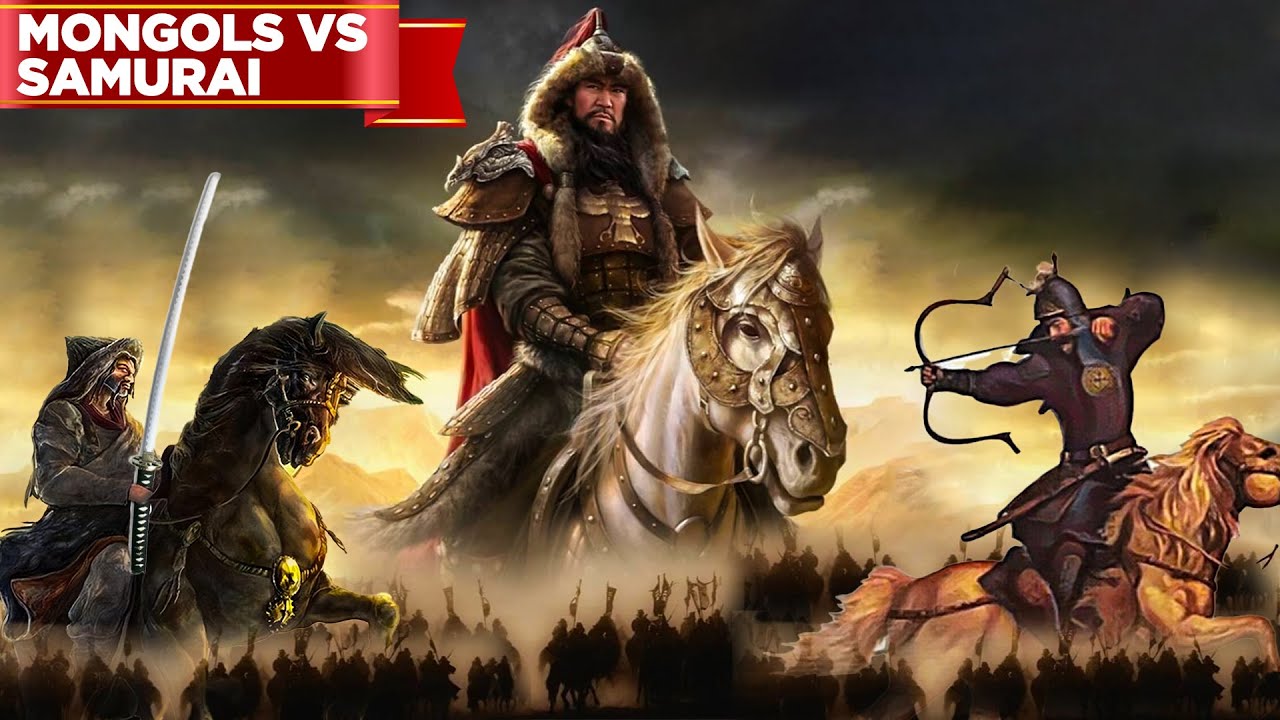
Forget the sanitized history lessons about nomadic horsemen. The Mongol Empire, forged by Genghis Khan, wasn't just a tale of conquest and strategic brilliance, it was a sprawling, brutal tapestry woven with fratricide, creative executions, and a peculiar disdain for personal hygiene. From kings trampled beneath celebratory feasts to queens forced into common marriages, the "normal" in this era would make even the most hardened modern sensibilities flinch. This was an empire where body odor was a mark of character, where a king's dirty underwear was a prized gift, and where God himself was apparently a Mongol general. Prepare yourself, because the textbooks barely scratched the surface of this truly nutty history.
The Boy Who Learned Murder
Before he became the legendary Genghis Khan, founder of the Mongol Empire and architect of one of history's bloodiest trails, he was simply Temujin. And if that name doesn't strike fear into your heart, his early life certainly should. Temujin's father died when he was young, thrusting his family onto the unforgiving steppe. His mother, Hoelun, became the de facto chief of their small, struggling band, which included multiple wives of Temujin's father and a clutch of siblings and half-siblings. Friction was inevitable, but Hoelun kept a tight leash on burgeoning rivalries. As the boys grew, however, a particularly grim tradition began to loom large: according to Mongol custom, the eldest son was entitled to marry his father's wives, excluding his own mother, and inherit the concubines. This tradition set the stage for Temujin's first, chilling act of ruthlessness.
Bekhter, Temujin's eldest half-brother, was a bully, openly taunting Temujin about his impending claim to the family's women, including Temujin's own mother. When Bekhter declared himself the chief of the family, Temujin's resentment boiled over. Despite his mother's strict prohibitions against kin-slaying, during a hunting excursion, Temujin and his brother Khasar cornered Bekhter and filled his body with arrows. Hoelun chastised her sons fiercely, but the die was cast. Temujin had discovered a powerful, albeit brutal, truth: murder could be a highly effective problem solver. It was a lesson he would apply with devastating liberality in the coming decades, as China and Persia would soon discover.
Temujin's early life continued to be a crucible of hardship. His family was constantly in peril, hunted by his father's former allies turned enemies, and generations-long adversaries. Temujin himself was captured in a raid, only to escape. But his young wife, Borte, was not so fortunate. In a similar incident, she was abducted by Merkit raiders. Enraged, the 19-year-old Temujin swiftly assembled a small coalition of allies and charged the Merkits, who proved no match for his vengeance. This victory cemented his reputation as a formidable warrior. Yet, Borte's ordeal was far from over. By the time Temujin rescued her, she had been tortured, assaulted, and stripped of her dignity multiple times. Things grew more complicated when she discovered she was pregnant. Given the significant time elapsed since she had shared a bed with Temujin, the paternity of the child was highly uncertain. Whispers and questions spread throughout Mongolia, but to everyone's surprise, Temujin declared he would accept the child, Jochi, as his own. So great was his influence that no one dared question him for decades, not even until his deathbed. These two pivotal events in Temujin's family life, the fratricide of Bekhter and the acceptance of Jochi, were crucial steps that helped him ascend to the throne of a unified Mongolia.
The Khan's Creative Cruelties
Genghis Khan's belief that murder could solve almost anything was not merely a personal philosophy, it was an imperial policy. While he was often shrewd and subtle in eliminating his enemies, he was equally adept at making public, brutal examples of them. Take the curious case of Burri, a famous Mongol wrestler. Long before Genghis's rise to power, Burri had made the mistake of humiliating Genghis's beloved brother, Belgutei, in a wrestling match. Genghis never forgot.

After unifying the Mongols and claiming the title of Genghis Khan, he summoned Burri and "invited" him to a rematch with Belgutei. Burri knew he was trapped: declining meant death, but defeating Belgutei again would surely mean the same. Seeing his only chance, Burri intentionally threw the match, gladly eating dirt in the arena as Belgutei pinned him. He conceded, hoping this act of submission would settle the score. But Genghis Khan had already decided Burri's fate. Even after the match was over, Genghis signaled his brother to push his knee onto Burri's back until it gave way, cracking. The paralyzed wrestler begged for forgiveness, but Genghis, ever merciless, ordered his soldiers to drag Burri outside and leave him there to die. Genghis later explained that Burri's decision to throw the match was an act of cowardice, and he had no place for cowards under his rule.
A similar fate befell Genghis's shaman, Teb Tengri. This influential figure tried to use the Khan's brothers to create a rift in the family, making a prophecy that Khasar would betray Genghis for the throne. Genghis's mother, Hoelun, intervened, stopping a second fratricide. After Hoelun's death, Teb Tengri made his move again, this time against Genghis's youngest brother, Ujiy. On his wife's advice, Genghis invited Teb Tengri to a wrestling match. During the bout, Teb Tengri suffered the same fate as Burri: his back was broken, and he died from paralysis. The irony was palpable: Genghis Khan reportedly detested torture, yet he had no issue with killing his enemies as painfully as possible. This penchant for excruciating, if not technically torturous, ends would be inherited by his successors.
"The irony was palpable: Genghis Khan reportedly detested torture, yet he had no issue with killing his enemies as painfully as possible."
Royal Blood, Peculiar Ends
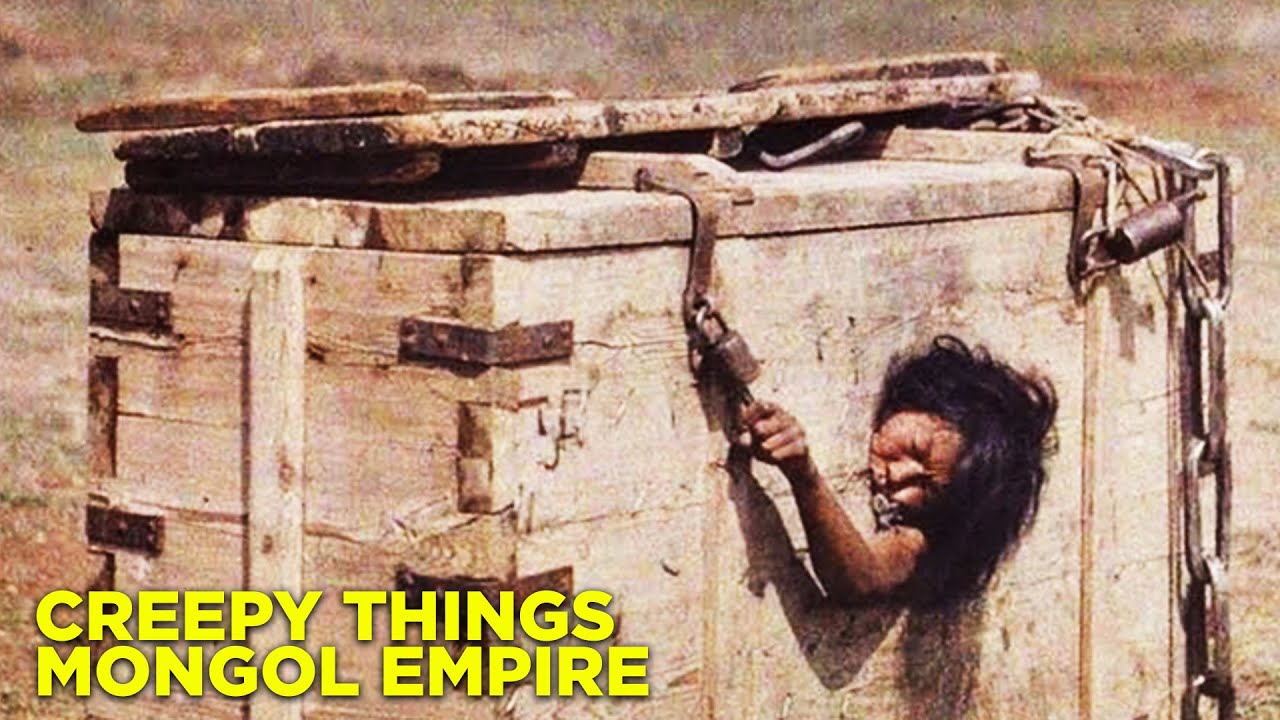
The Mongols, for all their brutality, observed a peculiar taboo: they generally avoided shedding royal blood directly. This didn't mean royal enemies were spared, far from it. It simply meant their executioners had to get extra creative. The result was some of the most macabre death sentences in history, designed to be both agonizing and symbolically "bloodless."
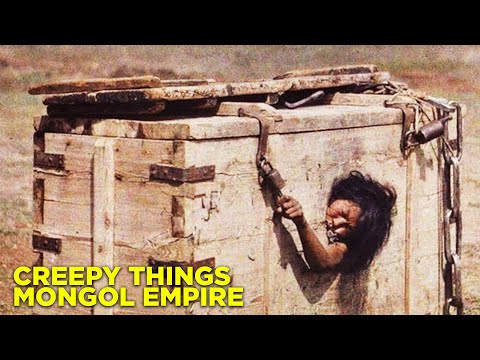
During the reign of Guyuk Khan, Genghis's grandson, a courtier named Fatima fell under suspicion for the dubious death of his brother. Guyuk, convinced Fatima had poisoned his sibling, had her tortured to extract a confession. Once she confessed, Guyuk issued a truly horrifying sentence: he ordered her upper and lower orifices to be sewn shut, and then she was thrown into a river to drown. It was an end so awful it beggars belief.
The fall of Baghdad to the forces of Hulagu Khan, another of Genghis's grandsons, brought about a similarly gruesome fate for the Abbasid Caliph Al-Mustasim. As the spiritual and temporal leader of the Islamic world, his royal blood could not be shed. So, the Mongols devised a solution: Al-Mustasim was rolled up in a carpet and trampled to death by stampeding horses. His death marked the symbolic end of the Islamic Golden Age and a brutal testament to Mongol ingenuity in execution.
But perhaps the most stomach-churning example of this "royal blood" loophole involved the Russian princes captured after the Battle of the Kalka River. Instead of a quick death, these princes were shoved under some floorboards. Then, as the Mongols celebrated their victory, they held a grand feast directly on top of the makeshift platform, dancing and eating, slowly crushing the princes to death beneath them. Even a filmmaker like Quentin Tarantino would struggle to top that level of calculated gruesomeness.
Women of the Steppe, and Beyond
One of the more surprising aspects of the Mongol Empire, especially when compared to its contemporaries, was the treatment of its native women. Unlike most societies of the era, Mongolian women enjoyed a remarkable degree of freedom, value, and equal status within their society. They held influence, managed households, and sometimes even led in the absence of men. However, to call the Mongols "feminists" would be a grave mistake, for this liberal attitude was strictly limited to native Mongolian women. The fate of foreign women, captured during raids and invasions, was a stark and brutal contrast.
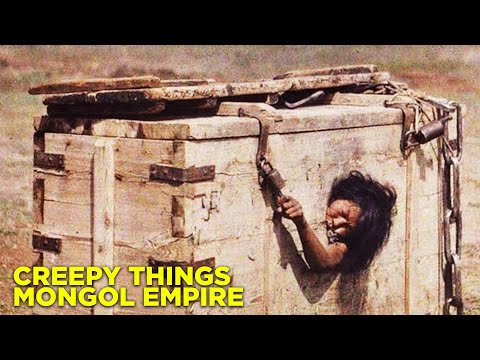
These foreign women were often victims of human trafficking and slavery. They were forced to marry Mongol men, or worse, relegated to the status of concubines, their dignity and autonomy utterly stripped away. The Mongols also frequently demanded young maidens as tribute from the populations of their conquered lands, a practice that further underscored the disparity in treatment. One such tragic figure was Bouli Tarhan, a Siberian Queen. She was one of the rare leaders who managed to give the Mongols a bloody nose in battle, putting up legendary resistance. Despite her fierce stand, the Mongols eventually overpowered her. Bouli Tarhan was captured and, as a final indignity, forced to marry an ordinary Mongol soldier. While she wasn't killed, her name and legacy were effectively erased from history, a common tactic to subdue rebellious figures.
Yet, there was one foreign woman who managed to beat the Mongols at their own game. Tergene, a Merkit princess, was gifted to Ogedei Khan, Genghis's son and successor, after Genghis had defeated and subjugated the Merkits. Tergene was a cunning and ambitious woman. She skillfully navigated the treacherous waters of the imperial court, rising through the ranks to become Ogedei's favored wife. She then ruthlessly exploited Ogedei's well-known weakness for alcohol, systematically encouraging his drinking until he succumbed to it, effectively drinking himself to death. With Ogedei gone, Tergene seized power, becoming the ruler of the Mongol Empire for the next five years, a testament to her sheer will and strategic prowess.
The Scent of Power and Piety
In our modern world, strong body odor is generally considered a sign of poor hygiene, and perhaps even a questionable personality. In the Mongol Empire, however, it was quite the opposite: a powerful scent was considered a mark of strong character. This seemingly bizarre cultural norm stemmed directly from their ancient religious beliefs, rooted in Tengrism, the old Mongol religion.
Tengrism held that all water bodies, from rivers to lakes, were sacred homes to the Dragon Gods. These deities were believed to control the water cycle, and any disturbance to their aquatic abodes would incur their wrath. Consequently, bathing in water was strictly taboo, as it was thought to contaminate the water and disturb its sanctity, thereby angering the Dragon Gods. This prohibition extended beyond personal bathing to the washing of clothes. Since their garments were constantly exposed to filth, sweat, and other bodily fluids, washing them would similarly pollute the sacred waters. This meant that Mongols wore the same set of clothes 24 hours a day, 7 days a week, until the garments simply could not withstand their stench anymore and tore apart from sheer wear and tear.
Even then, only commoners would discard their smelly, torn rags. Members of the royal family had a different custom entirely. Instead of throwing away their dirty laundry, they would bestow it upon those who had pleased them. Today, receiving a monarch's soiled undergarments would likely be considered, at best, a prank, and at worst, an insult. But for some subjects of the Mongol Empire, receiving dirty underwear from the Khan was considered the most ostentatious and generous honor one could possibly receive, a direct personal gift from the ruler, imbued with his powerful scent and essence.
"For some subjects of the Mongol Empire, receiving dirty underwear from the Khan was considered the most ostentatious and generous honor one could possibly receive, a direct personal gift from the ruler, imbued with his powerful scent and essence."
God's Wrath Incarnate
Killing in the name of one true religion is a tale as old as time, but the Mongols took it to an entirely new level, intertwining their conquests with a chilling divine mandate centered on Genghis Khan himself. Interestingly, while the Mongol Empire was remarkably religiously tolerant in many respects, allowing various faiths to coexist within its vast borders, this tolerance did not preclude them from justifying mass murders and genocides with a religious fervor of their own.
In 1218, after the recently conquered city of Bukhara had surrendered, Genghis Khan climbed the pulpit of its mosque and delivered a speech that sent shivers down the spines of the assembled citizens. "You have committed great sins," he declared, "if you had not committed great sins, God would not have sent a punishment like me upon you." This wasn't mere rhetoric, it was a profound self-belief, or at least a powerful propaganda tool he wielded against his enemies: Genghis Khan presented himself as the literal wrath of God, a divine scourge sent to punish the wicked.
Even after his death, Genghis's successors eagerly embraced and amplified this terrifying narrative, glorifying killing and pillaging in his name. His grandson, Guyuk Khan, when communicating with Pope Innocent IV, boldly asserted that the power vested in the bloodline of Genghis Khan by the heavens gave them the undeniable right to rule all land "from sunrise to sunset." Any nation or individual opposing this divine right was, by definition, an enemy of the Empire and, by extension, an enemy of God's will. Genghis's other grandson, Mongke Khan, went even further in a letter to the King of France, proclaiming Genghis as the "one true Lord." Hulagu Khan, yet another grandson, was also a firm believer in this propaganda, seeing Genghis as a chosen vessel of God's punishment, set upon a path to chastise those nations who stubbornly refused to learn their lesson. For the Mongols, conquest was not just military strategy, it was divine destiny, making their brutal expansion a holy crusade of unparalleled scale.
History, as it turns out, is rarely as neat and tidy as the textbooks suggest. The Mongol Empire, often reduced to a few paragraphs about horsemen and vast territories, was a realm where the lines between life and death, honor and depravity, were drawn in ways that defy modern comprehension. It was a place where fratricide paved the way for empire, where the scent of a king's unwashed garment was a badge of honor, and where the gods themselves seemed to endorse mass slaughter. The past wasn't just different, it was filthier, weirder, and undeniably nuttier than you could ever imagine.