Ancient Greece, the supposed cradle of Western civilization, often gets a gilded treatment in our history books. We're taught about the philosophers, the democratic ideals, the stunning architecture, and the epic poetry. It's all very refined, very noble, very… sanitized. But peel back the marble facade and you'll find a civilization far stranger, far filthier, and frankly, far more unsettling than any textbook dares to admit. Forget the glory of the Parthenon for a moment, and brace yourself for the reality of a society that diagnosed illness by taste, sold athlete's grime as medicine, and invented comedy out of giant phallic parades. This was not your grandmother's Greece, unless your grandmother was particularly into bodily fluids and public indecency.
The Doctor Will Taste You Now
In our modern medical age, a diagnosis is a precise, often clinical affair involving advanced tests and sophisticated equipment. But imagine for a moment that your doctor, instead of ordering a blood panel, simply stuck a finger in your ear, scooped out some earwax, and then… ate it. Sounds like something out of a horror film, doesn't it? Yet, this was a perfectly acceptable, even respected, diagnostic method in ancient Greece, attributed to none other than Hippocrates himself, the very inspiration for the Hippocratic Oath that every licensed doctor today is sworn to uphold.
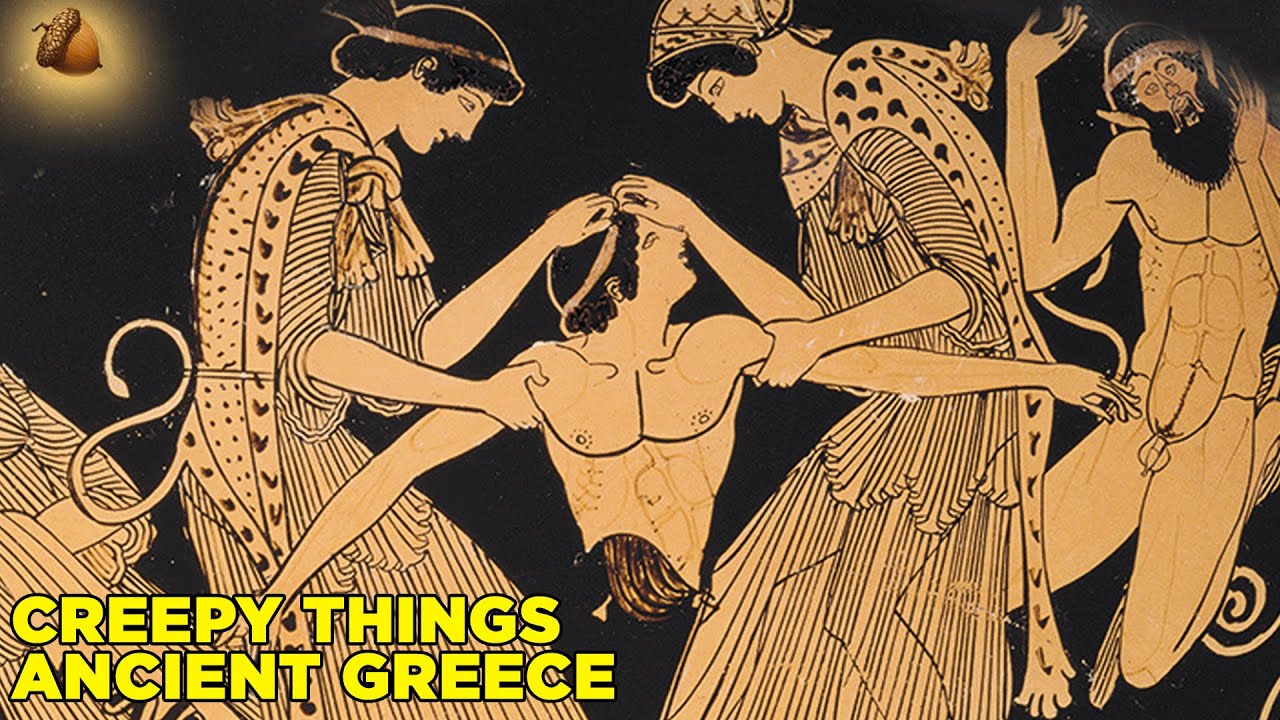
Greek healers firmly believed that the taste of various bodily fluids held the key to understanding a patient's ailments. Without the luxury of pathological labs, these early medical practitioners had to get creative, employing their own taste buds as their primary diagnostic tools. While our doctors today do indeed request samples of bodily fluids for testing, the difference is crucial: they are looking at chemical compositions under a microscope, not savoring a patient's phlegm or, Heaven forbid, a stool sample. The idea was that different diseases would alter the flavor profile of these excretions, providing clues to the underlying sickness. It was a deeply personal, undeniably repulsive, and utterly unhygienic practice that makes you wonder if the cure wasn't sometimes worse than the disease.
Sweat, Grime, and Ancient Greek Gatorade
The Olympic Games, a cornerstone of Greek culture, conjures images of powerful, sculpted athletes competing for glory. What isn't often highlighted is the sheer, unadulterated filth that accompanied these contests. Before competing, Greek athletes would strip naked and cover themselves in oil, a practice meant to enhance their physique and flexibility. They would then wrestle, run, and compete in various events on dirt-filled grounds. By the time the games concluded, these athletic superstars were caked in a truly disgusting concoction of sweat, mud, oil, saliva, and general grime.
Now, here's where it gets truly bizarre. A specialized group of slaves, known as "gloy collectors," had the unenviable task of scraping all this accumulated filth off the athletes' bodies. But their job wasn't just to clean. Oh no. They were collectors, and they collected every last bit of that disgusting mixture. This scraped-off grime was then carefully bottled and sold to the public. For the common ancient Greek citizen, this bottled filth was considered a potent medicine, used either as a pain-relieving ointment or, even more incredibly, as a performance-enhancing serum. The idea that smearing yourself with a champion's sweat could somehow imbue you with their strength or heal your aches speaks volumes about the peculiar beliefs of the time, and makes modern "performance enhancers" seem rather tame by comparison.
The idea that smearing yourself with a champion's sweat could somehow imbue you with their strength or heal your aches speaks volumes about the peculiar beliefs of the time.
The Original "Kiss My Rear"
During a recent global pandemic, the sight of people hoarding toilet paper became a bizarre symbol of societal panic. But imagine walking past your neighbor's house and seeing them meticulously stacking a pile of stones on their porch, not for landscaping, but for their bathroom. In ancient Greece, this wouldn't have raised an eyebrow. Lacking anything resembling modern toilet paper, the Greeks improvised with some rather uncomfortable alternatives.

Their primary method of post-lavatory hygiene involved using cold, hard, and decidedly rough stones. While some Greeks, like their Roman counterparts, occasionally used a sponge attached to a stick for cleaning, this was a luxury not afforded to everyone. Most households kept a pile of pebbles in their lavatories, and people would literally grate these hard stones against their bodies to clean up. There was even a saying to encourage frugality in the bathroom: "Three stones are enough to wipe." Ouch. It makes pandemic-era toilet paper prices seem like a bargain.
But the Greeks, ever resourceful, also found a way to combine their bathroom habits with a healthy dose of social commentary, or rather, social aggression. When they wanted to express their disdain for an enemy, they would take broken shards of ceramic pots, known as ostraka, etch the name of their foe onto them, and then, quite literally, scrape their dirty butts with them. This act was a profound public insult, a physical manifestation of telling someone to "kiss my rear," and it's a testament to ancient Greek ingenuity in combining hygiene with humiliation. So, the next time you hear that phrase, you'll know its surprisingly gritty, ancient origins.
When Your Womb Wanders: Women's Medicine
While some ancient civilizations, like those in India, Egypt, and early Mesopotamia, afforded women considerable rights and social status, ancient Greece was a stark contrast. For women, especially in city-states like Athens, it was arguably one of the worst places to live in the ancient world. They were often treated as the lowest form of human life, just a step above slaves, with their societal value primarily tied to childbearing and household management. This demeaning view extended into their medical treatment, which was often as bizarre as it was ineffective.
Greek doctors held a peculiar belief that women possessed a unique susceptibility to the "impure." They assumed that disgusting things affected women in ways they couldn't affect men, and, conversely, that only equally disgusting things could cure women's ailments. For example, a woman suffering from a vaginal discharge might be prescribed a truly repulsive concoction: a mix of roasted mule excrement and wine. One can only imagine the taste, and the efficacy, of such a remedy.
Even more fantastical were their treatments for miscarriage. The prevailing belief was that a woman's womb was a free-roaming organ that could wander around the body, causing all sorts of problems, including miscarriage. To coax the errant womb back to its "designated position," doctors would apply cow dung to the woman's body. The logic was that the foul smell would repel the womb, forcing it to flee back to its proper place. It was a medical theory based more on odor aversion than anatomical understanding, and a stark reminder of how little was truly known about the female body.
Contraception was another area where ancient Greek medical advice veered into the absurd. The Greek physician Soranus, often cited for his medical writings, offered some truly baffling methods. He famously argued that if a woman became pregnant, it was entirely her own fault, an idea that would make him perfectly at home in some modern political debates. His primary advice for contraception after sex was for women to simply squat, sneeze, and rinse. The notion that a vigorous sneeze could somehow expel sperm and prevent conception highlights the profound lack of understanding of human reproduction. Soranus also suggested rubbing honey or cedar resin on the genitals before intercourse, which, if nothing else, probably served as a pretty effective deterrent against any further amorous adventures.
The notion that a vigorous sneeze could somehow expel sperm and prevent conception highlights the profound lack of understanding of human reproduction.
Child Brides and Ancient Grooms
Beyond the medical oddities, the social landscape for women in ancient Greece was undeniably bleak. Their lives were often confined to the home, with limited legal rights and virtually no public presence. One of the most striking examples of this societal imbalance was the age at which girls were expected to marry. The average age for ancient Greek women to enter matrimony was between 12 and 14 years old. To put that into perspective, these were still children, barely past puberty, if even that. While child marriage was not uncommon in many ancient civilizations, what made the Greek practice particularly disturbing was the age of their husbands.
The men these young girls were married off to were typically at least 30 years old, and often much older. This created a profound power imbalance, effectively placing prepubescent girls into marriages with men who were not only adults but often twice their age or more. These unions were not based on love or mutual consent, but on economic and social arrangements, designed to secure property, alliances, and heirs. The young brides were expected to be subservient, fertile, and to manage the household, essentially transitioning from childhood directly into domestic servitude without any real adolescence or personal autonomy. It's a stark, uncomfortable truth that contrasts sharply with the idealized image of ancient Greek society.
Phallic Parades: The Birth of Comedy
While much of ancient Greek life might seem grim by modern standards, they certainly knew how to throw a party, especially for Dionysus, the god of wine, fertility, and ecstatic revelry. These celebrations, known as Dionysian festivals, were the ancient world's answer to Mardi Gras, but with a distinctly Greek, and rather explicit, twist. Once a year, the streets of Athens would erupt in vibrant, boisterous processions featuring an abundance of phalluses. Yes, you read that right: phalluses, and lots of them.
Men and women would march through the city, often heavily intoxicated, carrying gigantic, long phallic figures and floats proudly above their heads. These weren't subtle representations; they were enormous, cartoonish depictions of male genitalia, paraded openly as a tribute to their fertility god. Dionysus's followers would get thoroughly drunk, singing raunchy songs about male anatomy and yelling rude, bawdy jokes at passersby. It was a spectacle of uninhibited revelry and sexual frankness that would make many modern sensibilities blush.
Perhaps the most astonishing aspect of these phallic processions is their historical significance. According to the philosopher Aristotle, these boisterous, often crude, parades were the very birthplace of comedic theater. He argued that the improvised jokes and ribald humor shouted during these festivals were eventually adapted into full-fledged stage plays. So, the next time you enjoy a stand-up routine or a witty sitcom, remember its ancient Greek ancestors: a group of drunken revelers parading gigantic cartoon penises through the streets of Athens, yelling jokes about them. It seems comedy, in its purest, most irreverent form, began with a collective, colossal laugh at the human form.
The history we get in school is often a carefully curated narrative, designed to present a palatable, inspiring vision of the past. But the truth, as always, is far more complex, more visceral, and infinitely more fascinating. Ancient Greece, for all its intellectual and artistic triumphs, was a place where medical diagnoses involved tasting bodily fluids, where athletes' grime was a prized commodity, where women were married off as children, and where public festivals celebrated fertility with giant phallic displays. It was a world utterly alien to our own, yet undeniably human, proving once again that history is always nuttier, filthier, and weirder than any textbook could ever truly capture.