Forget the horned helmets and the romanticized notion of noble explorers. The Vikings, as taught in school, are often presented as fierce warriors, skilled navigators, and perhaps even early democratic thinkers. And while some of that is true, the truth, as always, is far stranger, far filthier, and infinitely more unsettling. These were not just seafaring adventurers, but a people whose everyday existence was steeped in practices that would make modern sensibilities recoil, from an economy built on human chattel to child abandonment and ritual slaughter. Prepare to dive headfirst into the truly unhinged realities of the Norse world.
The Brutal Business of Human Cargo
While the Vikings certainly did not invent the concept of human bondage, they perfected its application, elevating it to an art form of sadism that served as the very bedrock of their thriving economy. Plying the European sailing waters with their formidable longboats, they weren't just raiding for gold and glory, but for flesh and blood. Historians confirm that the entire Viking economic system was powered by the relentless trade in enslaved people, a network so extensive it reshaped the demographics of entire regions. Ireland, in particular, became a frequent target, with cities like Dublin and Limerick emerging not from peaceful settlement, but as brutal Viking slave trade hubs. For centuries, these ports served as crucial conduits for the vast amounts of human loot gathered from the relentless pillaging of Ireland, Britain, and France.
Modern pop culture often peddles the myth that Viking raids on monasteries were primarily for their material riches or out of religious animosity. While the prospect of treasure was undoubtedly a bonus, the primary objective, chillingly, was the monks themselves. Why, you ask, were these men of God such prized targets? Because they were literate, often educated, and crucially, perceived as prone to subjugation. This combination made them ideal candidates for a life of forced servitude. But there was a darker, more specific demand for these religious men: castration. Eunuch slaves were highly sought after in the Byzantine Empire and the Middle East, filling critical roles as teachers, harem guards, administrators, and palace servants. The high demand from the East, coupled with the Vikings' efficient supply chain, transformed the Mediterranean slave trade into a truly industrious enterprise.
For the Vikings, monasteries were essentially "raw material" factories. All they had to do was raid, snatch these subservient men, already trained in the service of God, and ship them off to markets like Venice. There, they would undergo castration before being sold to their Eastern masters. It wasn't just for export, though; Vikings also kept a number of these enslaved individuals for their own households. While the popular TV series Vikings depicts a bond between Ragnar Lothbrok and his slave Athelstan, treating him with a degree of kindness, historical reality suggests such benevolence was a rare exception. The life of a thrall, as slaves were called, was generally one of unremitting hardship, a fact underscored by archaeological discoveries that reveal an even more disturbing facet of Viking slavery.
A Grave Companion: Slaves Beyond the Veil
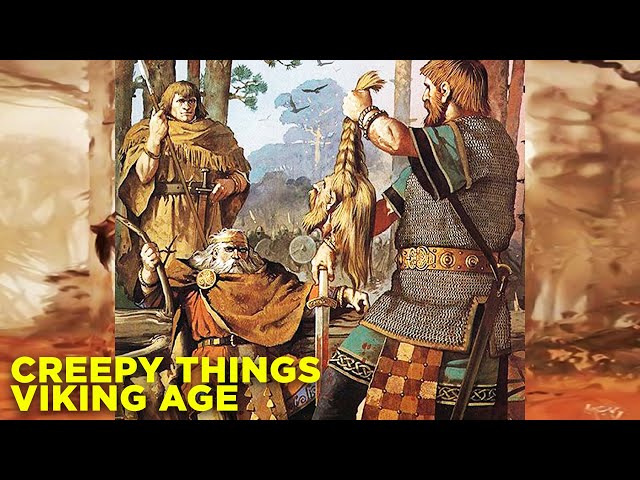
The Viking relationship with their enslaved population extended beyond the bounds of earthly existence, a practice that echoes the grim traditions of Mesopotamian kings. Disturbing archaeological findings confirm that not only did Vikings keep slaves, but they also considered them essential companions for the afterlife. Upon a master's demise, chilling rituals were enacted where slaves were sacrificed to accompany their owners into the grave. The methods of sacrifice were particularly gruesome. Slaves were often executed by decapitation, and then, in a macabre twist, buried without their heads. The exact reasoning behind this headless interment remains a subject of scholarly debate, but it is believed that Vikings did so to clearly differentiate the master from the slave, ensuring no confusion in the next world. One could even speculate, with a wry, dark humor, that perhaps they wished to prevent their former thralls from "ratting out" any earthly abuses to Odin upon reaching Valhalla.
For the Vikings, monasteries were essentially "raw material" factories. All they had to do was raid, snatch these subservient men, already trained in the service of God, and ship them off to markets like Venice. There, they would undergo castration before being sold to their Eastern masters.
Hearth and Claw: The Unconventional Viking Household
Life in a Viking longhouse was a far cry from modern domesticity. The average Viking family, unlike their more affluent counterparts, could not afford the luxury of a separate barn. This meant that it was entirely normal to walk into a longhouse and find pigs, cows, and other livestock sharing living quarters with the family. But it wasn't just farm animals that were integrated into daily life; Vikings also displayed a remarkable affection for their pets. Cats and dogs were common companions, but the truly wild card in this domestic menagerie was the bear. Yes, bears. Not only did these animals often share beds with their human owners, but they were also, incredibly, taken along on raids.
How did one acquire a pet bear, you might ask? On a slow day during a raid, Vikings would venture into the wild, specifically targeting bear dens to abduct cubs. These tiny, ursine bundles of fur were then brought back to the settlement and raised as "house bears." As crazy as it sounds, these pet bears served practical purposes. They were reportedly useful for keeping enslaved people in line, their sheer presence a formidable deterrent. They also provided an imposing layer of protection for the family's cattle. However, the inherent dangers of having a giant, wild animal roaming almost freely within a settlement were undeniable. Many Viking communities recognized this risk, levying heavy fines on families who owned bears, or outright banning them. Yet, some families, perhaps drawn by the utility or simply the sheer bravado of it all, chose to risk the consequences, keeping their formidable pets no matter what.
The Bloody Harvest at Uppsala
Every nine years, the Viking world converged on Uppsala, a sacred site where a grand festival was held to appease the Norse gods. And to appease the Viking gods, particularly Odin, sacrifices were not just encouraged, but demanded. The scale of these offerings was staggering: a total of 99 men, horses, dogs, and hawks were ritually slaughtered every nine years. This immense sacrifice was a direct echo of Norse mythology itself, particularly the story of Odin's quest for cosmic wisdom. Legend has it that to gain understanding of the universe, Odin performed a self-sacrifice. He plucked out one of his eyes, casting it into Mimer's Well, ritually pierced his belly with his spear Gungnir, and then hanged himself from Yggdrasil, the world tree, for nine days and nine nights. This foundational myth made the number nine sacred to the Vikings, influencing the very structure of their communal sacrifices.
At Uppsala, the Vikings meticulously recreated Odin's ordeal. The sacrificed humans, horses, dogs, and hawks were arranged in sets of nine and then hung from the trees of the holy grove, a grotesque tableau intended to honor and placate the chief deity. Modern pop culture, ever eager to romanticize, often depicts these sacrificial humans as adult volunteers, willingly walking to their deaths in the hope of securing a special place in Valhalla. However, both the historical sagas and archaeological findings paint a far grimmer, and far more disturbing, picture.
Children of the Sacred Grove: The Darker Side of Sacrifice
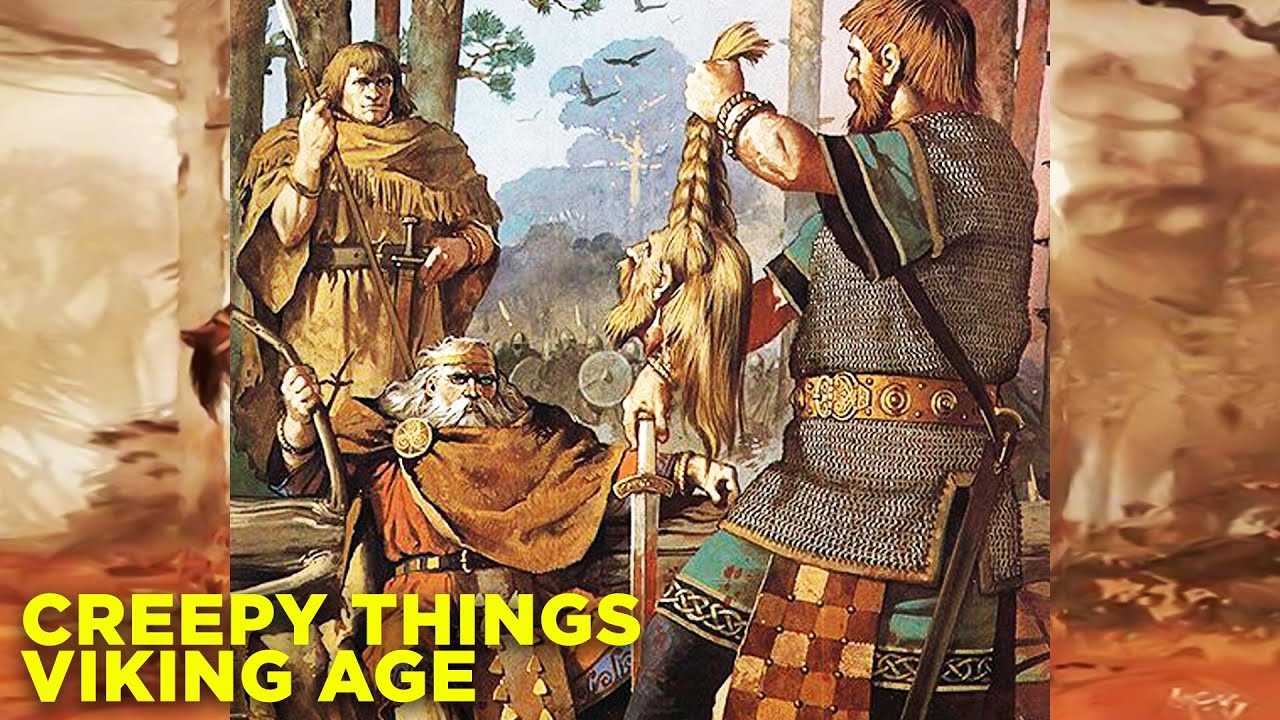
The notion of willing adult volunteers for the Uppsala sacrifices is, according to historian Harry Brown, unsupported by any actual historical sources. The truth, as revealed by archaeological excavations at sacrificial sites, is considerably darker. These findings indicate that a significant number of the victims were, in fact, children, many of them under the age of 10. This stark reality shatters the romanticized image of heroic self-sacrifice, replacing it with the chilling specter of ritual child murder. Further corroboration of the brutal nature of these sacrifices comes from a 10th-century historical record by Ibn Fadlan, an Arab traveler. He recounted the harrowing story of a slave girl who attempted to refuse her impending sacrifice. Her defiance was met with brutal force, as she was assaulted by at least six men before being dragged to the altar for her execution. This account underscores not only the non-voluntary nature of many sacrifices but also the abject powerlessness of the victims.
The notion of willing adult volunteers for the Uppsala sacrifices is, according to historian Harry Brown, unsupported by any actual historical sources. The truth, as revealed by archaeological excavations at sacrificial sites, is considerably darker. These findings indicate that a significant number of the victims were, in fact, children, many of them under the age of 10.
The Short Straw of Childhood: Abandonment and Gender Bias
Another unsettling aspect of Viking society, often overlooked, is the stark gender imbalance evident in household records. These records frequently show that boys significantly outnumbered girls. On average, a common Viking household might have had four male children for every one female child. In more extreme cases, this ratio could escalate to a staggering nine to one in favor of boys. This wasn't due to some peculiar genetic predisposition for male offspring. Viking parents, like any others, gave birth to roughly equal numbers of boys and girls. The disparity arose from a deeply ingrained cultural practice: child abandonment.
A child was not truly considered a "kid" or a full member of the family until it had been formally named. This naming ceremony, called osovatny, is actually the ancient precursor to modern christening rituals. Only after osovatny was performed was a child officially welcomed into the family. This left a crucial window of opportunity for parents to abandon a baby if they deemed it undesirable. Tragically, girls often drew the "shorter stick" in this cruel lottery. Before the osovatny, parents would conduct a grim "quality check," scrutinizing the infant for any deformities, curses, illnesses, or perceived weaknesses. In this harsh calculus, being female could, sadly, be considered such a weakness. This practice, disturbingly reminiscent of ancient customs in Mesopotamia and Sparta, highlights the brutal pragmatism of Viking life. Once the osovatny was completed, however, the child became the parents' legal responsibility, and any attempt to dispose of it afterwards would incur the wrath of Viking law.
War Scars and Bloody Pastimes: The Viking Mindset
The ceaseless cycle of Viking raids, with their inherent violence, pillaging, and kidnapping, left an undeniable mark on the psyche of those who participated. No matter one's upbringing or mental fortitude, such experiences inevitably led to a form of medieval shell shock, or post-traumatic stress disorder. Returning home, it was no easy feat to simply "turn off the crazy" and reintegrate into life as a normal father, husband, or farmer. This everyday ordeal forced Nordic civilians to devise various methods of coping and rehabilitation. One might assume that sports and recreational activities would offer a healthy outlet, but ironically, even these pastimes in Nordic society were fraught with peril.
Consider the Viking swimming race, for instance. This wasn't a contest of speed or endurance; it was about who could effectively waterboard their opponent for the longest duration. Even seemingly innocent games like catch and tag could, and often did, escalate into bloody, violent encounters, yet this was considered entirely normal. The unwritten rule of Viking games was that one could stop playing at any time. Therefore, if a participant chose to remain in the game long enough to get seriously hurt, it was considered their own fault. This brutal philosophy sheds light on why Vikings likely struggled so profoundly with PTSD. Dr. Taran Wills of the University of Aberdeen suggests that the problem of PTSD became so severe within Viking settlements that the sagas, often seen as mere glorifications of Viking exploits, served a dual purpose: they were also meant to warn future generations of the harsh, psychological toll awaiting them in adulthood. It was a world where trauma was not just prevalent, but woven into the very fabric of daily life and even leisure.
The history books, sanitized for mass consumption, rarely scratch the surface of the truly unsettling realities that shaped the Viking Age. From economies built on enslaved monks destined for castration to children sacrificed in pagan rituals, and from pet bears sharing beds to games that ended in bloodshed, the Norse world was a place of extreme contrasts and brutal pragmatism. It reminds us that history is not just about dates and battles, but about the deeply human, often terrifying, and undeniably nutty ways people lived, loved, and died. It was a world far wilder than any textbook dares to tell.