Forget the neatly packaged narratives of World War II and the sprawling tragedy of Vietnam. The Korean War, often relegated to a footnote in American textbooks, was a brutal, bewildering conflict that pushed the United States military to its breaking point and left a legacy of unresolved tension that continues to define geopolitics today. It was a war where the lines between good and evil blurred, where heroes and villains traded places with shocking frequency, and where the sheer scale of human suffering was matched only by the bizarre decisions made by all sides. This wasn't just a distant skirmish; it was a crucible that forged the modern world, a forgotten war that deserves far more attention than it ever receives.
The Purge Before the Plunge
Before American boots ever hit Korean soil, the simmering tensions on the peninsula had already boiled over into horrifying atrocities, not just from the invading North, but from the very government the United States would soon fight to defend. South Korean President Syngman Rhee, a man whose authoritarian tendencies often get overlooked in the rush to condemn communism, initiated a chilling program of pre-emptive terror. Anyone he merely suspected of being a communist sympathizer was forced into a "re-education" program, ostensibly designed to steer them towards the correct way of thinking. When the supply of actual sympathizers dwindled, Rhee's regime simply began forcibly enrolling random, innocent people into these programs, creating a vast pool of potential victims.
The situation escalated dramatically with the North Korean invasion in 1950. Within two days of the Northern forces crossing the 38th parallel, President Rhee issued a chilling directive: all those imprisoned in his re-education camps, along with members of the South Korean Workers' Party, were to be executed. What followed was a series of government-sanctioned massacres, where huge swathes of the population were systematically slaughtered. The youngest known victim was a mere teenage girl, her life extinguished by the very state meant to protect her. While firearms were the most common method of execution, some methods were particularly cruel; suspected communist sympathizers living on the coast were often tied together and thrown into the sea, condemned to a slow, agonizing death by drowning.
Disturbingly, when the United States entered the conflict, little was done to halt these heartless acts. Some American commanders, in a shocking display of moral compromise, even approved of the executions, while others, like the revered General Douglas MacArthur, simply turned a blind eye to the unfolding horror. This dark chapter of South Korean history was then systematically suppressed, buried under decades of authoritarian rule, until the 1990s and 2000s, when a more democratic South Korean government began to uncover the truth. Thousands of human remains have since been exhumed, offering grim testament to the scale of the killings, though the true extent of these massacres may never be fully known.
America's Rude Awakening: Task Force Smith's Ordeal
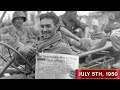
When the North Koreans launched their full-scale invasion of the South, one might assume the mighty American military would swiftly put an end to the communist aggression. This assumption, however, would be profoundly mistaken. The first American engagement of the war, the Battle of Osan on July 5, 1950, less than two weeks after the invasion began, was a complete and utter disaster, a stark and bloody introduction to the realities of modern warfare for an unprepared United States.
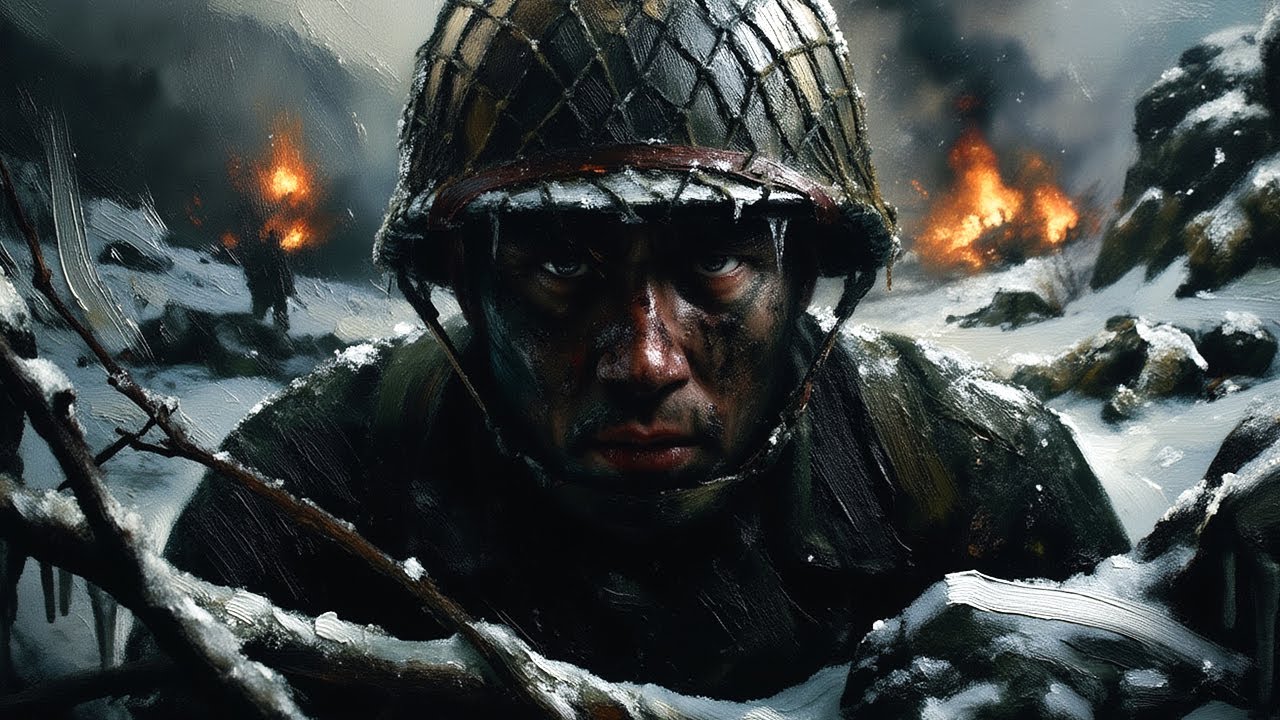
The unit dispatched to hold the line was a hastily assembled group of 540 GIs, nicknamed Task Force Smith. They were mostly teenage boys, fresh out of basic training; only about one-sixth of the men had any combat experience, and most had completed a mere eight weeks of training before being deployed. Their equipment was equally abysmal, largely dating back to the early days of World War II. Few of their weapons were capable of piercing the armor of North Korean tanks, and in a critical oversight that bordered on criminal negligence, the entire task force possessed a grand total of six anti-tank rounds.
On the morning of July 5, as a heavy rainstorm negated any possibility of air support, the Americans watched in horror as eight North Korean tanks rumbled towards their positions. At 8:16 AM, they opened fire with artillery, but the tanks barely flinched, continuing their relentless advance. The Americans fired their precious six anti-tank rounds at a roadblock they had established; two tanks were damaged, and a third caught fire. A North Korean soldier emerged from the flaming tank, firing on the Americans and killing one GI before being cut down himself. The Americans managed to disable another tank by hitting its tracks, but by then, the North Koreans had destroyed their communication lines, severing their ability to coordinate.
Just when things seemed utterly hopeless, another 25 North Korean tanks appeared on the horizon. Most of these new arrivals simply rolled past the American positions, largely undamaged, firing as they went. Then, three more tanks and a column of trucks, stretching as far as the eye could see, arrived. By 2:30 PM, the Americans were out of ammunition and had suffered devastating losses. The survivors were forced to retreat, leaving their wounded behind, hoping for imprisonment. Instead, the injured Americans were rounded up, bound with the very communication wires the tanks had severed, and summarily terminated. Task Force Smith lost almost half of its soldiers in that single engagement, managing only to delay the North Korean invasion force by a paltry seven hours. This grim pattern of inexperienced American soldiers, ineffective weapons, and overwhelming North Korean forces would repeat itself throughout July, pushing the American and South Korean armies to the brink of total collapse.
Against the Ropes: The Pusan Perimeter's Desperate Stand
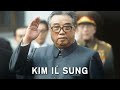
The initial setbacks were not isolated incidents. The US army's woeful state of preparedness meant that the North Koreans were on the verge of winning the entire war within two months of their initial invasion. Throughout July, the American and South Korean armies were relentlessly pushed further and further south. By early August, Kim Il-sung's forces had seized over 90 percent of the Korean peninsula, and the North Korean leader was convinced that victory was imminent. It was a dire situation, a near-total collapse for the United Nations forces.
But then, a desperate stand was made. On August 2, 1950, the combined US and South Korean armies finally managed to halt the North Korean advance, clinging to a small, embattled pocket of land on the southeastern tip of the peninsula: the Pusan Perimeter. This small patch of territory became the last bastion of resistance, a place where the defenders, outnumbered and outgunned, fought with a desperate resolve. Meanwhile, plans for a counter-offensive were already in motion. Task Force Keane, a larger unit comprising 20,000 men, was dispatched to capture the Chenchu Pass, a strategic route that would allow UN forces to push rapidly inland.
On August 7, as Task Force Keane moved from its base, it stumbled upon thousands of North Korean troops who had been attempting to reach that very base. What followed was three days of incredibly bloody, open combat. Despite their numbers, Task Force Keane was ultimately beaten back to its original starting point, failing to gain any ground. Once again, the Americans had been defeated. The US and South Korean forces had no choice but to remain confined within their tiny Pusan Perimeter, bitterly defending every inch of ground through the entirety of August and the first half of September 1950. General Matthew Ridgway, a key figure in the later stages of the war, famously stated that "the war would have been over in 60 days with all Korea in communist hands if it hadn't been for the US's air force," a testament to how close the UN forces came to total defeat.
"The war would have been over in 60 days with all Korea in communist hands if it hadn't been for the US's air force."
The Tide Turns: Inchon's Bold Gambit
Despite the overwhelming odds and repeated setbacks, the never-give-up mentality of the US and South Korean soldiers, coupled with a daring strategic gamble, proved to be their salvation. At 6:30 AM on September 15, 1950, hundreds of ships converged on the coastal city of Inchon, located hundreds of miles north of the desperately defended Pusan Perimeter. In a move reminiscent of D-Day, thousands of American soldiers stormed the beaches, swiftly destroying the North Korean defensive positions.
The North Koreans were caught completely by surprise. Their defenses, poorly maintained and largely unprepared for such an audacious amphibious assault, quickly crumbled. Within just two weeks of the Inchon landing, the South Korean capital of Seoul was back in American and South Korean hands. The tide had decisively turned. The North Koreans suffered immense losses, and by mid-October, America had taken over 135,000 North Korean prisoners of war. From this point onward, the United States and South Korea held the clear upper hand in the conflict, pushing the North Korean forces back across the 38th parallel and beyond, a dramatic reversal of fortunes that few could have predicted just weeks earlier.
The War That Never Ended
Despite the dramatic shifts in momentum, the Korean War eventually settled into a brutal, grinding stalemate that lasted for years. By June 1953, both sides were entrenched, firing millions of shells at one another in what seemed like an endless escalation of hostilities. Yet, behind the scenes, the communist powers were beginning to disengage. A critical factor in this shift was the death of Joseph Stalin, the long-reigning ruler of the Soviet Union, in early 1953. The remaining Soviet leaders, embroiled in an internal power struggle to determine his successor, quickly lost interest in continuing to support the costly Korean War. Suddenly, North Korea and its Chinese allies found their resources drying up.
Deprived of critical Soviet backing, North Korea eventually accepted peace talks with the United Nations. By the end of July, most of the heads of the nations involved had signed the Korean Armistice Agreement, a document designed to end immediate hostilities. However, and this is a crucial point often overlooked, this agreement explicitly stated that all fighting would stop only "until a final peace settlement is achieved." This was a stopgap measure, intended to prevent further loss of life while final peace accords could be drafted. Yet, to this day, no final peace agreement has ever been signed.
Remarkably, South Korea itself has never even accepted the terms of the Korean Armistice Agreement, and no representative from South Korea has ever signed it. This was largely due to the intransigence of President Syngman Rhee, who, even after the armistice, still harbored ambitions of taking the entire Korean peninsula. Without continued American support, however, he lacked the military strength to achieve this. Consequently, the fighting stopped, but the war itself was never formally concluded. This means that, technically, the Korean War is still officially ongoing, a frozen conflict decades after the last shots were fired, a chilling reminder of unresolved geopolitical tensions.
The Unwilling Homecoming: POWs Who Chose Communism
When the fighting officially ceased, one of the most immediate tasks was the repatriation of prisoners of war. All soldiers captured by either side were freed and given the opportunity to return home. As might be expected, tens of thousands of North Korean and Chinese soldiers, disillusioned with their communist dictatorships, refused to return and instead chose to remain in the West. A smaller number of South Korean soldiers, precisely 327 of them, chose to remain in North Korea, often because they had family ties there and wished to stay with them.
But perhaps the most bizarre and unexpected outcome was the fate of a small group of Western prisoners. A total of 21 Americans and one Scottish soldier, having been captured and held by communist forces, refused to return home. These men, for a variety of complex reasons, chose to remain under communist influence, a decision that shocked and confused their home nations. Their motivations were diverse: some were genuinely impressed by the communist way of life they had experienced, while others were deeply disgusted by the injustices they had witnessed or endured in their home countries. This act of defiance, choosing to remain with the enemy, highlighted the profound ideological battles at play and the individual consciences caught in their crossfire.
"Most weirdly of all, 21 Americans and one Scottish soldier who had been captured refused to return home instead they chose to remain under communist influence."
Clarence Adams: A Defector's Complex Journey
Among the American soldiers who chose not to return, one of the most compelling stories belongs to Clarence Adams. Adams, a corporal from Memphis, Tennessee, was an African-American man who had experienced more than his fair share of suffering and discrimination in the pre-Civil Rights era USA. While imprisoned by the communists, he found something unexpected: access to a high standard of education, a stark contrast to the limited opportunities he might have had at home. He immersed himself in communist political theory, becoming an expert on the subject. So profound was his conversion that he began lecturing other American prisoners on what he considered to be the virtues of communism, an act that would have severe repercussions.
When the war ended, Adams knew that his outspoken advocacy for communism during his incarceration would likely lead to a court-martial, prison time, and a dishonorable discharge if he returned to the United States. So, he made the momentous decision to move to China, where he married a Chinese woman and continued to live as a sympathetic adherent to the communist ideology. His commitment was such that during the Vietnam War, Adams frequently appeared on communist radio shows, using his platform to appeal directly to American soldiers in Vietnam, urging them to return to the US and fight for civil equality at home instead of abroad.
However, even for Adams, the allure of his homeland proved irresistible. In 1966, he made the decision to return to America, driven by a simple, powerful desire: communism, for all its promises, could not provide him with the one thing he wanted most in the world, his mother. Upon his return, the US government did subpoena him, but remarkably, he avoided prison time. Instead, Clarence Adams settled back into American life, opening a Chinese restaurant in Memphis, a poignant and somewhat ironic end to his extraordinary journey. While many of the imprisoned soldiers who had sided with communism eventually returned home, few achieved the quiet success of someone like Corporal Morris Wills, who returned to America in 1965 and later attended Harvard University, demonstrating the varied and often unpredictable paths these defectors took.
A War's Lingering Shadow
The Korean War, in its sheer scale of human cost, was nothing short of catastrophic. While official estimates often cite at least 2 million civilian deaths, that number might be much closer to 3 million. The combined military deaths were at least 500,000, and could well exceed 1 million. These staggering figures represent a profound loss of life, a generation decimated by a conflict that, for many in the West, remains a vague historical blip between two more famous wars. It was a war characterized by desperate fights, strategic gambles, and moral compromises that continue to echo through the present day. The fact that North Korea remains the "hermit kingdom," a secretive, propagandistic nation refusing to integrate with the international community, is a direct legacy of this unresolved conflict.
The Korean War was a crucible for the American military, exposing its weaknesses and forcing it to adapt. It showed the world the brutal realities of proxy wars and the devastating human cost of ideological clashes. It was a weird war, a sad war, and a war that continues to shape the geopolitical landscape of East Asia, proving once again that history is rarely as clean, as simple, or as confined to the past as our textbooks would have us believe. The forgotten war is still very much with us.