Forget the black and white caricatures of history class, the stoic, goose-stepping automatons that fill cinematic landscapes. The reality of life as a Nazi soldier, particularly for the average conscript, was a maelstrom of psychological manipulation, chemical dependency, and brutal, often contradictory, realities. It was a world where children were forced to utter "Heil Hitler" dozens of times a day, where bankers became concentration camp clerks, and where the very notion of a "clean Wehrmacht" is a historical fabrication. The story of Hitler's military is not just one of ideological fervor, but of a generation caught in a web of deceit, drugs, and unimaginable horrors, a narrative far wilder and more disturbing than any textbook dared to print.
The Cradle of Conformity: Indoctrinating a Generation
Hitler's rise to power in 1933 wasn't just a political coup; it was the start of a six-year, comprehensive campaign to rewire the minds of Germany's youth. The average age of a German soldier in World War II was a mere 18 years old, a chilling statistic that underscores the success of this early indoctrination. As German immigrant Erica Mann presciently observed in her 1938 book, the Nazi party was meticulously shaping the ideas and feelings of future generations.
The regime's insidious reach extended into every corner of a child's life. From the age of five, children were expected to say "Heil Hitler" an astonishing 50 to 150 times a day, a formula required by law. This wasn't merely a polite greeting; it was the official German salutation, replacing neutral greetings. Whether meeting a friend on the way to school, starting or ending a class, or even at home, the phrase was inescapable. Postmen, streetcar conductors, and stationery store clerks all used it. Even parents' first words at the lunch table had to be "Heil Hitler," with students encouraged, and indeed threatened, to report any parental deviation, as it was a punishable offense.
The slogan of the Young Volk, the Hitler Youth, and the League of German Girls, "Heil Hitler" even permeated evening prayers, where its omission was considered heresy. The word "heil," meaning salvation, was wrenched from its religious context, shifting allegiance from man's relationship with God to man's relationship with his ruler, stamping Hitler's authority deep into the German psyche.
By the time the Second World War began, non-Jewish, non-Slavic, non-foreign-born German children were obliged to enroll in the Hitler Youth or the League of German Girls. These programs were, at their core, preparation for war. Children wore uniforms to school every day, their mornings beginning with singing Nazi anthems and saluting the Nazi flag. They participated in camps and expeditions, featuring drills and military training. School textbooks were cynically rewritten to serve as instruments of Nazi ideology.
While some children undoubtedly enjoyed the outings, camping, singing, and games, these activities were merely a sugar-coated veneer for subtle brainwashing. Hitler and Göring initially envisioned these youth programs being run by young Germans themselves, but this plan never materialized. Instead, the responsibility fell to older Nazis, the Brownshirts and Stormtroopers, who were often considered unfit for direct military service. These men, frequently bitter and disillusioned, were notoriously brutal and authoritative towards their young charges. Though children sometimes grew bored with the relentless ideology, the systematic indoctrination created a generation primed for the regime's darkest deeds.
The Young and the Damned: Kristallnacht and Early Horrors
The success of this comprehensive indoctrination became terrifyingly clear during the events of Kristallnacht, the "Night of Broken Glass," in November of 1938. Propaganda-fueled children, barely out of their own youth programs, poured onto the streets. They smashed up 7,500 Jewish shops and actively participated in beating Jews in the streets and in their homes. While older Germans, who hadn't been subjected to this new educational system, often looked on in horror and sympathy for the Jewish victims, the stark contrast between the generations was undeniable. Not all youth were blinded, nor were all elders saints, but the majority of the younger generation responded to Hitler's hateful call with chilling enthusiasm.
As these young Nazi enthusiasts joined the cause, many found themselves assigned the horrific duty of guarding concentration camps. The testimony of Oscar Greening, one of the last living Nazi officers, tried and punished for his crimes against humanity in 2015, offers a heart-wrenching glimpse into this reality. In 1942, at the tender age of 21, Greening was posted to Auschwitz.
Within moments of his arrival, he was forced to witness and participate in the unloading of Jewish prisoners, who were immediately separated by gender, age, and health. Anyone deemed "unfit to work" was marked for immediate death. Greening, despite being raised in an ultra-nationalistic household, was still horrified, not by the idea of executing Jewish people, but by the sheer inhumanity of its implementation. His conditioning was so profound that the extermination itself was rationalized: the concept of innocent Jewish people being enemies of the fatherland was so deeply integrated that it was compared to firing bullets at Allied forces or the Soviet army. Even when it came to children, Greening confessed that because those innocent children had "Jewish blood," they could not be allowed to grow up to become enemies of the state.
"The idea of innocent Jewish people being the enemies of fatherland was so well integrated in the minds of german youth fighting the second world war that they used it to rationalize terminating jewish people by comparing it to firing bullets at allied forces and the soviet army."
The Banality of Evil, Auschwitz Edition
Oscar Greening's story highlights another disturbing facet of the regime: how ordinary lives were co-opted into atrocity. Like many young men, Greening had a stable job in the banking sector, where he had even been promoted due to colleagues and superiors enlisting in the army. Yet, he and countless others sacrificed their civilian careers to enlist, convinced it was "the right thing to do," having been trained for this very moment. Interestingly, many of these guards had no knowledge of concentration camps or what transpired within them until they received their new assignments.
Appointed as a clerk at Auschwitz, a role not dissimilar to his old banking job, Greening was initially shocked by the systematic stripping of Jewish people's money and their subsequent sentencing to death. Yet, this shock quickly gave way to a twisted sense of purpose, believing he was eliminating his country's enemies. Greening manufactured for himself what he considered a tolerable life at Auschwitz. In his office, he was shielded from the camp's raw brutality. When he walked around the camp, he could avert his eyes from anything that displeased him. He generally had no reason to visit the remote corners of Birkenau, where the innocent met their demise.
The only constant reminder of the diverse nationalities arriving at the camp was the variety of currencies that crossed Greening's desk. One day he would handle French francs, the next Czech korunas, followed by Polish zlotys. American dollars were a regular sight. Beyond currency, the array of confiscated liquor also spoke volumes: Greek ouzo, French brandy, Italian sambuca, all part of the collection. Greening described the Auschwitz main camp as a small town in itself: a place with gossip, vegetable shops, a canteen, a cinema, and a theater offering regular dance and other performances. It even boasted a sports club for the Nazi guards. These individuals, whether reluctant or brutal, were often intelligent and civilized people, yet their morality was profoundly absent.
The Führer's Fix: Amphetamines and Blitzkrieg
While propaganda fueled recruitment and ideological fervor, Hitler found another, more chemical, way to drive his soldiers into battle. The lightning-fast Blitzkrieg, which swept across Europe, was powered not just by innovative tactics, but by drugs. German soldiers marched from one European country to another, high on amphetamines, specifically Pervitin, a methamphetamine variant commonly referred to as "speed."
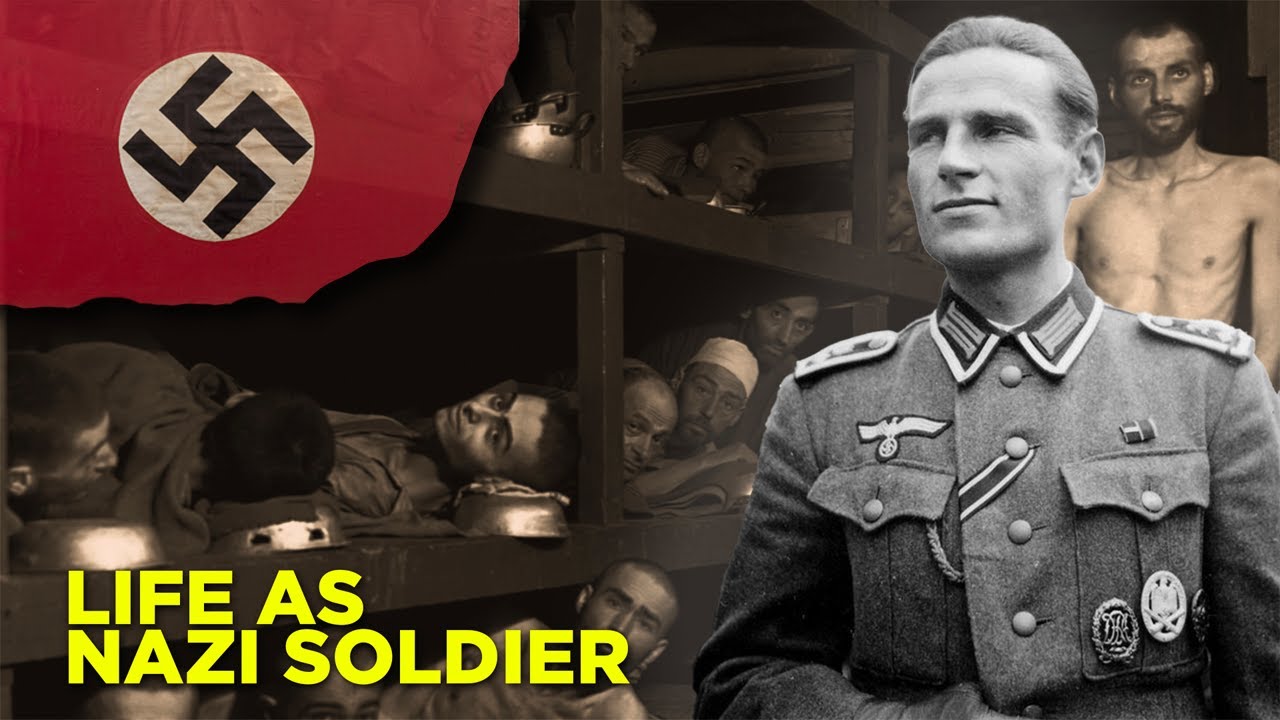
This drug-fueled strategy, however, was a dangerous gamble, burning the candle from both ends. Soldiers who remained hooked on amphetamines often succumbed to extreme fatigue or severe cardiac problems, including heart failure. Those who were taken off the "black pills" suffered intense depression and anxiety, severely impairing their performance and turning them into liabilities for the army.
To compound their misery, Hitler made the disastrous decision to break his treaty with Stalin and invade the Soviet Union. Initial successes were quickly swallowed by the brutal Russian winter. The "Red defiance" transformed the Eastern Front into the most bitter fighting any German soldier had ever witnessed. While families back home optimistically expected soldiers to be home by Christmas, the reality was a relentless hellscape. Soldiers received no proper rest, as Russian forces continued to fire upon them even at night. By Boxing Day, German soldiers at Stalingrad were mere shells of their former selves, resembling walking corpses with nothing to eat and no ammunition to fire. Death or grueling captivity in war prison camps awaited them. Astonishingly, even in such dire circumstances, many soldiers retained faith in their Führer, who was, perhaps, fighting his own demons back in Obersalzburg.
From Oath to Obedience: The Wehrmacht's Transformation
The German military, initially known as the Reichsführer, was not always in lockstep with Adolf Hitler. Its conservative leadership viewed Hitler as a radical political upstart, disapproving of his rise. Famously, during the 1923 Beer Hall Putsch, the German military actually fired at Hitler and his followers. However, Hitler was shrewdly building his own army, the SA, or Stormtroopers, also known as the Storm of Thailand.
In 1934, Hitler masterfully secured the support of military leaders by sacrificing the SA and its top leader, Röhm, during the Night of the Long Knives. The Reichsführer was subsequently replaced by the Wehrmacht, the unified armed forces of Nazi Germany, which served from 1935 to 1945. A mere two months later, the military's oath of service underwent a chilling transformation. The new version compelled soldiers to swear unconditional obedience to the Führer personally, rather than to the German constitution. This shift solidified Hitler's personal control over the military.
Further cementing his authority, in 1935, in accordance with Nazi racial laws, the military prohibited Jewish recruits from joining its ranks, and those already serving were dismissed. By 1938, Hitler had assumed the title of Supreme Commander of the entire German military. These strategic moves effectively unified Hitler and his generals, bringing the military firmly under the thumb of the Nazi regime.
The Shadow of Complicity: Resistance and Whitewashing
Despite the overwhelming conditioning and propaganda that fueled recruitment, it is crucial to remember that not all soldiers were Nazis. Far from it, many had little to do with the party's ideology. Yet, the Wehrmacht's history is deeply complicated, often subject to attempts at whitewashing its involvement in war crimes and the Holocaust.
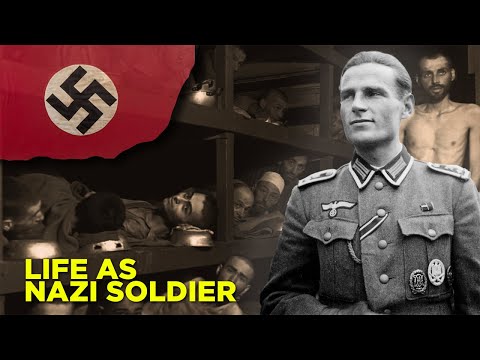
"Wehrmacht's history is deeply complicated because people have attempted to whitewash it over time in attempts to equip them from the war crimes and the holocaust."
While statistically a small minority, some honorable individuals within the military did protest the regime's actions or actively rescued Jewish people. These acts demonstrated that resistance and aid to Hitler's victims were possible, even within the disciplined and authoritarian structure of the army. Furthermore, a few high-ranking German officers participated in the unsuccessful plot to assassinate Hitler on July 20, 1944. However, it's important to view this effort primarily as an attempt to regain control of the war effort and prevent Germany's total destruction, rather than a moral stand against the Holocaust itself. Indeed, some of the conspirators were themselves deeply implicated in the army's complicity in the Holocaust.
While the Wehrmacht did fight alongside Allied armies against the SS in the final days of the war, it would be a profound mistake to exonerate them of their crimes against humanity. Ongoing research continues to reveal just how willingly and profoundly the military participated in the Holocaust, a stark reminder that the clean Wehrmacht myth is just that, a myth.
The history of the Nazi soldier is a stark, uncomfortable tapestry woven from youthful idealism twisted into fanaticism, the insidious grip of chemical dependency, and the chilling normalization of unimaginable cruelty. It's a story that defies easy categorization, proving that the past is always messier, more human, and infinitely stranger than the sanitized versions we often get in school.