Forget everything your high school textbook told you about the Vietnam War. It was never just about geopolitics and jungle warfare, not for the soldiers on the ground. While American troops were trained for the European front, Vietnam threw them into an alien, suffocating landscape with no clear battle lines, no safe zones, and a relentless psychological assault. This was a war fought not just against an enemy, but against the very fabric of reality, where the official narratives clashed with whispers of shadowy beasts, vanished planes, and political maneuvers that would make Machiavelli blush. The battle for Southeast Asia was far stranger, and far more unsettling, than any history class dared to admit.
The Jungle's Grip: Psychological Warfare and Unseen Foes
The United States' involvement in Vietnam presented a uniquely brutal challenge, one that fundamentally differed from any previous military engagement. Unlike the relatively defined fronts of the Second World War, Vietnam offered no such clarity. There was no clear line to advance, no secure territory to hold, and no conventional theater of operations. The sheer alien nature of the terrain, characterized by oppressive heat, suffocating humidity, and an endless expanse of dark, dense woods, began to chip away at the sanity of American troops almost immediately. This wasn't just physical hardship; it was a profound psychological assault, amplified by the Viet Cong's mastery of guerrilla tactics and their penchant for psychological warfare. While a combat veteran in World War Two might have endured approximately 40 days in active combat, those serving in Vietnam often faced an astounding 240 days of direct engagement out of their single year-long tour. This relentless exposure to danger and uncertainty created an environment ripe for the inexplicable.
The unfamiliarity of the landscape was so profound that American Marines often relied on local South Vietnamese guides. These locals, either sympathetic to the American cause or simply seeking to avoid the Viet Cong, possessed an intimate knowledge of the treacherous topography. Yet, even they harbored deep-seated fears about certain parts of the jungle. They spoke of creatures unnatural and terrifying, entities not to be confronted: phantoms, reanimated corpses, and flying shadows. Marines, initially, dismissed these warnings as mere "third world folklores," the superstitious ramblings of an uneducated populace. However, once plunged into the action, these dismissals quickly evaporated. The jungle itself became a character in the war, a silent, menacing entity that amplified the soldiers' stress, anxiety, and terror. Adding to this volatile mix was the rampant spread of opium through American ranks, a desperate attempt by some to cope with the unimaginable pressures. Being "hopped up" and marching through what increasingly felt like haunted woods did little to steady the nerves of men already pushed to their breaking point.
Whispers in the Canopy: Encounters with the Unnatural
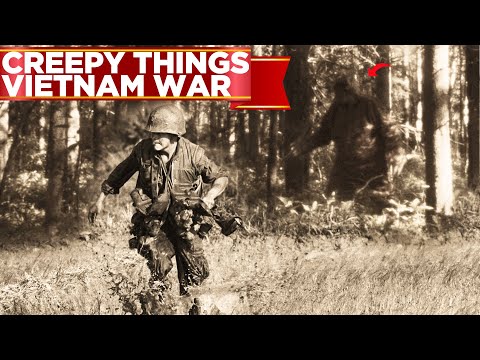
As the psychological toll mounted, so too did the reports of bizarre and terrifying encounters. Soldiers began to describe ghostly figures moving with unnatural speed and silence through the dense foliage. More chilling still were the accounts of fanged humanoids with black eyes, creatures that allegedly attempted to abduct unsuspecting troops. Some soldiers, scared out of their wits, spoke of beasts that appeared to be bulletproof, shrugging off rifle fire as if it were a mere annoyance. These were not isolated incidents, but persistent, unsettling narratives that permeated the ranks, adding another layer of dread to an already nightmarish conflict. The darkness of the triple canopy jungle, which often prevented sunlight from reaching the ground, ensured that for many Marines, the Vietnam War was fought in perpetual twilight, a shadowy realm where fears could easily manifest.
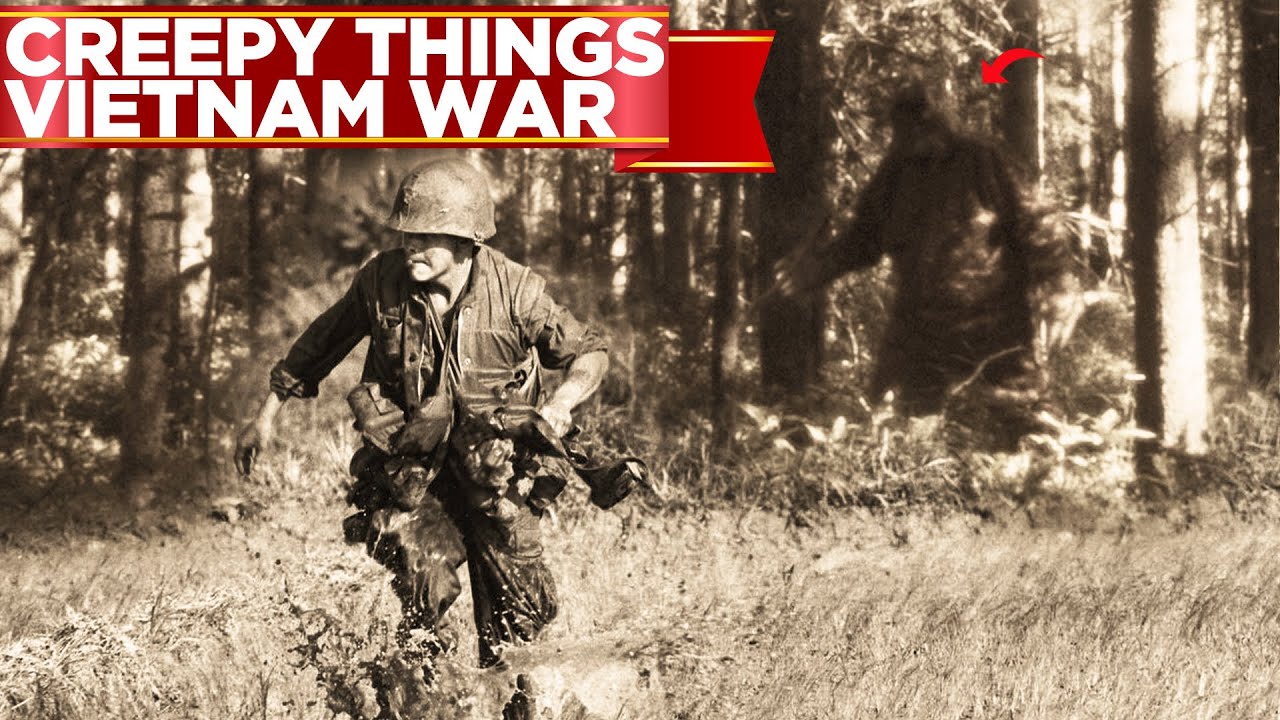
Perhaps the most famous of these encounters came from men of the US First Marine Division, who testified to encountering a "giant woman" with bat-like wings and skin as black as shadow. One Marine, Earl Morrison, recounted seeing this creature as close as 10 feet while on night duty. He described the winged woman emitting a strange glow as it approached the men, before it abruptly flew away from their camp. Such reports, dismissed by official channels but deeply ingrained in veteran lore, fueled a chilling hypothesis: some believed that the pervasive fear of these supernatural entities influenced military strategy. It is speculated that the sheer terror inspired by these rumored jungle inhabitants may have contributed to the American military's heavy reliance on chemical defoliants like Agent Orange and incendiary weapons like napalm, rather than committing more manned incursions into the deepest, darkest parts of the jungle. If something out there was truly bulletproof, or could snatch a man without a trace, then perhaps burning the forest down was the only viable solution.
The sheer terror inspired by these rumored jungle inhabitants may have contributed to the American military's heavy reliance on chemical defoliants like Agent Orange and incendiary weapons like napalm.
Flight 739: A Ghost in the Airways
Amidst the earthly and unearthly horrors of Vietnam, another mystery unfolded, one that predated the major American escalation but remains inextricably linked to the conflict: the disappearance of Flying Tiger Line Flight 739. On March 16, 1962, this Lockheed L-1049 Super Constellation vanished without a trace somewhere between Guam and the Philippines. There was no wreckage, no distress signal, no radio communication, and no records of any ominous events prior to its disappearance. The plane simply ceased to exist. After two months of fruitless searching, all 107 passengers aboard the unfortunate flight were declared deceased, leaving a gaping void in the lives of their families and a chilling question mark in aviation history.
The official narrative surrounding Flight 739 was that it was a civilian charter, unrelated to the unfolding war effort in Southeast Asia. However, the families of the victims vehemently claimed otherwise. They insisted that the men on board were soldiers, specifically deployed to Vietnam. While government files did validate that some of the vanished men were indeed communication advisors or supply sergeants, the families pointed to a more compelling piece of evidence: a list of hand-picked mission members, allegedly assembled from military bases across the United States. Furthermore, the official files provided to the families regarding the passengers and the flight itself were heavily redacted, fueling suspicions of a cover-up. The Civil Aeronautics Board's report, for its part, confirmed that the plane was indeed heading for Saigon, indicating its ultimate destination was very much within the war zone. It stated the plane carried no cargo, but had 93 Americans, three personnel from South Vietnam's military, and the rest were crew, totaling 96 passengers for the Travis Air Force Base to Saigon leg.
The eerie silence from the aircraft, the complete lack of any attempt to establish contact, defies conventional aviation disaster scenarios. A Liberian tanker in the vicinity reported witnessing an explosion along the plane's flight path, offering a potential explanation. Yet, subsequent investigations found absolutely no crash site, no sign of an explosion, no human remains, and no disturbance in the vast ocean. It was as if the aircraft, and everyone on it, had simply dissolved into thin air. For decades, the families of the missing soldiers have campaigned tirelessly to have the names of their loved ones inscribed on the Vietnam Memorial Wall in Washington. Yet, eerily, the authorities have remained steadfastly silent on the matter, refusing to acknowledge any military connection. The flight crew, comprised of five men and four women, were all civilians, but the passenger manifest included highly trained individuals: 93 jungle-trained Army Rangers, primarily experts in electronics and communications, alongside three members of the Armed Forces of Vietnam. The enduring mystery of Flight 739 serves as a stark reminder that some chapters of the Vietnam War remain stubbornly, and perhaps intentionally, unwritten.
Trinh Minh The: The General Who Could Have Been
The outcome of the Vietnam War, a conflict that reshaped global politics, might have unfolded dramatically differently had a figure named Trinh Minh The survived a sniper's bullet in 1955. This seemingly scrawny individual, who looked more like a college freshman than a military leader, held a pivotal, albeit largely forgotten, role in the early days of the conflict. The, as he was known, received his military officer training from the Japanese Kempeitai, a brutal military police force, during World War Two. By 1945, at the tender age of approximately 25, he had already become an officer in the Cao Dai militia, a syncretic religious movement that maintained its own armed forces.
Throughout World War Two, The served as a non-commissioned police officer in the Japanese military, a period that cemented his staunch anti-communist and anti-colonialist ideology. Following the war's conclusion, he initially joined the French army as part of the Association for the Restoration of Vietnam. However, by 1951, disillusioned with French intentions, Trinh Minh The defected, taking with him thousands of loyal supporters. His aim was to establish a genuine Vietnamese nationalist force, free from both communist and colonialist influences. He created the Union of Nationalist Forces of Vietnam, positioning himself as a "third contender" in the struggle for Vietnam, poised to fight against both the Viet Cong and the Western-backed forces.
Historical accounts suggest that Trinh Minh The was under immense pressure from his financial backers to align his formidable forces with the nascent South Vietnamese army. Such an alliance could have dramatically altered the balance of power, potentially offering a strong, nationalist alternative that might have garnered broader popular support and challenged the Viet Cong's growing influence. However, before any such arrangement could be finalized, The was assassinated by a sniper on a Saigon street in 1955. The identity of the sniper remains a mystery, as does the true motive behind his elimination and who ordered it. Was it the Viet Minh, fearing a potent nationalist rival? Or was it elements within the South Vietnamese government, wary of a charismatic leader who might prove too independent? The speculation about how his alliance with South Vietnam could have changed the war's course is endless, but the specifics of any such arrangement, and the truth of his demise, died with Trinh Minh The, leaving behind one of Vietnam's most tantalizing "what ifs."
The President's Papers: Bush's Unclear Service Record
The military service record of George W. Bush became a flashpoint during his presidential campaigns in both 2000 and 2004, drawing intense scrutiny and revealing a series of sketchy elements and glaring inconsistencies. Certain parts of his official records were conspicuously missing, while others directly contradicted one another, creating a hotbed of speculation that continues to this day. For instance, payroll records indicate that Bush reported for duty at Ellington Air Force Base in 1973. Yet, a medical report dated May 2nd of that same year appears not to corroborate his presence. Further records suggested that his attendance at the Texas air force base was, at best, "dodgy," characterized by frequent absences and an active pursuit of a transfer, which was initially denied but eventually approved.
His qualifications for the role he held were also far from exemplary, a stark contrast to the effusive praise later showered upon him by superior officers, who inexplicably lauded him as an "exemplary and dedicated pilot." A significant question mark hangs over an entire year of his service, for which his whereabouts are not accounted for at all. Curiously, while his service logs remained opaque, his celebrity status, even then, was meticulously documented. Commanding officers, it seems, were eager to arrange photo opportunities, shaking hands with the scion of a prominent political family. This stark disparity between documented celebrity and nebulous service raises a potent question: did America's future president receive preferential treatment, allowing him to avoid the most brutal fighting of the Vietnam War and secure a more comfortable position in pilot training? Bush himself later claimed he was denied overseas deployment, but what truly transpired behind the scenes remains frustratingly unclear, a testament to how even the most powerful can have inconvenient truths buried in the annals of history.
The identity of the sniper remains a mystery, as does the true motive behind his elimination and who ordered it.
Operation Wandering Soul: The Ghost Tape Gambit
In a fascinating, albeit ethically dubious, attempt to turn Vietnamese superstition against the enemy, American military personnel launched Operation Wandering Soul. Recognizing the deep-seated spiritual beliefs of the Vietnamese, particularly regarding the veneration of ancestors and the fear of restless spirits, the Americans devised a psychological warfare tactic that was both innovative and chilling. With the assistance of South Vietnamese volunteers, they recorded incredibly eerie voices, specifically designed to sound like the wailing, lamenting spirits of fallen Viet Cong soldiers. These recordings were then broadcast throughout the dense jungles, often at night, from loudspeakers mounted on helicopters or carried by ground troops.
This infamous recording, now widely known as "Ghost Tape Number 10," is even available on YouTube for those brave enough to listen. The primary objective of Operation Wandering Soul was to sow fear and demoralization among the Viet Cong, to convince them that their fallen comrades were suffering in the afterlife due to improper burials, and that their own fate would be similar if they continued to fight. The effectiveness of this macabre psychological operation, however, remains a subject of considerable debate. The results are largely considered "dubious at best." Some analysts assert that the tape had absolutely no effect on the seasoned Viet Cong fighters, who easily saw through the ruse and dismissed it as American propaganda. They understood the tactic and were not swayed by it.
Conversely, other reports endorsed its success, suggesting that the tape did at least manage to "leech away some of the enemy's morale," creating unease and doubt among the ranks. More dramatic, though less substantiated, reports claimed that the tape terrified certain Viet Cong units so methodically that they abandoned their posts and yielded to the Americans, choosing surrender over facing the wrath of vengeful spirits. The true impact of Operation Wandering Soul, like so many other unconventional aspects of the war, is still shrouded in the humid, tangled jungles of Vietnam, a testament to the desperate and often bizarre lengths to which both sides went in a conflict that blurred the lines between reality and nightmare.
The Enduring Haunt of History
The Vietnam War, far from being a neatly packaged historical event, remains a sprawling, complex tapestry woven with threads of unimaginable hardship, political intrigue, and unsettling mysteries. From the psychological torment inflicted by an alien jungle and the spectral figures said to inhabit it, to the inexplicable disappearance of a plane carrying soldiers to a secret mission, and the shadowy assassination of a potential kingmaker, this conflict consistently defied conventional understanding. The official narratives, often sanitized and simplified for public consumption, barely scratch the surface of the profound weirdness and raw terror experienced by those who lived through it. History, as Nutty History consistently reminds us, was always far more bizarre, more unsettling, and ultimately, more fascinating than any textbook could ever convey.