Ulysses S. Grant, the man who crushed the Confederacy and saved the Union, didn't just fade away gracefully. He rotted, quite literally, from the inside out, his throat devoured by cancer, his voice reduced to a rasp, and the stench of decay clinging to his sickroom. This wasn't the heroic battlefield death of a general, but a slow, agonizing public spectacle, a testament to the brutal realities of 19th-century medicine and the relentless march of human frailty. Yet, even as his body failed, Grant fought one last, desperate campaign: a race against death to write his memoirs, not for glory, but to save his family from the financial ruin a swindler had wrought.
The Quiet Man Who Conquered
Born on April 27, 1822, in Point Pleasant, Ohio, Hiram Ulysses Grant entered West Point at 17, a young man remembered less for academic prowess and more for an uncanny mastery of horses. He rode with a calm hand that impressed all, a talent that set him apart far more than any theoretical understanding of military strategy. How, then, did this unassuming boy, with no particular ambition for soldiery or politics, rise to command vast armies and twice hold the nation's highest office?
Graduating in 1843, Grant's early military career was marked by a stifling monotony. He considered resigning until the Mexican-American War intervened, a conflict he privately deemed unjust, calling it one of conquest rather than defense. Yet, in Mexico, he proved his mettle. During the Battle of Monterey, he executed a daring ride under sniper fire, clinging sideways to his horse while carrying dispatches. At Chapultepec, he helped haul a cannon into a church steeple, firing on enemy troops in a move equal parts reckless and ingenious. Officers noted his composure under fire and his willingness to take risks. But peace brought discontent. Stationed far from his wife, Julia Dent, whom he married in 1848, loneliness led to alcohol becoming his refuge. By 1854, his drinking alarmed superiors enough that he resigned his commission, leaving the army in disgrace.
Reduced to selling firewood in the streets of St. Louis, failing at farming and business, Grant seemed destined for obscurity. The man who had shown such daring in Mexico struggled to provide for his family, carrying the reputation of a drunkard. When the Civil War erupted in 1861, few would have predicted that this failed officer, forgotten by nearly everyone, would return to command vast armies. Commissioned first to lead volunteers in Illinois, he quickly proved himself at Fort Donelson in February 1862. When the Confederates asked for terms, Grant famously replied, "No terms except unconditional and immediate surrender." Newspapers hailed him as "Unconditional Surrender Grant," and the name stuck, signaling the arrival of a new kind of Union general.
The Unconditional Strategist
His rise was relentless, though not without controversy. Weeks after Fort Donelson, at Shiloh, his army suffered staggering losses, and rumors of drunkenness circulated. But President Lincoln stood by him, famously declaring, "I can't spare this man. He fights." That defense saved Grant's career. From that moment, his ascent was unstoppable. At Vicksburg in 1863, he executed one of the war's most brilliant campaigns, cutting off a Confederate stronghold and forcing surrender after a long siege. A year later, he was brought east, placed in command of all Union armies, and tasked with finally defeating Robert E. Lee.
Grant's strategy was brutal, marked by relentless pressure and horrific casualties, but it worked. In April 1865, at Appomattox Courthouse, Lee surrendered to Grant, who offered generous terms and forbade his men from celebrating the enemy's humiliation. In just four years, Grant had risen from obscurity to become the most celebrated soldier in the nation, the man credited with preserving the Union. He entered the presidency in 1868 at the age of 46, celebrated as a modest, devoted general whose very presence in the White House was proof of the republic's survival.
From White House to Poor House
Grant's presidency began with enormous public trust, and in some respects, he justified it. He pressed Congress to pass the Enforcement Acts, using federal troops and the new Department of Justice to crush the Ku Klux Klan. He signed the Civil Rights Act of 1875, a measure promising equal access to public accommodations. He even supported the creation of Yellowstone, the first national park in American history, a legacy of conservation that endures to this day. On paper, these achievements marked him as a reformer, unusual among generals turned politicians.
Yet, scandal followed scandal, his own weaknesses making them worse. He remained loyal to friends and associates who proved corrupt, a failing critics never forgave. The Credit Mobilier affair exposed bribery at the highest levels of government. The Whiskey Ring revealed a vast network of tax fraud that implicated officials close to the president. The Panic of 1873 triggered the worst depression the country had yet experienced, and Grant's hard money policies, though consistent with his principles, deepened the misery of farmers and workers. By the end of his second term, his reputation was battered, not because he had stolen, but because he seemed unable or unwilling to see that others had.
Even so, Grant left office still admired as the Union's general, if not as a statesman. Crowds gathered to bid him farewell, and foreign leaders welcomed him abroad as a conquering hero. But the contrast between the man who had once defeated secession and the leader who had failed to control corruption in his own house was stark. The final, crushing blow came in the summer of 1884. Weeks before his cancer diagnosis, the investment firm of Grant and Ward collapsed in a spectacular fraud. Ferdinand Ward, hailed as the "young Napoleon of finance," had built a pyramid of lies, using Grant's name to lure investors, then robbing them blind. When the firm failed, it left not only its clients ruined but the general himself. Grant had invested all he possessed and borrowed heavily besides. When the debts were called in, his fortune amounted to just $80 in cash.
For the man who had once commanded half a million soldiers, the humiliation was complete. He had defeated Lee, but he had been defeated by a swindler.
For the man who had once commanded half a million soldiers, the humiliation was complete. He had defeated Lee, but he had been defeated by a swindler. Congress, shamed by the spectacle of a bankrupt hero, intervened in March 1885, restoring him to the rank of general of the army with a full pension of $3,000 per year. It was a measure of relief, though hardly wealth, and it came only because he had been forced to resign his commission when he entered the presidency. Without it, Julia would have been left destitute. With it, she was at least assured of survival. But for Grant himself, the gesture carried a cruel irony: the pension came too late to comfort him, because his body was already failing.
The Cigar's Cruel Verdict
The turning point came in the summer of 1884. At 62 years old, Grant attended a reunion of Civil War veterans at Ocean Grove, New Jersey, rising to a standing ovation from 10,000 men who had once marched under his command. It was his last public appearance, though no one guessed it. That same summer, he began to complain of a sore throat, a small irritation at first, which he dismissed as trivial. He delayed seeing a doctor for months, but in October came the verdict: cancer of the throat, a condition almost certainly caused by the cigars he had smoked incessantly, sometimes 20 in a single day. It was a mortal sentence, striking down not the man who had fallen in battle, but the general who had survived every shot and shell, only to be undone by a habit carried quietly for decades.
Grant tried to keep the truth from Julia, his wife of nearly 40 years, but she learned it soon enough from the family physician. In the early months of 1885, the public too was told. In March, The New York Times announced that the general was dying, a headline that sent tremors of grief across the nation. Crowds gathered outside his house, well-wishers sent letters by the hundreds, and even old enemies expressed sorrow. But sympathy, however great, did nothing to ease his fear that he would leave Julia and their children with nothing. For although Grant was famous, he was nearly penniless, his financial ruin having come as suddenly as his cancer diagnosis.
A Body Betrayed: The Agony of the 1880s Clinic
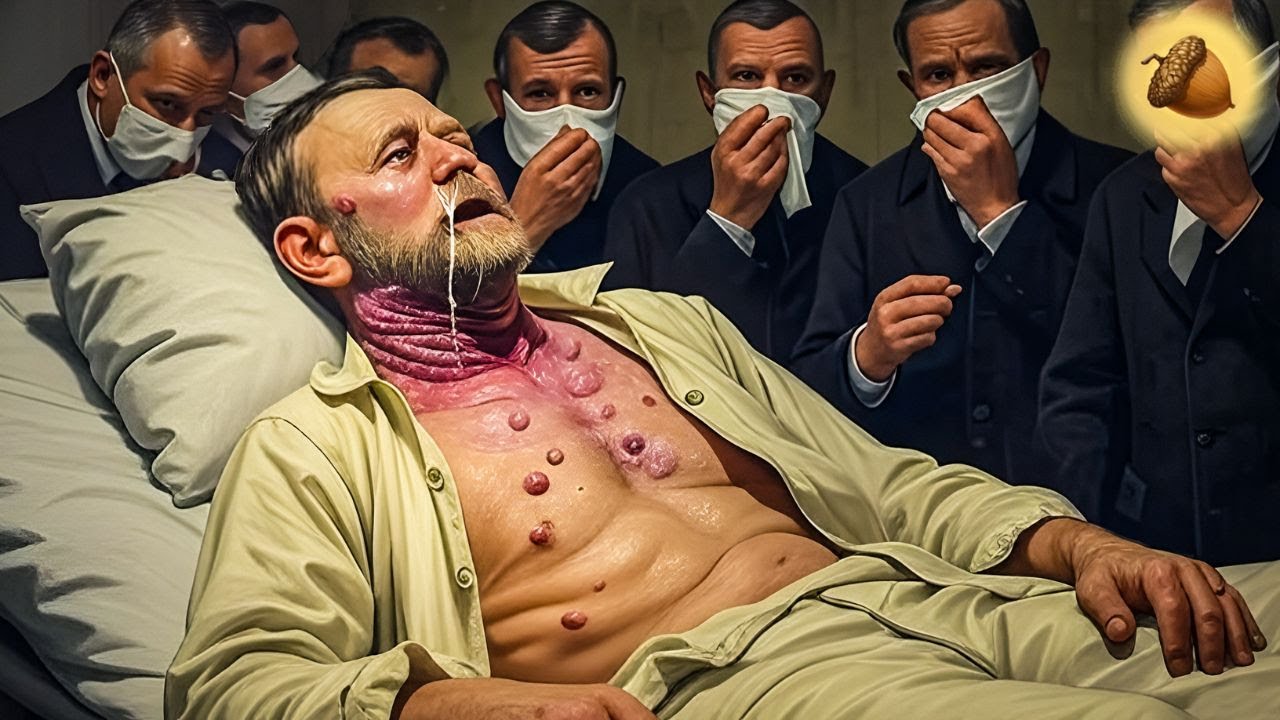
By the spring of 1885, Grant's transformation was visible to all. His throat grew raw, and swallowing became an agony. He wrapped himself in scarves to hide the swelling at his neck, but whispers spread nonetheless. Visitors noted his strong face, his stooped figure, and his silence where once he had been steady, if reserved. For a man celebrated for iron endurance, the disease was a public humiliation. His frame, which had once carried 180 pounds in middle age, withered to less than 130. He could swallow little more than milk, broth, or bits of scraped fruit, while solid food brought agony that no treatment could relieve. Friends remarked on his skeletal appearance, his cheeks sunken, his coat hanging loose on his body. Julia and the children pressed him to eat, but he waved them off, resigned to what the cancer allowed.
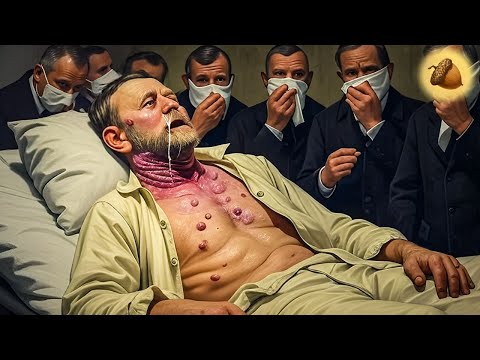
The remedies prescribed contributed enormously to his torment. Physicians recommended cocaine gargles to dull the pain, mercury solutions to cauterize tissue, and caustic applications that burned more than they soothed. Others tried searing the tumor itself, a treatment as useless as it was agonizing. These efforts weakened him further, exhausting what strength he still possessed. The swelling at his neck spread to his tongue, tightening his throat until even speech became labored. Those who remained at his side endured the sickening odor without protest, for to show disgust would have been cruelty to the man they loved. Yet through it all, he refused morphine. He told his physicians that he would not cloud his mind, that he had work yet to finish. Pain he could endure, but confusion he would not allow. It was a decision that condemned him to unbearable suffering, but it gave him clarity enough to labor each day.
His inability to speak added to the humiliation. At first, he rasped in whispers, forcing visitors to lean close, but as the tumor advanced, he relied on scribbled notes. Those who came to see him recorded the sight of the once commanding soldier reduced to scrawling fragments on slips of paper, his hand shaking, his meaning conveyed in hurried lines instead of voice. For Julia and the children, the vigil was unending. They watched as he faded, recording small victories, an hour of sleep, a brief smile, amid the greater decline. But Grant himself had no such illusions. He spoke little of his body, focusing instead on what might provide for them after he was gone.
His Last Campaign: The Pen and the Publisher
That resolve turned to the pen. In the autumn of 1884, desperate for income, Grant had written articles for The Century magazine describing his Civil War campaigns. The payment was $500 a piece, nearly $17,000 in today's money, and they were praised for their clarity. The editor, Robert Underwood Johnson, suggested he attempt a memoir, as Sherman had done. Grant hesitated, doubting his own literary worth, but the suggestion soon became a necessity. He could see that time was short, and the book was the only way to provide for Julia.
Mark Twain, learning of his plight, intervened with an extraordinary offer. Instead of the modest 10% royalty promised by Century, Twain proposed terms unheard of in publishing: 70% of the profits to the author. It was an act of friendship as much as business, and it meant security, if only the manuscript could be completed. Grant accepted, and with Adam Badeau, his former aide, assisting in research and his son Frederick checking documents, he set to work. By the spring of 1885, he had only one purpose left: to finish The Personal Memoirs of Ulysses S. Grant.
He labored not to preserve his name, but to provide the money that would support Julia once he was gone. In this way, the torment of his final years was twofold. He endured a body destroyed by cancer, and he carried the burden of responsibility to his family.
Each morning, he labored at his desk, wrapped in shawls, stopping only when pain or exhaustion forced him to lay down his pen. Each evening, his family gathered around him, their hopes tied to the pages that piled slowly on the table. Observers noted that when he dictated passages of Shiloh, Vicksburg, and Appomattox, his eyes seemed to regain their old clarity, as if memory itself gave him brief respite from pain. For Julia and the children, the sight was bittersweet. They saw a man consumed by disease, yet fighting with pen and paper to secure their future. He labored not to preserve his name, but to provide the money that would support Julia once he was gone. In this way, the torment of his final years was twofold. He endured a body destroyed by cancer, and he carried the burden of responsibility to his family. Where others might have sought release in death, Grant fought on with pen, forcing himself to finish the story of his life while the cancer destroyed it.
A Public Passing, A Nation's Mourning
As the end approached, Grant's suffering reached almost unimaginable levels. In June 1885, he was moved to a cottage in Mount McGregor near Saratoga Springs, where the cooler air promised some relief. His throat was nearly destroyed, and by July, he could barely swallow even water without agony. His breathing grew labored, his voice almost gone, and his body showed the signs of rapid decay. The household became a place of whispers and dread as attendants entered his room with handkerchiefs discreetly raised, forced to endure the odor that clung to him, even as they tried to keep his dignity intact.
During his final weeks, his health declined swiftly. He suffered from recurring fevers, the result of infection spreading through his wasted body. His weight had fallen dangerously, his frame now skeletal, and delirium became increasingly common. Curiously, despite the obvious reality, his doctors did not declare him dying until the very end. Friends, reporters, and even members of his family maintained the pretense that recovery was possible, though the truth was plain to anyone who looked at him. Public bulletins spoke of encouraging signs or moments of improvement, a thin disguise over the spectacle of a man whose body was collapsing day by day.
On July 18, 1885, with immense effort, Grant completed the manuscript of his memoirs. It was the culmination of months of labor, pages written and dictated under torment, his last campaign fought not with armies, but with pen and paper. On July 22, he finished the revisions, his task accomplished. The following morning, July 23, he asked Julia to sit with him. Unable to speak, he squeezed her hand when asked if he died in peace. This was his last conscious gesture. In the early hours of that day, at 63 years of age, the general exhaled his last breath. Across the country, tributes began at once. General Philip Sheridan ordered a day of remembrance. President Grover Cleveland proclaimed 30 days of national mourning. Bells tolled, flags were lowered, and millions reflected on the death of the soldier who had saved the Union.
During the following days, while the body awaited the funeral, preparations for preservation proved arduous. His emaciated, cancer-ravaged frame presented challenges to the embalmers, who struggled to slow the visible signs of decline. Accounts from the time noted that odor remained a concern despite efforts to seal the coffin for public display. Yet, even in this diminished state, arrangements were made with care, ensuring that hundreds of thousands could view him as they passed in mourning. The mighty general who had commanded vast armies now lay as a body that resisted even the respect of preservation. The contrast was unavoidable. Those who had once known him as a figure of strength now saw him diminished to remains that demanded constant tending.
The Grandest Farewell and a Literary Triumph
The funeral train began its journey northward, carrying Grant's body first to West Point, where cadets stood in solemn tribute, and then onward to New York City. Along the route, crowds gathered at stations, heads bared in respect, some in tears, many carrying flags draped in mourning. In New York, the coffin was placed for public viewing, and a quarter of a million people passed by in two days, lines stretching for blocks, men and women waiting hours for the brief chance to look upon the coffin of the man they called the Savior of the Union.
On August 8, 1885, the funeral procession was held, one of the largest in American history. More than 1.5 million people lined the streets of Manhattan. The casket was drawn by two dozen black stallions, a sight intended to convey both solemnity and grandeur. Veterans of the Union and the Confederacy marched together, a symbolic gesture of reconciliation that Grant himself might have approved. Pallbearers included Union Generals Sherman and Sheridan, Confederate Generals Buckner and Johnston, Admiral David Dixon Porter, and Senator John A. Logan of the Grand Army of the Republic. Following the casket came President Grover Cleveland, former presidents Rutherford B. Hayes and Chester Arthur, members of the cabinet, and the justices of the Supreme Court. Dignitaries from across the nation and abroad filled the ranks, demonstrating that the general, who had risen from obscurity in Ohio, was now honored by the full weight of the republic.
He was interred first in a temporary tomb in Riverside Park. Twelve years later, on April 17, 1897, his remains were placed in the completed General Grant National Memorial, known simply as Grant's Tomb. It was, and remains, the largest mausoleum in North America, a structure of granite and marble intended to reflect the permanence of his legacy. Mark Twain's publication of The Personal Memoirs of Ulysses S. Grant ensured that the family was not left impoverished. Julia received royalties of approximately $450,000, the equivalent of more than $15 million today. The book was both a commercial triumph and a critical success, praised for its clarity, honesty, and unadorned prose. In the end, the work secured not only her financial security, but his reputation as one of the greatest soldier-writers in history.
History isn't always the tidy, noble narrative we get in school. It's often a messy, contradictory affair, filled with generals who conquer armies but are undone by cigar smoke, presidents tainted by scandal, and heroes left penniless by swindlers. Ulysses S. Grant's final act, battling cancer and financial ruin with a pen, reminds us that even the most celebrated figures of the past were agonizingly, gloriously human, and their triumphs and tragedies were far stranger, and often far more horrifying, than any textbook would dare to print.